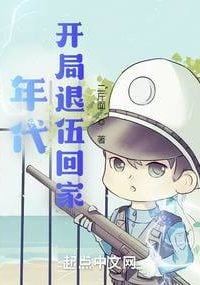
Era: Returning Home After Retiring From The Army
+Add to Custom List
Genres:
Novel Info

Summary

... Read More

Luo Cheng, a technical school graduate from the 2000s, wakes up on a train to find himself in 1961 Yian City. He has been transported back in time, and his identity has shifted from a student to a recently discharged army communication soldier. Confused by the sudden change in era, he discovers that the world lacks modern conveniences, with severe food shortages and a rigid rationing system. Despite his disorientation, Luo Cheng possesses a mysterious sign-in system that appeared in his mind, allowing him to retrieve items from a modern train snack package, including instant noodles, peanuts, and mineral water. Armed with a discharge allowance, ration coupons, and a recommendation letter, he attempts to navigate this harsh new reality while trying to understand his altered past.

Upon arriving at the train station, Luo Cheng struggles with hunger and the unfamiliar environment. He uses the system to retrieve eight-treasure congee, an act observed by starving children who view his discarded can as a treasure. Heading home via bus, he encounters Qin Xiaoli and her cousin Qin Lan, who ask for his protection due to the dangers posed by refugees fleeing northern droughts. Luo Cheng agrees to escort Qin Lan home, a journey that highlights the physical weakness of his modern body compared to the hardened locals. During the trip, he shares instant noodles with Qin Lan, introducing her to flavors and textures that are unimaginable in this era of scarcity. The aroma of the noodles eventually reaches Qin Lan's village, where her family cooks them, creating a scent that draws the attention of neighbors and underscores the extreme deprivation of the time.

Luo Cheng returns to his rural home, a modest mud-brick house shared with his parents, grandmother, two younger sisters, and a younger brother. The family dynamic is drastically different from his previous life as an only child. His mother, Wang Ling, and grandmother are frail from malnutrition, a stark contrast to their healthier counterparts in his original timeline. The family is immediately concerned about the food Luo Cheng brings, particularly the white steamed buns from the army. His sisters, Luo Xiaoyu and Luo Shishi, are fascinated by the peanuts he gives them, experiencing flavors that are alien to their diet. The household operates on a strict economy of survival, where every grain is accounted for and shared among extended family members to maintain social bonds and ensure collective survival.

The core conflict revolves around Luo Cheng's need to secure a livelihood and support his enlarged family in a time of famine. His father, Luo Wen, and grandmother discuss how to distribute the grain coupons and buns, balancing the needs of their immediate family with obligations to relatives. Luo Cheng plans to use his recommendation letter to secure a job, likely as a mechanic or driver, which would provide access to commercial grain and stability. He also intends to explore the limits of his sign-in system, hoping it will provide more substantial rewards beyond snacks. The narrative follows his integration into this 1960s rural life, highlighting the challenges of adapting to a pre-modern existence while leveraging his future knowledge and the mysterious system to improve his family's fortunes.

As Luo Cheng settles in, he navigates the social intricacies of village life, from fetching water with his sisters to interacting with neighbors and extended family. The story emphasizes the daily struggle for food, the importance of ration coupons, and the physical toll of malnutrition. Luo Cheng's return brings a sense of hope and authority to the household, as he is viewed as the educated eldest son who can secure a better future. The narrative sets the stage for his efforts to establish himself in this new world, using his military credentials and system rewards to overcome the immediate threats of hunger and poverty while adjusting to the responsibilities of being the head of a large, struggling family.

Latest Release
DateGroupRelease
2026-08-11shanghai fantasy c23
2026-08-11shanghai fantasy c22
2026-08-11shanghai fantasy c21
2026-08-11shanghai fantasy c20
2026-08-11shanghai fantasy c19
2026-08-11shanghai fantasy c18
2026-08-11shanghai fantasy c17
2026-08-11shanghai fantasy c16
2026-08-11shanghai fantasy c15
2026-08-11shanghai fantasy c14
2026-08-11shanghai fantasy c13
2026-08-11shanghai fantasy c12

Community Reviews

Rating(3.5 / 5.0, 17votes)
5 stars
4(24%)
4 stars
6(35%)
3 stars
2(12%)
2 stars
5(29%)
1 stars
0(0%)

Popular reviews

... Read More
Let me just say this: the instant noodle scene is one of the most perfectly paced sequences I've read in a transmigration novel, and I've read a lot of them. Here's what the author does: Luo Cheng is starving. He's been walking for kilometers in November heat. His system won't refresh until midnight. He pulls out these instant noodles—fine, white, fragrant—and Qin Lan watches him like he's performing a miracle. He breaks the noodles, some crumbs fall, and she looks like she's been physically struck. "How could he be so careless? Those were food, precious food." The pacing here is deliberate. The author slows down every micro-moment: the crumb falling, her pained expression, his growing guilt, her hesitant first bite, the way she chews slowly like each mouthful is sacred. And then—she asks about the seasoning packets. Beef. Oil. Chili. In 1961 China, this is an alien concept. The entire sequence takes maybe two paragraphs but it stretches across what feels like an hour of reading time, and that's intentional. The structure of the chapter itself follows a similar rhythm. It opens with disorientation—the train arrival, the confusion about where he is, the system awakening. Then it moves into the journey, where the world-building unfolds through action rather than exposition. The arrival at his home brings a different kind of tension: family dynamics, the grandmother's weakness, the siblings he doesn't remember. Each section escalates the emotional stakes while the external stakes (hunger, survival, navigating a strange era) remain constant. The only minor drag is the bus wait, but even that serves the worldbuilding—limited transportation, the fare being a few cents that some can't afford. Nothing is wasted.
... Read More
Let me be honest with you—the moment that made me put the book down and just sit with it was when Luo Cheng tossed that congee can by the wall. The author doesn't dramatize it. There's no narration warning us that this is dangerous. No internal monologue from Luo Cheng thinking, "Maybe I should be more careful." He just... throws it away. And then the narrative calmly tells us: "If he hadn't been in a military uniform and appeared tall and strong, someone might have already snatched his food." That's it. That's the stakes. A boy from the 2000s, carrying the entitlement of someone who has never gone hungry, walking through a world where a discarded food container is worth more than his life. The uniform protects him, but barely. The author is setting up a fundamental conflict: Luo Cheng doesn't understand the danger he's in, and that ignorance is the most precarious thing about him. The external stakes are clear—survival in a famine-era China where food is currency and weakness is death. But the internal stakes are where this gets interesting. Luo Cheng is trying to reconcile two realities: the world he remembers (apartment, parents, grandmother, siblings he never had) and the world he's in (mud-brick house, starving relatives, a grandmother who can barely walk). Every interaction with his new family is a collision between these two versions of reality. The scene with Qin Lan amplifies this. She's terrified of his noodles not because she's greedy, but because accepting luxury when others are starving is a moral act in itself. She plans to return half the pack. That's not just politeness—that's survival ethics. And then there's the grandmother. The novel ends this section with Luo Cheng deeply uneasy about her condition. What happened to her? Why is she so weak? The stakes just got personal.
... Read More
I keep coming back to that congee can. It's thrown away like trash by a boy who can't imagine a world where it's valuable, and it's salvaged by children who see in it not just leftover food but a container worth selling for scrap. That can is the entire theme of this novel compressed into one aluminum cylinder. Food is the central symbol here, but not in a simplistic way. It's not just "starvation bad, plenty good." The novel is exploring what happens when someone from an era of abundance enters an era of scarcity—not just physically, but psychologically. Luo Cheng's casualness with food, his inability to understand why Qin Lan is distressed by crumbs, his genuine confusion about cornmeal's taste—all of this is the trauma of plenty colliding with the trauma of want. The system itself is a symbol worth unpacking. It gives him train snacks—items from his own era that represent convenience, excess, the mundane luxury of a certain time period. But in 1961, these aren't conveniences; they're artifacts of a lost world. The system is essentially a time machine that only works in one direction: it brings the past into the present, but the present can never go back. Then there's the family. Luo Cheng was an only child. Now he has siblings he doesn't remember, a grandmother who is frail instead of robust, a mother who is thin instead of plump. The novel is asking: what happens to a family when history changes? What memories survive? Who are we when the people we loved are gone, replaced by strangers who share our face? The grandmother's weakness is the most haunting symbol. In his original timeline, she was the robust matriarch who adored her only grandson. Here, she can barely walk. The novel hasn't explained this yet, but it's clearly setting up a mystery about what this alternate history took from him.
... Read More
Okay so let me just say this opening setup is genuinely clever. A guy wakes up in 1961 China after what he thought was graduation, gets discharged from the army, and stumbles home with a system that gives him train snacks like they're legendary artifacts. The plot hook hits immediately—Luo Cheng has no ID, no phone, no idea where he lives, and the era itself is hostile. That's a solid inciting incident right there. What I found most interesting is how the author uses the system not as a typical overpowered cheat but almost as a source of cultural dislocation. The eight-treasure congee, the instant noodles, the mineral water—these aren't weapons or money, they're mundane items that become extraordinary in this context. When he tosses that empty congee can, kids scramble for it. That scene alone tells you everything about the stakes without a single exposition dump. The escorting Qin Lan subplot is doing a lot of heavy lifting too. It's not just filler—it establishes the world through her eyes, shows us how precious food is, and gives Luo Cheng a moral compass to test. She's guarding cornmeal like it's gold. The tension between his casual generosity and her terror at wasting crumbs is the plot's emotional engine. I'm curious where the grandmother's frailty fits into the larger arc. The author planted that detail deliberately—Luo Cheng's past-life grandmother was robust and doted on him, but this one is barely walking. That's a wound waiting to be explored. And the sibling situation? An only child suddenly gets three sisters and a brother. Who is this family, and what happened to his original one? Those questions are going to keep me turning pages.
... Read More
I want to talk about how the dialogue in this novel does something remarkable: it uses silence and hesitation as its primary instrument. Take Qin Lan. She barely speaks, but every word she says carries weight. When Luo Cheng offers her the noodles, her response is a string of denials—"No, really, you don't have to. I'm not hungry."—but her stomach growls. The author doesn't need her to explain her hunger; the body betrays her. Later, when she asks about the seasoning packets, it's not out of culinary curiosity. It's the question of someone trying to understand a world where beef and oil exist in food packaging. Luo Cheng's dialogue, by contrast, is casual, almost naive. He asks if cornmeal is tasty. He offers his water bottle without fully grasping what it represents to her. He eats instant noodles dry and doesn't understand why she's horrified. This creates a delicious dramatic irony—readers who understand the era feel the gap between his innocence and her survival instincts. The mother, Zhang Ling, has a distinctly different voice. Her dialogue is sharp, practical, immediate: "You two lazy girls! Help your brother with his things." No warmth, no ceremony—just the brisk efficiency of someone who hasn't had a proper meal and has no energy for hospitality theater. When she learns Qin Lan is just someone Luo Cheng escorted, her attitude relaxes. Not because she's cruel, but because resources are so scarce that even water is a calculation. And the kids! "Big brother, why didn't the soldier finish it? This can is so good; how could he throw it away?" Their dialogue is pure, unguarded, and heartbreaking. They've already internalized a worldview where a soldier's waste is a blessing. The narrative voice itself is interesting—it stays close to Luo Cheng's perspective but occasionally dips into omniscient commentary, like when it notes that his carelessness "almost turned into a heartwarming tale of goodwill." That kind of authorial wink keeps the tone from becoming too heavy.
... Read More
I need to talk about the worldbuilding because this author doesn't just describe 1961 China—they make you FEEL it. The train station scene is a masterclass in showing, not telling. No cars, only bicycles. Buses you can only board at designated stops. Train tickets requiring official paperwork. Luo Cheng walks out and the world has shifted beneath his feet. The detail about the buns going hard after a day's journey—that's the kind of specific, sensory detail that makes historical fiction breathe. But the moment that absolutely wrecked me was the congee can. Luo Cheng crouches in a corner, eats in secret, throws the can away because there's no trash can in sight, and immediately a group of kids descends on it. "There's still some congee left! Let's add water and share it." "This can is made of iron—we can sell it at the scrap yard for food!" And then the most devastating line: "Big brother, why didn't the soldier finish it? This can is so good; how could he throw it away?" He must've seen us and left it for us on purpose. Soldiers are always kindhearted! He didn't leave it for them. He was just careless. But they interpret his negligence as charity. That single scene contains more social commentary than half the novels I've read this year. The world feels real because the author understands that in a time of scarcity, even waste becomes precious. The bus ride, the dirt road, the mud-brick house with a thatched roof—every setting is chosen to reinforce the harshness of this era. Even the weather works in the author's favor: November heat instead of summer, making Luo Cheng's struggle with his quilt and belongings feel authentic. This isn't a backdrop; it's a character.
See all reviews

Characters

See all characters

Custom lists

See all custom Lists