Entangled with the Madman: The Drama Queen Ex-Girlfriend - Reviews

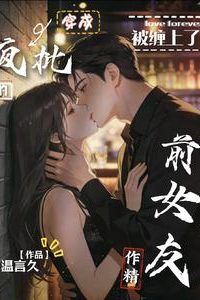
Entangled with the Madman: The Drama Queen Ex-Girlfriend
+Add to Custom List
Sort
Add review
... Read More
The way this author uses space to tell the story is genuinely masterful. Let me break down two scenes that completely sold me on the worldbuilding here. First, the classroom. It's described with this almost cinematic precision—the window-side corner where Wen Chu was sitting, the vacant spot beside her, the weight of a hundred stares. The author doesn't just tell us it's crowded; they make us feel the pressure. Wen Chu feels like "an ant being roasted on a grill." Xi Liye's presence is so potent that she can smell his clean, crisp scent. A forty-five-minute class becomes an eternity. This isn't just a setting—it's an emotional pressure cooker. The classroom transforms from a mundane academic space into a stage where their relationship is being performed, observed, and judged by an invisible audience. Then there's Xi Liye's apartment. When Wen Chu arrives, she's in a state of utter bewilderment—"Who am I? Where am I? Why am I here?" The apartment is described as high-end but not ostentatious, with a foyer where she drops her canvas bag and a living room she scans blankly. It's a sanctuary, a private world removed from the gossip and scrutiny of campus. The contrast between the public classroom and the private apartment mirrors the central tension of their relationship: they're being watched everywhere, but only in these quiet, contained spaces can they be themselves. The library mention is also brilliant worldbuilding—reservations completely full during CET season, seats worth their weight in gold. It grounds the story in a very specific Chinese university reality that feels authentic and lived-in. This isn't a generic romance setting; it's H-Uni, with its own rules, its own social dynamics, its own ecosystem of gossip and pressure.
... Read More
I need to talk about the worldbuilding in this book because it's doing something really special that most transmigration novels completely ignore. The campus setting feels incredibly lived-in. Not just the physical spaces — the dorm room with its curtains, the tiered classroom with its PPT and chalk, the cafeteria where people spotted them eating together — but the SOCIAL ecosystem. The campus forum is such a brilliant touch. It's not just a plot device; it's a window into how information spreads in a university setting. The comments are hilarious and accurate: people screenshooting Xi Liye's gaze, debating whether the girl is the Computer Science beauty, speculating about his sexuality. This is a world that exists beyond the main characters' immediate experience. But the scene that absolutely stuck with me is the algorithm lecture. Let me paint it for you: Wen Chu is sitting in the back row, masked up, trying to hide from a hundred staring eyes because of the forum post. The professor is explaining the Longest Common Subsequence algorithm — and here's where the author gets genuinely clever. Wen Chu's internal monologue about how she survived this exact same hellish major in her previous life, debugging code until her hair fell out, only to end up in the SAME major after transmigrating? That's not just comic relief. It's worldbuilding that says: this universe has rules, and they're cruel. The sensory details are sharp too. "The sound of chalk hitting the whiteboard echoed in the quiet room, interspersed with the faint clatter of keyboard typing." I could hear that classroom. The drowsiness washing over her, the panic when the professor locks onto her, the thin layer of sweat on her palms when she has to stand up and answer. This is a person with social anxiety being put on the spot, and the author doesn't shy away from the physical reality of it. The dorm scene after class — pulling the curtains shut to create a "tiny, safe space" — is another example of how the physical environment mirrors Wen Chu's psychological state. She's constantly building walls, literal and figurative. The mask she wears to class isn't just practical; it's armor. And then there's the memory sequence — the hospital corridor after her parents' death, the smell of disinfectant mixed with cheap perfume and cigarette smoke, the relatives whose eyes kept sliding toward her inheritance. That scene is so viscerally described that you can feel the suffocation. It's the origin point of everything about who Wen Chu is now.
... Read More
"You want to hit me?" Xi Liye's voice drifted down from above, that trace of subtle teasing returning. I REPEATEDLY READ THIS PART AND I CANNOT DEAL WITH IT. Let me set the scene: Wen Chu, dressed like a giant marshmallow, attempts to swat Xi Liye's shoulder after he makes a dad joke at her expense. She overestimates her coordination. She falls forward. And instead of hitting the ground, she crashes directly into his chest — warm, solid, smelling of crisp winter air and faint soap. His arm wraps around her, he catches her perfectly, and she's left standing on her tiptoes half-wrapped in his arms. The physical description alone is enough, but it's the EMOTIONAL layering that kills me. Wen Chu's mind goes blank. Her pulse races against his palm. She's flushed from shame AND anger. And Xi Liye? He's thinking about how the hug felt even better than holding her hand did, and how he couldn't feel her body heat because she was wearing too many layers, so he'll just find another opportunity next time. NEXT TIME. This man is methodical about romance and I am HERE FOR IT. The fact that he read those articles from Qin Yu and mentally checked off "holding hands ✓, next: hug" while actually executing it is simultaneously the most sweet and most unhinged thing I've ever read. And then after letting her go, he just says "Let's go, I'll buy you that Tanghulu" like his heart isn't racing too, like that moment wasn't monumental for both of them. The CP energy is absolutely electric. Every interaction between them crackles.
... Read More
I am NOT okay. I am absolutely not okay. Let me just say this first: "The incredibly thin chain almost vanished into the glow of her skin, leaving only the moonstone and the curled silver kitten to shimmer with a soft, tranquil light." This description is SO beautiful and it made my heart hurt in the worst way. Because we KNOW what this bracelet represents. It's not romance. It's possession. And Wen Chu, sweet, anxious, transmigration-surviving Wen Chu, she just sends him a photo of it on her wrist like it's some cute couple moment. The tragedy is so thick I can barely breathe. But then—AND THEN—she asks him if he's a "furry-con" because of the kitten motif. I literally screamed. The dramatic irony is UNREAL. She's trying to find flaws in him, and instead she's accidentally bonding over shared love of cats. And Xi Liye? He remembers a childhood kitten that died. His gaze darkens. His aura becomes dangerous. And he immediately thinks about how she looked huddling her neck in the snow, like a pitiful kitten waiting to be claimed. The man is SO unhinged and the author writes it so casually that it hits different. Every sweet moment is laced with something sinister. I can't look away.
... Read More
There are symbols running through these chapters that I think the author wants us to sit with, and I've been turning them over in my head since I finished reading. The scarf is the big one. Xi Liye tying a scarf around Wen Chu's neck is such a loaded image. A scarf is protection — it shields against cold, against the world. But it's also something that wraps around the throat. In the original novel, Xi Liye strangles her. The scarf is both care and threat, and that duality is exactly what this relationship is. The campus forum post captures him in that moment of tenderness, and everyone is mesmerized by it. But Wen Chu sees the danger underneath. She's the only one who knows the full story. Then there's the mask. Wen Chu wears it to class not just to avoid recognition from the forum post, but as a literal barrier between herself and the world. She's a transmigration survivor hiding in someone else's life, pretending to be someone she's not, surrounded by people who would judge her if they knew the truth. The mask is her survival mechanism made physical. And the algorithm lecture — the Longest Common Subsequence — that's not accidental. LCS is about finding patterns that repeat across different sequences, about identifying what's shared between two things that are otherwise different. Isn't that exactly what Wen Chu is doing? She's looking for the common subsequence between her past life and this new one, trying to find the pattern that will help her survive. But the pattern keeps changing. Xi Liye isn't following the script. The original novel's trajectory doesn't match what's actually happening. She's searching for an algorithm that no longer applies. The "Infinite Loop of Professional Purgatory" she jokes about — that's a theme too. She escaped one hellish existence only to find herself in another. Death in the novel, social anxiety in reality, transmigration into a romance novel where the male lead is a murderer. Is she really escaping anything, or just running in circles? The mother's voice messages are the counter-symbol though. "Remember to accept the money. Buy something thick, don't catch a cold." These small, repetitive acts of care — that's the opposite of an infinite loop. That's a linear progression toward something warm. Wen Chu's reply, "Thank you, Mom," with her old nickname — it's the first time she's genuinely accepted love without suspicion. Maybe that's the real theme: learning to trust the things that are actually good for you, even when your past tells you they're traps.
... Read More
I need to talk about Xi Liye because this man is absolutely unhinged in the most fascinating way and I cannot stop thinking about him. Let's start with the napkin scene. He wipes his hands slowly, deliberately, then rests his arm across the back of her chair and lets his fingertips brush her nape. The narration says it 'seemingly by accident' and then immediately tells us his internal thought: 'So slender... I could wrap my hand around it.' Sir. Sir, are you okay? This is not a romantic gesture, this is a threat wrapped in velvet. And the fact that Wen Chu felt a 'violent shiver' and nearly bolted tells you everything about the power dynamic here. She's supposed to be the one in control of this situation, but physically, emotionally, he occupies every inch of space around her. Then there's the hand-holding scene which is honestly one of the most intimate moments I've read in this genre and I'm not even sure the characters fully realize what's happening. He guides her fingers one by one, 'with a slow, firm, and indisputable strength,' and the text literally says 'The sense of intimacy and control brought by this posture was far more intense than a simple handshake.' Control. Intimacy. These two words appearing in the same sentence describing physical touch is not accidental writing. But what really gets me is Qin Yu's perspective. This guy knows Xi Liye—'When Xi Liye went mad, he wouldn't even recognize his own father'—and he's watching his best friend develop feelings for someone and his advice is basically 'rein it in, don't treat her like one of those cute little animals in your lab.' The dehumanizing undertone here is staggering. Xi Liye sees people as objects to study, to control, to possess. And Wen Chu, the girl who's been planning her escape since chapter one, is the first person he's encountered who can't be reduced to a specimen. The moment he 'Likes' her post and stares at it 'for a long time, motionless' with the light making him look 'almost inhumanly still'—that's the moment the mask slips. That's the moment we realize Xi Liye isn't just playing along. He's already gone. And Wen Chu? She's sitting right next to him writing 'My deary boyfriend' as a caption, fully aware this is performative, fully aware she's training him for someone else, and yet her friends are commenting 'The atmosphere! The size difference between your hands is insane!' on what is supposed to be a fake relationship. The tragedy here is so thick I can taste it.
... Read More
Okay so I need to talk about Xi Liye because this guy is a whole mood and I am HERE for it. Let me start with the breakfast sandwich scene because honestly I replayed it in my head like five times. Wen Chu casually mentioned over WeChat that she loved a specific cafeteria sandwich and wanted it every day for a month. Every. Single. Day. And Xi Liye—cold, stoic, "got it"-replying Xi Liye—actually remembered and brought it to her. Not just remembered, he brought it FRESH and HOT. That is not a man who says "got it" to dismiss someone. That is a man who files away every tiny detail about the person he likes and then acts on it quietly. And then the class invitation! Wen Chu's internal monologue is literally fighting itself. She asks him to stay, immediately regrets it because "he's too busy," then backtracks to "actually no you MUST stay!" and Xi Liye just... goes along with it. "It can wait. It's just one class." BRO. This man stayed up all night doing data observations because she didn't reply to his goodnight text, and now he's casually abandoning his lab for a filler lecture. The contradiction is delicious. What really gets me is how their dynamic has shifted. Wen Chu entered this as a "cannon fodder" playing a role—the warm violence bratty girlfriend act. But somewhere between the gaming all-nighters and the silent WeChat exchanges and the stairwell breakfast delivery, the performance started bleeding into something real. She called him "boyfriend" in a text and her finger paused. That hesitation isn't about the word being wrong—it's about the word starting to feel RIGHT and that terrifies her because she thought this was temporary. Xi Liye on the other hand? He's been quietly dismantling his own emotional armor. The scene where he sees "Good morning, boyfriend" and his knuckles tighten around the coffee cup, then his heart softens—that's a man who has never experienced this kind of friction before. "It was... uncomfortable." He literally names the emotion. This isn't some cold genius who doesn't feel things. This is someone feeling things for the first time and not knowing what to do with them. I'm just sitting here wondering: when Wen Chu realizes she actually cares about him, what happens to her original plan? And when Xi Liye realizes he's already all in, does he ever let her walk away?
... Read More
Let's talk about dialogue in these chapters, because it's a masterclass in subtext. The most powerful conversations happen when characters aren't actually talking to each other at all. Take the classroom scene. Wen Chu says nothing. Xi Liye says almost nothing. But the entire emotional arc of the chapter is communicated through a pen, a drawing, and a glance. When Wen Chu sees the cat and leans in, she doesn't speak. When Xi Liye watches her attention return to him, he doesn't smile. The author trusts the reader to understand that these silences are louder than any dialogue could be. "Her attention is back on me"—that's the entire emotional payoff of the scene, and it's conveyed in five words. The WeChat conversations are equally brilliant. Wen Chu's messages are performative—she's trying to act casual, to tease, to deflect. "It's just that dating you really offers zero privacy, Classmate Xi" with that pointing finger emoji. But Xi Liye sees through it immediately. He imagines her: "cheeks puffed out, flustered and annoyed, yet trying her best to act composed. Like a small animal whose burrow had been surrounded by onlookers." And his responses? Minimal. "Got it." "Next time, we'll find a quieter place." Two words, then a promise. He doesn't need to explain himself. He doesn't need to reassure her with flowery language. His dialogue is sparse because his intentions are absolute. Even the forum comments have distinct voices—1L is shocked, 15L is judgmental, 58L is shipping them hard, 77L is skeptical. Each comment feels like a real person, not a plot device. The author has given each anonymous commenter a personality, and that's no small feat.
... Read More
Okay, I need to talk about Xi Liye because THIS MAN is something else. On the surface, he's the perfect gentleman—driving her to the cafeteria, picking out mushroom-free porridge, buying her an expensive bracelet. But then you read his internal monologue and your blood runs cold. He literally compares Wen Chu to prey. He says it himself: "The prey I set my mouth on was delivered into my hands by fate itself." And that's not some edgy villain line—he means it. The way he watches her, the way he catalogs her reactions, the fact that he was "bored" at that party until he spotted her shrinking in the corner like a "small herbivore that had accidentally wandered into a predator's den." Chilling. Absolutely chilling. And the worst part? Wen Chu has no idea. She's over here doing mental calculations about how to make him disgusted so she can break up, completely oblivious that the guy she's trying to repel is the one who's actually been hunting since day one. The power dynamic here is so twisted. She thinks she's the one playing games, but she's been played from the start. And that moment when he puts the kitten bead-art in his inner coat pocket—like it's a trophy? That's not boyfriend behavior. That's collector behavior.
... Read More
Let's talk about the stakes because they're layered in the most deliciously painful way. Wen Chu's internal conflict is simple on the surface: she needs to break up with this guy before the female lead shows up in six months. But the deeper conflict is that she has NO IDEA who she's actually dealing with. She's treating Xi Liye like some generic romance novel male lead who will get annoyed and dump her if she's difficult enough. But the text keeps revealing that he's operating on an entirely different frequency. Every time she tries to push him away, he absorbs it and pulls her closer. The mushroom incident—she's practically begging to be hated and he picks out every piece of mushroom from her porridge. The bead-craft—she's counting seconds until it's over and he's memorizing the way her eyelashes cast shadows. The stakes for her are survival: she needs to escape this situation before it becomes dangerous. The stakes for him are acquisition: she is his and he will be patient. This is the core tension that makes every scene electric. She's playing a game of avoidance and he's playing a game of capture, and they're using completely different rulebooks. The original book described him as a "dark, psychotic obsessive" but she's reading him through the lens of a romance novel, which means she's dangerously underestimating the threat. Every chapter raises the stakes because the gap between their perceptions keeps widening.
... Read More
I keep coming back to the cat drawing, and I think it's the central symbol of these chapters. Let me unpack why this tiny detail carries so much meaning. The cat is described as "round, chibi-style," curled up with its head buried in its paws, revealing only "a pair of round, slightly timid eyes." Its ears are droopy, its tail tightly coiled around its body. This is not a confident cat. This is a cat that is small, vulnerable, trying to make itself as tiny as possible. And it's a drawing of the emoji Wen Chu sent Xi Liye—a playful, slightly self-deprecating image she used to express her own feelings of awkwardness and timidity. Xi Liye draws this cat not to mock her, but to mirror her. He's saying: I see you. I see how small you feel in this crowded room, how you want to curl up and disappear. And I'm not afraid of that version of you. In fact, I'm drawing it for you. The pen itself is also symbolic. Wen Chu leaves her black gel pen on the desk, and Xi Liye picks it up—not his own, but hers. He uses her tool to create something intimate. The pen becomes a bridge between them, a physical object that carries the weight of their unspoken connection. And then there's the forum post—the public gaze, the scrutiny, the loss of privacy. The cat drawing is private; the forum is public. One is intimate and controlled; the other is chaotic and uncontrollable. Xi Liye's response to the public exposure is to create more private spaces: "Next time, we'll find a quieter place." He's building a world where they can exist without the cat being watched, without the drawing being analyzed, without their love being performative. The deeper theme here is about visibility and safety. Wen Chu is terrified of being seen—by classmates, by the forum, by society. But Xi Liye doesn't ask her to hide. He asks her to find quieter places. He's not erasing the public; he's creating private sanctuaries within it. The cat drawing is his way of saying: I will meet you in your timidity. I will draw your cowardly little cat, and I will make it beautiful.
... Read More
The author's use of winter as both setting and mood is genuinely impressive across these chapters. Let me start with the basketball court scene — it's biting cold, snow has melted, and Xi Liye is out there in just a gray sweatshirt and joggers while everyone else is bundled up. The sensory details are everywhere: the sharp squeak of sneakers on floorboards, steam rising from thermos flasks, damp bangs plastered to Xi Liye's brow, the dull heavy thud of the ball hitting the backboard. You can FEEL the cold through the page. Then there's the lobby scene with Pei Ye — floor-to-ceiling windows, traffic flowing like water outside, neon lights flickering and reflecting in his eyes but failing to warm them. That single line about the lights not bringing warmth to his eyes does more character work than an entire chapter of exposition. The contrast between the warm, harmonious family dinner inside and Pei Ye's cold isolation by the window is visual storytelling at its finest. And the ending — the tanghulu stall. A warm yellow light glowing behind a small glass cabinet cart on a biting winter evening, bright red glistening strings of candied hawthorn looking "quite enticing." Three or four girls chirping nearby. This is the kind of scene that feels like a film frame — every detail placed with intention, creating a world that's cold on the surface but warm underneath, just like the relationship developing between the leads. The author doesn't just describe settings, they use environment as emotional mirror. The cold weather makes the warmth of small gestures — a jacket handed over, a hug caught, a promise of sugary street food — feel infinitely more precious.

Leave a comment

You must be logged in to leave comments. or
