Summary

... Read More

Louise Riddel is a twenty-year-old woman burdened with the responsibility of caring for her younger sister, Mildred, who suffers from a congenital illness. Orphaned and supported by no help from her older brother Helio, Louise works long hours at a local grocery store and helps at an orchard to pay off her family's debts. Her life is further complicated by Helio, who has brought home his pregnant lover, Cherinia. The brother allows the couple to move into their home, forcing Louise to take on all domestic chores while Cherinia exploits her pregnancy as an excuse to avoid work. The household dynamic is toxic, with Helio displaying laziness and aggression toward Louise.

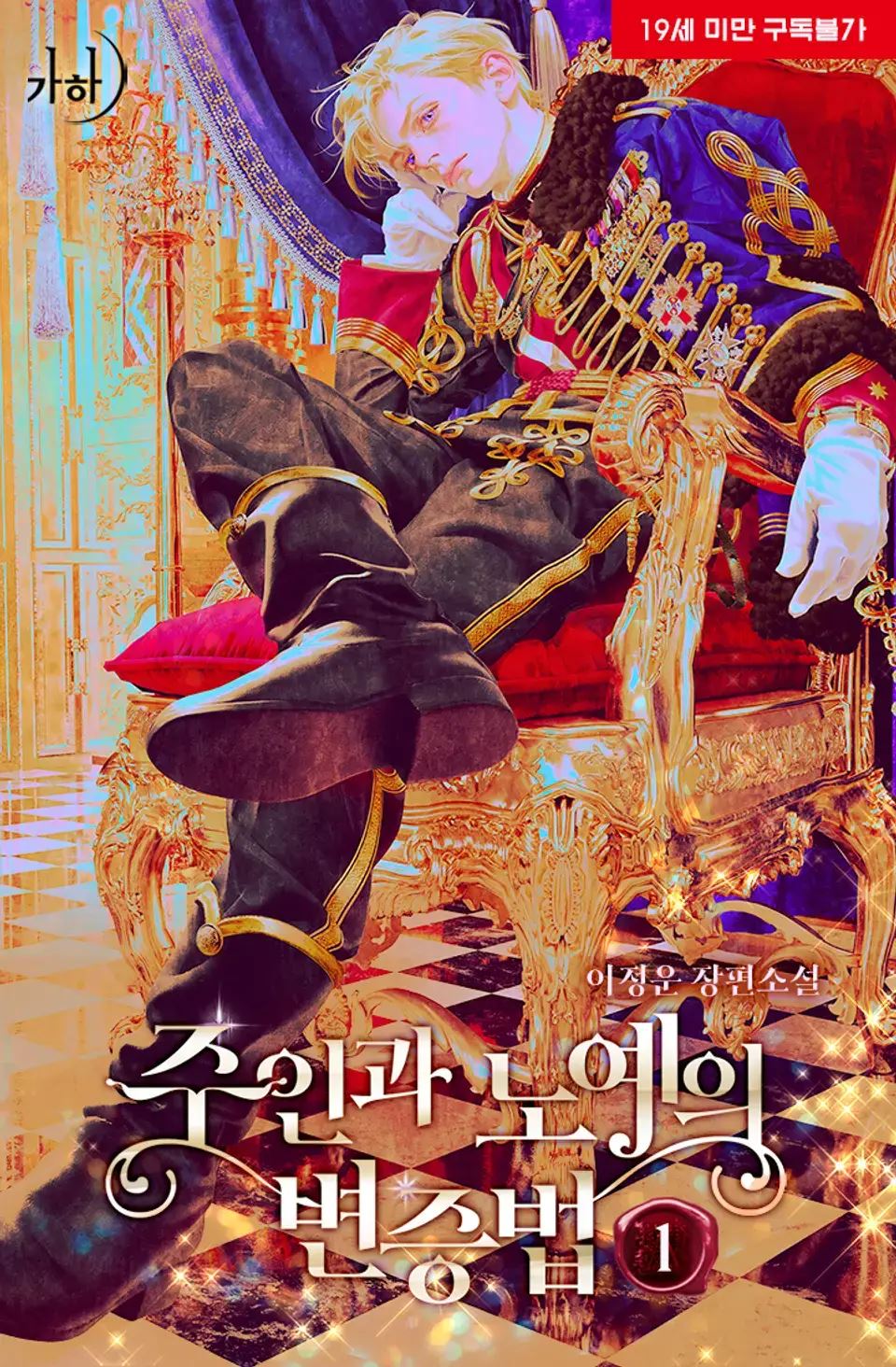
The narrative shifts to Richard, the new Lord of the Evron estate and the younger brother of Emperor Leonhart. Richard is a decorated military commander who chose the barren, remote fief of Evron to escape the political intrigues of the capital and his brother's persistent pressure to marry. Richard harbors a deep aversion to marriage due to his parents' loveless political union and his own traumatic childhood. Despite his stoic exterior, he is a capable administrator who plans to reform the corrupt tax systems left by the former Marquis. His arrival coincides with the tension in the village, where Baron Hans, a remnant of the previous regime, attempts to maintain power through intimidation and bribery.

The central conflict arises when Baron Hans attempts to harm a child during the lord's procession, but Richard intervenes, saving the boy. Louise, witnessing this act of bravery and nobility, feels a spark of admiration. However, her personal crisis escalates when Helio confesses that he lost all their wedding funds gambling. Facing the imperial marriage tax which he cannot pay, Helio pressures Louise to substitute for Cherinia to fulfill the right of the first night, a duty owed to the new lord. When Louise refuses, Helio threatens to send Mildred to an orphanage, leveraging his legal authority as head of the household. Desperate to protect her sick sister, Louise reluctantly agrees.

Louise is taken to the castle, where she undergoes a humiliating virginity examination and is dressed in a sheer negligee. She is led to Richard's chambers, trembling with fear. Richard, however, recognizes her immediately as the woman who saved the child in the market. Despite the Emperor's decree that he must consummate the union to validate the custom, Richard refuses to violate her consent or take a woman destined for another. Instead, he negotiates a secret pact: Louise will pretend they consummated the marriage, and he will provide the physical evidence—a blood-stained silk cloth—by injuring his own arm with a decorative dagger.

Rather than leave her to face the consequences alone, Richard forces his way into the intimate space, leaving marks on her body to simulate passion while maintaining his moral boundary. He then carries the exhausted, asleep Louise to the bed, revealing a hidden tenderness beneath his stern demeanor. The story concludes with Richard discovering a growing affection for the resilient peasant girl, shifting his focus from mere duty to a desire to protect and improve her life within his newly acquired fiefdom.

Latest Release
DateGroupRelease
2026-09-27citrus aurora c75
2026-09-27citrus aurora c74
2026-09-27citrus aurora c73
2026-09-27citrus aurora c72
2026-09-27citrus aurora c71
2026-09-27citrus aurora c70
2026-09-27citrus aurora c69
2026-09-27citrus aurora c68
2026-09-27citrus aurora c67
2026-09-27citrus aurora c66
2026-09-27citrus aurora c65
2026-09-27citrus aurora c64

Community Reviews

Rating(3.9 / 5.0, 50votes)
5 stars
14(28%)
4 stars
19(38%)
3 stars
16(32%)
2 stars
1(2%)
1 stars
0(0%)

Popular reviews

... Read More
'You know the law allows the head of the family to give up support if they deem someone terminally ill and beyond recovery.' This line from Helio is one of the coldest sentences I've read all year. He's not just threatening Louise—he's invoking the law as a weapon against his own sister's sick child. The stakes escalate from 'lose your wedding money' to 'your nephew dies' to 'you sleep with a man you don't know to save him' in approximately four paragraphs. And Louise? She calculates the odds and chooses the lesser evil. 'She didn't care what happened to herself, but she couldn't send innocent Mildred to an orphanage.' What makes this conflict so suffocating is that there's no villain to punch. Helio isn't a cartoon antagonist—he's a broken man who gambled away his future and is now dragging everyone down with him. He genuinely believes he's justified. 'Cherinia is family too!' he says, as if love is a zero-sum game where Louise's sacrifice proves nothing. And the law? The law is the real villain here. It allows this. It enables this. It turns human beings into tax obligations and first-night payments. Meanwhile, upstairs at the castle, Richard is weighing whether paying the tax himself would set a bad precedent. He's considering the optics. The politics. The message it sends to the fief. And Louise is downstairs calculating whether her body is the price of her sister's life. Two people in the same building, facing the same system from opposite sides of a door that neither can open.
... Read More
The stakes in this chapter are deceptively simple on the surface—a woman must convince the world she spent the night with a lord—and absolutely devastating once you unpack them. Louise isn't just protecting her body; she's protecting her future husband's honor, her own family's standing, and possibly her life. The Emperor himself is watching through the head maid. There is no room for failure here. One exposed secret, one suspicious gap in the story, and everything collapses. But the real tension lives in the gap between what Louise expects and what actually happens. She enters the room braced for violation, and every physical closeness Richard creates sends her into panic mode. When he tells her to lie face down, when he lifts her skirt, when he pulls down her underwear—each action feels like another step toward an edge she can't climb back from. The reader feels this viscerally because we're trapped inside her awareness. We don't know Richard's intentions any more than she does. Every touch could be tenderness or threat, and the narrative refuses to tell us which until it's too late to react. Then there's Richard's own internal conflict, which the author renders with surprisingly quiet precision. "Disgusted by his own desire"—that's the line that reframes the entire scene. He's fighting himself just as hard as Louise is fighting her fear, and their mutual restraint becomes the most powerful form of tension in the passage. When he finally gives in to something—biting her shoulder, marking her skin—it's framed as necessity, not desire. "If there are no marks, it will arouse suspicion." He uses intimacy as a tool. And yet the scene still reads as tender because of the care he takes: catching her when she stumbles, warning her about the dagger, covering himself afterward so she won't see his wound. The final image—Richard carrying her sleeping form, her scent driving him wild while he holds himself back—is the kind of ending that makes you sit with the book for ten minutes before turning the page. Maximum tension, zero resolution. Exactly what I wanted.
... Read More
Okay so this section is doing something really interesting with the plot structure. On the surface it's a romance setup, but underneath it's a political thriller disguised as intimate drama. Let me break it down. The主线 here is Richard forcing Louise to spend the night under the pretext of the droit du seigneur. But what makes this plot stand out is how the author subverts expectations. You'd think this is going to be a straightforward "lord takes maiden" scene, right? Wrong. Richard spends the entire night fighting himself—watching her sleep, dousing himself with cold water, even masturbating onto silk cloth just to fulfill the legal requirement without actually touching her. That's not the plot of a predator; that's the plot of a man genuinely struggling with his own humanity. Meanwhile, the subplots are weaving in like threads. Cherinia's fake pregnancy isn't just comic relief—it's setting up betrayal. Helio telling her to lie because "no decent man would want a woman who's been sullied" directly mirrors the feudal system Richard enforces. The irony is thick enough to cut with a dagger. And then—BAM—at the end, Richard's brother appears. The Emperor himself. Louise going from scared peasant to standing before royalty in one chapter? That's a plot pivot that changes everything. The line that really sold this for me: "The tradition of the droit du seigneur was not about the act of intercourse itself but about the deflowering of a virgin." The author is using medieval legal nonsense as a vehicle to explore consent, power, and restraint. Richard could have just taken her. He chose not to. That choice IS the plot, not the consummation. I'm obsessed with how the blood-stained silk becomes this recurring symbol—the evidence of a right exercised but not violated. It's physical proof of restraint, which is such a clever narrative device.
... Read More
I need to talk about Cherinia because WOW. Every time she opens her mouth in this text, you can TASTE the manipulation. The author has given her this incredibly distinct voice—she speaks in this whiny, cooing, deliberately childlike register that's absolutely calculated. Look at this: "Cherinia's belly, hic, Cherinia's belly hurts…!" This is a grown woman who deliberately repeated her own name in third person while faking pregnancy symptoms to get out of doing laundry. The author writes her dialogue in a way that's almost comically over-the-top, but here's the thing—it WORKS. Helio falls for it every single time. That's not cartoonish writing, that's characterization. We understand through her dialogue exactly HOW she operates in this world. Then contrast that with Louise's dialogue, which is basically non-existent. She says one thing: "I told you I can't do it every day. And you should wash your underwear yourself." That's it. That's her entire personality in dialogue—direct, practical, no nonsense. And Helio's responses? "Do I seem that incompetent to you?" Classic defensive masculinity. The author uses dialogue not just to advance the plot but to map out the entire power dynamic of this household. Richard's dialogue is minimal too, but when he speaks it's loaded with subtext. "Something like kissing isn't important"—he's trying to rationalize his actions, and the reader knows it.
... Read More
Okay so let's talk about Richard for a second because THIS man. Like, I need to process what just happened. Louise saves this random kid and then gets dragged toward almost-rape by Baron Hans and who shows up? This golden-eyed knight who literally just stops everything with one word. "Stop." That's it. One word and the entire scene pivots. But here's what got me—the way the text describes their eye contact. "As the piercing gaze bore down on her, she felt a shiver run through her body, like being pierced by a sharp blade." Chills. Actual chills. And then later, Louise can't stop thinking about those green-gold eyes while she's scrubbing blood off her floor. The contrast is killing me. This man who radiates authority and power, and Louise who is drowning in poverty and responsibility, and somehow that one moment connects them? And then we cut to Richard having dinner with his brother the emperor, and he's being all humble and deflecting, but you can tell he's also deeply tired. "I didn't want to send you so far away"—the emperor says this almost like he's guilty. They're close, these two brothers, despite the power imbalance. Richard chose this barren fief specifically to avoid court gossip, which tells you everything about what he's running from and what he's protecting. I keep wondering what Louise will think when she finds out the golden-eyed knight IS the new lord. That reveal is coming and I am NOT ready.
... Read More
The stakes in this section are INSANE and I'm only halfway through and my heart can't take it. Let's break it down. Louise's family is in literal danger—Mildred is dying of whatever illness she has, Helio is irresponsible and possibly abusive, debt collectors are showing up unannounced, and now there's a new lord whose arrival might change everything for better or worse. The market scene almost becomes a death scene. That sword coming down? If Richard hadn't intervened, Louise either dies or ends up in Baron Hans's cellar. Both outcomes are catastrophic. And Richard? He's playing a different game. He's the emperor's brother, a war hero, freshly assigned to a corrupt fiefdom that he needs to clean up. He deliberately chose this posting to avoid political intrigue at court, but the intrigue found him anyway through people like Baron Hans and the remnants of Marquis Liberti's network. The fact that he had to spend nights catching up on administrative paperwork because his predecessor's corruption was so deep tells you the scope of what he's walking into. The tension between classes is palpable. Baron Hans whips people, threatens children, and treats soldiers like extensions of his ego. The peasants can only pray their child keeps his right arm. And then Richard arrives and one look from him makes the baron tremble. Power dynamics shift in real time and it's electrifying. But the biggest question hanging over everything: what happens when Louise and Richard's worlds collide properly? She's a peasant surviving on borrowed time. He's a noble with the power to change her fate—or destroy it. The gap between them is enormous and the story is building toward that collision with every page.
See all reviews

Custom lists

See all custom Lists