Dressed as an Abyssal Dragon Hatchling [Holographic] - Reviews

Dressed as an Abyssal Dragon Hatchling [Holographic]
+Add to Custom List
Sort
Add review
... Read More
Can we talk about how good Jing Nian's internal voice is? Because honestly, some of the best writing in these chapters isn't in the narration or the dialogue—it's in the quiet thoughts running through his head that make him feel like a real person trapped in an absurd situation. "Suddenly being revered by dragons, I'm a bit puzzled!" — This. This right here. He just went through a bone-rearranging transformation, discovered his world is a video game, is standing on a living dragon's head, and his immediate reaction is mild confusion rather than existential dread? That's the kind of grounded, human response that makes him incredibly likable. He's not a hero. He's a guy who's way out of his depth trying to keep his cool. And then there's the hilarious contrast between his internal panic and the external drama. While dragons are roaring and ancient beings are waking up and blood pools are being channeled into sacrificial flames, Jing Nian is over here thinking about how the little dragon is hesitating before flight like a toddler at the edge of a pool. The tonal shift from epic fantasy to domestic comedy is handled so smoothly it barely registers—but when you catch it, it's pure gold. The narration itself has this great rhythm too. It moves from rapid-fire realization (the Dragon Slayer reveal) to slow, methodical observation (feeling his bones shift, realizing the pillar is a horn) to warm, almost nostalgic comedy (coaxing the dragon to fly). The author's voice never feels forced or overwrought. It breathes. And the occasional fragments—"Dragon Slayer!!!" repeated three ways, the single word "Together"—hit harder because they're not padded with explanation. The prose trusts the reader.
... Read More
I need to talk about this dragon throne scene because the scale descriptions are INSANE and I love it. Let me just... the author does this thing where Jing Nian actually does the math in his head, right? He estimates the little dragon cub at 30-50 centimeters, then calculates that the elder dragons are 16-25 meters tall, and then — and this is the part that got me — he compares the throne to a Mary Sue bed from web novels. 'The rumored Mary Sue bed was only around 200 square meters... Seated on a 1,200 square meters solid, golden, enormous dragon throne.' BRO. He's sitting on a throne the size of a small house and his internal monologue is basically 'huh, my taste in furniture is apparently imperial-tier now.' And the visual of those dragons lined up by color and size, 'resembling a lineage of grandfather, father, and grandson' — that's such a vivid, almost photographic image. The hall itself feels so real, you can almost hear the echo of claws on stone. What really sells the worldbuilding though is the contrast between the epic setting and the comedic details. You've got this ancient dragon council, loyalty contracts, sacred bonding ceremonies... and then the elder dragon Hesse can't stop staring at golden hair. The world feels ALIVE because it's not taking itself seriously the whole time. Even the Dragon Blood Pool collapse that's mentioned in passing gives you this sense of a larger history without infodumping. The dragons' physicality — their disproportional legs, the way they grin and almost stick out their tongues during the bonding — makes them feel like actual creatures rather than decorative fantasy props.
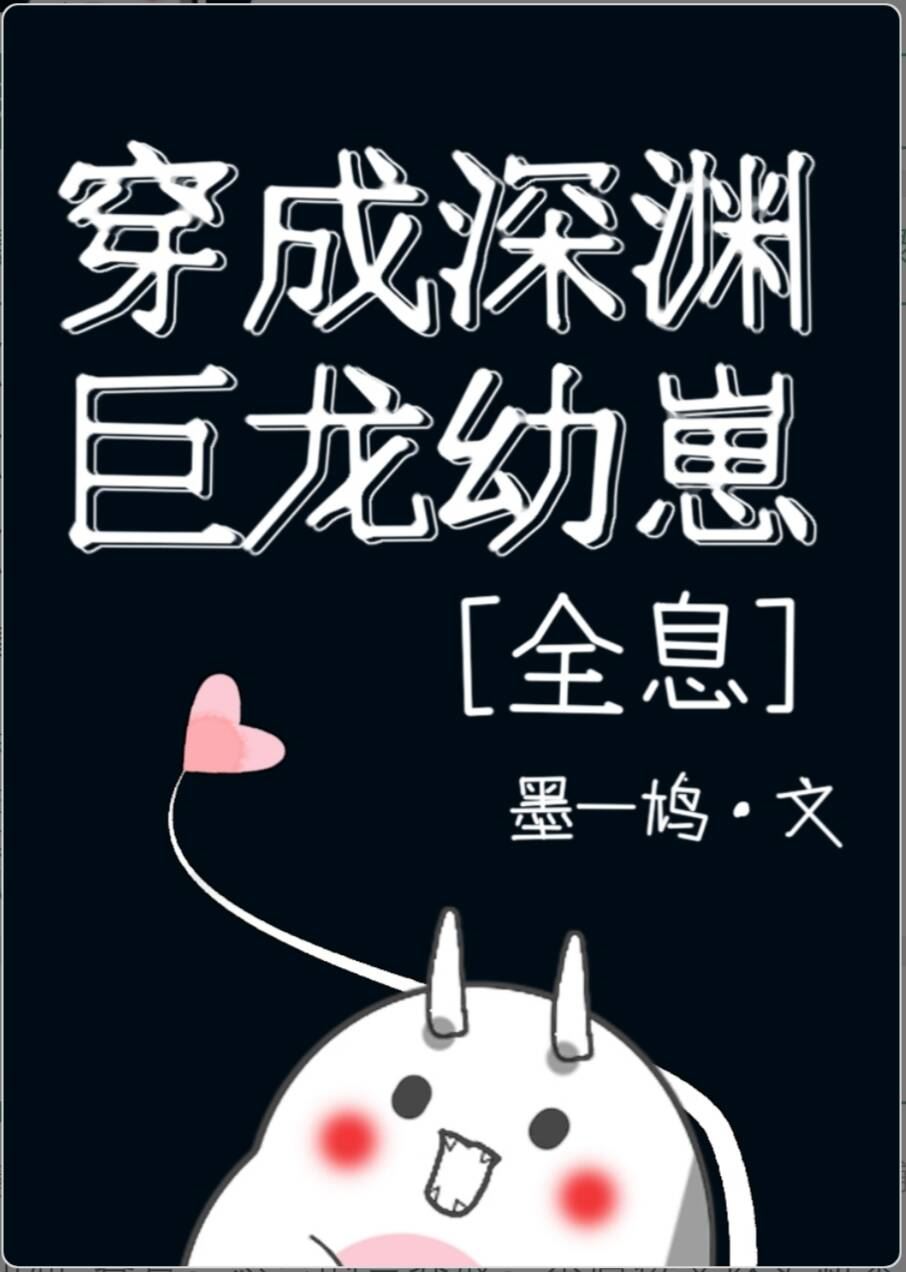
... Read More
Chi Yan: "I sensed our young master!!!" Other dragons: "…" That ellipsis. The author put an actual ellipsis as a dialogue beat and I lost it. The dragons collectively rolling their eyes is such a specific, hilarious character moment. You can literally see them mid-flap, ready to leave, when suddenly Herse drops the lore about double-yolk eggs and everyone's like, oh, shit, we have work to do. And Elder Herse's voice is so distinct from everyone else. When he starts speaking with this "lofty tone" — "But for the first time in history, a double-yolk egg is about to hatch among our dragon kind!" — you know he's ancient. You know he's seen centuries. And then immediately he's giving the same orders Jing Nian wouldn't even want: no intimidating the timid second one. The neighboring races' internal monologue is peak comedic voice though: "It's just a new hatchling, heh, dragons have no shame. They rob us twice with the same excuse!" "Oh my goodness! The dragon clan without a dragon lord is trouble, even the bandit dragon clan is going to rule and dominate!" The shift from resigned to existential dread is so fast and so funny. One minute they're just tired of being robbed, the next they're considering relocating entire tribes because two baby dragons might make things worse. The author's humor voice here is devastatingly sharp.
... Read More
The dialogue here is sparse but each line carries weight. The mysterious outsider's trembling excuse—'It's... the quantity of one of the materials is incorrect'—his voice is defined by fear and deflection. The dragons' dialogue is barely there because they don't need words; their roars and elemental power speak for themselves. But the real standout is Huo Yi's internal monologue, which gives us his voice most clearly. There's this dry observational quality to his thoughts—like when he smiles thinking about Jing Nian's pitiful appearance without knowing the full consequences. His voice feels cultivated, controlled, but with these cracks where his heartbeat races and his mind drifts to fantasies. The narrator's voice has this wry omniscient quality too, especially lines like 'in the illogical logic of the dragons' and 'what the boy didn't know was.' The casual asides create a sense of intimacy with the reader. And Jing Nian's one line 'You're just as tall as a good boy now~' with that tilde ending—that's such a specific character touch, gentle and slightly teasing.
... Read More
'For you to play with~' I literally screamed at my screen. This scene between Jing Nian and Ao Ao is so unexpectedly tender wrapped in comedy. The little dragon offering his heart-shaped tail decoration like a peace offering, then deliberately exposing the sensitive tip so Jing Nian can pinch it — and enduring the ticklish agony with 'determined looks' — it's devastatingly cute. That moment when Jing Nian says 'More precious than gold!' and Ao Ao's eyes go all shy and hopeful? I melted into the floor. But here's what got me — Ao Ao doing ALL of this strategically. The sacrifice of his pride, the ticklish suffering, all to prove to those newcomers 'This is mine! Don't even think about it!' A three-month-and-ten-days-old dragon going full territorial over his human parent figure. And then the reverse psychology when he gets called a crybaby — he turns away but still coils his tail around Jing Nian's wrist. He won't admit he's upset but his body language screams it. That's the kind of emotional authenticity that makes fictional bonds feel real. The fake-crying babies as rivals only amplifies how genuine Ao Ao's attachment is. Nobody performs love like a dragon who offers his most sensitive self to someone and then pretends it was tactical all along.
... Read More
There's something quietly profound about the cabbage field scene that I can't shake. The little dragonling is terrified of caterpillars — these enormous, terrifying creatures — and the very thing he's supposed to be tending to is... cabbages. Edible plants. Growth. Nurturing. The contrast between what frightens him and what he's being asked to do is almost poetic. And then Huo Yi, this godlike NPC who can manipulate the holographic world's programming, reduces himself to pushing soil over seeds with his foot. The most powerful being in this space, humbled to the level of a gardener, doing it for a child who doesn't even know his name properly. There's a symbolism in that I can't unsee. The seeds themselves — scattered carelessly, dropped in one hole, wasted — mirror how Jing Nian treats everything in this world. He doesn't understand the value of what's been given to him. He scatters his opportunities the same way he scatters those seeds. And Huo Yi is the one who has to bend down and cover them up. "For example, for this small planting task, he could have actually directly given it to the young dragonling." The word 'small' is doing heavy lifting here. To Huo Yi, this is nothing. A trivial manipulation of code. To Jing Nian, it's everything. The asymmetry of that perception is the entire theme of this relationship compressed into one sentence.
... Read More
There's a symbolism running through this entire chapter that I can't stop thinking about. Jing Nian wears an actual mask - physical concealment representing his hidden identity. Uncle Pipilu is an NPC that glitches, a mechanical repetition of humanity that breaks down when confronted with something unexpected. The three teammates have names that are essentially performance personas - nobody goes by "Full from Eating, Now Losing Weight" in real life, it's a curated version of themselves for the game world. Everything here is about performance and authenticity. The game world itself seems to be a place where identity is fluid and constructed, which mirrors how Jing Nian has to construct his identity to survive. And then there's the recurring motif of coldness versus warmth. The teammates are warm despite their chaotic energy, Gordon is cold and isolated despite his devotion, Uncle Pipilu is literally cold as an AI construct. The text repeatedly mentions temperature - the "chilling aura" of the NPC, the warmth of the group banter. I think the deeper question this book is asking is: in a world where everyone is performing, where do authentic connections happen? The answer so far seems to be: in the spaces between the performance, in the moments when the glitch reveals something real.
... Read More
I am NOT okay with this father-son dynamic and I need everyone to understand why. "This was probably what being a parent was like. No matter how old a child grows, they are still precious in their parents' eyes. Even though he was now a 50-meter-tall dragon cub." STOP. The author just hit me with the ultimate emotional gut punch disguised as a funny observation. Jing Nian, who literally just had his bones shattered and regrown, who is now perched on a dragon's head surrounded by hostile witnesses, looks at this colossal golden beast and his first thought is... parental pride? The entire arc from when he first found this tiny, vulnerable dragon egg/cub and nurtured it to this moment where it's grown into a majestic king-sized dragon but STILL acts like a baby asking its dad to fly together? "Together, let's go!" That line wrecked me. The little dragon's consciousness is bright and eager and completely unguarded with Jing Nian. After everything they've been through—together, no less, with the shared consciousness link binding them—the text frames it as parenting and I am HERE FOR IT. And Jing Nian's internal response is so tender. He suppresses his laughter not to mock the dragon but because he doesn't want to crush the kid's spirit. He encourages it. "Your wings have grown, you can do it!" This is a man giving a pep talk to a fifty-meter dragon while his own body is still settling into a new form. The emotional depth here is layered—there's genuine fear for his survival, yes, but underneath it all is this fierce protective love that has developed organically between them. I'm not crying, you're crying.
... Read More
I need to talk about this mini-market scene because the imagery is absolutely stunning. 'Flying creatures from the sky, half-beast beings, crawling creatures on the ground, and even amphibious creatures were present. The most surprising thing was that there were several fish species with their own pools.' This is such a vivid, alive setting. The author took a dragon's lair in the abyss and turned it into this bustling multicultural marketplace and I am HERE FOR IT. And the scale is brilliant — 'mini' is only for the dragons; for Jing Nian and the little dragon it's normal-sized. That small detail tells you so much about the worldbuilding logic without needing an info dump. Then you have Hesse the elder dragon trying to be gentle with his massive claw, accidentally knocking over little bear people's wooden houses — it's whimsical and slightly chaotic, and it gives the world a sense of history and texture. These aren't just decorative NPCs; they have families, businesses, lives. The fact that the dragons just 'chose to turn a blind eye' because the young masters liked it says everything about their attitude toward these smaller creatures. The world feels lived-in and genuinely imaginative, not like a generic fantasy template.
... Read More
The pacing in these chapters is genuinely masterful and I need to unpack why. We open mid-crisis — dragons discovering Jing Nian's presence, eyes turning dangerous, scalp-tightening tension. That's chapter 44-level nightmare fuel. Then the author DOES something I rarely see done well: they deliberately defuse the tension by pivoting into worldbuilding exposition through the dragon council discussion. Instead of jumping straight to action, we get this long, almost bureaucratic conversation about bloodlines and spellwork and whether the second young master can ever be fully restored. It should drag, right? But it doesn't, because the subtext is crackling — every serious dragon statement is undercut by their lingering gaze at Jing Nian's human features. Then comes the throne placement, which is where the pacing really shines. The author slows way down here, letting us sit with Jing Nian's calculations and observations, building a different kind of tension — not 'will he be discovered' but 'how much is he beginning to belong here?' And then the bonding ceremony sequence is where it all converges. Each dragon approaching, each contract offered, Jing Nian slowly relaxing... it's a rhythm that mimics his psychological shift. By the time he's chuckling at Hesse's goofy expression, we've traveled the full arc from terror to tentative belonging in roughly one chapter. And that final moment — 'Jing Nian s' — the cliffhanger cut-off?chef's kiss. Just... leaves you hanging. The author knows exactly when to stop.
... Read More
Okay so this part where Jing Nian literally just hands Gordon 60 gold coins and his whole "red name above his head" thing just... disappears? Like poof, suddenly he's a harmless NPC smiling at people? I love this. It's such a clean way to show the power dynamics in this world — you don't need a fight, you don't need manipulation, you just open your wallet and the whole social hierarchy shifts. The player interface message [Gordon's favorability +1!] is such a small detail but it tells you everything about how this game-world operates. And then Gordon's whole vibe after — the intense staring, making everyone look away, then regretfully leaving? Iconic. He's savoring every second of power he just bought. But honestly the real plot move here is the little dragon. That scene where Jing Nian redirects the dragon's energy toward Gordon instead of letting it just run wild? That's not just comedy, that's strategic. He just tested the dragon's new ability, neutralized a potential threat, and created an alibi simultaneously. The dragon's laughter while burning Gordon's pants off is peak storytelling — it's chaotic and funny but also reveals character about both of them.
... Read More
"In other words, the 'outsiders' from Jing Nian's world had no idea that Grans was a real world; they believed it to be something akin to an illusion." This line hit me like a physical thing because it reframes the entire reading experience. We've been reading a story about people treating a fantasy world like a game, and now we're being told — oh, it was a game only for THEM. The world was always real. The dragons were always real. The magic was always there, watching them play. What I love about how the worldbuilding unfolds here is that it doesn't rely on exposition dumps or info-dump-heavy narration. Hesse explains the rules of the divine realm the way an old friend would — reluctantly, like he's been carrying this knowledge too long and finally can't keep it bottled up. You can feel the weight of centuries in his voice. He mentions that dragons don't believe in others, that ascending means losing connection with kin. These aren't mechanics; they're wounds. The worldbuilding is character-driven, which makes it stick. The contrast between the two worlds — Grans with its dragons and gods and faith-based power systems, and the Interstellar World with its technology and skepticism — isn't just a cool concept. It's structurally essential. The author has built a world where belief is literally currency, where gods need worshippers to exist, and where a civilization that doesn't believe in gods is essentially a blind spot in the cosmic economy. That's not just set dressing — that's the kind of worldbuilding that changes how every scene functions. And the visual of the old dragon himself, sitting among leaders of various races, explaining that the gateway can't be closed and the divine realm might be using it as an invasion route — it's cinematic in the best way. You can picture the flickering torchlight, the tension in the room, the way the dragons start getting excited about conquering the divine realm like teenagers who just discovered they have superpowers. It's chaotic and alive and utterly believable as a moment. The author also does something really subtle with scale. We go from intimate conversations between individuals to the cosmic implication that two entire worlds are merging. And somehow it never feels unmotivated because every piece of worldbuilding is earned through character revelation.

Leave a comment

You must be logged in to leave comments. or
