Summary

... Read More

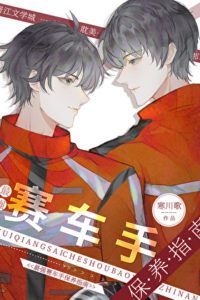
Qi Xiaoyu, a renowned Peking Opera performer from the Republic of China era, is drugged and sold by loan sharks to the wealthy Xun family in 1940s Shanghai. Upon regaining consciousness, he discovers he has transmigrated into the body of a contemporary youth with the same name, an unworthy cannon fodder character in a novel titled "Sick President Sadistically Loves Me." The original owner of this body was a indebted trainee on a talent show who agreed to a "warding-off wedding" with the sickly Third Master of the Xun family, Xun Qian, to pay off usurious debts. Xun Qian is a powerful but terminal figure in gray-market business, kept alive only by chance, and the marriage is a superstitious attempt by his mother to save his life. Qi Xiaoyu, recognizing his role as a villain destined for a tragic end in an asylum, resolves to survive by playing the subservient husband, paying off his debts, and avoiding the protagonist who will eventually destroy him.

The story begins with Qi Xiaoyu’s first night in the Xun mansion. Despite Xun Qian’s visible disgust and cleanliness obsessions, Qi Xiaoyu displays unexpected competence and humility, quickly adapting to the role of a caretaker. He anticipates Xun Qian’s needs, such as providing cigarettes and managing the environment, which shocks the butler, Cheng, who expects a rebellious or clumsy youth. Qi Xiaoyu’s background in the rigorous theater troupe has trained him to read people and serve them flawlessly. He accepts his position as a temporary fixture, planning to maintain a low profile, accumulate wealth, and secure a divorce once the original plot’s protagonist, Tang Yuning, appears.

Simultaneously, Qi Xiaoyu navigates his obligations in the entertainment industry. He attends a press conference for the talent show "Let’s Debut, Trainees," where he outmaneuvers Dong Fan, the original owner’s manipulative ex-roommate. Dong Fan attempts to exploit Qi Xiaoyu’s past obsession, but the transmigrated Qi Xiaoyu responds with sharp wit and cold detachment, exposing Dong Fan’s scummy behavior to the media without directly attacking him. This shift in personality attracts attention, with fans noting his transformation from a naive fish to a scheming one. Qi Xiaoyu secures a lead vocal part in the show’s finals despite lacking modern musical notation skills, using his operatic training to master the song overnight through sheer discipline and practice.

His dual life creates a complex dynamic with Xun Qian. The sickly president, initially repulsed by the arrangement, finds himself increasingly intrigued by Qi Xiaoyu’s unusual competence and lack of the greed or malice he expects from others. Qi Xiaoyu cares for Xun Qian’s physical discomfort, including massaging his legs and managing his pain, actions that Xun Qian observes with growing curiosity. The atmosphere between them shifts from hostility to a tentative, unspoken understanding. Qi Xiaoyu remains focused on his goal of self-preservation, while Xun Qian begins to see Qi Xiaoyu not merely as a substitute for a figure in a painting, but as an individual worthy of attention.

As the narrative progresses, Qi Xiaoyu’s efforts to rewrite his fate begin to alter the original story’s trajectory. His professional success on the show and his improved relationship with Xun Qian create a buffer against the catastrophic events that were supposed to occur. The tension lies in whether he can maintain this delicate balance, keeping his distance from the main plot’s emotional entanglements while securing his financial freedom and safety within the dangerous political and criminal landscape of the Xun family.

Latest Release
DateGroupRelease
2026-09-26knoxt c48
2026-09-26knoxt c47
2026-09-26knoxt c46
2026-09-26knoxt c45
2026-09-26knoxt c44
2026-09-26knoxt c43
2026-09-26knoxt c42
2026-09-26knoxt c41
2026-09-26knoxt c40
2026-09-26knoxt c39
2026-09-26knoxt c38
2026-09-26knoxt c37

Community Reviews

Rating(4 / 5.0, 352votes)
5 stars
114(32%)
4 stars
122(35%)
3 stars
114(32%)
2 stars
2(1%)
1 stars
0(0%)

Popular reviews

... Read More
Okay so let me just say this out loud — Xun Qian is one of the most interesting character dynamics I've read in a while and I need to unpack it before I forget. Everything about him is controlled. Cold, restrained, almost clinical. But then you have these tiny cracks where the real person bleeds through. Like when he says 'I'll wait for you here' instead of asking why Qi Xiaoyu came all this way — you can feel him holding back a hundred questions. He notices his hair is still wet from rain or whatever, he notices everything but says nothing. And then the cigarette scene. Oh my god. He takes off his hand-warming muff, lights a cigarette, and gets SO close that their lips almost touch sharing the same flame. This is a man who communicates entirely through physical proximity and small gestures. He doesn't say 'I care about you' — he says 'Have you smoked?' and then teaches him how. The tenderness is absolutely devastating because it's disguised as practicality. The fact that Ma Weiye calls him 'a person like him, who doesn't even want his own mother or uncle' and then calls it 'interesting' to follow a 'little star' to New Zealand — that detail about his family abandonment is such a loaded throwaway line. It reframes EVERYTHING about his relationship with Qi Xiaoyu. Why is he so attentive? Why does he wait in the car? Is it obligation or is it something else? I keep going back to that moment where Qi Xiaoyu accidentally inhales and chokes, and Xun Qian immediately puts his hand on his back to help. Pure instinct. Pure care. And he hides it behind a smile and 'Yeah. It's okay if you don't know how to smoke.' But here's what I can't stop thinking about — who is Xun Qian actually performing for? Is he being gentle with Qi Xiaoyu because he genuinely cares, or because he knows exactly how to make someone dependent on his attention? The narrator never lets us fully trust his motives. That uncertainty is what makes this relationship so electric to read. Does Xun Qian actually love Qi Xiaoyu, or does he love the control he has over him?
... Read More
Okay, I need to talk about this birthday scene because my heart literally stopped when Qi Xiaoyu made that wish. Think about it—he has NEVER had a birthday celebration before. The original owner's own father and half-sister completely forgot. And here comes Xun Qian, who barely speaks more than two sentences at a time, remembering his birthday down to the lunar calendar date and ordering a custom cake with a figurine of HIS exact outfit from the airport. That is not casual. That is someone who pays attention to every detail about another person. And the wish—oh man, the wish. He doesn't ask for wealth or fame or revenge. He wishes Xun Qian good health. Right there, in one silent moment, the entire emotional architecture of their relationship lays itself bare. It's so selfless it aches. And Xun Qian, who maintains this incredibly controlled exterior throughout the whole evening, lets a small smile show at the corners of his lips. You can almost hear what he's not saying. Then later, inviting Qi Xiaoyu to stay overnight at the lake villa with floor-to-ceiling windows overlooking the water. The way he phrases it—so casual, like it's no big deal—but the subtext is screaming. This is a man who doesn't do any of this for just anyone. The tension between what they say and what they mean is absolutely delicious. I spent twenty minutes just re-reading that wish scene.
... Read More
Okay so I need to talk about this cliffhanger because my hands are literally shaking. We go from this incredibly tender, quiet moment in chapter 164—warm morning light, sharing porridge, this little black dog being picked up and held—and then BOOM, chapter 167, someone has tampered with the safety wire that's going to hold Qi Xiaoyu while he films his death scene. Who did it? Tang Kui basically confesses to suggesting it, but he played it off as a joke. That line where he says 'if this wire is broken and someone falls down, it must be very painful' while handing the wire to Jiang Sicheng—chilling. Actually chilling. And then the wire ACTUALLY breaks during the test pull. Is this sabotage? Is Tang Kui the culprit? Or is this someone else on the crew? The author has set up three separate threads of danger here: the emotional threat of the variety show potentially rekindling Qi Xiaoyu and Xue Qingchu's romance (which clearly terrifies Jiang Sicheng), the physical threat of the sabotaged wire, and the looming question of what's actually happening to Xun Qian. All of these plot threads are converging and I am NOT ready for what comes next.
... Read More
Let's talk about how fast this blows up, because it's terrifyingly realistic. The text literally says 'in just ten minutes, the search jumped to the front row.' TEN MINUTES. That's how long it takes for a private moment—just walking side by side after dinner—to become public property. And the comments? The comments are the worst part. 'Did this man fly to New Zealand just to spend the holidays with him?' 'Maybe it's that kind of relationship.' The assumption, the malice, the complete willingness to imagine the worst about two people who did absolutely nothing wrong. The stakes here are enormous and they're presented almost casually. Qi Xiaoyu's career, his reputation, his privacy—all of it hangs on a single photograph that doesn't even show the person most people will fixate on. Xun Qian isn't in the frame. It's just Qi Xiaoyu and Zhang Han walking, half a dog's head visible. But nobody cares. The narrative doesn't need more evidence. What keeps the tension razor-sharp is that we KNOW Xun Qian has resources. When Zhang Han says 'don't worry about the cost,' we understand exactly what that means. This isn't going to be a simple press release situation. The escalation is inevitable and the reader is waiting for the other shoe to drop, but the author is milking this perfectly—letting us sit in the discomfort of knowing trouble is coming while Qi Xiaoyu himself seems oddly calm about it.
... Read More
'Give me his IOU, and the money will be in your account tomorrow.' That's it. That's the line. Two sentences from Mr. Cheng and I immediately understood who this man is. He doesn't negotiate. He doesn't haggle. He completes transactions. The contrast with the flattering voice right before it is everything — this groveling man going "Oh thank you thank you Mr. Cheng" after being told his human cargo is basically collateral. The power dynamic is so cleanly rendered through dialogue alone. But what really got me was Qi Xiaoyu's internal voice. "My name was popular and widespread, from Beiping City to Shanghai Beach. What big storms has he not seen?" That's an opera performer's pride speaking. He's not just some random transmigrator — he's someone who lived a whole life on stage, who commands attention, who's used to having power in his hands. And now he's lying in a stranger's bed in a stranger's body. The irony is delicious. The narration itself has a great rhythm — it moves between sharp observations and longer reflective passages the way a person actually thinks when processing shock. First the immediate sensory details (wind, spinning, bright light), then the analytical scanning (cars, clothes, power structures), then the emotional response (scolding the original owner for being stupid). By the end he's just lying there for fifteen minutes cursing everyone who ever wronged this body. That's how people actually cope. They don't have profound philosophical breakthroughs — they sulk. And the author captured that perfectly. The voice feels like someone who's survived a lot and learned not to take anything at face value. I want to keep reading just to hear more of it.
... Read More
This chapter is gorgeous when you slow down and actually look at it. The New Zealand setting isn't just a backdrop—it's doing heavy lifting. Let me tell you about that lawn birthday scene. It's nighttime, they didn't catch the sunset (which honestly made it funnier in real time, watching Jiang Sicheng be dramatic about it), but then the staff brings out string lights and suddenly you're sitting there thinking this is the most romantic thing ever. And then—the Milky Way. The author keeps mentioning it. "The Milky Way as far as the eye can see and within reach." This isn't just pretty description, it's giving you this enormous, infinite sky over this small group of people at a dining table, eating yogurt cake with a winged elf on it. The contrast between the vastness of the universe and these tiny human moments—the teasing, the photo debates, the wish-making—it creates this bubble of warmth that feels almost sacred. Then you cut to Xun Qian. Same country, different planet. A private jet interior described as "luxurious and abundant" but all he can do is cough into a dark blue handkerchief. The visual of his fair fingers against that dark blue fabric, the suppressed coughs, the way the room temperature seems to drop when he learns about the rumors—it's cinematic. The author switches from warm golden light to cold clinical darkness in one paragraph and you feel it in your bones.
See all reviews

Custom lists

See all custom Lists