Summary

... Read More

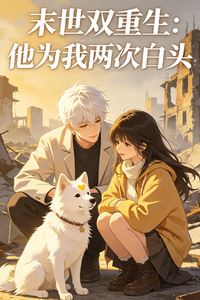
Lin Qingtang dies a horrific death in a zombie apocalypse, betrayed by her best friend Long Juanli and Juanli's brother Junlong under the command of a gang leader named Zhao Hongbin. Just as she is torn apart, a young man named Rong Yuxuan, who had secretly loved her since childhood, arrives too late to save her. Consumed by grief and rage, Rong Yuxuan unleashes his latent lightning powers to kill Zhao Hongbin and the Long siblings, feeding them to the zombies. His despair is so profound that it triggers a rebirth, sending his consciousness back in time to the day before the apocalypse begins. Simultaneously, Lin Qingtang also wakes up thirty days before the disaster, retaining her memories of the previous timeline. She realizes the betrayal that awaits her and immediately cuts ties with her fake best friend, seeking refuge with her wealthy and protective father, Lin Shaoan.

Upon returning to her past, Lin Qingtang discovers a mysterious spiritual space inherited from her late mother, containing endless fertile land, livestock, and a magical white dog named Abai. The space allows for rapid crop regeneration, providing a sustainable food source. Recognizing the impending doom, she and her father liquidate their assets to stockpile essential supplies, including weapons, medicine, generators, and comfort foods. They relocate to a secluded suburban villa to prepare for the coming storm. Meanwhile, Rong Yuxuan also retains his memories and powers, though they are weaker due to his earlier death. He frantically searches for Lin Qingtang, discovering she has disappeared from university and sold her family's company. His investigation leads him to confront the Long siblings, whom he recognizes as the betrayers from his previous life. He brutally beats them, warning them to stay away, before continuing his search using surveillance footage to track Lin Qingtang's movements.

As the thirtieth day arrives, acid rain begins to fall, transforming humanity into mindless zombies. Rong Yuxuan and his roommate Li An survive the initial chaos, utilizing Rong Yuxuan's lightning abilities to fight off the infected. He locates Lin Qingtang's position at an abandoned housing project and rides toward her. During his journey, he encounters Long Juanli and Long Junlong, who have also survived and discovered Rong Yuxuan's powers. Desperate to live, they attempt to attach themselves to him by claiming to be Lin Qingtang's friends and apologizing for past wrongs. Rong Yuxuan rejects them coldly, threatening their lives if they follow him. Undeterred, the siblings decide to secretly tail him, hoping to use Lin Qingtang as a bargaining chip to ensure their own survival. Rong Yuxuan, aware of their psychic presence, stops and confronts them, his eyes filled with killing intent as he prepares to deal with the people who caused his previous lover's death.

The story establishes a dual-rebirth narrative where both protagonists are racing against time and past traumas. Lin Qingtang is focused on securing her safety and that of her father within her spiritual sanctuary, while Rong Yuxuan is driven by an obsessive need to find and protect her. The conflict is not only against the external zombie threat but also against the internal betrayals of those who exploited Lin Qingtang's trust. The Long siblings represent the lingering danger of the past, refusing to accept their exclusion and plotting to re-enter the protagonists' lives. The narrative sets the stage for a collision between Lin Qingtang's preparedness and Rong Yuxuan's protective fury, with the fate of their relationship and survival hanging in the balance as the new apocalypse unfolds.

Novel Items

More
Item
A torn sneaker that belonged to Lin Qingtang, with a little rabbit printed on its side. Half its face was soaked in blood. Rong Yuxuan picked it up and clutched it tightly. He kept it throughout the post-apocalyptic timeline and later took it out at the old street corner. The little rabbit's tiny bared teeth made it look as though it were crying or smiling.
Cultivation Methods
Su Qingqing's ability type. Electric sparks flicker in her hand and she can strike with bolts of lightning. She used it defensively when Chen Xu's group first encountered her family in the warehouse.
Natural Disaster
A highly corrosive rain that began falling on the first day of the apocalypse. It creates white smoke and hissing sounds when hitting surfaces, forming tiny pits on roads and corroding vegetation. It causes skin reddening and stinging on contact, and some victims develop fevers. The rain continued for at least three days, spreading across Xizhou and the city.
Item
Gloves that Lin Qingtang gave to Rong Yuxuan when they first met. She tried to give them to him but he refused, so she stuffed them inside his jacket. They were still warm from her hands. This was during his childhood when he was fifteen and selling roasted sweet potatoes.
Vehicle
Shen Qinci's sleek black motorcycle that she rides to the Civil Affairs Bureau. She keeps her marriage certificate and tools like wrenches and motor oil in a toolbox beside it.
Food
A common exchange item in the System, used previously for wild vegetable egg soup. It is filling but less energy-dense than the milk tea powder.
Latest Release
DateGroupRelease
2026-08-11shanghai fantasy c20
2026-08-11shanghai fantasy c19
2026-08-11shanghai fantasy c18
2026-08-11shanghai fantasy c17
2026-08-11shanghai fantasy c16
2026-08-11shanghai fantasy c15
2026-08-11shanghai fantasy c14
2026-08-11shanghai fantasy c13
2026-08-11shanghai fantasy c12
2026-08-11shanghai fantasy c11
2026-08-11shanghai fantasy c10
2026-08-11shanghai fantasy c9

Community Reviews

Rating(4 / 5.0, 22votes)
5 stars
7(32%)
4 stars
9(41%)
3 stars
6(27%)
2 stars
0(0%)
1 stars
0(0%)

Popular reviews

... Read More
Okay so let me just say this chapter is absolutely NUCLEAR. The entire setup here is built on one of the most satisfying tropes in all of fiction — the rebirth/revenge arc — but it's executed with such precision that it doesn't feel lazy at all. The plot twist hits in layers. First, we get the mirror scene where Lin Qingtang sees her own face — twenty-one years old, no bite wound, no scars — and you immediately know something is wrong. Then Long Juanli walks in with soy milk and fried dough sticks, delivering every line exactly as she did in the previous life. The detail about the red date soy milk being her favorite? That's the kind of thing that makes your blood boil because you KNOW what's coming. What I love most is how the author structures the reveal. We don't get exposition dumps about the apocalypse. Instead, we get fragments — "the sickening crunch of her bones breaking," "Zhao Hongbin shouting those words," "the expression on Long Juanli's face as she pushed her." Each memory hits like a physical blow. And then the cherry on top: Long Juanli herself suggests her own brother as a match. THE SAME BROTHER who watched her die. That's not just dramatic irony, that's sadistic plotting and I am HERE for it. The father subplot is also brilliantly woven in. Lin Shaoan's reaction — calm, immediate, terrifyingly competent — sets up what I'm guessing is going to be a major power dynamic. He doesn't ask questions, he just says "Tell me" and then later casually orders people to be hurt without killing them. The man is a shark in a tailored suit. And that ending with the pendant getting warm? Classic hook. The mother's space, the white light, the hard ground — the author is clearly building toward something supernatural and I need to know what it is. This plot doesn't waste a single beat.
... Read More
Let me just start with the betrayal because this is the emotional wound that drives everything else. Long Juanli - her BEST FRIEND. The one she trusted more than anyone. The one whose gentle concern she now recognizes as invisible chains wrapping around her in her previous life. And this person personally pushed her into a zombie horde. Let that sink in. The text describes her lips trembling as she says 'the person I trusted more than anyone... personally pushed me into the zombies.' That's not just plot information - that's the kind of betrayal that rewrites a person's understanding of their entire past. The stakes are established through this betrayal in a way that's both personal and universal. It's not just 'bad people did bad things.' It's 'the person whose hand I held through childhood did this to me.' The intimacy of the betrayal makes the threat feel infinitely more real and terrifying. When your enemy is someone who smiled at you every day, every smile becomes suspect, every gesture of kindness becomes a potential weapon. But the external stakes are equally compelling. The apocalypse is coming in less than a month. Not in a year. Not in ten years. In less than thirty days. And Qingtang knows exactly what's coming because she lived through it. She knows about Zhao Hongbin, about the zombie horde, about the specific sequence of events that will destroy everything. This is the ultimate information asymmetry - she's the only person who knows the future, and everyone else thinks she's having a breakdown. The internal conflict is where this really gets interesting. Qingtang has to navigate a world where her father is about to liquidate everything he owns based on what sounds like the delusions of a traumatized teenager. She has to watch him believe her without having proof. She has to see him cry for her mother in a magical space and then immediately pivot to buying two tons of salt. The emotional whiplash of living in a world that's about to end while pretending everything is normal at school - that's a conflict that never stops generating tension. The father-daughter alliance against an invisible threat creates a fascinating dynamic. In most apocalypse stories, the protagonist is alone or leading a group. Here, Qingtang has one person who believes her, and that person is her father. But that creates a new kind of vulnerability - if something happens to him, she's back to square one. When she tells him 'I can't survive alone,' she's not just expressing emotional need. She's stating a tactical reality. The liquidation of assets, the weapons purchases, the move to a secret villa - each of these actions raises the stakes because they represent irreversible commitments. Once the stocks are sold, there's no going back. Once the villa is rented, the old life is officially over. The author keeps the tension mounting by showing us that with every preparation step, they're burning bridges to their previous existence. They're not just preparing for the apocalypse - they're actively leaving their old lives behind, and there's no returning to normal even if the apocalypse doesn't happen.
... Read More
Let me just say this upfront: the chapter structure in this section is a masterclass in emotional pacing. We start with pure atmosphere and sensory immersion - the rice fields, the cottage, Abai, the grief. Qingtang is sobbing, her father is crying, we're in this tender, almost sacred moment of family reunion across death. And then - boom. 'We've got less than a month. We need to make a proper plan.' The pivot from mourning to mobilization happens so fast it's almost jarring, and that's exactly the point. The author understands something crucial about survival narratives: grief doesn't get a waiting room. When the clock is ticking, you process what you can process and then you move. Lin Shaoan's transition from sobbing for his dead wife to efficiently harvesting rice fields is not emotionally inconsistent - it's emotionally honest. That's how trauma responses actually work in high-stakes situations. Then the structure shifts into what I can only describe as a preparation montage, and it's executed with remarkable economy. The rice regrows overnight - one scene, one paragraph, problem solved. The list-making sequence - medicine, weapons, generators, food, seasonings, sanitary supplies, solar chargers, walkie-talkies - this could have dragged on forever, but the author keeps it tight and purposeful. Each item on the list serves a dual purpose: practical survival AND emotional character development. The snacks aren't just snacks - they're a tribute to the mother's philosophy. The seasonings aren't just condiments - they're about preserving dignity in inhumane circumstances. The asset liquidation sequence is where the pacing really shines. Instead of showing us the agonizing process of selling everything, the author gives us a rapid-fire summary: stocks sold in three batches, luxury cars gone, paintings and jewelry and antique porcelain disappearing, and by the tenth day, an astronomical sum accumulated. This is the narrative equivalent of a time-lapse video - we understand the magnitude of what's happening without needing to sit through every transaction. The division into four quarters - medicine, weapons, generators, food - is structurally satisfying. It's organized, methodical, almost clinical. And then the author undercuts that clinical precision with the most human detail possible: the spicy gluten strips and potato chips. The contrast between the industrial-grade generators and the jelly cups is the pacing equivalent of a heartbeat - steady, purposeful, but fundamentally driven by love. The move to the secret villa at night during light rain, bringing only clothes and photo albums and leaving everything else exactly as it was... that's a perfect structural beat. It closes the preparation arc while opening the next one. And the sponsorship form discovery at the very end? That's the author's way of saying 'we're not done yet' without breaking the momentum. The chapter doesn't end with a resolution - it ends with a question mark, and I am already clicking to the next one.
... Read More
I've been thinking about the jasmine pendant all day and I need to articulate why it matters so much beyond just being a plot device. On the surface, it's a magical key - touch it, wish, and you're transported to a parallel dimension. But the symbolism runs far deeper than that, and the more I sit with it, the more I realize this entire story is about how love creates spaces that death cannot destroy. Jasmine flowers. That's the recurring motif. The fragrance that triggers childhood memories. The bushes in front of the cottage where the photograph shows her mother smiling. The pendant itself shaped like a jasmine flower. In Chinese culture, jasmine symbolizes maternal love, affection, and the bond between mother and child. It's also a flower that releases its fragrance most intensely at night - hidden, but always present. That's exactly what this space is: invisible to the world, but glowing with warmth for the people who need it. The space itself is a powerful symbol of inherited love. Qingtang's mother couldn't stay with her daughter, but she created something that would outlast her physical presence. The rice fields that never run dry. The cottage that preserves a moment in time. Abai, the dog who greets them with unconditional love. These aren't random gifts - they're deliberate acts of maternal foresight. The mother knew, in some way beyond normal human understanding, that her daughter would need this. That she would face something terrible, and that this space would be her anchor. Abai himself is symbolic on multiple levels. He's white - purity, innocence, the uncorrupted bond between parent and child. The golden heart-shaped patch on his forehead is almost too on-the-nose, but it works because it represents the mother's love literally watching over them. He's a guardian spirit, a living embodiment of the family's love, and his presence in both the photograph and the present timeline collapses the distinction between past and present, between life and death. The necklace passing from mother to daughter to father is a lineage of love. When Qingtang places it in her father's palm and tells him to close his eyes and think about her mother, she's not just activating a magical function - she's creating a moment of shared grief and connection. The space responds not to blood relation but to emotional truth. It opens for whoever needs it most in that moment. And then there's the regrowing rice - a symbol of hope, of renewal, of the idea that what is given in love cannot truly be consumed or exhausted. The crops return because the love that created them is inexhaustible. This is the thematic core of the entire narrative: love as the ultimate survival resource. Not weapons, not money, not generators - love. The father buying snacks because 'that's what your mother always used to say' is the thesis statement of the book in a single gesture.
... Read More
There's a symbolism in this chapter that I can't stop thinking about, and it's the pendant. Lin Qingtang has worn her mother's jasmine flower necklace since childhood. Never once taken it off. And now, after being reborn, after dying and coming back, it's warm. "As though something hidden inside it was slowly awakening… Trying to communicate with her." The pendant represents everything she lost — her mother, her innocence, her previous life. But it's also a bridge to something new. The fact that it activates NOW, after her death and rebirth, suggests that the apocalypse isn't just a physical event but a spiritual one. The world is changing, and so is she. The necklace was dormant in a normal world but awakens in a world where death isn't the end. Then there's the soy milk. Long Juanli brings red date soy milk — her favorite — as an act of care. But in the previous life, this same gesture was part of the trap. The author is exploring a deeply unsettling theme: how betrayal often hides behind acts of love. The things people use to gain your trust are the same things that make the betrayal hurt more. "We're best friends" — Long Juanli says this while setting up a marriage proposal to her own brother. The word "trust" appears multiple times in this chapter, always in the mouth of the betrayer. "Someone with a trustworthy family." "You know I've already made sure he's trustworthy." Trust is the central wound here. But then there's the father-daughter relationship, which offers a counter-theme. Lin Shaoan doesn't need to perform love — he demonstrates it. He crouches beside her. He holds her. He remembers his wife's last words. His love isn't conditional on performance or manipulation. It's just there, steady and absolute. The chapter seems to be asking: what survives death? What is real? The pendant suggests the answer might be something supernatural — a connection to her mother, a power awakening. But it also suggests that love, true love, might be the one thing that transcends even the apocalypse.
... Read More
The pacing in these chapters is absolutely relentless and I cannot complain. We start with this almost domestic scene—Qingtang and her dad harvesting crops, playing with Abai, feeling safe for once. It's warm and golden and you almost forget this is an apocalypse novel. Then Abai growls at three zombies and Rong Yuxuan silently takes them out. Okay, fine, a little tension. But then—FOUR SUVs. More than a dozen thugs. Boss Hu with a shotgun. Zombies from every direction. The chapter goes from "let's harvest rice" to "we're under siege" and it happens so smoothly you don't even notice the shift until it's too late. The cliffhanger at the end—"Enemies from both front and rear"—is exactly the kind of moment that makes you immediately open the next chapter. No drag, no filler, just escalating tension that never lets up. The only moment that felt slightly slow was the training sequence with Abai's fire control, but honestly it worked because it gave us a breather before the storm hit. Classic tension-release-tension structure and it's executed perfectly.
See all reviews

Characters

See all characters

Custom lists

Oops…There is nothing here.