Summary

... Read More

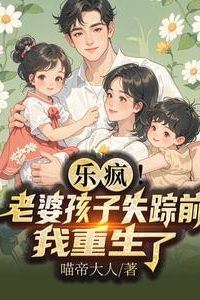
Su You, a pharmaceutical editor and part-time gaming content creator, dies in a brutal apocalypse after being betrayed by her stepmother Liu Qin and her father Su Weiguo. In her final moments, she realizes they conspired with strangers to steal her material restoration ability and handed her over to a mountaintop survivor base, resulting in her execution by explosion. Instead of dying, Su You awakens in her own apartment on August 16, 2055, exactly one month before the disasters begin. She is reunited with her orange cat, Big Orange, and quickly confirms she has been reborn. Her primary motivation shifts from survival to vengeance and self-preservation, vowing never to trust her father or stepmother again.

Shortly after regaining consciousness, Su You activates a Survival Base System. The system grants her a spatial storage module and a rest area, both of which preserve items indefinitely and offer a hundredfold monetary rebate on stockpiled goods. This mechanism allows her to convert small purchases into massive capital. She immediately begins liquidating her existing assets and emptying her apartment’s storage room, generating over ten million yuan. With this capital, she systematically acquires a suburban warehouse and establishes a connection between it and her base space using the system’s Space Overlap function. She also upgrades her base to Level 3, unlocking a trade area and the ability to host up to one hundred residents.

The first major conflict arises when Liu Qin, Su Weiguo, and Liu Qin’s son Liu Sheng arrive at Su You’s apartment. They attempt to manipulate her into letting them stay, planning to exploit her resources and eventually seize her property. Su You, now ruthless and calculating, feigns financial ruin and claims to owe loan sharks one million yuan. She pressures her father and stepmother to buy her apartment at a steep discount to help her repay the debt. They agree, transferring 800,000 yuan, believing they have acquired a prime property for a bargain. Su You uses the money to pay off her actual debts and continues her preparations, effectively cutting ties with her family while ensuring they are left with a crumbling building that will be dangerous during the coming earthquakes and cold snaps.

Simultaneously, Su You addresses her workplace harassment. Her supervisor, Qu Xiangdong, pressures her to work overtime despite her sick leave and hints at laying her off in favor of his relative. Su You records his admissions of favoritism and blackmail, threatening to expose him to his wife and the company. She forces him to agree to a severance package, securing her freedom from corporate exploitation before the end of the world. She then contacts Amber, a skilled hacker and former gaming rival, to build an encrypted doomsday website. The site features a countdown timer and a forum where Su You plans to warn the public about the impending disasters and recruit loyal residents for her base.

As the apocalypse approaches, Su You expands her supply network by purchasing a struggling supermarket and a pharmacy. She retains the staff, including the reliable Manager Wang, and uses the businesses as fronts for massive bulk purchasing. She stockpiles tons of coal, fresh food, medicines, and daily necessities, storing them in her base space through the overlapped warehouse. She also befriends Sun Liancheng, the warehouse manager and husband of her former colleague Sister Min, revealing just enough information to secure his loyalty and assistance in managing her logistics. By the time the countdown on Amber’s website reaches its final days, Su You has amassed sufficient wealth and supplies to survive the coming years in comfort, while her enemies remain oblivious to the catastrophe that is about to consume them.

Latest Release
DateGroupRelease
2026-08-11shanghai fantasy c131
2026-08-11shanghai fantasy c130
2026-08-11shanghai fantasy c129
2026-08-11shanghai fantasy c128
2026-08-11shanghai fantasy c127
2026-08-11shanghai fantasy c126
2026-08-11shanghai fantasy c125
2026-08-11shanghai fantasy c124
2026-08-11shanghai fantasy c123
2026-08-11shanghai fantasy c122
2026-08-11shanghai fantasy c121
2026-08-11shanghai fantasy c120

Community Reviews

Rating(3.8 / 5.0, 10votes)
5 stars
3(30%)
4 stars
2(20%)
3 stars
5(50%)
2 stars
0(0%)
1 stars
0(0%)

Popular reviews

... Read More
Let me just say this absolutely: the apartment trick was one of the most satisfying pieces of revenge I have ever read. Su You didn't just reject her family—she weaponized their greed against them and watched them walk right into it. Think about the setup. She tells them she owes a million to loan sharks who threatened to sell her to Myanmar. She shows them the empty apartment. She acts desperate. And Liu Qin—oh, cunning Liu Qin—immediately pivots to 'why don't you sell it to us at a discount?' Like she hadn't just tried to steal it from her. The hypocrisy is so thick you could cut it with a knife. But Su You sees right through it. She pretends to hesitate, lets them think they're getting the better end of the deal, and watches them sign over 800,000 yuan for an apartment that is literally a death trap. The text drops this beautiful detail: 'Built decades ago, these old blocks had no seismic reinforcements. Before the extreme cold even hit, the earthquakes had already torn them apart, turning them into dangerous ruins.' She knew. She KNEW. And she sold them their own execution date. The stakes here are layered in the best way. On the surface, it's a family drama about a daughter fighting吸血 parents. But underneath, there's the apocalypse ticking like a bomb. Every chapter Su You stocks more supplies, rents more warehouses, and the reader is constantly aware: the real conflict isn't just about money or property—it's about who survives when the world ends. And Su You is playing chess while her family is still arguing over the rules. The loan shark threat at the end? Liu Qin saying 'she'll be begging us instead'? That's the author raising the stakes one more time. The family thinks they've won. They have no idea what's coming. And that dramatic irony? That's what keeps me turning pages.
... Read More
I need to talk about Su Weiguo because honestly I have never wanted to punch a fictional father so badly in my entire life. The moment he showed up at her door with that entitled 'What are you doing? Why aren't you inside resting?' attitude, I literally threw my phone on the couch. This man raised a daughter who bought her own apartment through three years of part-time jobs and game livestreaming, and his first instinct is to demand she move out of his way. The audacity is truly impressive in the worst possible way. But what really got me was Liu Sheng. The younger brother. In her previous life he used to call her 'sister' sweetly and coax her for money for clothes and sneakers and gaming credits. And now? Now he looks at her and says 'You made your own mess, so clean it up yourself. I still need to go to school.' Just like that. The mask completely drops when there's no money to extract. That single line from the book says it all: 'You made your own mess, so clean it up yourself. I still need to go to school. Don't you dare even think about my college tuition.' I literally gasped reading that. He went from sweet little brother to complete stranger in the span of one sentence. And Su You—watching her finally snap was the best thing I've read in forever. When she slapped him first before he could slap her? Chef's kiss. 'Teaming up with an outsider to steal your own daughter's home—who else could do something so vile? From now on, I have no father.' She didn't just walk away, she publicly declared the relationship dead while the entire Housing Bureau watched. I was screaming internally. The most chilling part though? Liu Qin's line at the end: 'I've heard what loan sharks do—they'll carve out her kidney and sell her to northern Myanmar. When that happens, she'll be begging us instead.' This woman is planning her daughter's destruction and smiling about it. What kind of person is that?
... Read More
Okay, so I just finished this batch and honestly? The plot pacing is absolutely relentless. Let me just say this—the doomsday countdown website with that blood-red timer and the 3D beating heart graphic? That's the kind of opening image that makes me immediately check my own grocery supply situation. Which, by the way, is now empty because I went and bought way too much canned food after reading this. What's brilliant about the plot structure here is how Su You is layering her preparations like an onion. First, she upgrades her base with Space Overlap—basically spatial teleportation, which is a game-changer. Then she unlocks the 100-person residency capacity, which sets up this whole recruitment mechanic. Then she's buying real estate (supermarket, pharmacy), stockpiling supplies, and building a website to find other survivors. Each step logically leads to the next, and the author never lets the reader breathe for too long. The Sun Liancheng subplot is particularly clever. He's this seemingly ordinary warehouse manager who somehow already knows something's coming. The scene where he confronts Su You on his scooter—lowering his voice, making sure no one's around, asking if her warnings are real—this is classic tension-building. And then the reveal that he's already stockpiled at his villa in Huanshan Valley? Chef's kiss. It shows that even in this world, there are other people who are prepared, which makes the apocalypse feel more real and dangerous. The website reveal with Amber was another highlight. That pitch-black page with the blood-red countdown and the Damocles sword imagery—this is the kind of atmospheric detail that makes me want to screenshot it. And the fact that Su You is already posting threads about base residency spots? She's not just surviving; she's building a community. That's the Noah's Ark parallel the text is clearly going for, and it's working beautifully. One thing I'm curious about: the system store that hasn't unlocked yet. The text mentions it'll come later, which is a classic hook. I'm already theorizing that the store will be essential for late-game survival. But I won't spoil anything—I'm just as curious as everyone else! Overall, the plot here is tight, well-structured, and constantly escalating. Every chapter ends with a new development that makes me want to immediately read the next one. The author knows exactly how to keep readers hooked.
... Read More
There's something deeply atmospheric about how this text handles space and setting, and I want to unpack that. The apartment itself is a character. When Su You's family walks in, the text tells us: 'Inside, the living room had only one sofa left. Su You's storeroom, once stacked high with supplies, was now stripped bare, as clean as if it had just been built.' This is a woman who has already begun the apocalypse in her mind while the rest of the world is still living in denial. The emptiness of her apartment is a visual metaphor for everything she's lost and everything she's about to lose again. Then there's the contrast between the Housing Bureau—those sterile government offices where family drama plays out in front of judgmental strangers—and the hotpot restaurant, warm and steaming and alive. The author moves us from cold institutional spaces to warm sensory ones, and it's not accidental. The hotpot broth is described as 'fiery red, richly flavored,' the numbing fragrance filling the air. This is worldbuilding through taste and smell, which is so much more immersive than any description of the apocalypse could be. And the warehouse! Thirty square meters, 600 yuan a month, on a slope, a bit remote. These details matter because they ground the story in reality. Su You isn't some superhero with infinite resources—she's making calculated choices with limited means. The fact that she chose a slope location specifically because it avoids flood risk shows how every environmental detail is being weaponized for survival. The text also drops these worldbuilding bombs casually: 'In the early days of the apocalypse, when the torrential rains first came, the problems seemed minor—just some leaks. But later, when earthquakes and extreme cold arrived...' This is the author showing us the future through the past tense of someone who already lived it. The world feels alive because Su You carries its history in her head, and every detail she notices about the apartment building's aging pipes and lack of seismic reinforcement is a countdown clock we can all hear ticking.
... Read More
I want to talk about how this section moves because honestly the pacing is doing some real work here and I'm here for it. The chapter opens at maximum intensity—Su You confronting her father at her own door, the physical shove, the slap, the public scene at the Housing Bureau. It's fast, it's loud, it's cathartic. And then—boom—she's alone in a five-star hotel suite planning logistics. The transition from emotional explosion to cold calculation is so sharp it's almost jarring, and that's exactly the point. This is a woman who has lived through three years of apocalypse and she doesn't have time to wallow. What I love is how the author uses the hotpot scene as a pressure valve. After all that confrontation and family drama, we get this quiet moment where Su You is just... eating. Alone. No dialogue, no conflict, just a woman savoring food that will one day be a memory. It's a breath between the storm and the next wave of action. Then Sister Min enters and suddenly we're in full preparation mode. The warehouse rental, the meteorology friend, the flood warnings, the shopping list—each detail piles on like bricks in a wall. The author is building something here, and you can feel the structure taking shape. By the time Su You is ordering an SUV rental and walking into a supermarket, the pacing has shifted from reactive (dealing with family) to proactive (building her survival empire). The chapter ends on what feels like a cliffhanger of a different kind—not a life-or-death moment, but the beginning of a massive shopping spree. It's the narrative equivalent of cracking your knuckles and getting to work. And I need to know what happens next because every time Su You opens her phone to make a plan, the stakes feel that much more real.
... Read More
Can we just talk about how natural the dialogue is in this text? Because I'm genuinely impressed. Take Sun Liancheng's first conversation with Su You. He says, 'I saw someone at the warehouse door from afar, and it really was you. I'm your Brother Sun—your Sister Min should have mentioned me to you.' This is perfect. It's casual, slightly awkward (like how real people speak when they're trying to be polite), and it establishes their relationship immediately. He's not a smooth talker; he's a regular guy who's trying to make a connection. And then when he lowers his voice and asks about the apocalypse? The shift in tone is seamless. 'Su You, is what you told your Sister Min really true?' This isn't dramatic or theatrical—it's the way a cautious person would actually speak when they're trying to confirm something without revealing too much. The author nails this. Su You's dialogue is equally well-crafted. When she's feigning confusion, she says, 'Brother Sun, what are you talking about? I don't understand.' This is perfect deflection. She's not lying outright; she's playing dumb. And when she finally reveals the truth, she carefully mixes lies with facts: 'According to predictions, the apocalypse will begin in about a month. I have a friend who's a survivalist...' This shows she's strategic with her words, which fits her character. The old pharmacy owner's dialogue is another highlight. 'If this were at a banquet, I'd have to toast you at least three times. Truly the younger generation surpasses the old, heroes keep emerging.' This is colorful, slightly theatrical, and completely in character. He's an elderly businessman who's used to social niceties, and his dialogue reflects that. Amber's messages are casual and modern: 'Holy crap, Sister You, you got rich? Won the lottery or inherited some long-lost relative's fortune?' This feels like actual WeChat messages between friends. The author clearly understands how young people communicate. What's remarkable is that every character has a distinct voice. Sun Liancheng is cautious and measured. Su You is direct but strategic. The old owner is warm and chatty. Amber is energetic and casual. You never confuse who's speaking, which is a testament to the author's skill. The dialogue also serves the plot efficiently. Every conversation reveals information or advances the story. There's no filler dialogue—everything has purpose. This is how you write dialogue that feels both natural and functional.
See all reviews

Characters

See all characters

Custom lists

See all custom Lists