Don’t run, its not marked yet! [Entertainment circle] - Reviews

Don’t run, its not marked yet! [Entertainment circle]
+Add to Custom List
Sort
Add review
... Read More
Okay so I NEED to talk about this chapter because the author just casually dropped like six major plot beats in one sitting and I am NOT okay. First, Ji Cheng gets a good performance rating at the interview. This is HUGE for him—he walked in with zero expectations, just wanted to do his own thing, and somehow nailed it. And then BAM, immediately bumps into Lu Jingze in the hallway. Like, what are the odds? The narrator even explicitly points out how strange it feels, like they've met before. Which, they HAVE—briefly, the night before. The four-eyes-one-bed situation. Classic omegaverse reunion setup but honestly I'm still here for it because the execution is tight. But the REAL plot twist hits when Lu Jingze grabs him and declares "Dare to run around before the estrus period ended?"—wait, WHAT? Ji Cheng was already past his protective phase but something went wrong with the inhibitors? The whole thing with the temporary mark awakening memories in their bodies? This means their first encounter wasn't just a random fling, it was fated biology doing its thing. And now Lu Jingze is literally refusing to let him go? Princess carry him down to the underground parking lot like a damn rom-com lead? And then—the paparazzi pics were already sent out by the time Lu Jingze dropped him home. There's an iron chain between Ji Cheng's door and he still won't let Lu Jingze inside? This is setting up SO much future drama. I can already tell this isn't going to be a smooth romance road. Who leaked those photos? What's Lu Jingze's family situation look like when they find out? And Ji Cheng's acting career—tomorrow media is basically the biggest player in City A. Is this going to help him or destroy him?
... Read More
The contrast between the two settings in this excerpt is really striking. The orphanage reads as institutional and slightly oppressive — kids lined up in teams, being evaluated like products, Dean Hao manhandling children out of formation with zero subtlety. But there's also warmth in it, in the way Ji Cheng and Luo Shaofeng immediately embrace in their room and make plans to stay connected. Then we cut to the film set, which has its own texture — the small TV Xing Cangrui watches, the actors discussing role dynamics, the practical business of production. Ji Cheng removing his sunglasses and revealing bloodshot eyes is such a vivid visual moment. You can literally see his exhaustion. And that final image of the Audi A8 at the crew entrance, a man in black stepping out — it's cinematic in a way that feels intentional. The author clearly understands how to use physical space to ground emotional moments. The orphanage room where the boys say goodbye, the hotel room where Ji Cheng wakes up alone at three PM, the set where he's surrounded by people but clearly carrying something heavy inside him. Every location tells you something about the character's internal state.
... Read More
Okay so I need to talk about Wang Ye because THIS character. Ji Cheng's whole backstory with him just wrecked me in the best way. Picture this: twelve-year-old Ji Cheng gets cornered by bullies, Alpha pheromones flooding his system, and who shows up? This little kid—literally less than the bully's shoulder height—who just drops one line: "Let go of him." ONE LINE. And Ji Cheng will never forget that voice for the rest of his life. The text literally says so. What hits me hardest is the power dynamic here. Wang Ye was this tiny kid who happened to be the young master of the Wang Group, one of the top eight companies in City A. But here's the thing—he didn't use his status to dominate Ji Cheng. He didn't even really USE his status. The bullies ran because they recognized the name, not because Wang Ye threatened them. That's such a soft kind of heroism. And then the aftermath! Ji Cheng flinches when Wang Ye reaches out to touch his head. Of COURSE he flinches. He's just been cornered by an Alpha releasing pheromones on him, and this stranger is reaching toward him? Wang Ye's reaction is everything—he frowns, fans away the lingering smell, and then SQUATS DOWN to Ji Cheng's level. He doesn't loom. He makes himself smaller. "It's okay, those people are gone! You see that the smell has faded, doesn't it?" This is how you write trauma recovery without making it a lecture. And Ji Cheng's response—sniffing his nose, nasal voice, just saying "Ji Cheng"—it's so quiet. So small. He'd spent the entire chapter being told he was "shit," that his mother threw him away, that everyone saw him as something terrible. And then this one person offered him their hand. Fast forward and Ji Cheng advances most of his own salary to fund Wang Ye's entertainment company when he's just an 18th-line star. That's not just gratitude. That's devotion. That's someone who would bet their entire future on the person who once told them they were okay. I'm not okay with how much I love this friendship. Also—does anyone else notice how Wang Ye calls Ji Cheng "brother" when he's being protective, but the bullies call him "little bitch" and make it sound like an insult? The language around these characters matters so much. But then Ji Cheng comes back to the present and there's Lu Jingze outside his door with a bottle of water, and Ji Cheng smiles and thinks "he still has a long way to go." I feel like that's the story in a nutshell. Someone saved him once. Now he's learning what it means to be saved differently. Or maybe that's just me projecting. Either way, Wang Ye is the best character ever written and I will die on this hill.
... Read More
The courtroom scene is framed like a press storm, and I mean that literally. "The reporters outside the court were like beasts who have been starved for a few days." That's such a visceral image — they're not observers, they're predators. Cameras flashing, microphones thrust forward, questions about inheritance and betrayal and whether Ji Cheng approached Lu Jingze for purpose. The world outside the courtroom doesn't care about truth; it cares about spectacle. But inside? Inside is quiet. "This case was not open to public. The victims and their families were sitting in the seats." Ji Cheng looking back at familiar faces and feeling uncomfortable — that moment of responsibility, of survivor's guilt mixed with solidarity, hit me hard. These aren't abstract victims. They have faces. He recognizes them. And then there's the ending image, the one I can't stop thinking about: Ji Cheng looking up at the bright sky. After years — YEARS — of carrying this secret, this shame, this damage to his body and his identity, the sun comes out and for the first time he can smile back at the reporters instead of shrinking from them. The haze is swept away. "Dazzling sunshine" is such a simple phrase but it does so much emotional work. The hotel room scene earlier has this claustrophobic tension — Lu Jingze's messy hair, his complicated silence, the weight of unspoken days between them. Then the morning after, standing at the window together, Lu Jingze's arms around Ji Cheng's waist, the sweat on Ji Cheng's forehead that Lu Jingze notices but doesn't expose. Intimate, protective, careful. The world outside the window is chaos; inside their private space there's stillness. The contrast between the public spectacle and private reckoning is what makes these scenes land. Justice isn't just a courtroom verdict — it's a man breathing fresh air after drowning for too long.
... Read More
There's something about Lu Jingze's voice that I can't quite pin down, but this chapter made it clearer. He doesn't do grand speeches. He does quiet confessions and then follows them with actions. When he says "I'm sorry" and just... lowers his head, that's not weakness, that's honesty stripped bare. But then there's this line: "Fool, how can there be so many untruths, it's man-made, justice will definitely come." That's the kind of line that should be engraved somewhere. It's optimistic without being naive. It acknowledges that justice isn't some cosmic force — it's built by people, by people willing to stand in courtrooms and face their families' sins. Lu Jingze isn't waiting for the world to right itself; he's helping build it. Ji Cheng's dialogue is sparse but devastating in its simplicity. "No cellphone." Three words that carry a world of hurt. "Tomorrow I will go with you. I want to personally solve the problems that have troubled me for so many years." No dramatic music, no breakdown. Just a decision, spoken plainly. That's a man who's done running. The side characters' voices are so distinct it's impressive. Fang Yao's lawyer says "I can give you a satisfactory answer" with that confident professional tone. Fang Yao himself pivots from emotional support to "Think about what to eat tonight?" — absolutely essential emotional regulation through food. Luo Shaofeng's tears and immediate pivot to hot pot is so authentically chaotic. And the most important line, the one that anchors the entire chapter: "Lu Jingze treats you sincerely." Spoken by Luo Shaofeng, observed by Ji Cheng, internalized into action. That's the kind of dialogue that doesn't announce itself but changes everything.
... Read More
I need to talk about how this chapter just PUNCHES you in the face with information and then doesn't let up. First you get the accident — glass shattering, Ji Cheng hospitalized — and then BAM, the Lu family news drops on top of it all. One day for Lu Jingze and it's already too much. The author is playing with real stakes here and it works because you can SEE Lu Jingze crumbling under it. The internal conflict is what gets me though. His self-blame — if he hadn't left temporarily, if he'd been there, none of this would've happened. That's not rational, that's guilt talking, and it's so human. He's sitting by the operating room door like a statue, and Wen Ruchun has to physically calm him down. For someone who usually has it together, this breakdown is devastating. But then the external stakes keep mounting. Xing Cangrui's mistake on set, the production issues, the accident itself — it's all interconnected and it creates this pressure cooker atmosphere. You're simultaneously worried about Ji Cheng's physical recovery AND wondering what the Lu family news means for the larger plot. The tension never fully releases, and I mean that in the best possible way. I stayed up way too late reading because I needed to know what comes next.
... Read More
I need to talk about these two because holy shit the dynamics here are fascinating. Lu Jingze is introduced to us already in crisis mode—but not the kind where you feel sorry for him. He's a high-status alpha who's used to being in charge, and watching him lose control incrementally is such good character work. First the driver's nervous glances, then having to ask for help at the hotel, then realizing his inhibitors are garbage. Each moment chips away at his composure. But here's what I love: he doesn't panic. He adapts. He gets more inhibitors. He stays awake despite the jasmine scent overwhelming him. He's trying SO HARD to be the responsible one. And then—spoiler—he succeeds at nothing, because the real challenge wasn't the pheromones, it was the person. Ji Cheng, on the other hand, operates on a completely different frequency. When he wakes up, the first thing he does is check himself in the mirror, sees the bite marks on his glands, and immediately processes what happened without a word. No drama. No confrontation. Just… gone. There's something既冷又强about him. He's not crying about the mark. He's not leaving a note. He's treating this like something that happened to him, not something that defines him. The contrast is everything. Lu Jingze is calculating, strategic, already planning how to pursue. Ji Cheng is reactive, autonomous, already walking away. One wants to close the distance. The other is already out the door. And yet—there's chemistry there. Real chemistry. Not the easy spark type, but the complicated kind. The kind where two people who are clearly both strong in their own ways collide and neither one wanted this but both of them experienced it fully. That's the stuff that makes ABO romances actually interesting instead of just predictable. I keep going back to the line where Lu Jingze thinks about how the "perfect fit" made him want to know more. And then Ji Cheng literally fits on top of him, and the universe is just… trolling him. I'm not even mad about it.
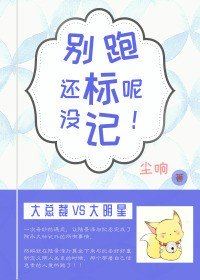
... Read More
The opening image of this section is chef's kiss. Ji Cheng and his two companions bypassing the paparazzi—who are literally eating at a barbecue stall, having a supper break—to sneak into a hotel across from the community. There's something almost cinematic about this. Street food smoke, night shadows, three people moving like conspirators through a residential compound. The author paints this world so casually that you just absorb it. Then cut to the hotel room. Just two people on a bed, talking in lowered voices about danger and survival. "The Lu family is the head of the upper class. Even if you don't plan to spend a lifetime with Lu Jingze, people will not let you go." That line alone builds an entire social hierarchy, a whole world of power structures that hover over these characters like weather. And the next scene—morning light, a plate of breakfast on the table with a handwritten note underneath. The domestic warmth of that image contrasts so sharply with the anxiety Ji Cheng is carrying. You can feel the temperature change from the dark hotel room to this bright, sparse apartment where two people share meals but not words. The orphanage chapter at the end introduces a completely different texture—fluorescent-lit conference rooms, Dean Hao's performative hospitality, children being presented like merchandise. The world of this book keeps expanding and each new location comes with its own rules and dangers. It never feels static.
... Read More
Okay so let's talk about how this whole situation unfolds, because honestly it's pretty brilliant how every plot beat conspires against Lu Jingze. We start with a simple premise—picking up someone in distress—and then BAM, the taxi driver's gaze, the pheromones escalating, the tunnel blocked by an accident. Every single thing that could go wrong does go wrong, but it's not random. The author is building this pressure cooker deliberately. The genius move here is the expired inhibitors. Lu Jingze thought he was prepared. He took more that morning. He bought extra at the hotel. But they're useless. And that detail—that he even curses about it internally, "they dare to send expired inhibitors"—it's both funny and terrifying. It strips away every plan he had. No meds to control the situation. No strategy left. Just raw survival instinct. And then the twist: Ji Cheng isn't some passive omega lying there. He seizes the moment. The text literally says he "turned and sat up directly from the bed, suppressing the person in front of him." This flips the entire power dynamic in a single sentence. Lu Jingze goes from being the capable alpha in control to the one pinned down, surprised, and ultimately outmaneuvered. What a reversal. Then the morning-after disappearance—that's the real gut punch. Lu Jingze spent the whole night preparing for what comes next, imagining conversations, planning how to win this person over with his looks and alpha ability. And Ji Cheng just… vanishes. No name, no number, no explanation. It's the worst kind of cliffhanger because it's not a dramatic farewell. It's ghosting after intimacy, which hits different. The story structure here is tight. Setup → Escalation → False Control → Loss of Control → Aftermath → New Question. Every section feeds the next. I didn't want to stop reading, and that's because the plot never lets you settle. But now I'm obsessed with one question: why did Ji Cheng leave? Was it shame? Practicality? A calculated move? Or did he just not feel the same way about all of this?
... Read More
I'm going to be real with you—I literally paused reading after this paragraph because my heart rate changed. "The pheromone in Ji Cheng's body gushed out of his body uncontrollably for an instant." And Lu Jingze smells jasmine. Just... jasmine. After everything. They had one night, barely any words exchanged probably, and now their bodies are screaming at each other across ten centimeters of hallway space. What got me most was how both of them were caught off guard. Not just Ji Cheng panicking, but Lu Jingze too—he looked surprised. This isn't just some Alpha claiming what he wants. HE didn't expect this either. The temporary mark on Ji Cheng's body and the memories in BOTH their bodies awakening at the same time? That's not just physical attraction, that's something deeper the author is hinting at. Like their bodies knew each other before their minds did. There's also this quiet vulnerability in Ji Cheng. He's supposed to be tough—"a stubborn character that is not afraid of death" according to the narration—but when faced with his four-eyes partner who's now a well-known big brother, his body betrays him completely. He runs. He deflects with humor. He locks his door with an iron chain. All armor, no softness showing. But Lu Jingze isn't having it. "I've send you back, let me sit in anyway!" He's helpless about the distance between them but he's also persistent. There's a tenderness underneath the possessiveness that makes me think this isn't just going to be a hot-and-cold fling story. I need to know what happens when Ji Cheng lets his guard down even a little.
... Read More
I'm genuinely impressed with how this passage controls its tempo. It opens at breakneck speed—Weibo comments rolling like a live ticker, hot search numbers climbing, fans dissecting shadows on phone screens. Then it suddenly cuts to Lan Chuan in his hotel room, shivering, unable to reach Shan Cong. That shift is everything. The author drops us from the roaring crowd into the quiet panic of one guy who didn't realize he was the pawn. And then—Xing Cangrui's call. The gentle voice on the other end contrasts so sharply with the chaos we just saw. By the time Lan Chuan enters the room and faces Ji Cheng and Lu Jingze, the pacing has built this suffocating atmosphere. The pheromone detail—"rotten oranges"—is such a small thing but it does massive work, physically manifesting the tension. What I love most is the refusal to resolve anything. The scene ends mid-sentence with Lu Jingze asking for advice, which is exactly the kind of deliberate unresolved note that makes you immediately open the next chapter. No cheap cliffhanger with explosions—just a question hanging in the air like the pheromones in that room.
... Read More
Okay I need to just... take a breath because this ending genuinely got me. The way the author wraps up their whole arc is honestly chef's kiss. You've got this guy Lu Jingze who spent the entire story being so calculating, so guarded, and then here comes this moment where he just loses it completely and sprints into a car like an idiot because Ji Cheng said yes. And it's not even the yes that matters most—it's the fact that he finally lets himself want something openly, in front of everyone, without playing some elaborate game. The six-month time skip was a smart move honestly. We don't need to see every step of their relationship, we just get the payoff. The Oster Awards scene is the perfect capstone—Ji Cheng winning Best Actor for Silk Route, publicly thanking his boss who also happens to be the person who changed his life. "Perhaps their beginning was a mistake, but for the rest of their lives, they will be each other's best existence." That line right there? That's the thesis of the entire story condensed into two sentences. Their whole thing started with manipulation and hidden agendas, but somewhere along the way it became something real. The plot circles back beautifully. Remember how Ji Cheng seemed trapped by his scandals and career crisis? Now he's on stage holding an award, having survived all of it. The external conflicts—the scandals, the pressure, the public scrutiny—all of it becomes backstory to something that worked out. It's satisfying without being overly saccharine because we remember how messy everything was. That last line about nostalgia in each other's eyes though—like, they both know exactly what they went through together and that bond is irreplaceable. I'm not crying, you're crying.

Leave a comment

You must be logged in to leave comments. or
