Don’t Beg Me Anymore
+Add to Custom List
Novel Info
  • Author:
  • Status:Ongoing

Summary

... Read More

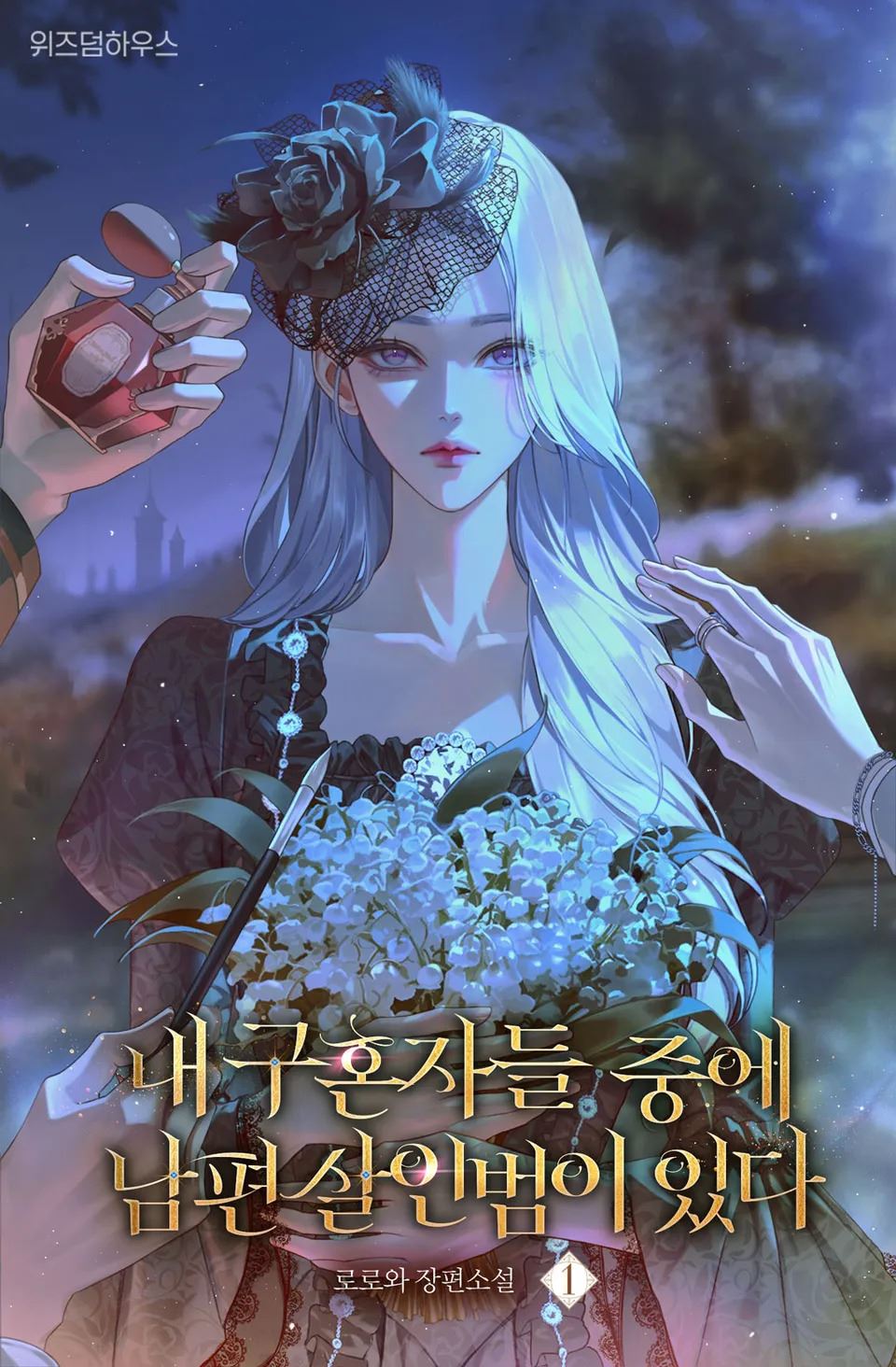
Mia Branda Agatha was once the celebrated eldest daughter of the influential Agatha family, known for her beauty and literary talent. After a long courtship, she married Louis Regi Simon, a playwright who claimed to cherish her intellect and support her dreams. In reality, Louis was a fraud who used Mia as a ghostwriter, publishing her works under his own name while systematically stripping her of her wealth, reputation, and independence. Over twenty years of marriage, he confined her to their estate, subjected her to physical and emotional abuse, and surrounded her with mistresses. Mia endured this suffering for two decades, believing that her devotion would eventually bring him back to the man she originally loved.

After dying and regressing ten times, Mia finally broke free from her delusion. She realized that Louis never changed and that her attempts to please him were futile. In her eleventh life, she decided to stop enduring and instead focus on reclaiming her freedom and destroying Louis. When her mistress, Olivia Hursel, came to live in the estate, Mia no longer reacted with jealousy or despair. Instead, she calmly observed Olivia’s behavior and allowed events to unfold without intervention. When Louis demanded Mia’s diamond-encrusted shoes as a gift for Olivia, Mia complied with a polite smile but maintained her composure. She refused Louis’s physical advances, openly insulting him and shattering his ego. The confrontation left Louis furious but exposed his true nature to Olivia, who eventually lost favor and was dismissed.

Mia’s primary goal was to escape the estate and regain her autonomy. She knew that Louis controlled every aspect of her life, including her movements and communications. To counter this, she began writing a new manuscript, embedding a hidden message within it using a cipher based on her previous works. The message was a desperate plea for help, designed to reach her devoted readers who might recognize the code. Louis, unaware of the subtext, took the manuscript to the publisher, assuming it was another successful work to be credited to his name. Meanwhile, the Duchy of Balthazar, a powerful noble house, expressed interest in sponsoring Louis’s new book. In response, Duke Balthazar sent a mute servant, a former swordsman wrapped in bandages, to the estate.

The servant secretly passed Mia a note containing another cipher. Mia deciphered it, revealing that the sender was an ally who had read all her works and wished to help her escape. The message indicated that the servant would await her at a specific location. Mia realized that the duchy’s interest might be genuine or a trap, but she had no other options. As Louis became intoxicated by his newfound patronage, he grew increasingly erratic and abusive. Mia slapped him when he attempted to assault her, an act that left him stunned but unable to punish her severely due to his dependence on her writing.

The servant returned to Mia’s quarters under the pretense of delivering breakfast. Using a notebook to communicate, he confirmed that more than half of the estate’s servants had been replaced by agents loyal to the Duchy of Balthazar. He also informed Mia that the valuable gifts sent by the duke had been secretly transferred to her. The servant asked Mia about her preferences, not out of personal interest, but to better serve her needs during her transition to freedom. He promised that she would be repaid for her patience and assured her that he would remain loyal to her as her protector. Mia accepted his assistance, recognizing that this was her chance to finally escape the cage Louis had built around her. The stage was set for her to reclaim her life, using the network established by the duchy to dismantle Louis’s control once and for all.

Latest Release
DateGroupRelease
2026-10-03dusk blossoms c44
2026-10-03dusk blossoms c43
2026-10-03dusk blossoms c42
2026-10-03dusk blossoms c41
2026-10-03dusk blossoms c40
2026-10-03dusk blossoms c39
2026-10-03dusk blossoms c38
2026-10-03dusk blossoms c37
2026-10-03dusk blossoms c36
2026-10-03dusk blossoms c35
2026-10-03dusk blossoms c34
2026-10-03dusk blossoms c33

Community Reviews

Rating(0 / 5.0, 29votes)
5 stars
0(0%)
4 stars
0(0%)
3 stars
0(0%)
2 stars
0(0%)
1 stars
0(0%)

Popular reviews

... Read More
I need to talk about Louis for a second because WOW. This man is a walking red flag with a title. The scene where he's on his knees sobbing fake tears while simultaneously squeezing his eyes shut to produce them? That's not love—that's a man who just realized his property is filing paperwork. And Mia's realization that 'you were my entire world. Not anymore' hit me so hard. The fact that she once worshipped him like he was the sky and that's literally what got her killed in her past life? Istan. That line 'Honorifics only work when there's respect to begin with' though? Iconic. She's not just leaving a bad marriage, she's unlearning an entire mindset that was programmed into her. And the House Steward too—he went from screaming curses to just sitting there docile, eating whatever filth she gave him. Humans as creatures of adaptation. Mia literally quoted that back to herself while doing the same thing to him. The symmetry made me both uncomfortable and incredibly satisfied.
... Read More
The pacing in this batch is absolutely masterful and I want to talk about how the author shifts tones so sharply. We open with Louis being absolutely vile — drunk, sweating, declaring love in the most suffocating way possible, then Mia putting him down with 'You smell like sh*t' and the scene immediately deflates. It's almost comedic in its brutality. And then just as we're recovering from that, BAM — the servant passes her the note. The cipher sequence that follows is paced like a puzzle box, each number unlocking another piece of the message, and by the time Mia reads 'I will wait. Here,' the tension has shifted from physical disgust to intellectual curiosity. Then Louis comes back again, MORE drunk, MORE unhinged, and the chapter practically vibrates with awkward dread until the house steward carries him away. Next morning brings a complete tonal pivot — golden sunlight, luxurious gifts arriving, Louisdeparting in a carriage, and suddenly everything feels almost peaceful. Until Mia realizes she's trapped and can't even leave her room. The final sequence with the servant returns to whisper-quiet tension, all those preference questions building to that devastating reveal about the servant's identity. Each section transitions so smoothly that I didn't even notice the mood shifts happening until I was already three scenes deep.
... Read More
The atmosphere in these chapters is suffocating in the best way. Start with that first paragraph — “my heart felt itchy—restless.” You can feel the attic air thick with anticipation, the door she's staring at like it's the only exit from her own skin. Then jump cut to the estate grounds swarming with reporters, cameras flashing, voices overlapping like a storm breaking. The contrast is brutal: she's up in the attic watching chaos unfold below, and for once, she's not the storm, she's the eye. I love how the environment mirrors her shift in power. The reporters represent the public reckoning, the “mob mentality” she explicitly names — and that's the key word. It's not justice, it's consumption. People want drama, and she's given it to them wrapped in a confession. But the interior scenes are where the real texture lives. The house steward's veins bulging, the knights hesitating before turning their backs, the new female servant calling her “Mistress” — every detail reinforces that the household's loyalty has quietly migrated. Even the Grand Duke's agent, Eric, feels like part of the landscape now. He moves like shadow, speaks through a notebook, but his presence is everywhere. And that final image — Mia leaning back on the sofa, pretending to rest while actually steeling herself for Louis's return — it's so cinematic. You can picture the lighting, the stillness before the next collision. This estate used to feel like a cage; now it feels like a battlefield she's finally learning to navigate.
... Read More
I need to talk about Eric. Seriously, this character is doing SO MUCH with almost no words at all. Like, he can't even speak, right? But the author keeps finding new ways to show us what he's feeling, and it's honestly more powerful than any dialogue could be. The hair-drying scene though... I literally had to stop reading and just stare at my screen for a second. Eric is this bandaged, mute guy who clearly has some serious backstory, and he's standing behind Mia drying her hair with this cloth, and he's being SO careful, like she's made of glass. And when she tries to grab the cloth back because she's impatient, he just... takes it from her and continues, but gentler. The narration says "for some reason, it felt like I was being treated as something precious. Almost... cherished." AND THEN it cuts off mid-thought. That ellipsis is doing so much work. What kills me is that Mia herself seems confused by this treatment. She served Louis for ten years plus whatever time she had in her previous life, and nobody ever touched her with this kind of care. Eric doesn't say anything—HE CAN'T say anything—but his actions are screaming. And the mirror scene! He catches her looking at him in the reflection and he's trying NOT to smile. The fact that he's forcibly holding back a smile while doing something this intimate... that's not just kindness. That's something else. And Shasha! I love that she's these two completely different energy levels. One moment she's marching around like a soldier dealing with the house steward, and the next she's flustered and dropping petals in the bath water. Her revealing that she was about to say something and then STOPPING herself—what was she going to say?! And then when Mia asks about the Grand Duke, Shasha literally changes the subject by dropping a bath additive. She knows something. They all know something. The dynamic between these characters is so layered. Everyone's playing a part, everyone's hiding something, but somehow the genuine moments keep breaking through. That's what makes it good... I think.
... Read More
Let's talk about how the author gives each character a voice so distinct you could identify them blindfolded. Louis? His dialogue is pure chaos — fragmented, repetitive, drunk-slogged nonsense. 'You're my treaaaasure! I love you!' 'So goooood! Soooo gooood…… Aaaah!' He speaks in elongated vowels and incomplete thoughts, which perfectly captures a man who has never had to finish a single sentence in his life because someone else always does his thinking. Compare that to the house steward, who barely speaks but whose presence is felt in every scene like a dark cloud. And then Mia's internal monologue — sharp, sarcastic, endlessly analytical. 'If you couldn't handle your liquor, you shouldn't have drunk in the first place. What kind of disgraceful spectacle was this?' That's not just narration, that's CHARACTER. The servant's dialogue — or rather, his written dialogue — is equally distinctive. Everything in his notebook is formal, deliberate, almost archaic: 'I will always remain by my master's side. Please feel free to treat me as you wish.' There's something almost unsettling about how polite he is while conducting what is essentially an interrogation about Mia's food preferences. And Mia's responses! She answers through food choices instead of words, which is such a brilliant narrative device given her mute circumstances. The author clearly understands that dialogue isn't just about what characters say — it's about HOW they communicate, or fail to.
... Read More
Okay, so we need to talk about the sheer audacity of what Mia just did. I read this part like three times because I kept waiting for it to be a trick, but nope—she actually weaponized her own authorship confession to destroy the entire machine built on her labor. The setup is gorgeous: she'd already smuggled in that cipher plea, which was the tactical move, but the *real* checkmate was the second insert. “Only today do I dare gather the courage to confess…” — she basically published a manifesto under Louis's name and watched the world eat it alive. And the best part? She didn't even have to lift a finger. The mob did all the work for her. All those people who'd admired Louis as a genius suddenly had to chew on the fact that their idol was a front. I loved the house steward's meltdown. He went from smug “you're ruining everything” to trembling with rage when he realized his entire ecosystem was collapsing. Classic “livestock resemble their owner” line gave me chills. She's not just surviving anymore; she's playing 4D chess while everyone else is still figuring out the board. But here's what's got me hooked: what happens when Louis returns? He's out there gambling away the last dregs of his wealth, and he has no idea his wife just publicly burned his legacy to the ground. This isn't revenge, it's surgical dismantling. And I'm here for every second.
See all reviews

Custom lists

See all custom Lists