Dog on the Hutch - Reviews

Dog on the Hutch
+Add to Custom List
Sort
Add review
... Read More
The dialogue in these chapters is SO good it hurts. Let me just highlight a few moments that made me stop reading and re-read out loud. First, Kang Seoui: 'It's exhilarating just imagining. Isn't it fun? A bastard son's rebellion, coming to fruition.' Bro is genuinely thrilled about this. He's not even pretending to be reluctant. The way he crosses his legs and taps his shoes like a kid who just got offered the world — you can HEAR the greed in his voice. And then Director Yeon's response is this serpent-whisper: 'I'll wipe him out completely.' Not 'we'll wipe him out' — I. Because Yeon is the one holding all the cards. Heeni is the puppet, but Yeon is the puppeteer and he knows it. Then Nam Soohyun's entrance: 'Sweetheart, long time no see.' She doesn't even greet Yeon first, she goes straight for the omega. And when she sees the pheromone residue on Heeyeon, her reaction is pure chaos energy — 'Isn't that guy just a full-on thief? He had always looked at me with disgust for meeting younger kids, but now, look at him. He's worse than me.' THE AUDACITY. The fact that she's the queen of dating younger omegas and she's calling Yeon a thief is the most satisfying karma I've ever read. And Lee Haejin — the man who can't even understand why Yeon would put ice in his own glass. His baffled silence says more than any dialogue could. Sometimes the best writing is knowing WHEN someone doesn't speak. Yeon's line to Heeyeon — 'You're going to make this director feel neglected' — is such a perfect blend of manipulation and genuine affection. Is he testing Heeyeon? Is he being vulnerable? Both. Always both. The dialogue carries so much subtext. Everyone is performing, even when they think they're being honest.
... Read More
The sensory writing in this chapter is actually insane when you slow down and notice it. There's this one passage where Director Yeon wakes from his nightmare and the text describes the pheromones around him—"the sweet scent of his pheromones seeped into his lungs. A scent completely unlike the foul, tangled stench of pheromones from his nightmare." That's not just atmosphere, that's thematic worldbuilding in three sentences. The nightmare pheromones represent everything Yeon fears about himself: animalistic, chaotic, uncontrollable. Heeyeon's pheromones are sweet, calming, grounding. The author is literally using smell to map out the emotional safety Yeon finds in this relationship. And the opening scene with the nameless alpha? Pure horror worldbuilding. You don't get exposition dumps about the dungeon system or the hierarchy or why alphas are caged—you get it through visceral reaction. "The pheromones of an omega in heat, the frantic scent of other alphas—it was all repulsive." The alpha doesn't just dislike it; he's physically revolted. But he also acknowledges his own nature: "His alpha instincts were alive." The world feels claustrophobic and real because every sense is engaged. You can smell the fear, the heat, the hatred. You can feel the bars of the hutch. Then you cut to Yeon's bedroom—soft lighting implied by "freshly-awakened skin," the warmth of bodies under sheets, the nearly-touching noses. The transition between these two scenes is so jarring that it emphasizes how far removed Yeon is from the other alphas in this facility. One alpha is hiding his fangs in a cage full of screaming pheromones. The other is being gently patted on the back by his omega partner. Both are alphas. Neither is the same kind of man. The setting does all the work without the author ever having to explain the moral hierarchy of this world.
... Read More
Jung Heeyeon eating like a hamster. I literally could not stop picturing this. The author has such a gift for these tiny moments that say everything about a relationship. Kim Jiwon watching him chew those long rice cakes, noticing how he grips the end because it's too unwieldy, how he'd probably struggle with scissors even if offered — and here's the thing, this isn't pity. This is a doctor's clinical observation layered with something warmer, something that makes him check Heeyeon's condition "out of habit" but really because he can't NOT notice him. The moment when Heeyeon calls him "Doctor" and Kim Jiwon barely suppresses a grin — that's the most honest reaction in the whole chapter. He loves being called that by THIS person, not the gruff alphas who come to his office. And then the Director shows up and taps Heeyeon's cheek like it's nothing, and Kim Jiwon immediately reads it as "trying to gain Jung Heeyeon's approval" — meaning the Director does this stuff consciously, strategically, with someone as sheltered as Heeyeon. What really got me though was Kim Jiwon's internal monologue when he pieces together Heeyeon's past. "Most of Director Yeon's close associates likely had a similar understanding... They shared similar backgrounds with the director." So they're all survivors of the same system, bound together by shared trauma, and yet Kim Jiwon is the one who notices Heeyeon's clumsy hands first. That's not coincidence. That's someone who pays attention to the person, not the role. And Heeyeon defending the Director by saying "Aren't omegas supposed to be frail anyway?" — that line hit me like a truck. He's protecting the very people who enabled his conditioning without even knowing it.
... Read More
Okay so let's talk about this plot layering because honestly it's actually really smart. The whole setup with Kang Seoui making that phone call was such a clever way to establish stakes without info-dumping. Director Yeon threatening to destroy the alpha trait? That's not just villain monologue - it shows how far he'll go for Heeyeon, which ties directly into his eventual decision about imprinting. And then Kim Jiwon dropping the imprinting option like it's nothing? Chef's kiss. The way the plot builds here is fascinating - first we get Heeyeon's pheromone instability explained through the infertility shots backstory, then we see how Chairman Jung's blood relation to Heeyeon triggered that incident, and suddenly imprinting becomes this loaded word that carries so much weight. It's not just a romantic choice, it's literally medical treatment with possessive overtones. The real plot twist though? Heeyeon was awake. I caught that detail about him not sleeping through the day lately - it's subtle but it means he heard everything or at least sensed Director Yeon's hesitation. That's going to matter later. And Director Yeon checking him from ankles up while Heeyeon calls himself 'baby'? The plot keeps weaving these intimate moments with life-or-death stakes in a way that keeps you turning pages. The confession about finding Heeyeon beautiful wasn't just filler - it's the emotional core that makes the imprinting decision feel earned rather than forced.
... Read More
'If he imprinted on the omega who told him he was beautiful' - THIS line. THAT'S the emotional core of everything. Not the medical necessity, not the alpha instinct, but this quiet confession that got swallowed by all the pheromone talk. My chest actually hurt reading that. The scene where Heeyeon naturally creeps over and nests like it's the most obvious thing in the world? I'm not okay. After everything - the infertility shots wrecking his pheromone system, the pheromone shock, Chairman Jung's betrayal as a blood relative - he still chooses to curl into Yeon's arms. That's not dependency, that's devotion masquerading as instinct. And Yeon's entire internal struggle! The way he tilts his glass 'as if drifting underwater' while Kim Jiwon explains the science? That's not just atmosphere - that's a man drowning in his own contradiction. He wants to imprint so bad he can taste it ('crude satisfaction'), but he's terrified of being the reason Heeyeon can never leave. Which is rich coming from a man who already destroyed someone's ability to touch another omega. The ankle check scene made me weirdly emotional. 'How's your ankle?' followed by Heeyeon's casual 'I can walk just fine now' while bearing faint bluish marks on his pale cheek? The tenderness in Yeon's questions paired with the visible damage creates this ache. He's treating injuries like they're normal conversation because he's been through hell together. That CP energy isn't in grand declarations - it's in the quiet moments where one person becomes the other's entire world through sheer persistence.
... Read More
The dialogue in this passage is remarkably distinct across characters, which is harder than it sounds when you're dealing with an ensemble. Director Yeon's voice is probably my favorite. He speaks in short, controlled bursts with a dry, almost playful cruelty. "Painkillers." Not a full sentence. Just the word, dropped like a stone. "As if you only made one enemy, Chairman." That line has this incredible cadence—accusatory but calm, like he's commenting on the weather. And then the joke at the end: "You're pretty brave, I guess you're not a baby anymore." The tonal whiplash from menace to warmth is entirely on purpose and it works because Yeon is a man who contains multitudes. Jung Heeyeon, on the other hand, speaks in short, questioning replies. "Pardon?" "Finish off?" "Yes?" His dialogue reflects someone who has spent his life waiting to be told what to do. But notice how it changes over the course of the flashback—he goes from confused interrogative to declarative: "I want to go as well." The dialogue does character development without any narration. And Jung Younggil—his dialogue is fragmentation and desperation. "I-I can't keep staying alive like this…." "P-Please spare me!" The stutters, the broken sentences, the escalating panic all communicate a man whose lifelong control is evaporating. His final outburst about Yeon Woobeom is particularly good because it's arrogant even in defeat: "You think you can trust that alpha behind you?" He's still trying to manipulate, still can't imagine anyone choosing loyalty over self-interest. The narrator's voice is also worth noting—wry, observant, occasionally darkly humorous without undermining the gravity. "Some of it got caught between the bars and didn't fall, so he gave it a gentle nudge with his foot to help it drop." That sentence is chilling precisely because of its casual tone.
... Read More
I cannot believe the author just went from 'let me buy some tofu for the director' to full-on kidnapping in like two pages and I am not ready for this. The pacing in these five chapters is absolutely ruthless and I love it. Let me break down why this works so well. First, the author gives us this slow, almost meditative opening. The snow, the quiet roads, the careful calculation of arrival times, the tiny hesitation over the price of tofu. It's deliberately low-key. You think you're settling into a slice-of-life moment. And then the black SUV appears and everything detonates. The transition from 'That was fascinating' to 'Crash!' is so abrupt it's almost comical how effectively it hooks you. But here's where the real masterclass happens: after the kidnapping, the author could have immediately thrown us into dramatic confrontation scenes with Chairman Jung. Instead, we get silence. 'Why is it so quiet…' Heeyeon is alone, hurting, coughing, trying to walk—and the house is empty. The author stretches out those moments of waiting, of him mentally replaying the kidnappers' words, of him calculating time, of him reassuring himself about Soocheon. This is where the tension lives. Not in the action itself but in the unbearable quiet after. Then Chairman Jung finally appears and the chapter ends on 'And if Director Yeon found out he had been hit, the man would be heartbroken.' That's the chapter's final emotional note—not a cliffhanger about physical danger but about emotional vulnerability. Brilliant structure. The author understands that suspense isn't just about what happens next but about what the character is afraid of losing while the next thing happens.
... Read More
I need to talk about the strawberry latte. Just the strawberry latte. In a room full of whiskey and liquor bottles, Lee Haejin slides over a strawberry latte for Jung Heeyeon because "he couldn't even handle beer." AND Director Yeon personally goes out to buy junk food if Jung Heeyeon wants it. These two men are literally dripping with care and neither of them are saying it out loud. It's all in the details. The latent pheromones wrapping around Jung Heeyeon's body — is it for stabilization or possession? The text says it's hard to tell. I think it's both. That's the whole relationship right there. "Your lover's card is your card." That line hit me like a truck. It sounds transactional but it's actually the most devoted thing either of them has ever said. Like... I will give you everything I have because you asked. Because you're mine. And then the moment with Nam Soohyun — oh my god. Jung Heeyeon saying he doesn't want to see her again, and you can SEE Director Yeon's mood shift. The furrow between his brows relaxing. Pushing the strawberry latte closer. It's so painfully domestic for a scene that's supposed to be about criminal conspiracy. I'm just sitting here emotional over a man offering his lover a drink because he knows what he can handle. Where is my romance writer.
... Read More
I need to talk about Jung Heeyeon because this character has completely disarmed me. Think about what he does in this chapter—he wakes up next to an alpha who just lashed out at him in his sleep, instinctively reaching for his throat like Yeon would do to anyone else. And what does Heeyeon say? "I wasn't scared." Not "please don't hurt me." Not even a tremble in his voice. Just complete, unshaken trust. And the way he follows up with "You'd never do anything to hurt me"—that's not naive, that's a deliberate choice. This is a person who knows what alphas are capable of because of his own past abuse, and he still chooses to see the good in Yeon. That takes a level of emotional courage that most characters in fiction don't have. But the most telling moment for me is when Heeyeon decides to "adore" Director Yeon. After patting his back, he asks if he should adore him, and the author describes how Yeon's "fierce sharpness" melts. This isn't a transactional relationship where one gives and the other receives. They've created something reciprocal. Heeyeon pats Yeon's back the same way Yeon used to pat his during nightmares. Heeyeon adores Yeon the same way Yeon adores him. They've built this little ecosystem of care between them that exists outside of everything else—the dungeon, the hierarchy, the alpha-omega power dynamics that the world insists on imposing. And Yeon's guilt about almost attacking him? That's what makes him complex. He's not just a tough ex-thug with a soft spot. He's someone who genuinely believes he might have hurt Heeyeon, and that self-awareness separates him from the other alphas in this story. He eye-scans Heeyeon's face to make sure he's telling the truth, stubborn thoroughness as the text says. He can't quite believe it yet, and honestly? That makes it even more beautiful when he finally accepts it.
... Read More
The stakes here are layered in a way that makes every conflict feel urgent even when nothing is actively exploding. On the surface, there's the external conflict: illegal weapons trading, a crime lord (Chairman Jung) who wants to take what's his, and Director Yeon using himself as bait to draw out the real enemy. But the deeper, more devastating conflict is internal—Jung Heeyeon vs. his own trauma. Every time he steps into a container, his body remembers being trapped. The hollow metallic echo, the acrid smell of rusted metal, the way his nose scrunches in discomfort. These aren't just sensory details; they're flashbacks disguised as present-moment experience. The stakes for Director Yeon are equally high. He's walking into danger with the man he loves, knowing that Chairman Jung is out there and that the weapons are the very thing that could get them both killed. But he does it anyway. When Jung Heeyeon says 'Yes' to wanting to know the truth, the stakes shift again—he's no longer just a passive recipient of protection. He's choosing to enter the dangerous space, to demand answers, to become complicit in the risk. That's when the conflict transforms from 'will Director Yeon keep him safe?' to 'what happens when the person you're protecting chooses to put himself in danger?' The answer, of course, is that Director Yeon follows him in. And that's both the most terrifying and the most beautiful thing about this story.
... Read More
The pacing in these chapters is masterful because it never feels rushed, even though a lot is happening. We start in an intimate, slow scene—kissing, pheromones, whispered conversation about going somewhere. The prose lingers on sensory details, on the space between words. Then Director Yeon sends a text message and the pace picks up: the car ride, the sea view, the explanation of the container. Each scene transition is smooth but purposeful. The author doesn't spend more than a paragraph on the landscape before moving to plot information. And then—the stop at Incheon Port, the question from Jung Heeyeon, the decision to enter the container. The structure mirrors Jung Heeyeon's emotional journey: starting from comfort and safety, moving into tension and unease, ending with him stepping into the very thing that once trapped him. The container scene is where the pacing tightens noticeably. Shorter sentences. More internal monologue. The metallic echo, the acrid smell, the regret about not being carried. The author is compressing the reader's experience to match Jung Heeyeon's narrowing focus. There's no filler here—every sentence serves either character development or plot progression. Even the dialogue about whether Jung Heeyeon can walk on his own isn't just exposition; it's a microcosm of their entire relationship dynamic playing out in real time.
... Read More
Let's talk dynamics. Nam Soohyun pokes Jung Heeyeon's cheek, and Director Yeon *swats her hand away*. That's not just annoyance—that's ownership. But then Jung Heeyeon says, “You do it often, so I thought it was just what alphas did.” Oof. He's normalized Director Yeon's control. Yet when Nam Soohyun does it, he stays still, obedient, while Director Yeon bristles. The relationship between them is a mess of dependency and barely concealed fear. Jung Heeyeon calls him “Director” but asks for his name—that's intimacy-seeking wrapped in protocol. And Director Yeon? He calls him “Heeyeon” like fireworks. He cups his cheeks, exhales smoke into his mouth. Is it affection? Manipulation? Both? The fading bruises matter—they signal time passing, healing, but also erasure. Who put those bruises there? Why did they fade? And what about Nam Soohyun's wink? She's playing a game, flustering Jung Heeyeon, maybe testing him. Meanwhile, Kim Jiwon's fridge full of desserts is this weird background detail that makes the world feel lived-in. The relationship between Director Yeon and Jung Heeyeon isn't healthy—it's possessive, opaque, charged with power—but there's a raw, tangled care in it. Like, “I won't let you leave, but I also won't let anyone else touch you.” That's the vibe. And Jung Heeyeon's confusion? “What's wrong with me…” That's him realizing he wants more than obedience. Their dynamic is the spine of this story.
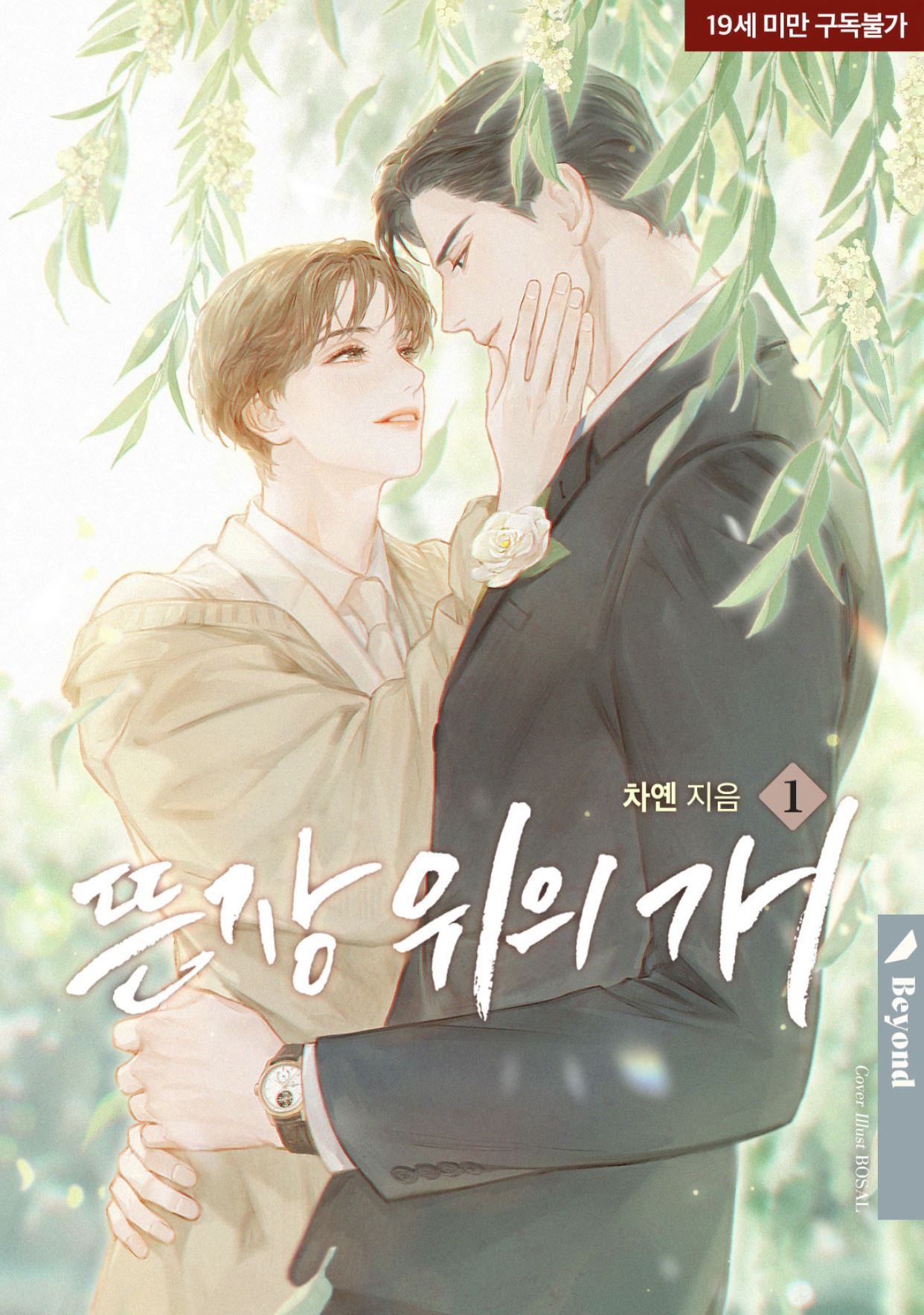

Leave a comment

You must be logged in to leave comments. or