Dog on the Hutch - Reviews

Dog on the Hutch
+Add to Custom List
Sort
Add review
... Read More
This chapter is essentially a meditation on greed and emptiness, wrapped around a convenience store meal, and I need a minute. Director Yeon explicitly tells Heeyeon to 'be more greedy' three times. But the joke isn't really about food choices. By the time we reach Yeon's internal monologue about his past—surviving on cheap noodles for nearly two years, eventually growing nauseated by them—the word 'greedy' transforms into something heavier. It becomes about desire itself. The ability to want something. 'I had nothing left to desire. There was nothing that made him feel greed.' That line hit me like a truck. This man built an empire, eliminated every threat, accumulated enough money that convenience store food is now beneath him—and what does he have? Nothing. Emptiness. The ultimate irony: he survived scarcity only to find that abundance feels exactly the same. Meanwhile, Heeyeon—the baby jelly, the smallest cup of noodles, the cautious selection—represents a different relationship with wanting. He hasn't learned to suppress desire yet. He notices things he likes and reaches for them, even if hesitantly. The blue-wrapped jelly with the cow print and cloud design becomes this perfect symbol: something small, sweet, almost childish, that Heeyeon claims for himself without apology. Yeon watches him eat it and smiles. The firearms cache, the deal with Chief Nam, Chairman Jung—these are all manifestations of greed in its destructive form. Yeon's world runs on acquisition and control. But in this kitchen, with a cup of instant noodles and a baby jelly, something else briefly exists. Not greed. Something closer to contentment. Whether that's sustainable remains the real question.
... Read More
The opening image of this whole sequence is so deceptively normal it made my skin crawl. Director Yeon is on the sofa, slowly lifting his gaze. Jung Heeyeon is freshly showered, in pajamas, heading to the kitchen for his medicine. Domestic. Quiet. Safe-looking. And yet the narration immediately undercuts it: "that same Omega was about to go into his first heat—completely unguarded in front of an alpha." The contrast between the mundane setting and the predatory awareness surrounding it is what makes this world feel so alive. We're not in a battlefield or a dramatic confrontation. We're in a living room. A kitchen. Normal spaces where something deeply wrong is quietly unfolding. And then the worldbuilding hits hard with the backstory dump — the fighting dogs, the alpha training program that sold sensitive alphas, the organization disguised as a security company that was essentially a gangster den full of omegas throwing themselves at a minor. This isn't just a romance with alpha/omega dynamics tacked on. This is a WORLD where certain people are bred and broken, where sensitivity is punished, where power operates in the shadows of legitimate businesses. The sensory details are also remarkable. The faint reddish imprint on pale skin. The ticklish sensation on Heeyeon's nape. The light-colored eyes meeting a stare. Director Yeon recalling what Heeyeon's pheromones smelled like from nearly two months ago — the fact that he REMEMBERS the scent but hasn't been able to experience it since shows how controlled his environment is. Every scene feels like a frame from a film where the camera lingers a second too long on something that should make you uncomfortable.
... Read More
I need to talk about how the author uses FOOD as a pacing mechanism because honestly this chapter is a masterclass in it. We start with odd pairings — tteokbokki with french fries, meat in the rice cakes — and Heeyeon's confusion mirrors our own. Why are these things together? Then the sweet sauce spreads across his tongue and he's relieved. Everything feels cozy. Warm. A lunch break scene. Midway through, the Director arrives with cake, and suddenly we have THREE layers of sweetness stacking on top of each other: the tteokbokki sauce, the cream cake, the affectionate head pat. The author lets us bask in this warmth for a solid chunk before pulling the rug. "Heeyeon, are you sure you're full?" — that's the first crack. Then Kim Jiwon exits with the dishes, giving the Director and Heeyeon a moment alone, and THAT'S when the real conversation begins. The exit of the third character is such a simple structural choice but it changes the entire energy of the scene. What was a group lunch becomes an intimate confrontation. And the chapter ends on that hanging question — "Why do you think omegas are supposed to be frail?" — with Heeyeon about to reveal something that will fundamentally shift how we understand everything. The author didn't rush this. They let the sweetness linger just long enough that the bitter truth cuts deeper. Every beat is deliberate.
... Read More
I need to talk about the soft tofu scene first because honestly it's sticking with me in a weird way. Director Yeon and Heeyeon making tofu together. Yeon saying 'you said you were craving it' and remembering something casual Heeyeon mentioned? That's the kind of detail that makes your chest tight, you know? And then Heeyeon nodding and saying the tofu Yeon made last time was better than ordered — that's not just about food. That's someone acknowledging effort, acknowledging care. And Yeon's response? Biting his lips gently. The text says 'the lips that only ever spoke such lovely things.' That hit me like a truck. And then IMMEDIATELY after that little moment of warmth, we cut to Heeyeon getting a message with 'lazy disinterest,' his eyes 'utterly emotionless.' The contrast isn't just sharp, it's devastating. That domestic tenderness is now shadowed by whatever Yeon is planning. It changes how I see that scene. Now when I think about it, I'm not just seeing sweetness — I'm wondering if that's part of the mask, if Yeon is showing affection WHILE orchestrating something ruthless. And Younggil... god, Younggil broke me. There's something so raw about an old man crawling on his hands and knees through his own dark house, bumping his head, tasting his own blood on the floor, muttering curses about 'that bastard' while desperately searching for a way out. The text says 'his behavior seemed half-crazed, but his movements remained surprisingly cautious.' That tension between panic and calculation — he's terrified but still sharp enough to check cameras, to remember the hidden safe, to have a whole escape plan ready. What really got me though is the phone call. He digs up this ancient cellphone, dials a number he knows by heart, and says 'It's me.' The voice on the other end says 'Chairman Jung?' — and then the old man smiles. 'The wrinkled corners of his mouth curved into a hideous smile.' A HIDEOUS smile. Not a relieved smile. Not a hopeful one. A hideous one. What does that mean? Who is he calling? And why does that smile feel so wrong? I keep going back to Heeyeon lying there during a medical checkup, completely unaware that his grandfather is crawling through darkness with a golf bag full of cash, or that Yeon has just ordered a 'hunt' to begin. The dramatic irony is KILLING me.
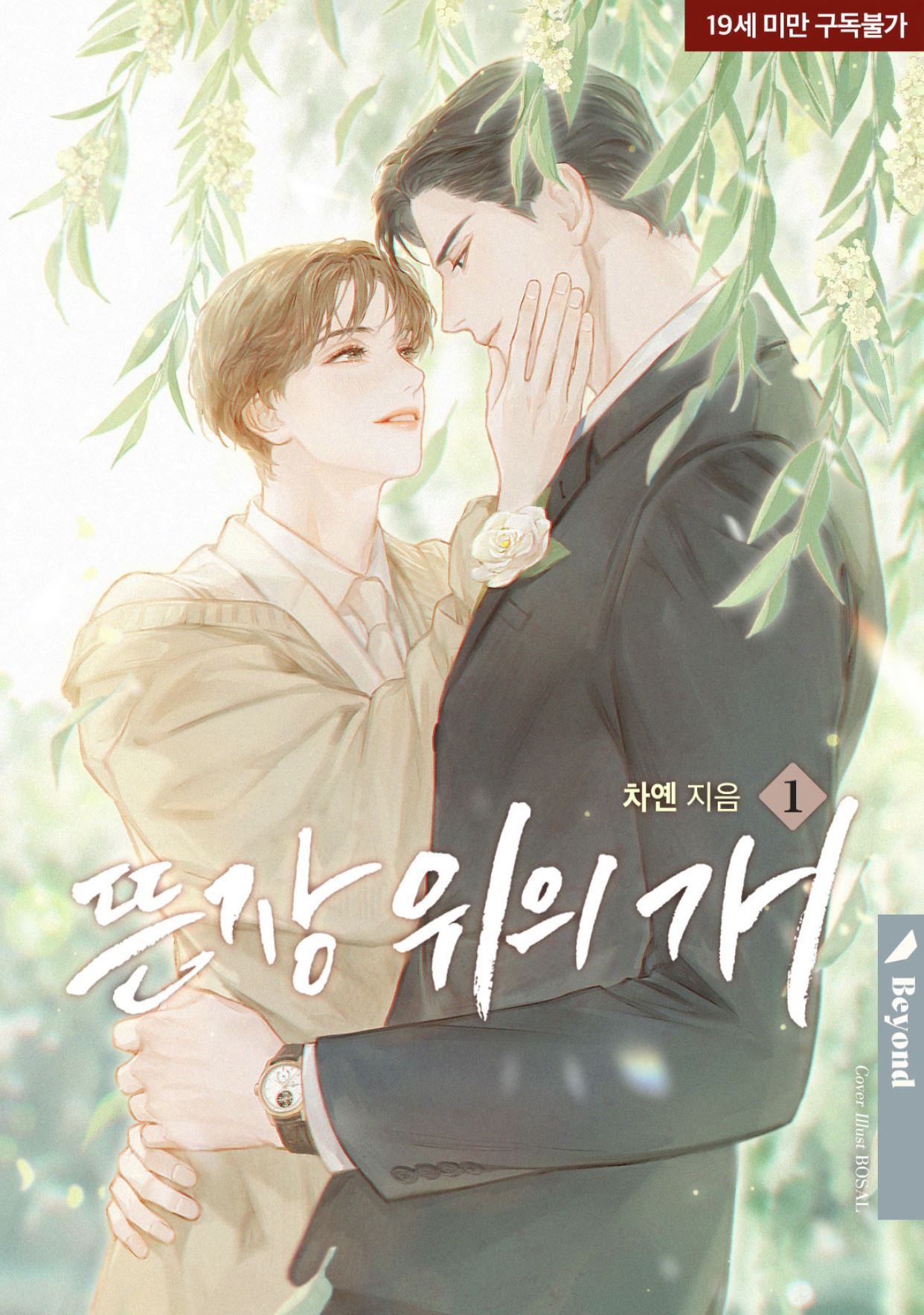
... Read More
There's a scene in these chapters that I keep coming back to, and it's not even the dawn moment—I know, I know, hear me out. It's the hospital room. Three days after the accident. Director Yeon hasn't gone to work once. He's just there, constantly present, pouring out his pheromones like some kind of living medicine, watching over Heeyeon as he sleeps. The details the author gives us are so specifically chosen to make you feel Yeon's internal state. The IV line connected to Heeyeon's thin wrist. The sharp needle piercing delicate skin. Yeon's bitter reaction to something as routine as medication because it reminds him of how fragile this boy is. 'The medication steadily flowing into Jung Heeyeon's sleeping body was a pheromone stabilizer... but the very fact that a sharp needle had pierced that delicate skin left a bitter feeling in him.' This man is sitting in a hospital chair watching an IV drip and his entire emotional world is crashing down because of a needle prick. And the scar on Yeon's eyelid—the one that splits across his face like a permanent reminder of his violent past—tugs into a gentle curve when he smiles. The author keeps coming back to physical details to show internal change. Yeon's body language is doing more storytelling than any internal monologue could. He smooths through Heeyeon's soft hair. He pats that trembling back. Over and over. Repetitive, calming gestures of someone who has finally found something worth protecting. Then you cut to the car window with snowflashes blurring past as dawn approaches, and the contrast between the sterile hospital light and the warm gold breaking over the horizon—cinematic as hell. I swear I could see this as a drama scene.
... Read More
The stakes in this scene are horrifyingly clear. On one side, Chairman Jung is fighting for his freedom—money, escape, survival. He's down to kidnapping his own grandson. On the other, Heeyeon is fighting for his autonomy and his relationship with Director Yeon. If the chairman succeeds in getting the assets, he wins. If he loses control, he loses everything. But the personal stakes for Heeyeon are deeper: this is the moment he stops being a pawn and becomes a person who can fight back. The physical danger is immediate—the heavy footsteps, the yanked hair, the threat of violence. But the emotional danger is what I'm sitting with. The chairman is trying to reassert dominance by insulting Yeon Woobeom, by reducing their bond to 'crawling into bed.' Heeyeon's tears aren't just sadness; they're rage. He's realizing he can truly hate someone. The conflict isn't resolved; it's escalating toward a breaking point. And the suspense isn't just whether he'll be hurt, but what he'll do after. Does he call Director Yeon? Does he use the cameras as evidence? The story holds that breath right at the edge of the fight. That's masterful tension maintenance.
... Read More
I need to talk about this one scene because it genuinely got me. Jung Heeyeon saying 'this is the first time I've ever touched snow' and then Director Yeon brushing a snowflake away from his eyebrow — I felt something in my chest. This whole dinner date reads like something out of a rom-com but it's layered with so much history between them. What struck me most was the little details. When Jung Heeyeon said he liked Director Yeon, he fidgeted with his fingers first before answering softly. That tiny gesture told me everything about how much he trusts this man. And Director Yeon? The way he watched Heeyeon eat, the way he deliberately softened his voice when asking about snow — it's possessive, sure, but there's also this strange tenderness underneath it all. The Christmas setting really amplifies the emotional weight. Snow falling, that massive glittering tree, both of them in the cold night — it feels like a scene from a movie. Heeyeon's whole face lighting up at the snow reminded me he's been caged his entire life, kept inside by a butler who called it 'protection' but was really control. And here he is, experiencing something as simple as touching snow for the first time, with someone who sees him. I keep coming back to Director Yeon's internal monologue about that butler. The man is clearly plotting revenge, thinking about ruining the beta who kept Heeyeon locked away. But in the same breath he's also thinking about how cute it is that Heeyeon rubbed against his hand like a puppy. That contradiction is everything. He's dangerous, yes, but he's also genuinely starting to care about this omega's happiness in his own twisted way. Do you think Heeyeon will ever fully understand what Director Yeon is planning against his former caretaker? Or will he be devastated when he finds out?
... Read More
There's a theme running through this entire chapter that I can't stop thinking about: the question of what it means to be an animal versus being human, and who gets to decide. The nameless alpha explicitly frames it: "A human couldn't possibly harbor such visceral, consuming hatred." He's saying that his capacity for pure, irrational rage proves he's an animal—and therefore, he argues, so is the man outside the hutch who pretends to be above them. It's a fascinating inversion of the typical alpha-omega hierarchy. The alpha outside the cage isn't morally superior; he's just better at performing humanity. Director Yeon embodies this tension perfectly. He's spent his life "crawling through the muck"—first as a low-level thug, then a bodyguard, then a security director, then a weapons dealer. Each role required him to perform a different version of humanity. He learned to act like a respectable man while being an animal underneath. And his nightmare literally forces that animal back to the surface: his hand reaches for a throat before his conscious mind stops it. The scar by his eye, touched absentmindedly, is a physical symbol of that history—a wound from when he was less controlled, less human-performing. But then Heeyeon enters the picture, and the whole framework cracks. Heeyeon doesn't care about the performance. When Yeon's animal instincts flare during the nightmare, Heeyeon doesn't see a monster—he sees someone who needs pats. The omega's response to the alpha's violence isn't fear or submission; it's tenderness. That's the central argument the chapter is making: the hierarchy that calls alphas animals and omegas lesser beings is itself a performance, and true humanity—the capacity for empathy, for gentleness, for trust—exists entirely outside that system. "Should I adore you, Director?" is not just a romantic line. It's a philosophical statement. Adoration isn't owed by an omega to an alpha by nature. It's chosen. And that choice is the most human thing in the entire story.
... Read More
I need to talk about this one line: 'The scent of gardenia, deeper now after sex, prickled the alpha's sensitive nose. It was a sweetness that couldn't be compared to any ice cream.' The author just dropped a whole emotional history in twenty words. Remember earlier how ice cream came up? Of course it did—Director Yeon kissing Jung Heeyeon after he'd been eating ice cream, the sweetness on his lips. But now the gardenia scent—natural, pheromonal, intimate—has replaced it as the thing that matters. This is a man who once thought about marking Jung Heeyeon as property, who treated him almost like a pet, and now he's noticing the subtle details of his body, his scent, the way his skin reacts. And Jung Heeyeon—oh god, Jung Heeyeon—who used to flinch at touch, now says 'I want to come' without hesitation. The emotional arc here isn't about dramatic declarations or tearful confessions. It's about two people learning that vulnerability isn't weakness, and that being seen doesn't mean being consumed. When Jung Heeyeon grips the hem of Director Yeon's suit jacket and says 'I'm alright because you're with me,' that's not dependency. That's choice. And Director Yeon carrying him isn't about control anymore—it's about care. The scene inside the container, with Jung Heeyeon complaining about walking and refusing to be carried because 'I'm an adult,' is honestly the most emotionally honest moment in the entire passage. He's asserting himself, and Director Yeon, who could absolutely just carry him anyway, lets him have that dignity.
... Read More
I need to talk about this moment where Jung Heeyeon stands on top of the cage looking down at his grandfather. Every time I re-read it, my chest tightens. This poor omega has every reason to hate the old man—his childhood was stolen, his family torn apart—but when Director Yeon asks 'Do you feel sorry for him?' and Jung Heeyeon says 'I don't feel sorry for him'... that wasn't just defiance, that was healing. Real, genuine healing. But here's what wrecked me—the way Jung Heeyeon didn't even look at the old man when he said it. His gaze stayed fixed on Director Yeon, who embraced him from behind, warm and solid and present. All that pain, all those years of being sold off, and he still chooses love over hatred. He still has someone to lean on. That line 'He hurt you, Director' wasn't cold—it was tender in its own way. Heeyeon wasn't defending himself or gloating; he was explaining to the person he cares about why this moment matters. And the Captain? Man, the betrayal cut deep because we barely knew him until he did it. But watching Jung Younggil realize too late that even his loyal captain was involved—that's the kind of emotional gut-punch that stays with you. The old man thought he understood his world, thought he had control, and in one night everything crumbled. Meanwhile Heeyeon, who had nothing, who was literally just surviving, ends up in the position of power. Who would've thought? Who absolutely would've thought that.
... Read More
OK so let's talk about stakes because this chapter just elevated everything to a whole new level of 'I need to lie down' territory. On the surface, the external conflict is straightforward: Chairman Jung orchestrated a car crash to kidnap someone, missed his target, and settled for Heeyeon instead. Those two men in the SUV saying 'He's an even bigger prize than Yeon Woobeom' tells you everything you need to know about what's at stake. Heeyeon isn't just some random omega—they specifically chose him because of who he is connected to. The fact that they mistook him for Yeon Woobeom and then decided he was BETTER adds this whole layer of predatory calculation that makes my skin crawl. But the internal conflict is where this chapter really hurts. Heeyeon is physically compromised—drug-induced, bruised, with an ankle that's been deliberately weakened—and his first instinct isn't fight or flight. It's: how do I survive long enough for Director Yeon to find me? He's betting his entire body on someone else coming for him. That's either the most trusting thing or the most desperate thing I've ever read, and I can't decide which. And then there's the conflict between what he knows and what he does. He KNOWS Chairman Jung planned this. He KNOWS this house is a prison. He KNOWS that running will get him caught and beaten. So why does he try to walk out anyway? 'He couldn't just sit there and wait, hoping that Director Yeon would come for him.' Because waiting is passive and passivity gets you killed in this world. But moving gets you caught. Every choice is a trap. The scene with Chairman Jung entering and demanding respect—'You're not greeting me. Is that how I taught you?'—this old man has been grooming Heeyeon for fifteen years and the horror is that Heeyeon's first thought when considering being caught is not about his own pain but about Yeon's reaction. The stakes aren't just physical survival anymore. They're about preserving the one good thing in his life from being contaminated by this darkness. And I am genuinely worried about what happens next because Chairman Jung just walked into that room and Heeyeon sat down like a good little boy and nothing good ever comes from that.
... Read More
The dialogue here is so distinctly voiced. Chairman Jung doesn't just sound old; he sounds like a man whose entire identity is crumbling. His lines are all about debt and ownership: 'Everything you ate, wore, and slept in—that was all because of me!' 'After all I've done to raise you!' He's trying to purchase gratitude with basic survival. Meanwhile, Heeyeon's replies are shorter, firmer, and often delivered in silence. '…Are you leaving the country?' That ellipsis says everything. And 'You didn't raise me either, Chairman.' It's not a shout; it's a statement of fact. The most striking exchange is when Jung Heeyeon calls the chairman a 'pup.' It's a role reversal that cuts deep. The language of the scene is steeped in canine metaphors—'dog that chased a chicken,' 'little pup,' 'mutt,' 'mongrel.' The chairman weaponizes them; Heeyeon reclaims one ('Mutt is a word used by people like you'). Their voices aren't just different; they're fighting over the same vocabulary. And the narration itself has this dry, observant tone that lets the dialogue carry the weight. No over-explaining.

Leave a comment

You must be logged in to leave comments. or
