Summary

... Read More

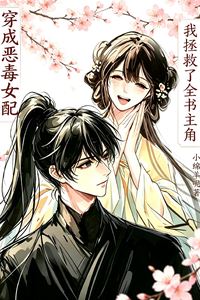
Wen Yinyue, a modern martial arts expert and intelligence operative, awakens in the body of a noblewoman in the Great Sheng Dynasty after a fatal explosion in her previous life. The original owner, the legitimate daughter of the An Yuan Hou Mansion, was betrayed by her stepmother Lady Liu and half-sister Wen Wanru. Drugged with a deadly poison called Qian Ji Yin to ruin her reputation before a forced marriage to the crown prince, the original Wen Yinyue fled into the forest. In her drugged state, she encountered a mysterious dark-robed man bearing a jade pendant engraved with the character "Yuan." After a brief, desperate encounter, she stole his pendant as compensation and fled, only to be cornered at a cliff edge and pushed to her death by Lady Liu's servants. Wen Yinyue inherits not only the body but also a one-month pregnancy and the lingering poison, vowing to survive and exact revenge.

Surviving the fall into a cave at the cliff base, Wen Yinyue uses her knowledge of traditional medicine and martial arts to stabilize her condition. She discovers the poison is in symbiosis with the fetus, making direct detoxification lethal. Choosing a path of slow suppression, she cultivates the Nine Heavens Mystical Spirit Art to strengthen her meridians and protect the child. After weeks of hardship, including a near-fatal encounter with a wild bear, she follows an injured deer to a hidden valley behind a waterfall. This secluded paradise contains a natural hot spring and rare medicinal herbs, including Ice Skin Grass and Blood Ginseng, which are crucial for her recovery and the fetus's health. She establishes a wooden cabin, begins farming, and fortifies the valley with traps, laying the foundation for a new life away from the political intrigues of the capital.

During the winter of the following year, Wen Yinyue goes into premature labor amidst a blizzard. She has secretly recruited a midwife from a nearby village, using a memory-altering herb to ensure the midwife cannot reveal the valley's location. She delivers twin children, a son named Wen Junye and a daughter named Wen Lingxi. The daughter is born weak and blue, but Wen Yinyue saves her using acupuncture and Blood Ginseng infusion. With the midwife's memory wiped, she sends her away, securing the valley as a safe haven for her growing family. Over the next year, Wen Yinyue raises her children while continuing her martial training, eventually breaking through to the second level of her cultivation technique. She also begins planning the establishment of a secret organization to protect herself and aid those wronged by society.

In the summer of the second year, Wen Yinyue leaves the valley in disguise to trade herbs for supplies. On the mountain path, she witnesses a teenage boy, Lin Feng, being beaten by assassins. Lin Feng is the sole survivor of the Zhenyuan Escort Agency, which was destroyed by a corrupt steward named Zhang Biao who framed his father for embezzlement and murder. Recognizing Lin Feng's resilience and shared desire for justice, Wen Yinyue intervenes using poisoned needles to disable his attackers. She rescues the wounded boy and brings him to her hidden valley. After healing him, she offers him a place in her growing organization, proposing the formation of Xiaoyao Pavilion, an organization dedicated to protecting the innocent and seeking revenge against the corrupt. Lin Feng accepts, becoming the first core member and leader of the Shadow Branch.

As Xiaoyao Pavilion expands, Wen Yinyue recruits other marginalized individuals, including skilled martial artists and herbalists who have been wronged by society. The organization is divided into two branches: the Shadow Branch, led by Lin Feng, handles combat and intelligence, while the Salvation Branch, led by Wen Yinyue, focuses on medical aid and herb cultivation. The members swear oaths of loyalty and mutual protection, forming a tight-knit family. Wen Yinyue continues to raise her children, Junye and Lingxi, teaching them martial arts and medicine from a young age. The story concludes with the pavilion fully established, its members training in the valley, and Wen Yinyue looking toward the future with the resolve to dismantle the forces that destroyed her original family and to build a new power base that can challenge the corrupt establishment of the Great Sheng Dynasty.

Latest Release
DateGroupRelease
2026-08-11shanghai fantasy c56
2026-08-11shanghai fantasy c55
2026-08-11shanghai fantasy c54
2026-08-11shanghai fantasy c53
2026-08-11shanghai fantasy c52
2026-08-11shanghai fantasy c51
2026-08-11shanghai fantasy c50
2026-08-11shanghai fantasy c49
2026-08-11shanghai fantasy c48
2026-08-11shanghai fantasy c47
2026-08-11shanghai fantasy c46
2026-08-11shanghai fantasy c45

Community Reviews

Rating(4 / 5.0, 8votes)
5 stars
4(50%)
4 stars
0(0%)
3 stars
4(50%)
2 stars
0(0%)
1 stars
0(0%)

Popular reviews

... Read More
Let me just lay out the stakes because they are INSANE: 1. She's poisoned with a toxin called Qian Ji Yin (Thousand Mechanisms Pull) that's nearly impossible to eliminate and will kill her within three months if untreated. 2. She's one month pregnant with a child that is currently in symbiosis with the poison—the toxin is feeding off the fetal energy, and if she tries to detox forcefully, the baby dies. If she does nothing, both die. 3. She's at the bottom of a cliff with no weapons, torn clothes, and broken shoes. 4. People are actively hunting her. The servant who chased her said: "Catch her! Madam said, alive or dead, she must be seen!" 5. She has no allies, no resources, and no idea where the father of her child is. That's five death sentences stacked on top of each other, and the protagonist is already three steps ahead, formulating a plan while sitting in a damp cave. What makes this work so well is that the author doesn't soften any of it. There's no "but wait, something good will happen!" The fetal movement she feels isn't a comfort—it's a complication. Her medical knowledge doesn't magically cure her; it just gives her a framework for survival. Every advantage she has comes with a trade-off. The symbiosis detail is particularly brilliant from a stakes perspective. It creates a permanent tension throughout the story—every healing attempt is also a risk to the baby, every decision is a gamble. The author has built a conflict engine that will keep running automatically. And the external threat? Lady Liu and Wen Wanru aren't just evil stepmother archetypes. They're smart enough to drug her, chase her to a cliff edge, and ensure she falls. The lead servant's laugh as she goes over—that's the kind of detail that makes you hate these characters viscerally. I'm not just invested in whether she survives. I'm invested in watching her dismantle everyone who tried to kill her.
... Read More
Okay so let me just say—this opening is a masterclass in stacking desperation. The protagonist wakes up, already poisoned, already pregnant, already running from people who want her dead, and the first thing she does is diagnose herself like it's no big deal. That's the kind of cold competence that makes you immediately root for her. I loved it. The plot structure here is tight. You've got the transmigration hook in Chapter 1, the immediate survival crisis (poison + pregnancy), and then by Chapter 2 she's already formulating a plan. No wasted exposition. The author doesn't stop to explain the whole world—they just drop you into the cave and let you figure it out alongside her. That's smart storytelling. What really stood out to me was the jade pendant. The original owner takes it as "compensation" and says "from now on, we owe each other nothing." That line hit different. It sets up this entire thread—the unknown man, the child he fathered, the pendant that's now her only connection to him. And the crown prince? The stepmother? The half-sister with the sweet smile and cunning eyes? All of these threads are being woven simultaneously, and I'm already guessing which ones will snap. One thing I found slightly rushed was the memory dump. The author packs a LOT of backstory into those first few paragraphs—the assassination mission, the explosion, the transmigration, the poisoned soup, the chase, the cliff. It's a lot to absorb in one sitting. But honestly, I didn't mind because the pacing is so breathless that it pulls you forward instead of making you stop and process. The biggest question hanging over me: who is the man in the dark brocade robe? The jade pendant says "Yuan." Is he royalty? A martial arts master? The father of her child? I need to know. The author is playing this card very close to the chest, which I respect.
... Read More
This is the kind of chapter that makes you hold your breath without realizing it. Let me back up. Wen Yinyue has spent all this time trying to stay hidden. She crossed over into this world with nothing but her knowledge, lost everything once before, and built a fragile peace in a valley with her two children. Her conflict is internal — she wants safety, she wants her kids to grow up without knowing what it means to be hunted. But the world keeps finding her. And now Lin Feng. A boy who is literally bleeding out on a mountain path, clutching a broken sword, protecting account books that could take down a corrupt official. He has nothing. No army. No allies. Just a wound that's getting worse by the minute and a group of assassins who want him dead. The stakes for both of them are existential. If Wen Yinyue gets caught helping him, her children lose their refuge. If Lin Feng dies, his father's name stays污ed and Steward Zhao wins. These aren't small things. These are life-and-death decisions happening in real time. "If she hadn't crossed over with ancient martial and medical skills, she would have died at the bottom of a cliff long ago. And this boy before her — armed only with a broken sword and grievously wounded — would surely die if this continued." That internal monologue is the whole story right there. Wen Yinyue recognizes herself in this boy. She knows what it looks like to be framed, isolated, facing people who have everything and you have nothing. The conflict isn't just external — it's the conflict of a person who swore never to get involved again, watching someone die in front of her and realizing she can't walk away. What makes the stakes feel real is that the author doesn't give us easy outs. Wen Yinyue's needles buy three men thirty seconds of paralysis. That's it. She's not an army. She's one woman with two babies and a cave. Lin Feng is bleeding through his abdomen. There's no cavalry coming. There's only what they can do right now, with what they have. And that's what makes you care. Not grand armies or epic battles. Just one person deciding, in a single moment, to throw three needles and run into the mountains with a stranger. That's the kind of choice that changes everything.
... Read More
Okay, so I have to talk about how the plot is setting up these mirrored situations, because it's honestly brilliant and I'm not even mad about it. Wen Yinyue gets framed by the Liu family, loses everything, hides in a valley, has kids, survives on her own. Then she runs into Lin Feng, whose father was also framed by Steward Zhao, whose escort agency was burned down, who's being hunted right now. The author is basically holding up a mirror and saying look how the world works for people who stand up to corrupt power. The plot thread connecting them is that both are fighting against people with money and political connections who can manufacture evidence and destroy lives. But here's the thing — Wen Yinyue isn't just some passive observer anymore. She saved him. She took him into her home. She's already moving from survivor to someone who actively intervenes. That's a plot shift that matters. And the structure of these chapters is doing something clever. Chapter 8 opens with the most peaceful domestic scene — her walking out of the valley with her kids, disguised, trying to live quietly. Then within pages, she's watching a boy get beaten on a mountain path. The whiplash is intentional. The author is telling us: you can hide, you can disguise yourself, you can try to be nobody, but the world doesn't let you off that easy. "An arrow was lodged in his left shoulder, its fletching still trembling." That detail — the fletching still trembling — that's the author making sure you feel how fresh and immediate this violence is. This isn't a backstory. This is happening now. I'm also curious about where the account books fit in. Lin Feng is protecting them even though his father is dead and the agency is gone. Those books are the key to everything — they're the evidence that could bring down Steward Zhao. And now Wen Yinyue has them in her care, essentially. She's going to have to decide whether she stays in her valley or steps back into the fight. The plot is building toward that moment and I am here for it.
... Read More
"She pinched three needles between her fingers, gathering a thread of internal energy at her fingertips, her gaze locking onto the three black-clad men closest to Lin Feng." I need to talk about this moment because it completely redefined who Wen Yinyue is in my head. Up until this point, she's been this quiet, careful woman raising kids in a valley. Sweet. Maternal. Surviving. And then — three silver needles, flick of the wrist, three men down in three seconds. The woman who just spent a chapter talking about buying millet and making cloth toys for her kids is also a person who can neutralize armed attackers without breaking a sweat. This is the kind of character reveal that makes you want to reread everything that came before it with new eyes. Every calm moment, every careful step, every disguised face — she's been holding back this whole time. Not because she's weak. Because she's protecting her children. And Lin Feng's reaction to her is everything. He watches her back as they run. He notices the gentle way she looks at the children. He decides — silently, without a word — that he would repay her even at the cost of his own life. That's not just gratitude. That's the beginning of something deeper. A loyalty that's earned, not given. The kids are also doing interesting things here. Junye, at one year old, is already calm under pressure — watching, observing, not panicking. That's Wen Yinyue's influence. And Lingxi, touching Lin Feng's sleeve and saying "doesn't hurt" — she's already reading people. These children are not just props. They're shaped by their mother and they're shaping her choices. I keep thinking about that scene where Lin Feng sees her smile for the first time without the disguise. "This was the first time since leaving the valley that she shed the cold hardness of her middle-aged woman disguise. Her smile was gentle." That smile — it's not just for him. It's a crack in the armor she's been wearing since she crossed over. She's letting someone in. And that's terrifying for someone who's been hurt before.
... Read More
'From today, your life is my life. I will avenge your enemies; I will protect your child.' That line right there? That's the voice. That's the thesis statement of the entire novel. It's not shouted or dramatic—it's whispered to empty air, almost casual, which makes it infinitely more powerful. This character doesn't do grand speeches. She makes promises and then keeps them. The dialogue in these early chapters is sparse but every line lands. The stepmother's cold whisper—"Ungrateful girl! The crown prince favors you, yet you dare refuse him?"—immediately tells you everything you need to know about the power dynamics in this household. And Wen Wanru's fake sweetness, holding that steaming cup of medicinal soup with a smile that doesn't reach her eyes? Chilling. The author doesn't need five pages of dialogue to establish that these women are dangerous. One scene does it. Wen Yinyue's internal voice is what carries this book. She's a modern special ops agent in an ancient body, and you can feel the contrast. She analyzes her own pulse like a professional. She assesses her situation with tactical precision. When she says "Be patient, Wen Yinyue. This is only temporary," it's not motivation-speaker energy—it's a field operative running a situation assessment. The voice is consistent, sharp, and deeply satisfying. The author's narrative style is also worth praising. There's no over-narration, no telling us how to feel. The prose is clean and functional but never dry. Sentences like "Her fingertips paused, and her heart clenched slightly" do more emotional work than paragraphs of internal monologue in lesser books. One thing I'd note: the dialogue between characters is limited in these chapters, which is mostly because most of them are dead or absent. But what we do get—the servant's vicious shout, Lady Liu's cold threat—each line is distinct and memorable. I can already hear their voices in my head.
See all reviews

Characters

See all characters

Custom lists

See all custom Lists