Dissatisfied [e-sports] - Reviews

Dissatisfied [e-sports]
+Add to Custom List
Sort
Add review
... Read More
"It's not that he didn't want Yan Yibing to bite him; it's just that he couldn't control himself." I NEED A MINUTE. This is the single most devastating sentence in these chapters and I don't even have the energy to be dramatic about it. Han Mo is in the bathroom with cold water running over him, pinching himself to stay grounded, and his first thought isn't disgust or annoyance — it's that he WANTED it. He wanted Yan Yibing's lips on him and that's the whole terrifying equation right there. And Yan Yibing on the other side of that door, crouching and biting his lip and feeling like he wants to disappear into the floor — he's carrying this same electric awkwardness but it's all internal for him. He thinks HE crossed a line, he thinks HE made things weird, he's probably replaying it on loop. Meanwhile Han Mo is the one who actually needed to pinch himself to stay composed. The emotional asymmetry in this scene is everything. They're both drowning but neither knows the other is drowning too.
... Read More
Lei Ming. I need to talk about Lei Ming because this character is doing something really nasty to the emotional architecture of the story. The flashback with Song Tang is viciously told. They were kids — lying on grass, drinking beer, dreaming about Zero. Song Tang held Lei Ming's hand and said, "We must make Zero better in our hands." And Lei Ming — face red, tears streaming — pointed at the ceiling and swore he'd make it happen. And then? Lei Ming sold Zero out. Not for money, not for glory necessarily, but because he wanted traffic. He wanted to be the guy who could embarrass the great team. That's worse than if he'd done it for some dramatic reason. That's just petty. Song Tang's pain is specifically framed as different from everyone else's. Yan Yibing has cold anger. Xu Rui has embarrassment. Fu Haifeng has frustration. But Song Tang? He has the grief of someone whose faith was weaponized against him. He believed Lei Ming. He trusted the guy who was sitting next to him on that grass. And the most devastating detail — Song Tang doesn't even have Yan Yibing's composure. When he says he wants to take down Lei Ming first, Yan Yibing snaps at him. "The match isn't for venting personal grievances." But Song Tang's not wrong. It's just that he's not Yan Yibing, who can separate the game from the wound. Han Mo watching Yan Yibing with that soft expression — "He is my husband, after all" — feels like the story's only moment of warmth in this whole chapter. Everyone else is bleeding emotionally, and Han Mo just... sees Yan Yibing. All of him. Even the version that comes back to be reckless because he has to.
... Read More
Okay so this chapter had me absolutely frozen at this one moment where Yan Yibing stands at the top of the stairs in his pajamas, calling everyone up for a meeting. Like — think about the visual. These are people who just got dragged out of bed in the middle of the night, hair messy, still half-asleep, and there's their captain standing in the doorway like some kind of reluctant prophet about to spill decades of secrets. The corridor was described as 'cooler than the rooms, with a faint night breeze' which is such a small detail but it does SO much. It grounds you. You can feel that temperature shift. It's not some dramatic arena or arena with spotlights — it's just a dim hallway in some shared base, and that's what makes it hit harder. Real life chaos bleeding into something sacred. And then later, the transition to this random Xinjiang barbecue place across from the Zero Club? The way the author describes the lamb curling at the edges, sizzling with oil, cumin powder falling onto hot charcoal — it's almost too normal after everything. That's the genius of it. Life goes on. People still eat. But Yan Yibing turning up the exhaust fan because he's a clean freak and hates the smell? That tiny character beat lands perfectly between two massive emotional scenes. The world feels lived-in here. You could walk through these spaces.
... Read More
I need to talk about this ending scene because it completely wrecked me. Yan Yibing lying there getting a massage, phone buzzing, and Han Mo is on the other end—but he can't speak because the physiotherapist hits his pressure point. The absurdity of it! Yan Yibing is screaming into the phone and Han Mo has to sit there listening to his arch-rival make involuntary noises, not knowing whether to laugh or panic. This is the kind of moment that tells you everything about their relationship without a single confession. "Uh, uh, uh, gently... I can't take it!" — read that again. His voice cracks, he's vulnerable, exposed, and Han Mo hears all of it. What does Han Mo feel when he hears that? Does he picture Yan Yibing winced on a massage table, flustered and breathless? Does it make him feel guilty or... something else? And what about Yan Yibing? He admitted at the start of this chapter that he was touched by Han Mo's effort. Bubbles in his eyes, water running, pretending it was just shampoo. The classic deflection. But then he comes home, exhausted from practice, and suddenly Han Mo calls. His first instinct isn't to ignore it or brush it off—he answers. Even when he can't speak properly. That tells me so much. The irony is layered. He used a female smurf account to get close to Han Mo, and now he's physically unable to hide behind his voice. The mask slips in the most mundane, hilarious way possible.
... Read More
On the surface, this is about a golden trophy. Han Mo wants it back. Yan Yibing has it. There's a minor dispute with Cheng Bin. Done. But the stakes underneath? These people are fighting over HISTORY. Han Mo was Yan Yibing's disciple. He trained at Zero for over half a year. He was kicked out — ONCE — and now he's back as the captain of a rival team, having surpassed Yan Yibing's eight-year record in just two. He's come to claim the golden gun, yes, but more importantly he's come to prove that he doesn't need Yan Yibing anymore. That he's won. Yan Yibing, meanwhile, hasn't found a successor in two years. The forums are asking whether it's 'time to pass the first place gold gun to Han Mo' — and Yan Yibing's refusal to return it for five years suggests he knew, deep down, that this moment would come. That Han Mo would eventually be ready to take it back. Or that Yan Yibing needed more time before letting go. The conflict peaks when Han Mo says 'Even if he has an injury, it can only be from me. Others are not worthy.' This isn't just possessiveness — it's a statement of stakes. Han Mo is saying: I am the only one who has the right to affect Yan Yibing. Not Cheng Bin. Not the league. Not fate. ME. And Yan Yibing's stake? He's been #1 for five years. His identity is tied to being the best. Han Mo surpassing him breaks something. But he also can't let go of the golden gun — the physical symbol of Han Mo's existence in his world. The tension is maintained perfectly because neither character will name what they actually want. Han Mo wants recognition. Yan Yibing wants... something he can't articulate. And the reader is left desperate for them to just say it.
... Read More
Okay so the plot of this chapter is absolutely delicious and I need to talk about it immediately because Han Mo's line hit me like a truck. When Chen Zefeng says Bing Shen spared Lei Ming and Han Mo just... laughs and says look at the kill feed, you can see he NEVER intended to spare him—that is some next-level psychological warfare right there. Let me break down why this plot twist lands so well. Yan Yibing could have just killed Lei Ming outright. Easy. But no, he wanted Lei Ming to stay alive and WATCH. Read those kill notifications over and over:【Zero-ICE has eliminated TZS-ming】, 【Zero-ICE has eliminated YH-hero】—each one a whip lash to Lei Ming's pride. The protagonist didn't win by being the better shooter; he won by understanding his enemy's psychology far better than the enemy understood himself. And the other layers! The JG's concentric chosen circle strategy gets dismantled in one move. Fang Rui gets exchanged one for one by Xiaojie. Then the final circle comes down to five people, then three, then it's just Bing Shen versus JG in a 1v1 showdown with a molotov cocktail deciding everything. The plot is so tightly wound, every thread connects back to Lei Ming's betrayal and the ultimate reckoning. No loose ends, no filler. The author knows exactly what buttons to push. That final post-match Moments thread with all the other players commenting is basically an epilogue that ties up the emotional loose ends. The forum reactions—【The best captain, I'll forever love ICE】and【He's still here, so the old era never dies】—these aren't just fan service, they're narrative confirmation that Yan Yibing's legacy is intact. Brilliant structure.
... Read More
There are layers here that I keep coming back to, and I want to sit with the symbolism a bit because this chapter is richer than it first appears. The flowers are the central symbol and they're doing so much work. Someone sending flowers to a grave for three years without anyone knowing — that's an act of love that exists entirely outside of recognition. It's love as practice, not performance. And it contrasts sharply with Han Tang's relationship with Han Mo, where every interaction is about power and acknowledgment and making sure the other person knows who's in control. The anonymous flowers say: I remember you even when no one is watching. Han Tang's twenty yuan says: I'm giving you this so you know I'm the one giving. Then there's the body as a symbol. Han Mo's mother died from an illness that persisted for years despite every attempt to cure her. Yan Yibing is getting physiotherapy because his body is wearing out despite his care. Both bodies are failing despite effort — one through sickness, one through use. The parallel between a mother's dying body and a fighter's deteriorating body is not accidental. There's something about sacrifice and expenditure here, about what the body costs when you give everything to something. The name Yan is significant too. The customer service says the last name is Yan, and Han Mo's wife is Yan Yibing — but the flowers have been sent for three years, which means Yan Yibing was sending them before their relationship was publicly known, before anything was settled. The symbolism of secret devotion existing before public acknowledgment is quietly powerful. And the author's joke at the end — the customer service asking if Yan Yibing can even remember his mother-in-law's name — is funny but also touches on something real about how much of this life is hidden, how much care happens behind closed doors that the rest of the world never sees.
... Read More
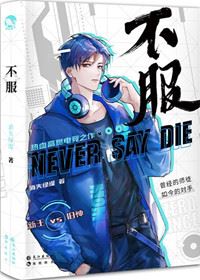
There's a symbolism running through these chapters that I can't stop thinking about. The sniper rifle. It represents control, distance, precision — everything Han Mo IS. But Yan Yibing keeps telling him to put it down and pick up an assault rifle instead. 'It's the aggressive ones who are truly powerful.' On the surface this is tactical advice. But what if it's something deeper? What if the rifle symbolizes Han Mo's emotional armor — the way he keeps his distance, watches from afar, never fires until he's certain? And what if Yan Yibing is actually asking him to take a risk, to get close, to engage? Then Han Mo makes his promise: he'll learn the rifle so Yan Yibing can return to being an entry fragger. He'll take on the burden so his captain doesn't have to sacrifice himself anymore. This is devotion as transformation — becoming what the other person needs so they can be themselves. And the hawk imagery! When Han Mo looks up at Yan Yibing with 'the eyes of a hawk assessing its prey,' everything flips. The hunter becomes the hunted. The observer becomes the observed. Han Mo has been watching Yan Yibing silently for so long — studying his playstyle, understanding his sacrifices, memorizing his movements — that now he finally sees his chance. He's not prey. He's a predator who's been waiting. The coffee motif is interesting too. Bitter, unsweetened, no milk — Han Mo's version of alertness. No comfort, no softening. Just pure,清醒 intensity. And Lei Ming, who waited two years in Team Two without leaving, who watched Han Mo and Song Tang get promoted while he stayed behind — he represents everyone who waits in the shadows, hoping someone will finally notice them. When he asks for the Free Sniper position, he's not just chasing a role. He's chasing validation. But Yan Yibing's question cuts to the heart of it: does Lei Ming understand what that position COSTS? Han Mo paid for his with pride, with self-doubt, with swallowing every insult. Is Lei Ming willing to pay the same price?
... Read More
The dialogue in this section is a MASTERCLASS in subtext and I'm still recovering. Let's talk about Yan Yibing's voice first. He says things like "I don't know the way; I can't go up by myself" while literally wedging his shoe in the door to prevent Han Mo from closing it. The contrast between what he SAYS and what he's DOING is so deliciously unreliable — he's a self-proclaimed "life idiot" but he's playing 4D chess without even knowing it. His dialogue is casual, almost lazy, but every line carries weight he doesn't realize. When he says "I'm so tired" while putting his knees on the armrest and swaying his legs, it's not just exhaustion — it's invitation dressed as complaint. Han Mo's dialogue is the complete opposite. He's terse, guarded, almost monosyllabic. "Climbing the mountain?" "You drank too much last night." "Want to go find them?" Each line is a wall. But the narration underneath tells the real story — his suppressed oppression, his bitterness vanishing, his mind going to "inappropriate places." The gap between his spoken words and his internal reality IS his voice. And the group chat? Perfect comic relief that also serves character. The names, the emoji usage, the casual teasing — it establishes the ensemble dynamic in just a few lines. Yan Yibing being called "Lazy Bing" and Han Mo being the studious one who stayed behind? We get an entire friendship ecosystem in three messages. That final author message though — "It's easy to get fucked by me when you do this kind of thing" — that's not dialogue, that's the NARRATOR breaking the fourth wall to deliver the thematic thesis in the bluntest way possible. No subtext. Just a sledgehammer. I loved it.
... Read More
I want to talk about the pacing because this chapter sequence is genuinely masterful and I need to understand how it works. It starts — and I love this — with someone ELSE losing. Puxin gets eliminated. Liu Sui livestreams through the hate. Lei Ming unplugs. It's almost comedic, this brief detour away from the main story. And then suddenly we're dropped into the finals with zero warning. That pivot from absurd internet drama to life-or-death tournament tension is jarring in the best way. Then the structure does something clever: it gives us Yan Yibing's 1v3 first, which is desperate and gritty and ugly — he's scraping by, losing gear, running on fumes. We're breathless after that. And THEN it gives us Han Mo's 1v4, which is clean and almost supernatural in its execution. The contrast in tone between the two scenes is what makes both hit harder. The commentators are the secret weapon here. Every time the tension peaks, we cut to their voices — 'Oh, Bing Shen is surrounded!' 'Incredible!' — and they function like a Greek chorus, telling us how to feel while simultaneously amplifying the stakes through their own reactions. And the finale — Han Mo winning, the trophy, the declaration — it comes so fast after all that buildup that it almost feels earned because we've been riding this rollercoaster for pages. The final line about the old era and new era is the exhale after holding our breath the entire time.
... Read More
The exhibition match flashback isn't just backstory — it's the thematic key to everything. Let me explain why. Yan Yibing chose the S1897 shotgun deliberately. Short range. Poor accuracy. Lousy damage. In a game where power matters, he picked the worst possible weapon and said, silently, I will protect my teammate even at my own disadvantage. It's an act of devotion disguised as practicality. And Han Mo, armed with a SCAR-L — reliable, effective, fair — walked into those ruins and ended him. The kill notification on the big screen is the symbolic moment where everything cracked. It wasn't just losing a game. It was being publicly defeated by the person you trusted enough to share the field with. The screen flashing those words turned a private rivalry into public spectacle, and Yan Yibing has been carrying that humiliation ever since. Now consider the blacklist. Yan Yibing blocked Han Mo — a digital act of erasure, of saying you don't exist in my space anymore. But he removed it. Not because Han Mo apologized (he didn't), not because anything was officially resolved, but because the wound is older than the pride. The blacklist was always going to be temporary. The question was how long Yan Yibing could convince himself otherwise. And the massage? Physiotherapy for injuries sustained from training — essentially, taking punishment for the sport. Both of them are physically broken in different ways, and they keep showing up anyway. That's the theme underneath everything: the body remembers what the mind tries to forget. Han Mo's injured hand, Yan Yibing's sore muscles, the public killing on a screen — all of it lives in the flesh before it ever gets processed by the heart.
... Read More
I've been thinking about this whole AWM scene for hours and I keep coming back to one thing: the weapon itself is loaded with meaning beyond what the characters are acknowledging. The Ghillie Suit and AWM represent power in this game world. When Han Mo gets them, he could keep them for himself. He's the top player, he earned them. But he immediately passes them to Yan Yibing — to Little Wildcat, the 'newbie' persona he's maintaining. This isn't just gameplay strategy. It's an act of trust and submission wrapped in the language of coaching. But the deeper layer — and this is what the flashback reveals — is the punishment dynamic. Both characters carry this memory of that moment when Yan Yibing defeated Han Mo and said the word 'punishment.' Back then, it was a light tap on the head with a headphone wire. A tease. A power move disguised as affection. Now, with the roles reversed, Han Mo brings up the same word but the weight behind it has completely shifted. When he asks "What... punishment?" his voice cracks. His Adam's apple moves. He's nervous. The confident esports god is suddenly the one exposed. The symbolism of the bandages on Han Mo's hands keeps coming back to me too — they're described as making him look 'heroic,' but bandages also suggest he's been wounded. Even at the top of his game, there are marks. And Yan Yibing notices them. Of course he does. The recurring motif of hands is everywhere in this passage — Yan Yibing's fair, sunless fingers tapping on the gaming computer, Han Mo's bandaged hands on the keyboard, the physical space between them closing inch by inch. Hands are how they communicate when words fail. And at the end, when Han Mo deflects with the Chen Zefeng joke, it's almost desperate — like he needs to break the tension before it breaks him.

Leave a comment

You must be logged in to leave comments. or
