Disastrous Romance - Reviews

Disastrous Romance
+Add to Custom List
Sort
Add review
... Read More
I need a moment. Just a moment. Because what the author did in Chapter 7 was emotionally devastating in the best possible way. Let me walk through the beats because my heart is still racing. Elijah tries to BE KIND—she offers him freedom, she explains she doesn't actually want to enslave him, she uses that word 'condition' thinking it's negotiated consent, thinking she's in control. And Kai? He hears 'a night' and his eyes go from lake-blue to the deep sea. That color shift alone should be a national treasure. Then the kiss—oh god, the kiss. 'His hot tongue invaded her parted lips, swirling around her delicate mouth with unrestrained force.' This is NOT gentle. This is desperate. This is someone who has been caged and chained and broken and is now tasting freedom through someone else's body. And Elijah, trapped and flustered and unable to speak the keyword because he won't let her breathe, finally manages to choke out 'Your… duty to serve.' But here's what DESTROYED me: the moment after the submission spell activates. 'He stretched his lips into a wider smile, his eyes flashing.' That's not gratitude. That's not devotion. That's something darker, somethinghungrier. And Elijah herself knows it—'Oh, dear. She knew she had touched something wrong the moment she saw the change in Kai.' The regret and anticipation warring inside her? I felt that in my bones. This is enemies-to-lovers at its most volatile. Neither of them is safe, and that's what makes every single emotional beat land like a hammer.
... Read More
I've been thinking about the choker nonstop since I finished these chapters. On the surface, it's a magical restraint. A quest mechanic. A visual marker of the slave system in this world. But the deeper you go, the more loaded this object becomes. Elijah originally saw it as an adornment — something that made Kai look pretty, part of the game's aesthetic. Then the moment she understands it as a death sentence, something he literally cannot remove without dying, the entire power dynamic shifts. It's also fascinating how the choker mirrors the romance system itself. These "affection levels" and "quest completion" — aren't THEY a kind of metaphorical choker? Elijah is technically pursuing these relationships, but she's also trapped by the system's rules, by her own goals, by the consequences of failure. She thinks she's in control, but she's wearing her own invisible collar. The title of this book references "The Continent's Four Peerless Men List" — a ranking system that reduces human beings to numbered entries with difficulty ratings and affection percentages. That DEE人造s something about how love and desire get commodified, measured, quantified. The system wants her to optimize relationships the same way the slave market optimized human worth. And then there's the food symbolism — that bowl of soup, the bread she dips, his desperate hunger. In a world where food itself is scarce and precious, sharing a meal becomes one of the most radical acts of humanity possible. He calls her "kind" and she assumes he means the food, but maybe — just maybe — he meant something else entirely. This book is way more layered than I gave it credit for.
... Read More
I keep coming back to the choker. That glowing collar around Kai's neck, the physical manifestation of the 'subjugation magic' that controls him. It's not just a plot device—it's a SYMBOL for every power imbalance in this story. Elijah buys freedom for Kai but immediately re-enslaves him through the game's mechanics. She claims she doesn't want to use him as a slave, yet she needs him to reach 30% affection for her own selfish goal. The pendant with four empty petals represents her quest for completion, but at what cost to the people she's 'collecting'? The author is asking uncomfortable questions about consent, autonomy, and whether kindness motivated by selfishness is still kindness. The blue eyes—Lake vs. Deep Sea. This recurring motif tracks Kai's entire emotional arc. The 'clear blue eyes' of a mountain lake suggest purity, transparency, something untouched. But when the subjugation spell activates, they 'turn as dark as the deep sea'—mysterious, dangerous, full of things that can't be seen from above. The same eyes. Completely different energies. What does that say about the nature of enforced devotion versus genuine feeling? And the nudity—everything exposed in the slave market, then the careful dressing with that pathetic apron, then the bare skin again in the inn. The author keeps cycling between exposure and coverage, vulnerability and armor. Bodies are both weaponized and weaponized against. Nothing is accidental here. Everything costs something.
... Read More
I'm sitting here trying to process what I just read and honestly? My chest hurts. Not because of the explicit content — though wow, the writing IS intense — but because of the emotional whiplash. One minute you're caught up in this incredibly vivid, almost cinematic intimacy scene, and the next you're watching this woman realize she just exploited someone who had literally NO other option. She apologized to him in her MIND only, didn't she? While he was still right there beside her. And then he's back the next morning wearing that choker like it's nothing normal, and she's the one struggling to process what happened. There's this beautiful, painful asymmetry in their emotions that the author captures so perfectly without ever spelling it out. "You're calling me by my name now." That line. That devastating little line. He noticed. Of course he noticed. While she's panicking about quests and affection percentages and the Crown Prince, he's quietly cataloguing every shift in how she addresses him, treating every word like it's something to be measured and kept. And then the breakfast scene — oh god, the breakfast scene. She watches him devour food with "almost desperate hunger" and feels guilty for calling it a "rare treat." She misinterprets his quiet thank you as gratitude for FOOD when really, for someone who's been treated as property their entire life, maybe the kindness itself was the real gift. The sweetness and the ache are tangled together so tightly I can barely separate them.
... Read More
Okay so let me just say — the way this whole chapter unspools is actually really clever. You have Elijah and Kai just trying to get through the forest, right? And then BAM, the Fairy King kidnaps Kai. But what really got me is the structure underneath all of that. The quest system itself is doing a lot of heavy lifting here. First you get 'The Fairy King's Treasure (1)' and the reward for success is literally just 'escape.' Which immediately tells you something is deeply wrong with this place. The game is gaslighting you, and I loved that. Then the second quest drops — Kai has been kidnapped, time limit of 2 hours, failure penalty is 'Kai's Humination.' Wait, the notification says 'Humiliation' but honestly the fear it planted in my head was SO much worse than what the words actually said. The author is playing with us, making us imagine horrors that may or may not be coming. Classic misdirection. But the real plot twist? The Fairy King isn't even the villain. She's a victim too. The whole thing is a curse — eleven years trapped, commanding her to 'take the most beautiful man in the world.' That revelation completely reframes everything that just happened. All that tension, all that righteous anger Elijah had, and the person she was fighting wasn't evil. She was enslaved. And then on top of that, there's ANOTHER victim — this little boy with honey-gold hair, bound in the same way, held for about a year. The author just keeps stacking revelations on top of each other like a house of cards that somehow doesn't fall. The hidden story unlock — 'Curse of the Continent' — is also such a smart narrative breadcrumb. It suggests the Fairy King's curse isn't isolated; it's connected to something much bigger in this world. I went from laughing at the injustice of the quest system to genuinely unsettled by the scope of what's happening. That's good plotting. That's the author earning my attention.
... Read More
'The slaves in the top-grade cages'—that single phrase tells you SO MUCH about this world without a single exposition dump. You immediately understand there are grade tiers, that beauty and status determine value, that some slaves are displayed like jewelry while others are chained together in the dirt being whipped. The worldbuilding is embedded in the background radiation of every scene. The slave market itself—musty, loud, brutal. Whips cracking, bodies scarred and naked, the merchant's calculated smile scanning Elijah 'from head to toe' like she's inventory. The specific detail of 'short chains' connecting ankles, the sound of 'sickening impact' echoing, the way Elijah's ankle tingles from Kai's grip while his back blooms with 'dark purple bruises'—these aren't decorative details, they're visceral. You don't just read this scene, you FLINCH with her. Then the transition to the inn—'Leaving the musty market behind'—the shift from public brutality to private tension is masterful. The bathroom water sounds, the apron (that filthy one-string thing meant to cover him), Kai emerging with silver hair dripping and skin gleaming like 'a precious mineral.' The contrast between the grime of the market and the ethereal beauty of washed-up Kai is almost unfair how effective it is. And the pendant! 'The flower-shaped pendant had four indented petals, each meant to hold a gem symbolizing the OP.' Four peerless men, four gems, one pendant. The author is planting objects that will carry enormous symbolic weight by the end. I can already feel it.
... Read More
Okay so first of all—can we just talk about how that quest title completely misled us? 'The Fairy King's Treasure (1)' sounds like, I don't know, a chest of gold or a magical artifact. Not literally captured men tied up in a forest. That twist hit me like a truck. The moment Elijah figured it out and thought 'the treasures seemed to be the captured men'—yes. Yes, exactly. The horror of it. Those 'fairies' weren't magical beings at all, just grotesque captors hoarding people like loot. But here's what really got me: the structure of the whole rescue. They go in, Kai gets separated, Fremin appears out of nowhere, and suddenly Elijah's doing child rescue AND keeping her slave companion safe at the same time. The stakes doubled without warning, and I was genuinely worried for both of them. The portal appearing right when the quest notification chimed was such a clean cause-and-effect—the system basically saying 'you did the thing, now go' before the light started flickering. Smart writing because it forced urgency. She couldn't linger. She had to move. And then Rike literally appears the second they exit. Not even five minutes of breathing room. Is this author trying to kill me with plot density or what? The reunion between Fremin and his brother was sweet but honestly kind of surreal given how many things happened in one chapter. Three days without seeing another soul and then—boom, two new characters introduced simultaneously. It was chaotic in the best way.
... Read More
I have to give credit where it's due — the dialogue in this thing is genuinely good and I wasn't expecting that. The two men in Chapter 1 have distinct speech patterns even though neither speaks much. Frederick's voice is described as "like a growling beast" and his dialogue matches that energy: rough, demanding, physically present in every word. When he says "Do you remember doing the deed on the floor with Zion? You liked it rough," it's crude but it also reveals something — he's keeping score, he's competitive, and he's trying to assert dominance through sexual history. Zion's presence is mostly implied through Frederick's dialogue, which is a smart choice. You hear about him without needing to hear from him yet, and that creates anticipation. But the real standout is the goat-mustached man in Chapter 4. His dialogue is casually cruel: "The ones on this side are the top-grade. They've been through extensive training, so they're highly obedient." The word "training" here is doing so much work — it's euphemistic, dehumanizing, and matter-of-fact all at once. And when Elijah says "What about those being whipped over there?" and he responds "You don't need to see them" before she insists on looking — that exchange perfectly establishes their power dynamic. He's trying to control what she sees, and she's refusing to be controlled. The game notifications have their own voice too — clinical, impersonal, almost cheerful. "Ding! [Quest: 'Slave Trade']" contrasts violently with the darkness of the quest itself. That tonal dissonance between the system's cheerful delivery and the horrific content is exactly the kind of voice choice that makes a story memorable.
... Read More
I need to talk about this man. Rike. Who IS he? First impression: sculpted features, broad shoulders, gentle smile, and apparently a 'Peerless Man' status that our notification system CONFIRMED. He shows up, scoops up his crying brother like it's the most natural thing in the world, and then immediately invites Elijah to camp with him? Bro has zero chill and I am HERE for it. But what really sold me was the contrast. Elijah explicitly compares Kai and Rike—Kai being this delicate, almost ethereal figure ('like a deer') while Rike is all 'valiant lion.' And the way he treats Fremin! So tender with the kid, then completely composed when facing Elijah. There's something deeply unsettling about how effortlessly he commands respect too—Mason literally bowed his head the SECOND Rike said his name. One word and the tension dissipated. That's not just authority, that's power. What's also fascinating is Elijah's internal monologue. She catches herself thinking 'is this love at first sight?' and then immediately guiltily reminds herself she's here for Prince Fredrick. The fact that she's already susceptible to handsome men AND she has a quest target in mind? She's so transparently trying to stay focused and failing miserably. When Rike called her 'lady' and she asked why, his response—'you seemed like one'—was such a smooth, mysterious line. I want to know WHAT he sees in her that made him classify her that way. Also can we discuss Kai's reaction? 'Mistress, I'm fine' when offered sword training, then snapping at Mason with 'watch your tongue, slave'—this boy has layers of trauma and pride that I am so ready to unpack.
... Read More
Let me walk through what's actually at stake here, because this is where the author really earns their keep. On the surface, it's simple: Kai is kidnapped, you have 2 hours to rescue him, or he suffers 'humiliation.' That's a classic ticking clock setup, and honestly, it works. But the author keeps raising the bar. First, the forest itself is hostile — those stinging fairy insects, the looping paths, the disorientation. You're fighting the environment AND the enemy simultaneously. Then Kai gets taken. Then the rescuer discovers the enemy isn't even the real villain. Then there's ANOTHER victim. The stakes don't just increase — they multiply. What's interesting is the INTERNAL conflict too. Elijah is a Knight of Vigor — she has power, she has training, she has a sword glowing with mana. But she's also newly arrived in this world, still figuring out the rules. When the Fairy King tells her she broke a curse through her abilities, Elijah is processing that in real-time. She doesn't have the framework to understand what's happening. Her external competence doesn't match her internal confusion, and that's a different kind of vulnerability. The time limit creates such sharp tension. Two hours. She's walking through a forest that loops back on itself, fighting through swarms of insects, racing against an unknown deadline. Every repeating tree, every wrong turn, every second of combat is stretching that deadline thinner. And the failure penalty — well, the author doesn't spell out exactly what 'humiliation' means, and I think that silence is deliberate. The reader's imagination is always worse than any description. But the real conflict reveal comes at the end. The Fairy King mentions eleven years. Eleven years of being forced to kidnap people. And now there's a boy who's been there for about a year. This isn't a one-rescue quest. This is a pattern. And Elijah has just become part of it. The stakes have shifted from 'save one person' to 'what is this place, who put this curse here, and how do you stop it without becoming part of it yourself?' That's a much bigger fight. And I need to know what happens next.
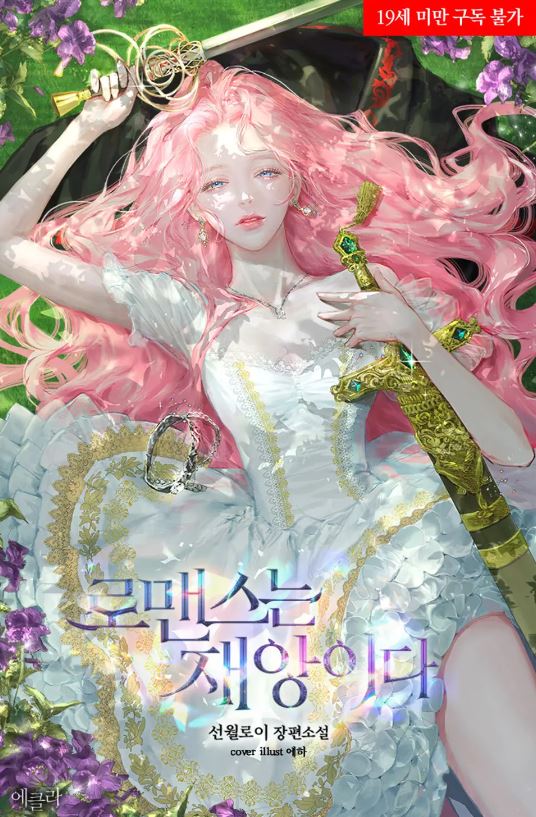
... Read More
The title of this special event — Deus Ex Machina — is the key to everything. It means "god from the machine," a plot device where a divine intervention resolves an impossible conflict. But the story is asking: what if the god IS the machine? What if the intervention isn't salvation but entrapment? Elijah's journey from player to played is the central metaphor here. She spent two weeks obsessing over a happy ending that didn't exist, and in her persistence, she became part of the game. Her pink hair — the color of strawberry cream — is mentioned repeatedly, almost obsessively. It's the visual signature of her new identity, and it's also the color of something artificial, dyed, constructed. She wanted to control the narrative by completing every route, and now the narrative controls her. The most striking symbolic moment is when she checks her backpack and finds her legendary items gone. Those items represented her mastery, her investment, her power within the game's logic. Losing them means the game has stripped away the very systems that gave her agency. She's not a top-ranked knight anymore — she's starting from zero in a world where the rules favor suffering over virtue. And then there's the slave market itself as symbol. Slaves in Deus are described as "those with exceptional combat abilities" — the strongest people in the world, reduced to property. The first peerless man is among them. This is the story's thesis: power is fragile, desire is dangerous, and the thing you most want to control will ultimately control you. The line "How did it come to this?" isn't just confusion — it's the beginning of philosophical awakening. She's not asking how she entered the game. She's asking how desire became captivity.
... Read More
"Mistress…" Those two words hit different. I need to talk about this dynamic because it is EVERYTHING. From the very beginning, there's this clear power imbalance — Elijah is the Knight, Kai is her attendant. But what makes it so compelling is how quickly that collapses under pressure. When the fairies swarm and Kai gets taken, it's not Elijah's status that matters. It's her desperation. And Kai — even bound, even terrified, even stripped of his clothes — he doesn't break. He cries, sure, but the moment Elijah arrives he looks at her and says "Mistress…" and it's not fear in his voice. It's relief. But here's what really got me: after she rescues him, the first thing she does is hold him. Not a dramatic speech, not checking if he's physically okay first — she just pulls him against her chest and holds him while he trembles. And Kai? He buries his face in her and wears "a soft smile she couldn't see." That detail. The author didn't need to show us his face. We already know exactly what that smile looks like. And then there's the clothes situation. Elijah, panicked and guilty and emotionally overwhelmed, goes "Honestly, where did you lose your clothes…?" and tries to play it off casually. That's not awkward writing — that's CHARACTER. That's someone who doesn't know how to process heavy emotions so they deflect with practical concerns. It's so human. It's so Elijah. I also have to mention Junabi. The Fairy King going from drooling over Kai to suddenly lucid and apologetic — it completely changes how we see her. She says "I'm so sorry! But it wasn't my will" and you believe her. She's not a predator; she's a puppet. And yet Elijah still calls her a "crazy b*tch" under her breath. That's realistic. That's how trauma responses work — you can intellectually understand someone wasn't in control and still feel enraged at what they did. The boy in the corner — golden hair, emerald eyes, bound for a year — changes everything too. Now Elijah isn't just responsible for Kai. She's responsible for another victim. Her protective instinct is about to expand, and I am here for it.

Leave a comment

You must be logged in to leave comments. or
