Summary

... Read More

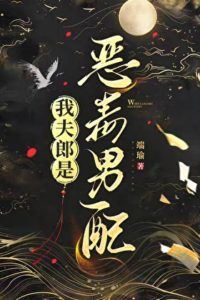
Xu Qi is a man whose life is defined by quiet passivity and invisible erasure. Physically frail and socially overlooked, he works a monotonous office job where his colleagues openly exploit him, and he endures the burden without complaint. His marriage to Liang Yue, a successful and ambitious architect, appears stable on the surface but is fundamentally hollow. They have slept in separate bedrooms for four years, a arrangement initiated when Liang Yue claimed Xu Qi disrupted her focus. The union was never born of passion but served as a pragmatic shield against parental pressure for grandchildren, a strategy that has now failed. Liang Yue has reached her biological deadline and is preparing to end the marriage, yet she has not yet informed Xu Qi.

The narrative tension ignites when Xu Qi discovers the specific cause of Liang Yue’s emotional withdrawal and infidelity. While waiting in his car outside a dental clinic, he observes Liang Yue meeting a man who emerges from the building wearing a white coat. The man is Liao Jinxue, a figure from Xu Qi’s high school past whom he has watched obsessively through the lens of a camera for years. Liao Jinxue was once a poor but brilliant student who transferred schools, leaving behind a trail of unspoken admiration from Xu Qi. Now a distinguished and handsome dentist, Liao Jinxue represents everything Xu Qi feels he lacks: success, vitality, and social standing. The realization that his wife is cheating with this man shatters Xu Qi’s fragile equilibrium, replacing his usual numbness with a sharp, vibrating jealousy.

Instead of confronting Liang Yue or initiating a divorce immediately, Xu Qi chooses a path of stealthy infiltration. He fabricates a dental appointment to see Liao Jinxue, using a pretext of tooth decay to gain entry into the dentist’s private professional space. The encounter is tense and awkward. Liao Jinxue is cold, indifferent, and barely acknowledges their shared history, treating Xu Qi as just another patient. Despite this rebuff, Xu Qi secures a follow-up appointment and manages to connect with Liao Jinxue on social media, though the interactions remain sterile. He begins to visit the clinic regularly under the guise of needing further dental work, specifically a tooth filling that he delays indefinitely to prolong his contact with his rival.

This new dynamic introduces a complex psychological layer to Xu Qi’s character. He oscillates between self-loathing for his cowardice and a twisted sense of purpose. He believes that by understanding Liao Jinxue, he might find leverage or closure regarding his marriage. Meanwhile, his home life grows increasingly suffocating. He visits his mother, Chen Fang, who relentlessly pressures him and Liang Yue to produce a child, unaware that their marriage is already in ruins. Xu Qi’s silence in these family gatherings highlights his isolation; he is trapped between a mother who sees him as inadequate and a wife who sees him as irrelevant.

A pivotal turning point occurs when Xu Qi tracks Liang Yue one evening. He follows her car to a restaurant where she meets Liao Jinxue. The scene captures the couple in intimate conversation, confirming the depth of their affair. Xu Qi attempts to photograph them but fails, dropping his camera in a moment of acute distress. This failure marks a shift from passive observation to active, albeit painful, engagement. He later develops the photos at a local studio run by Uncle Liang, an eccentric old man who serves as a mirror to Xu Qi’s own loneliness. Uncle Liang notices Xu Qi’s fixation on Liao Jinxue’s images, prompting Xu Qi to vaguely acknowledge the past connection.

The story direction moves toward a psychological unraveling rather than a dramatic confrontation. Xu Qi is no longer just a victim of his wife’s infidelity; he is becoming obsessed with the man who replaced him. His visits to the clinic become a ritual, a way to exist in the same air as Liao Jinxue. The power dynamic is skewed, with Liao Jinxue holding all the social and romantic capital, while Xu Qi clings to the remnants of their high school acquaintance. The narrative sets the stage for a deeper exploration of Xu Qi’s internal world, his unfulfilled desires, and the possibility that his fixation on Liao Jinxue may transcend mere jealousy, hinting at repressed emotions from their youth that were buried under years of conformity and silence.

Latest Release
DateGroupRelease
2026-09-26knoxt c3
2026-09-26knoxt c2
2026-09-26knoxt c1

Community Reviews

Rating(4.1 / 5.0, 27votes)
5 stars
10(37%)
4 stars
10(37%)
3 stars
7(26%)
2 stars
0(0%)
1 stars
0(0%)

Popular reviews

... Read More
I just finished reading this and I need a minute because the pacing hits different here. It starts in the office - quiet, mundane, Xu Qi eating his lunchalone while staring at sparrows. Normal stuff. Then BAM - Liao Jinxue texts him with something about orthodontics and youth and Xu Qi laughs unexpectedly. The author uses this tiny moment to pivot us from workplace drudgery into the emotional chaos. Brilliant.
... Read More
Let me just say this: the opening description of shoes is one of the most economical and devastating character moments I've read in a long time. Two pairs. One pair belongs to Xu Qi—leather shoes, bottom rubber reinforced more than once because they crack. The other pair belongs to Liao Jinxue—polished, gleaming, 'like those on display in the windows of luxury stores.' That's it. The author doesn't need to describe their entire life trajectories. The shoes tell us everything. Xu Qi is the one who's been grinding himself down, patching things up, making do. Liao Jinxue has somehow arrived somewhere else entirely. And the jealousy hit is so raw—you can feel Xu Qi's nails pressing into his palms. This isn't just professional envy; this is personal, it's layered with everything that happened between them. The Liang Yue thread adds another dimension. Xu Qi knows that 'Liang Yue gave up on him and chose Liao Jinxue, which is obviously an advantageous thing.' He's saying it almost to himself, like he's trying to convince himself that this is logical, that it makes sense. But the emotion underneath is anything but logical. What fascinates me most is Liao Jinxue's behavior. On the surface he seems cold and dismissive—but watch closely: 'Liao Jinxue glanced at the corners of his stiff mouth, and was silent for a while, as if he didn't see anything.' DID he see? He noticed. He chose not to comment. And then he schedules the follow-up appointment. Who does that? Someone who either doesn't care at all, or someone who cares in a way he can't show. I'm genuinely torn on which interpretation is right, and that ambiguity is what makes this relationship so compelling. The dynamic between these two feels like a loaded gun that hasn't gone off yet. Every interaction is charged with years of history neither of them will acknowledge.
... Read More
Can we just talk about Uncle Liang for a moment because this man has more personality in his pinky finger than some authors put in entire supporting casts. 'Don't look at what time it is, and don't open the store at night!' — immediate characterization in one line. This is a man who lives by his own schedule and doesn't care if you agree with it. 'That's what I taught well, there's nothing wrong with the camera.' — OH MY GOD. He spent the last five minutes dissing Xu Qi's equipment and then immediately takes credit for its quality. This is a parent move. This is legendary. The dialogue between them has this specific rhythm—Uncle Liang fires off opinions like weapons, Xu Qi absorbs them and offers minimal deflection, and somehow this becomes a form of intimacy. They don't need to talk about feelings because the feelings are in the exchange itself. 'I bought it for 800' and Xu Qi's quiet smile? That's two people who understand each other without saying what they mean. The narrative voice overall stays locked in Xu Qi's head—heavy on sensory detail (the taste of the filling, the suffocating car air, the heat of fresh prints), lighter on internal monologue. The author trusts us to understand his emotions from what he notices, not what he thinks. That's skilled restraint. One complaint though: Liao Jinxue speaks exactly zero words in this entire passage and yet already feels like the most dangerous person in the story. Is that on purpose? Because it's working.
... Read More
Xu Qi stood there with this seven-year-old camera and couldn't press the shutter even once. Seven years old, by the way—he's been carrying this camera forever, and somehow it mirrors his relationship with Liang Yue. Old, worn, still functioning but clearly past its prime, and yet he won't let go of it. The scene itself is structured beautifully, though you might not notice unless you're paying attention. It starts with a lie, moves to suspicion, then to pursuit, then to witnessed intimacy (from a distance, through a lens), and finally to the photo studio where the past literally comes back to haunt him. Uncle Liang recognizing Liao Jinxue from high school is the twist that recontextualizes everything. Up until that moment, I thought this was a straightforward jealousy story. Turns out there's a whole timeline I'm missing. And notice how the author never gives us Liang Yue's POV in this section. We only see her through Xu Qi's eyes, through the camera lens, through his interpretation of her smile and her laughter. That's deliberate. The narrative is keeping us trapped in Xu Qi's headspace, which means we're getting an unreliable emotional account. Is he misreading things? Is he projecting? Or is he the most accurate observer in the room? The book is playing with us here. Also—the setting shifts matter. From the suffocating car in traffic to the open space of the photo studio, from noise to relative quiet. The physical journey mirrors his need to process what he just saw. And ending on Uncle Liang's mysterious trailing-off sentence? That's a chapter hook that actually works instead of feeling cheap.
... Read More
Let me start with teeth because I genuinely think this is the central symbol of the entire novel so far. We have cartoon images teaching children how to brush their teeth correctly at the clinic where the affair takes place. We have Xu Qi claiming he has 'tooth decay' as an excuse to visit that same clinic. And we have Liao Jinxue—the man who took Xu Qi's wife—literally named after something medicinal (Jinxue sounds like it relates to healing or extraction). Teeth are about what's hidden inside your mouth, what you bite down on, what decays unseen. Brilliant. Then there are the photographs. Xu Qi's repeated photography of Liang Yue—"This repeated operation has made his finger muscles remember when to press the shutter"—creates this haunting image of someone documenting the person they're losing. Photos are frozen moments, proof that something existed. But they're also helpless; you can watch someone in a photograph and still not be able to reach them. The blurred double image in one photo, the familiar man beside Liang Yue—Xu Qi is literally capturing evidence of his own replacement. But the line that broke me was this: "It was the same thing, a life-saving charm that made their parents stop urging." Their marriage is described as a talisman. Not a partnership, not love, not companionship—a 护身符 (life-saving charm). Five years of marriage reduced to a superstition that kept their families off their backs. The theme of performance versus reality runs through everything: Xu Qi performs the role of husband, Liang Yue performs the role of busy professional, Chen Fang performs the role of concerned mother-in-law. Nobody is being honest, and the novel seems deeply interested in what happens when the performances start to crack. The separate bedrooms, the cold food, the unused living room—all of these are physical manifestations of a relationship that has become a hollow ritual. The symbolism is never heavy-handed; it just accumulates until you can't look at a dining table the same way again.
... Read More
'A bit of an impression.' I need to just sit with these two sentences for a moment. Xu Qi builds up this entire speech in his head—he's rehearsed this. He's probably thought about this encounter a thousand times since graduation. He asks: 'Do you remember me? We were high school classmates. You transferred to No. 13 Middle School in your second year of high school. I was in class 7 the class next to yours, do you still have any impressions?' He gives context. He gives history. He gives Liao Jinxue EVERYTHING he needs to remember him. And the answer is: 'A bit of an impression.' The narrator then tells us: 'For these four words, Xu Qi cleaned and grinded his teeth, and he would have to fill his teeth in two days.' This is the most physical manifestation of emotional pain I've encountered. His body is literally reacting to the rejection. He's not just disappointed—he's in pain, and the dental imagery makes it almost grotesque in its vividness. And what breaks my heart most is Xu Qi's attempt to recover. He 'reluctantly squeezed out a little smile, dispelling a little gloom in his eyes, and tried his best to keep his voice light.' He's performing normalcy. He's performing that everything is fine. But we see it—the smile is reluctant, the gloom is only partially dispelled, his voice is an effort. The jealousy returns 'familiar' and 'unwilling,' swelling silently. Familiar because it's old, unwilling because he thought he'd moved past it. But of course he hadn't. Years of suppressing this emotion haven't eliminated them—they've just pressurized them. The final nail in the coffin is the WeChat request. Twelve sentences of reasoning, and the response is a QR code on a wall. That's not rejection—that's something worse. That's indifference. And indifference hurts more than any harsh word ever could.
See all reviews

Custom lists

See all custom Lists