Summary

... Read More
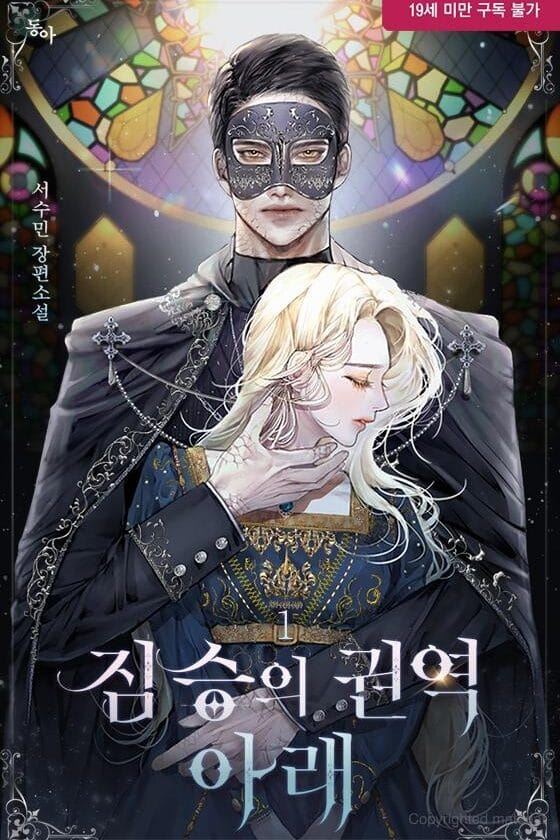
Eld was a noble confined to a dark room since childhood, surviving only on dreams of playing a VRMMO called『Broken Balance Online』on Earth. After starving to death, he woke up reborn as the fourth son of a poor low-class noble family named Gerd. His family plotted to banish him on his fifteenth birthday under the guise of a『Coming of Age Ceremony.』Eld realized this world operated identically to BBO: magic, job classes, skills, and leveling existed. However, the inhabitants lacked basic knowledge of common magic like『Self Cure』and did not understand combat mechanics such as critical hits.Rather than undergo the ceremony, which assigned random basic job classes, Eld decided to travel to the royal capital to change classes at the cathedral. He left home with a shabby sword and 10,000 gils. On the way, he encountered a Wolf, the weakest monster in BBO, and killed it instantly using critical hit techniques he had mastered in the game. He sold the fangs for 34,000 gils and registered as an F-ranked adventurer at the Elia guild.During the admission exam, Eld faced a Swordsman examiner. By exploiting the examiner's『Guard Crush』skill recovery time, Eld landed a Miracle Strike—a critical hit achievable by relaxing the hand upon impact—that sent the examiner flying. Eld passed and began taking requests. Teresa, the receptionist, tricked him into hunting『Kick Rabbits』but actually directed him to a Lesser Wolf hunting ground. Eld cleared six Lesser Wolves and later accidentally defeated 276 Army Spear Mice, a rank C monster, earning millions of gils. This profit allowed him to purchase a high-quality sword and buy a ferry ticket to the royal capital.On the ferry, Eld encountered Myna Maxia, president of the trading company operating the vessel. Myna was struggling to brew a『Pale Green Spirit Potion』and hired Eld to complete the task. Eld recognized the recipe from BBO and successfully brewed the potion, receiving a certification of trust from the Maxia Company and double payment. Shortly after, a Sea Dragon appeared, aiming for the ship's ancient relic, the Water Ferry Gem, which powered the vessel. As the dragon approached, passengers panicked, and Eld prepared to confront the threat with his limited Novice abilities.
Latest Release
DateGroupRelease
2026-10-01light novels translations c215
2026-10-01light novels translations c214
2026-10-01light novels translations c213
2026-10-01light novels translations c212
2026-10-01light novels translations c211
2026-10-01light novels translations c210
2026-10-01light novels translations c209
2026-10-01light novels translations c208
2026-10-01light novels translations c207
2026-10-01light novels translations c206
2026-10-01light novels translations c205
2026-10-01light novels translations c204

Community Reviews

Rating(3.9 / 5.0, 32votes)
5 stars
10(31%)
4 stars
9(28%)
3 stars
13(41%)
2 stars
0(0%)
1 stars
0(0%)

Popular reviews

... Read More
I need to talk about the royal capital reveal because honestly, it was such a cool moment. You've got this protagonist who's been on a boat, fighting a Sea Dragon, all this chaos — and then suddenly you're looking out and seeing the capital lights up ahead. The author drops this one line: 'In the outskirts of town stood my destination. The crest of the God of Jobs, Jias, was carved on its walls.' And then immediately undercuts it with 'It looked dilapidated with nary a light to be seen, only being illuminated by the surrounding lights.' Like... wow. This whole religion system around Job Gods, the old abandoned church versus the fancy real cathedral downtown, it all just clicked into place. The ferry system too is interesting — instead of regular sails, they use a Ferry Stone attached to the mast to move across water. That's a unique worldbuilding touch right there. It's not just 'ships go brrr,' there's a specific mechanic. And the fact that destroying the mast means the ship is stuck forever? That raised the stakes visually. You could literally see the danger. But my favorite part has to be the nighttime scene when our guy sneaks into the capital. 'Even the whole capital is asleep at this hour. Most of the lights were turned off even on the main street.' The transition from the bright chaotic daytime city to this eerie quiet at 3 AM, where you can barely see your foot in front of you without Night Vision — that atmosphere shift was chef's kiss. The author really knows how to paint a scene. 'I couldn't hear a single soul in the area.' Just silence and darkness, and then... voices. Something's off. Classic horror setup but done efficiently.
... Read More
Okay, I need to talk about the scene where Mylia accidentally uses Combo Attack and it opens up EVERYTHING. This is such a brilliant narrative trigger because it's not some huge dramatic reveal—it's just her saying the words and her spear gleaming, and suddenly the entire foundation of how this world works starts cracking. The protagonist's reaction is perfect: "Wh-What the heck is this?" He already knew something was off about the skill registry, and now we see the proof in real time. What I love about this plot development is how it ties into the larger system problem. The skill list only shows about eighty percent of basic skills, and advanced ones are completely absent. This isn't just a minor gap—it's a fundamental flaw in how this world's power system is structured. And the protagonist, with his from-another-world knowledge, sees all of this clearly while everyone else is just accepting it as normal. The pacing of the chapters leading up to this is also smart. We go from the fight planning, to the discovery during combat, to the aftermath where they split the loot, to the guild visit where everything escalates. Each chapter pushes the plot forward without feeling rushed. The twenty-minute fight against the Raging Ape is a nice callback too—earlier the protagonist was worried about waiting for poison to kill it, and now here they are, tearing through it because the right tools finally exist. And then the guild scene? The manager basically has a full system crisis on his hands. A Novice who can block a Raging Ape's attacks alone, a hero class that didn't even have a name ten years ago, and now an unknown class that shouldn't exist. The protagonist playing dumb and pretending he's still just some guy who passed the exam with a sword is both hilarious and tense. I genuinely wonder how long he can keep this up before someone connects the dots.
... Read More
The guild entrance scene is such a clean worldbuilding moment. You walk in and there's literally a world map right at the door—royal capital on a neighboring continent, sea travel involved. Within seconds you understand the scale of this world and the protagonist's end goal without any exposition dump. I love how efficiently this author does it. Then you get the detail about adventurers not being polite to nobles, which is such a small but vivid character note that tells you everything about the adventurer subculture. And the purchasing counter scene—34,000 gils for a set of fangs, one silver coin equals 1,000 gils, the receptionist's radiant smile turning dark when she hears 'Novice'—it all builds this world that feels lived-in and functional. But the line that really got me was: 'Unlike in BBO, if you die here, there's no respawn.' That single sentence changes EVERYTHING. It shifts the entire tone from gamey adventure to genuine survival horror for the protagonist. Every fight from here on out carries real stakes, and that's masterful worldbuilding because it's not about describing castles or magic systems—it's about reminding the reader that death is permanent. The training area with wooden swords, the receptionist serving as referee, the formal declaration 'Let the Adventurers Guild admission exam begin'—it all feels like a real institution with real procedures, not just a plot device.
... Read More
There is a moment in Chapter 11 where the prose does something I didn't expect. The protagonist steps into Elia's Second Forest and the description is almost deceptively calm: 『So that's the Kick… Rabbit?』 One sentence. That's all it takes to shatter the entire illusion the author built up. We spent three chapters with the bestiary, the combat manual, Teresa's recommendations, the map, the travel advice—all of it constructing a picture of a 'safe' hunting ground for beginners. And then one forest walk and every assumption collapses. The imagery here is sharp. Six Lesser Wolves. Fifty meters away. Noticeably larger than Kick Rabbits. Actually moving toward him with full awareness. The writer doesn't dramatize it with fire and blood—they just lay out the facts like a battlefield report, and the horror comes from the contrast between what was promised and what's actually there. But the worldbuilding in this section goes deeper than the immediate scene. The entire guild system feels alive. The duty contract with its death penalty clause. The ferry that costs three million gils for普通 public but is 'primarily used by guild and country officials.' The fact that the world's strongest adventurer—Gillart—only achieves Miracle Strikes twenty percent of the time. These aren't set-dressing. They're the bones of a world that operates on its own logic, with its own hierarchies, its own bureaucracy, its own hidden dangers. The bestiary itself is a worldbuilding masterpiece. It's thin because 'barely any adventurers read books.' That single detail tells us so much about this society—knowledge isn't valued, training is informal, most people survive on instinct. The combat manual's most advanced technique is a 200-word footnote about Miracle Strikes. This is a world where the best fighters are self-taught, where the 'official' knowledge is woefully inadequate, and where someone from another world with game-like knowledge has a massive but unacknowledged advantage. The forest didn't lie. The people around him did. And that distinction changes everything.
... Read More
The narrative voice in this sequence is immediately distinctive, and I want to focus on why it works so well. The protagonist's internal monologue has this conversational, almost rambling quality that makes them feel like a real person thinking out loud rather than a character delivering planned observations. "(Let's check the place out.)" — that parenthetical aside feels exactly like something you'd mutter to yourself when sneaking somewhere you shouldn't be. It's not narration; it's actual thought. What's remarkable is how the voice shifts between registers. There's the practical, calculating voice — assessing lock types, evaluating escape routes, weighing options. Then there's the emotionally reactive voice — the genuine surprise at recognizing the Garden of Despair, the dry self-deprecation about the sword costing 150,000 gils. And then there's the strategic voice that emerges during combat, which is notably more clipped and efficient. The prose itself becomes leaner when spell-casting begins, mirroring how a fighter's mind narrows to pure function. "Fire Arrow. Fire Arrow." The repetition isn't just tactical; it's rhythmic, almost incantatory. Brazis's dialogue is a masterwork of voice construction. In just a few lines, he establishes himself as charismatic, dangerous, and fundamentally dishonest — all without saying anything overtly threatening. "Would you like to join us?" The casual familiarity is the threat. He speaks like a salesman closing a deal, and that's what makes him so unsettling. The pivot from recruitment pitch to murder attempt is handled through dialogue that barely changes tone: "All that talk just now was just a diversion" — the protagonist's observation lands with devastating simplicity. The author also uses silence as a vocal tool. When Brazis takes the Artificial Devil Drug and starts screaming, there's no dialogue — just sound. The transformation from speech to inhuman noise is the author's way of showing that something fundamental has been lost. Words are human; what Brazis becomes can no longer produce them. One line that absolutely made me laugh out loud: "Is that how they're talking about me? I'm pretty sure the only reason I'm 'unidentified' was because I didn't know anyone on that ship. And please stop calling my sword shabby. It cost me 150,000 gils!" This is such a perfect character moment — the protagonist's defensive pride about their weapon cuts through the tension like a knife, and it does so entirely through internal voice rather than external action. That's confident writing.

... Read More
Can we just take a moment to appreciate how funny this protagonist's inner monologue is? Like, genuinely. He processes everything through a gaming lens and the narrator never stops to explain it—it's just assumed we understand. That's confident writing. 'I kind of regretted that I brought it up now.' — After mentioning the Miracle Strike to Teresa. Three words that carry so much weight. He's a man who survived an isekai death game and he STILL second-guesses his own speech patterns. That's not paranoia, that's expertise. 'That's what I was hoping for anyway.' — When four wolves run past him and two keep coming. He engineered this. He lured them into a formation he could exploit. And he says it like he's commenting on the weather. 'I, Teresa, proudly recommend this request!' — This woman has ZERO filter and I respect it. She's the type of NPC who gives you a suicide quest with a smile and genuinely believes you'll thank her later. Her dialogue is so distinct from everyone else in the text that I could pick her lines out of a blind test. The examiner's dialogue is basically non-existent, which is its own statement. '...I see. Well, good luck.' That ellipsis? That's a man processing guilt in real time. He could've said anything. He chose the least he could get away with. And the protagonist's closing line to the examiner: 'We Novices can't underestimate something like a Kick Rabbit after all.' He knows there are no Kick Rabbits in that forest. He's walking into a fight he knows about and he's wrapping it in a platitude so the examiner doesn't feel worse. That's not just witty dialogue—that's emotional intelligence disguised as small talk. The author's voice throughout is dry, slightly cynical, and deeply observant. It reads like someone who's seen the inside of too many death games and decided the best coping mechanism is humor.
See all reviews

Custom lists

See all custom Lists