Destination
+Add to Custom List
Genres:
Novel Info
  • Author:
  • Status:Ongoing

Summary

... Read More

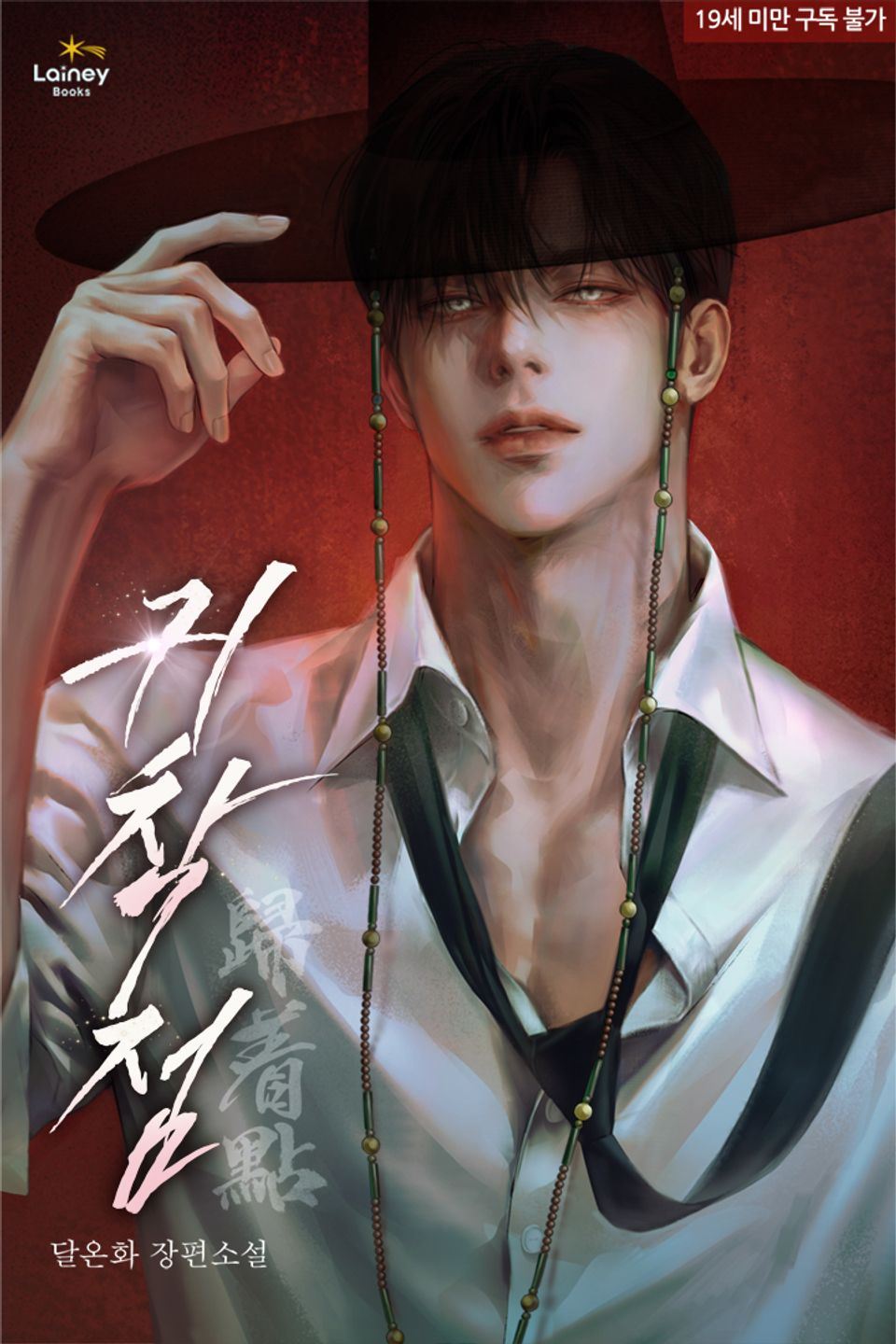
Baek Yeon-ah is a patrol officer in South Korea who recently received her probationary badge, but her career is jeopardized by severe psychological trauma. After a near-accident caused by hallucinating a ghost while on duty, she is diagnosed with post-traumatic stress disorder and placed on sick leave. Her condition deteriorates as she begins to see spirits nightly, particularly a sorrowful woman in black funeral dress who haunts her dreams and presses down on her body. A young, foul-mouthed shaman informs Yeon-ah that her maternal grandmother, Jin Sunja, refused a divine inheritance meant for their bloodline, passing karmic debt to her daughter and granddaughter. The shaman warns that unless Yeon-ah appeases the ancestors, she will suffer the same fate as her recently deceased mother.

Desperate for relief, Yeon-ah follows a letter from her grandmother, who died twenty years ago but reportedly sent the letter six months prior. The letter contains the key to a hanok in Songhak Village and urges Yeon-ah to perform prayers at a sacred tree. Traveling through a violent rainstorm, she arrives at the isolated house, intending to stay until she can resolve her spiritual troubles. Upon entering the property, she discovers that the house is occupied by a strange man named Seo Hwido, who claims to be the owner. Their initial encounter is hostile; Hwido is undress and dismissive, while Yeon-ah, armed with a property sale contract from her grandmother, accuses him of squatting illegally.

The conflict escalates as Yeon-ah realizes Hwido holds legal title to the house, having purchased it from her mother shortly after inheriting it. Unable to evict him, she attempts to negotiate, lying about seeing a ghost on his shoulder to gain leverage and secure the right to stay. Hwido, who appears to be a spirit bound to the location due to a curse carved into his back, sees through her ruse but finds her audacity amusing. He agrees to let her remain on the condition that she acts as his girlfriend to repel a persistent female stalker who has been harassing him in the village. Yeon-ah reluctantly accepts the deal, hoping to use her stay to find the sacred tree and lift her curse.

As Yeon-ah settles into village life, she encounters the locals, including Kim Deoksu and his wife Shim Suryeon. The villagers are wary of Yeon-ah due to old grudges involving her mother, who cut ties with the family. Despite the tension, Shim Suryeon guides Yeon-ah to the dangsan tree on the mountain behind the house, the site of her grandmother’s prayers. During the ritual, Yeon-ah experiences a sudden, oppressive chill and heavy rain, sensing that the tree is not merely a place of worship but a conduit for powerful spiritual energy. Meanwhile, Hwido observes Yeon-ah from the shadows, revealing that he has known her since she was a child and recognizes her weak spiritual ki, which makes her vulnerable to possession.

The narrative shifts to reveal Hwido’s perspective: he is a non-human entity trapped in human form, serving as a guardian to the village’s spirit tree. His anger stems from his isolation and the constant intrusion of human desires projected onto him. Yeon-ah’s arrival disrupts his long-standing solitude. As she begins to understand the history of her grandmother and the true nature of the village, the line between the human and spirit worlds grows thinner. The story establishes a dual conflict: Yeon-ah’s struggle to survive supernatural attacks while uncovering her family’s past, and the complex, adversarial alliance forming between her and the enigmatic Seo Hwido, whose true identity poses both a threat and a potential key to her salvation.

Latest Release
DateGroupRelease
2026-10-03dusk blossoms c28
2026-10-03dusk blossoms c27
2026-10-03dusk blossoms c26
2026-10-03dusk blossoms c25
2026-10-03dusk blossoms c24
2026-10-03dusk blossoms c23
2026-10-03dusk blossoms c22
2026-10-03dusk blossoms c21
2026-10-03dusk blossoms c20
2026-10-03dusk blossoms c19
2026-10-03dusk blossoms c18
2026-10-03dusk blossoms c17

Community Reviews

Rating(0 / 5.0, 41votes)
5 stars
0(0%)
4 stars
0(0%)
3 stars
0(0%)
2 stars
0(0%)
1 stars
0(0%)

Popular reviews

... Read More
Hwido's dialogue voice is absolutely iconic. The way he talks is this perfect mix of ancient weariness and dry, almost cruel humor. Listen to this exchange: "So you're thinking of quitting the police force and becoming a shaman?" — deadpan, testing her. "That doesn't sound so bad. Maybe I'll settle down here and become a shaman." — her trying to match him. "Why wait? Want to do it right now?" — and HERE is where his voice really shines. Is he being suggestive? Is he being serious? Is he just enjoying watching her squirm? All three. And then later, when the lustful spirit is groaning "Mi... mine... it's mine... gi..give, di..d*ck..." and Hwido just sighs and says "I'm not giving it to you, so wake up." BRO. He's saving her life and his first instinct is a SNARKY COMMENT. This man is built different. The dialogue between them always has this edge—like they're sparring even when they're being tender. And Yeon-ah's ritual voice, the one where she shifts tone to sound possessed? That's also really well done. The contrast between her real voice and her "spirit voice" shows she's actually putting effort into this, even if she's inexperienced. Hwido's inner monologue is where the real comedic gold is though. "Lucky for her, too. If Baek Yeon-ah had been an ordinary human... she wouldn't even be able to exchange words with him like this. Is the heavenly god watching? Look how generous I am being toward a human." Self-satisfied, bitter, aware of his own absurdity—all in one breath.
... Read More
I need to talk about the atmospheric details in this section because they are SO purposeful. The house itself feels like a character—those wooden pillars with deep worn sheen, the yellowed wallpaper that's still kept clean, the mother-of-pearl wardrobe, the low vanity table, the chest of drawers. None of this furniture belongs to the new occupant. It belongs to whoever lived there before, and the fact that it's been left completely untouched is this huge red flag that screams "something died in this house" without the author having to actually say those words. And then there's the rain. The storm that sent Yeon-ah running to this place in the first place, the one where lightning struck a specific tree that the village elders warned everyone about. The old woman outside is literally talking about it while Yeon-ah is inside trying to figure out what the hell is going on. That parallel between the weather outside and the chaos inside is just perfect. The scene where Yeon-ah is pressed against the chest of drawers with Seo Hwido towering over her—I could feel the claustrophobia. The latticed door, the heavy footsteps, the sudden intrusion into her space. And the contrast with the woman laughing coyly outside, completely unaware of the tension happening meters away, added this delicious dramatic irony. I could practically see the shot composition like a film. This author really knows how to paint a scene with words.
... Read More
There's this one passage that I literally had to stop reading and just sit with it. Let me find it... "To breathe air this clean under the same sky as the fine dust-choked metropolitan area. She was certain that six months living here would clear out her lungs and sharpen her mind." YES. THAT. The contrast between Seoul and Songhak Village isn't just background — it's a CHARACTER in itself. The author keeps reminding us that this place exists as an antithesis to everything Yeon-ah has been living. No car exhaust. No pale grey dust. Just green and blue and cicadas crying out for mates. And the village itself feels SO alive. The small pavilion in the plaza. The rocking chairs. The back scratcher. The ashtray. A neatly folded newspaper. These are the details that make you feel like you could step into this world and sit on that bench. It's quiet, it's trusting (open gates! strangers welcome!), and it's entirely separate from the supernatural danger lurking beneath the surface. Then there's the house. Grandmother Jin Sunja's house — this massive estate with an annex building, a bathhouse, a mountain behind it. Hwido climbs that mountain every night because his insomnia won't let him sleep. The sacred tree he wants to burn (but doesn't, mostly). The spirits gathering at the window behind the bathhouse. The house feels like it holds its breath, waiting for something to happen. I also need to talk about the sensory overload in Hwido's scenes. The cigarette lighter clicking. The flame catching. The pale smoke drifting. The sharp biting scent of tobacco cutting through the noise inside his head. And then — water. The sound of her shower. His senses are SHARPENED, almost uncomfortably so. He can hear a little girl's voice from twenty years ago tangled with a woman's indignant muttering about expensive cars. That auditory layering is MASTERFUL. The black-robed ghost keeping its distance is such a subtle detail too. It used to weigh on her body, stare at her every day. Now it watches from afar. The text says simply: "The simple absence of the presence that had weighed down on her body...was enough to transform the quality of her sleep." Sometimes the most powerful worldbuilding is about what's NOT there anymore. But what I love most is how the supernatural bleeds into the mundane without warning. One moment you're admiring the countryside scenery, the next three lustful spirits are at the window drooling over Yeon-ah's reflection. The horror doesn't announce itself — it just IS. And that's what makes this world feel so genuinely unsettling.
... Read More
Let me just say this upfront: the moment Yeon-ah felt sorry for Hwido is the most terrifying thing in this entire chapter. Not because she's weak, but because it's human. Read this line again—"The thought that he might be a pitiful person who had never once been shown proper affection made a sudden wave of sympathy rise up in her." SYMPATHY. For the guy who's been messing with her this whole time. Who called her 'little one,' who grabbed her hand without permission, who looked at her like she was some kind of puzzle he wanted to solve. And yet here she is, softening. That's not romance. That's trauma bonding in its early stages, and it's written so subtly you almost miss it. But I didn't. I felt that shift in my chest. The author doesn't give you a big dramatic confession or a tender moment. No, she gives you something way more realistic: a fleeting, inconvenient human connection that arrives when you're too exhausted to guard your heart. And then Hwido immediately weaponizes it by asking her to play his girlfriend. Girlfriends. Not actual girlfriend. The word choice is deliberate cruelty wrapped in casual language. But Yeon-ah's reaction? She offers a faint smile. A polite "yes, sir." She's negotiating survival while her heart does something reckless. This is the kind of emotional whiplash that makes you put the book down and stare at the ceiling. The chemistry between them isn't sweet. It's predatory and vulnerable all at once, which somehow makes it way more compelling than any traditional romance would be.
... Read More
'In five hundred years, he had never gotten worked up over anyone.' This single line hit me like a freight train. Seo Hwido is not just some edgy billionaire with a ghost problem—he's an immortal being who had his power sealed by heavenly punishment, who lived through centuries, and somehow this brat of a woman makes him lose control of his own body. The fact that he calls her a 'little brat' while internally spiraling? Peak repressed emotion energy. But here's what got me—the woman from five hundred years ago. The one who 'quietly took up a corner of his heart.' He can't even remember what he felt for her. Sympathy? Compassion? Pity? All that remains is that he 'enjoyed talking with that woman.' Compare that to Yeon-ah, who makes him physically lose his mind, and you realize: she's something entirely different. Not better necessarily, but more destabilizing. And Yeon-ah herself! She's not just some helpless girl. She gets kicked out, considers herself pathetic for having a stupid dream, then immediately pivots to Plan B and uses Hwido's own words against him. She presses herself into his arms, looks up at him with clear eyes, and says 'I'll do it.' That's not desperation—that's calculated survival. She knows exactly what she's doing, even if she's never dated anyone before. The dynamic between them is so messy and I'm here for it. He pushes her away, she pushes back harder. He threatens her, she kisses him first. Classic push-pull but executed with actual tension instead of just dialogue spam.
... Read More
There's a lot happening beneath the surface of these chapters that I want to unpack. The most obvious symbol is the dream itself—a Joseon-era fantasy where Yeon-ah is Hwiryeong, a noblewoman pining for a distant scholar who turns out to be Hwido. This isn't random. It's a mirror. In both timelines, Yeon-ah finds herself drawn to a man who remains emotionally unreachable. Hwiryeong smiles coyly while Hwido walks past her without a word. Modern Yeon-ah throws herself at him while he threatens to kick her out. The pattern repeats. But here's the deeper layer: Yeon-ah's BODY responds to the dream. Her heart pounds, she feels arousal, exactly as Hwiryeong would. This suggests something supernatural is happening—her consciousness is merging with the dream self, or perhaps the dream is revealing truths her rational mind hasn't accepted yet. The ghost in the black hanbok said it would protect her. Is the dream part of that protection? Or is it a test? Then there's the recurring motif of hands covering ears. Hwido wraps his large hands around Yeon-ah's ears and the back of her head during their kiss. It's controlling, dominant, but also almost protective—like he's shielding her from something, or silencing the world so only they exist. Later, when he says 'let's see how long you last,' it's as if he's both challenging her and bracing for impact. The ghost in white who trampled her body, the ghost in black who called her 'young lady'—these apparitions aren't just horror elements. They're symbols of unresolved history, of the past refusing to stay buried. Yeon-ah is caught between multiple worlds: modern and historical, living and spirit, choice and fate. And the plum blossoms? They fall, they scatter, they're beautiful but transient—just like the moments of peace in this chaotic story.
See all reviews

Custom lists

See all custom Lists