Summary

... Read More

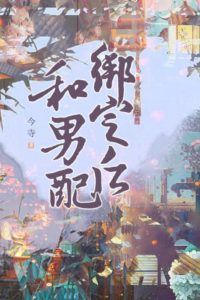
Song Yuqing, a straight male academic prodigy from the real world, dies and is reincarnated into an ABO-rated erotic novel as Song Yuqing, a malnourished beta from the slums. He becomes the stepfather of Qi Ran, the novel’s heartthrob protagonist, after marrying the wealthy but absent-minded alpha Qi Zhengqing. A system named 88 informs him that his original body is dead and he must complete a mission to survive: he must stop the various "gongs" (dominant partners) from engaging in explicit encounters with Qi Ran. Failure to complete the task will result in his soul being erased. The original character was despised by society for climbing into Qi Zhengqing’s bed to secure his status, and Song Yuqing inherits this hatred along with the character’s pale, fragile appearance.

Upon entering Victor United High School, Song Yuqing immediately faces hostility from alphas who view betas as inferior. He encounters Gu Jingtang, a teacher and Qi Ran’s childhood friend, who attempts to humiliate him by forcing contraceptive pills on him and mocking his reproductive capabilities. Song Yuqing retaliates by dislocating Gu Jingtang’s jaw and stuffing the pills into his mouth. Later, he is targeted by Pei Huai, a flamboyant and cruel alpha from the Intercontinental Class, who orchestrates a prank involving a venomous snake named Blue Baron. Song Yuqing calmly disposes of the snake in the trash and later treats its injured tail, only to throw it out the window when it attempts to bite him again. His cold, indifferent demeanor and physical beauty confuse and intrigue his peers, leading to widespread speculation on the school forum about his true nature and origins.

The core conflict intensifies when Pei Huai bullies Qi Ran in the school gym, beating him and subjecting him to psychological torment. Song Yuqing intervenes, slapping Pei Huai and knocking him unconscious with a book. He then attempts to rescue Qi Ran, but the alpha protagonist, prideful and traumatized, rejects his help. Song Yuqing slaps Qi Ran to snap him out of his delirium and declares himself to be Qi Ran’s father, a statement that leaves the confused alpha stunned. Despite his efforts to disrupt the novel’s plot, Song Yuqing finds himself increasingly entangled in the toxic dynamics of the ABO world, where alphas dominate and betas are treated as objects.

As Song Yuqing navigates his new life, he struggles with the lack of resources, often relying on Qi Zhengqing’s credit card for basic needs like nutritional supplements. He encounters Tan Shu, a seemingly gentle alpha heir who hides a twisted fascination with Song Yuqing’s coldness. Song Yuqing’s goal remains clear: survive, complete the mission, and return to his original world. However, the novel’s characters are drawn to him despite his efforts to remain detached. His academic prowess and physical resilience begin to challenge the hierarchical social structure of the school, making him a target for both admiration and further persecution. The story follows his attempts to maintain his identity as a straight man while dealing with the relentless advances and hostility of the novel’s male characters, all while trying to prevent the original plot’s explicit scenes from occurring.

Song Yuqing’s journey is marked by his refusal to conform to the submissive role expected of betas in this world. He uses his intelligence and physical skills to defend himself against alphas, often leaving them injured or humiliated. This behavior disrupts the expected narrative, causing confusion among the characters who are accustomed to his original character’s subservience. As he continues to interact with Qi Ran, Pei Huai, and other key figures, the boundaries between his mission and his personal survival become increasingly blurred. The novel explores themes of power, gender dynamics, and resistance within a restrictive societal framework, as Song Yuqing fights to carve out his own agency in a world designed to suppress him.

Latest Release
DateGroupRelease
2026-08-11shanghai fantasy c80
2026-08-11shanghai fantasy c79
2026-08-11shanghai fantasy c78
2026-08-11shanghai fantasy c77
2026-08-11shanghai fantasy c76
2026-08-11shanghai fantasy c75
2026-08-11shanghai fantasy c74
2026-08-11shanghai fantasy c73
2026-08-11shanghai fantasy c72
2026-08-11shanghai fantasy c71
2026-08-11shanghai fantasy c70
2026-08-11shanghai fantasy c69

Community Reviews

Rating(3.6 / 5.0, 5votes)
5 stars
1(20%)
4 stars
1(20%)
3 stars
3(60%)
2 stars
0(0%)
1 stars
0(0%)

Popular reviews

... Read More
Okay so let me just say this world feels INCREDIBLY textured. The author doesn't just dump lore on you—they make you FEEL it through the settings. I'm still haunted by that internet cafe scene. The cold neon at the entrance intertwining in mist, casting fragmented halos on glass walls. That's not just decoration, that's mood. Song Yuqing sitting there under blue screen light, veins visible on his pale wrist, clicking a mechanical keyboard while alphas across campus lose their minds over his blanket—that juxtaposition of cold technology and raw biological instinct is chef's kiss. And the junkyard! He spends two thousand coins on controllers and tin sheets. You can practically smell the rust and dampness. The author writes: 'the air thick with moisture after the rain, almost suffocating.' That's not nothing—that's the world pressing in on you. This isn't some sterile sci-fi utopia. It's gritty, it's wet, it's alive. The mental power system is woven into the environment too. When Pei Huai storms the dorm, his mental power 'blows open the cabinet doors' and the alphas feel like their heads are being 'pricked by needles.' The setting itself becomes a weapon. I love how the world's technology (mechas controlled by mental power, neural sensors) feels like it's still being figured out—Song Yuqing casually notes that building small robots isn't that difficult theoretically. The world has room for ordinary people to innovate within it. The hospital scene though—cold, clinical, with a nurse who's seen Qi Ran so many times she knows his patterns. Song Yuqing being the FIRST person to accompany him? That detail tells you everything about this world's social dynamics. Betas don't usually show up for alphas like that. The setting reinforces the hierarchy. Also the wall-climbing? 'Wearing a black baseball cap, Song Yuqing climbed over the wall with practiced ease.' This kid has been surviving in this world. The world isn't just backdrop—it's something you navigate, escape from, hide within. Absolutely brilliant.
... Read More
Can we just appreciate how DIFFERENT these characters sound when they speak? Because the author nailed it and I'm here for it. Song Yuqing's voice is this perfect blend of dry, dismissive, and unexpectedly warm. When he tells the alphas who harassed him: '3216, come over.' That's it. That's the whole message. He's not angry, he's not scared—he's treating a bunch of predatory alphas like misbehaving pets. And System 88's internal monologue? 'With a commanding tone like calling a dog, what did Song Yuqing take them for?' The humor lands because it's observed, not stated. But Qi Ran's dialogue—oh man. The man speaks in fragments and silences. '…' That's his most frequent line. When he says 'Don't touch my stuff' after Pei Huai intercepted his phone, it's not angry. It's desperate. The raw need underneath three words. And later, 'Song Yuqing… little…' He can't even finish the sentence. His voice is 'hoarse, his fingers tightly twisting the blanket.' The narration does the heavy lifting because Qi Ran physically cannot. Pei Huai's dialogue is all sharp edges and probing questions. 'Stepmom, do you still want me?' — sent while pretending to BE Qi Ran. That's manipulative AND vulnerable at the same time. The author writes: 'Pei Huai's emotions fluctuated wildly as he held his phone.' He's typing something cruel while feeling something he can't name. And when he discovers the truth? 'I was just toying with your clueless little mom.' The venom is performative. You can tell he's hurt. The nurse's dialogue is barely there—'I, I, I'll step out for now'—stuttering, flustered, which contrasts perfectly with Song Yuqing's calm 'Okay' and light laugh. That laugh 'made people itch even more.' The author understands that what characters DON'T say is often louder. And System 88! 'Baby… Don't you want to live? Stand up for yourself.' Then immediately gets shut down. The system's voice is this exasperated parent trapped in a machine body. Perfect comic relief that also grounds the absurdity of the situation.
... Read More
Let me just say—the pacing in this section is absolutely ruthless and I am HERE for it. The chapter opens with a bang (literally—something echoing in a silent room, a box of supplements, an ambiguous comment). Then it immediately pivots to the harassment messages. Thirty percent of the student body? That's a lot of exposition to deliver through text screenshots, but the author makes it work by keeping each message short and vicious. You feel the suffocation. Then Song Yuqing's response—'3216, come over'—and the chapter splits into parallel timelines. While Song Yuqing is gaming for three days straight (and the author makes this feel THREE DAYS long through those vivid internet cafe descriptions), Pei Huai is losing his mind back at the dorm. The cut between 'Penta kill!' and Pei Huai crushing an alpha's fingers is genius. Game victory and real violence, mirrored. The alley scene is where the pacing gets surgical. Song Yuqing walking, the alpha following, the rain, the puddles—short sentences, sensory details, building dread. Then the bonk. Quick. Efficient. No drawn-out fight scene. Song Yuqing hits him once and it's over. The alpha apologizes. Song Yuqing hits him again and leaves. Three beats and we're done. This is how you write action—confident, economical. Then the hospital scene slows everything down. The nurse applying medicine, Qi Ran's swollen eyes, Song Yuqing taking the cotton swab. The pacing becomes almost meditative after the alley's violence. And that's the move—let the reader breathe before hitting them with 'Don't speak.' The chapter ends mid-sentence, with Qi Ran's words blocked. I had to read the next chapter immediately. The structure also mirrors the emotional arc: chaos (harassment) → control (gaming/making money) → danger (the alley) → violence (Pei Huai vs Qi Ran) → tenderness (the hospital). Each section is a different temperature, and the author never lets you get comfortable in one. Also worth noting: the 88 system interruptions. They come at perfect moments—when Song Yuqing is about to do something reckless, when the tone gets too dark. 'You really gave him a thrill.' That line after the alley scene? Comedic relief that also makes you uncomfortable. The pacing knows exactly when to make you laugh and when to make you wince.
... Read More
I need to talk about how the tension in this text operates on SO many levels simultaneously and I'm genuinely impressed. On the surface, there's the immediate physical danger: Song Yuqing walking through a dark alley after three days of no sleep, an alpha stalking him, imagining violating him. The author builds this like a horror scene—you hear the footsteps, the puddles soaking pant legs, the alpha closing in. Then Song Yuqing 'slows his steps, seemingly troubled, most of his attention drawn to the increasingly wet pant legs, completely unaware of the person getting closer behind him.' Wait, he IS aware. He's luring him in. And then—bonk. Dull pain on the head. The alpha is on the ground looking up through blood mist at Song Yuqing's 'overly beautiful face' and APOLOGIZES. This beta just knocked out an alpha who was about to assault him and the alpha's first instinct is to say sorry. The world is genuinely twisted, as the narrator notes. But the real stakes aren't physical—they're emotional. Pei Huai discovering that Song Yuqing's 'be good' message was meant for Qi Ran, not him? That's a knife to the chest. Pei Huai's entire motivation is muddled: does he care about Song Yuqing or is he just possessive? The text makes you feel his confusion. 'Was it because he was deeply in love with that old thing half-buried in the ground, or was it because of Qi Ran…' He doesn't even know himself. And Qi Ran—god, Qi Ran. His phone screen shatters, splitting the words 'be good' in half. He reads that message 'how many times' and can't decide if it means Song Yuqing wants him or doesn't. That's the stakes: not life or death, but the agonizing uncertainty of whether someone cares about you. When Song Yuqing says 'don't speak' while treating his wounds, Qi Ran's fingers 'tightly twisting the blanket.' He's terrified of what Song Yuqing might say. The school-wide harassment of Song Yuqing—30% of students sending him disgusting messages—creates a constant low-level threat. He's vulnerable as a beta in a world that fetishizes and threatens him. Yet he responds by commanding alphas to come to Pei Huai's dorm like he's summoning dogs. The stakes are always there, humming beneath every scene.
... Read More
I keep coming back to that image of Qi Ran's phone screen—spiderweb cracks spreading across it, splitting the words 'be good' in half. That's not just a prop, that's the entire novel in miniature. The theme of fractured communication runs through everything. Song Yuqing sends 'be good' and it means something different to every recipient. To Qi Ran, it's ambiguous comfort. To Pei Huai, it's rejection. To the system, it's just another confusing human interaction. The same words, shattered differently in each mind. No one ever says what they actually mean. Qi Ran can't finish 'little mom.' Pei Huai can't admit why he's angry. Song Yuqing can't explain why he cares. Then there's the motif of hands. Song Yuqing's 'slender fingers' applying medicine, Qi Ran's fingers 'tightly twisting the blanket,' Pei Huai's mental power 'pressing down like a wheel.' Hands are how characters touch, hurt, heal, and control. Song Yuqing 'patting Qi Ran's head like a puppy'—that gesture is everything. It's familial, it's gentle, it's the first time someone has touched Qi Ran without wanting something from him. The 'red marks left by Pei Huai's grip, like red plum blossoms in the snow' on Song Yuqing's waist—this image is gorgeous and disturbing. Beauty and violence intertwined. The alpha's mark on the beta, but Song Yuqing wears it almost casually. Power dynamics made aesthetic. And the cheap son—Qi Ran himself is described as 'a wet, blood-stained, gloomy male ghost crawling out of hell.' He sees himself as lowly, as a 'hypocrite' coveting what doesn't belong to him. But Song Yuqing keeps choosing to stay. 'Not very smart, are you?' he says, and it's not an insult—it's affection. The theme here is that worth isn't determined by your circumstances. Qi Ran was beaten, poor, unloved—and Song Yuqing sees something worth saving. The nutritional supplements box—'Quite frugal'—that ambiguous comment about Song Yuqing not affording them? It's about how the world judges value. Thirty percent of students harassing him over a misunderstanding. The author is asking: who decides what someone is worth?
See all reviews

Characters

See all characters

Custom lists

See all custom Lists