Demon Lord, Is This All You've Got?
+Add to Custom List
Genres:
Novel Info
  • Author:
  • 草露
  • Status:Ongoing

Summary

... Read More

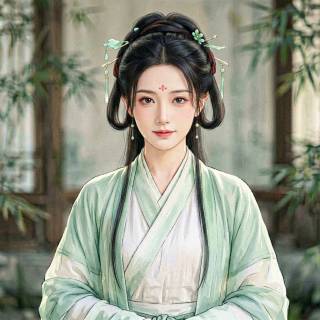
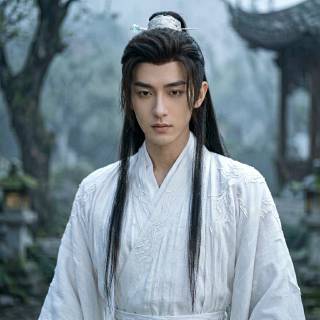
Chi Fengxue is a disciple of Qingming Mountain, the chief orthodox Daoist sect, known for her exceptionally poor talent in cultivation. While her senior martial brother Shen Yujing is a peerless genius who mastered thunder talismans in a hundred days, Fengxue cannot successfully draw a single talisman. Despite this, she insists on cultivating alongside him due to an arranged childhood engagement and her deep affection for him. On the mountain, she is ridiculed as a burden who only earned her place as a personal disciple of the reclusive Master Lingyun by riding on Shen Yujing’s coattails. Her only solace is a pair of sparrows she befriends with basic beast-taming arts. Her fate changes during a demon-slaying mission in a ghost-ridden town, where a breach opens into the Myriad Demon Den. As her comrades fall, Fengxue uses her superior mortal swordsmanship to fight through the horde. When Shen Yujing is critically injured and falls into the abyss, she drags his unconscious body out of the demon den, sustaining fatal wounds herself before tumbling off a cliff. She survives, but upon returning, she learns that Feng Fuliu, a talented junior sister, claimed to have saved Shen Yujing. When Fengxue tries to reveal the truth, no one believes her, and she is branded a liar seeking credit. Heartbroken and disillusioned, she eventually leaves the mountain, only to be hunted and killed by cultivators after she begins to turn into a demon due to demonic qi contamination. She dies pinned beneath a demon corpse, watching Shen Yujing and Feng Fuliu stand together in the sky, before waking up a hundred years earlier, back in her youth on Qingming Mountain.

Reborn, Fengxue retains the memories of her tragic past. When Shen Yujing wakes and claims he does not remember who saved him, she no longer reacts with the desperate indignation of her previous life. Instead, she coolly accepts his words and publicly proposes to end their engagement, stating that their bond was a shackle that hindered her cultivation. Master Lingyun appears and declares that Fengxue was accepted as his disciple for her own merit, silencing her detractors. Fengxue then encounters Feng Fuliu, who offers her a sword named Fuwei and feigns innocence. Fengxue, no longer blinded by love, sees through the deception. She accepts the sword but rejects Feng Fuliu’s pity, declaring that she will walk her own path and wishing them a happy future together. She leaves the mountain, riding the wind with a newfound sense of freedom, though she is aware that the demonic qi in her body will eventually consume her.

Descending to the mortal world, Fengxue arrives at Jingquan, a city famous for its wine. She witnesses a heretical cultivator using beast-making arts to turn children into human-faced dogs for entertainment. Using her Heaven’s Eye, she discovers the trapped vengeful spirits within the dog’s hide. She tracks the cultivator to a courtyard where she encounters a group of youths: Ye Pengzhou, Lu Yuan, Ye Xingyue, and Jiang Yao. Unaware of their future identities as terrifying demon lords, she intervenes. Ye Pengzhou reveals they captured the cultivator and had turned him into a dog as retribution. Fengxue skins the human-faced dog to release the trapped souls, performing a deliverance chant for the victims. The gruesome act shocks the young villains, particularly Ah Yao, who had been mocking her. Despite the blood on her robes, Fengxue treats the group with kindness, offering them travel talismans and inviting them to eat. The villagers of Jingquan, grateful for her rescue of their missing children, offer her gifts, which she accepts with humility. The encounter marks the beginning of her journey in the mortal world, where she will face the consequences of her demonic transformation while forging unexpected connections with those who will one day rule the Ghost Realm.

Novel Items

More
Cultivation Method
An exceedingly rare cultivation technique refined by Shen Yujing within a hundred days of beginning his studies. It demonstrates his exceptional talent as a cultivator born with the bones of the Dao.
Arcane Treasures
Talismans drawn by Yun Yan that unleash lightning attacks. Water conducts electricity, making these talismans especially powerful in the swamp terrain. Yunyan used them extensively during the crocodile battle, and her mana bar did not drop while using them.
Cultivation Method
A powerful technique used by Shen Yujing with the resolve of mutual destruction during the demon-slaying mission. He formed seals and summoned a bolt of purple lightning that reduced the demons to ash, but the cost left him unconscious and falling into the ghost-fog.
Formations
An array set up by the disciples to contain the ghost-ridden town and prevent the monsters from fleeing to harm surrounding villages. The seal was on the verge of collapse when the breach to the Myriad Demon Den opened.
Cultivation Method
Chi Fengxue knows only the crudest beginnings of beast-taming, but it was enough for her to understand the chirping of the two mountain tits and befriend them. She confided in these birds when she felt wronged and stifled on the mountain.
Weapon
Also meaning Succor, a fine frost-white sword left behind by a swordsman. Given by Feng Fuliu to Fengxue. The sword has a clear sword-cry when flicked and is described as a fine sword indeed. Feng Fuliu hoped it might recover its glory in Fengxue's hands.
Latest Release
DateGroupRelease
2026-08-11shanghai fantasy c8
2026-08-11shanghai fantasy c7
2026-08-11shanghai fantasy c6
2026-08-11shanghai fantasy c5
2026-08-11shanghai fantasy c4
2026-08-11shanghai fantasy c3
2026-08-11shanghai fantasy c2
2026-08-11shanghai fantasy c1

Community Reviews

Rating(4.1 / 5.0, 16votes)
5 stars
5(31%)
4 stars
8(50%)
3 stars
3(19%)
2 stars
0(0%)
1 stars
0(0%)

Popular reviews

... Read More
Okay so this chapter is where everything starts clicking into place and I am HERE for it. Fengxue has clearly been reborn—she references her past life multiple times and it changes how she approaches literally everything. The way she handles the confrontation with Feng Fuliu is chef's kiss. In her past life, she apparently beat her junior sister and got punished for it. This time? She just... walks away. She literally says 'I hate you because you lied' and then wishes them well. That is such a powerful character moment because it shows she's not trying to revenge-bait anymore—she's genuinely moved on. But the missing sword thing is what really got me. Her broken sword— the one she used to kill countless demons—vanished right before she fell off the cliff in her past life, and now it's gone again. Feng Fuliu claims she hasn't seen it. Fengxue says she considered beating the truth out of her but decides against it. I'm sitting here like... okay but WHO took it? And why does Feng Fuliu look like she's about to cry when Fengxue mentions her parents? The author is planting seeds everywhere and I am ready to dig. Also the two youths getting hung off a cliff and then piddled on by sparrows? Iconic. Fengxue really said 'I'm done with people' and the mountain birds became her enforcers. I love this energy.
... Read More
There are so many symbols layered into this text that I keep finding new ones every time I reread. The broken sword is the most obvious one. In her past life, her sword—her identity as a demon-slayer—was taken from her at the moment of her fall. It disappeared. Now in this life, she carries a wooden sword and refuses to chase after the truth of what happened. The broken sword represents everything she lost: her purpose, her honor, her life. And Fengxue's decision to let it go—'losing something makes room for something better'—is the thematic core of her rebirth arc. She's choosing to stop being defined by what was taken from her. Then there are the sparrows. These drab gray mountain birds become her agents of justice, raining destruction on the two youths who bullied her in the past life. But they also bring her fruit and chirp 'Love Ah Xue, love Ah Xue.' They represent something deeper than revenge—they represent the natural world aligning with her. Unlike the 'Record of Cloud-Wandering' which treats all demons as objects to be flayed and refined, the sparrows are alive, playful, loyal. They're part of the world that Qingming Mountain claims to protect but the text subtly critiques. And the wind-riding scene—when she finally breaks through the clouds and sees 'nothing but clear blue sky, the sea wide, the heavens high'—this is her literally seeing the world without 'one leaf covering her eyes.' The leaf metaphor is stated outright: in her past life, one small thing blinded her to everything else. Now she's flying above it all. The sky represents freedom from the obsession that destroyed her before. But then—the demonic qi. The text reminds us that she's tainted, that she'll slowly turn into a demon. The world she's flying toward is one where she won't be accepted. The 'Record of Cloud-Wandering' teaches that demons don't count as people. So her freedom is also her tragedy—she's breaking free from obsession only to walk toward a fate where the world will try to kill her. That tension between liberation and doom is what makes this story ache.
... Read More
I need to talk about this one moment because it wrecked me. Fengxue says something like 'My mother and father will definitely cherish me!' and Feng Fuliu just... breaks. She starts crying. Like, full-on sobbing. And Fengxue is just standing there confused because in her past life, Fuliu never cried even when Fengxue was physically beating her. Think about that for a second. In the past life, Fuliu could withstand violence without shedding a tear. But mention PARENTS and she falls apart? This girl is carrying something heavy. The text tells us she's an orphan—same as Ge Chunsheng, picked up off the road by a Daoist priest. So when Fengxue talks about her parents cherishing her, it's not just a flex. It's a wound being ripped open. And here's the thing that got me—the author makes it clear that Fuliu is usually 'so deeply calculating' that losing her composure like this is devastating. She's not some innocent flower girl. She's someone who plays the long game, who can face demons from eight directions while playing the qin. But parents? That's her soft spot. That's where she cracks. I keep wondering if Fengxue realizes what she just did. She said the words genuinely, with warmth, and Fuliu collapsed. There's such a painful gap between them—Fengxue has her parents and Fuliu doesn't. I'm not even mad about it. I'm just... deeply affected.
... Read More
I need a minute. I genuinely need a minute because Grandma Yun's story hit me like a freight train and I wasn't prepared for it at all. This woman — this former mortal, an embroiderer who taught orphaned girls to weave during a chaotic age of war, who turned barren land into a place famous for its brocade, who wove sunset clouds into cloth — and now she's forgotten. Her temple is in ruins, her idol is covered in dust, rain drips through the roof onto her shoulder, and the only thing keeping her alive is a few strands of incense smoke and the memories of girls she saved a thousand years ago. And when Fengxue asks her why a deity would be threatened by a rat spirit, Grandma Yun just sighs and says "It's a long story..." like she's not even bitter about it. She's not. She's just... tired. And then she offers Fengxue the cloud-brocade, this incredible magical artifact woven from her remaining divine power, and she does it with this warm, gentle smile like she's genuinely happy to finally pass something precious on to someone worthy. The line that wrecked me was: "Let them forget, then. As long as the weaving girls still have somewhere to stand, the cloud-brocade will keep being passed down in this world." She doesn't need worshippers. She needs her craft to survive. And when she senses something 'strange' inside Fengxue's heart and takes her hand to say "Poor child" — that moment of genuine compassion from a forgotten deity to a young woman who's carrying burdens she can't name? I was not ready for that level of emotional precision. Fengxue can only manage a rueful smile because what can she even say to that? In her past life, no one ever learned the truth. And here's a goddess from a ruined temple who sees her and believes her without questioning.
... Read More
This passage is obsessed with the question of personhood and it's not subtle about it at all. Fengxue literally asks: can someone who uses beast-making techniques even be counted as a person? And then she turns that question on the demon lords themselves, who also used those techniques, and tells them they still count because they fought evil with evil. The human-faced dog is the most horrifying symbol here. A man who wore a dog's hide for so long it was fusing with his body—he would become a true dog if not removed. But inside that hide were weeping faces. Children. Dozens of them. He didn't just kill them; he made them part of something monstrous. And Fengxue frees those souls with a chant, one by one, until the faces grow peaceful. Then there's the sheep. The parents bring sheep—because their children were turned into sheep. The little girl Kou'er who used to sell pear blossoms and now stands at her mother's tofu shop because she's too scared to go out alone... and then she's gone. The shepherd driving his flock. The lamb that refuses to move, staring at Grandma Song. Is that her daughter? The text never confirms it, and that ambiguity is what makes it devastating. Fengxue declines the coppers the villagers offer. She takes their food, their cloth, their gratitude—but not their money. She's poor, she's covered in blood, she just committed what would be an atrocity under normal circumstances, and yet she draws this line. She won't profit from their grief. That's her code. And the demon lords-to-be? They're poor too. Ah Yao can barely afford buns. They turned to heretical arts not from inherent evil but from necessity. The world is full of heretical arts, Fengxue says, and even Qingming Mountain cultivators flay monsters for pills. The line between monster and person is thinner than anyone wants to admit.
... Read More
There's something deeply symbolic about a forgotten goddess whose temple is held together by dust and rainwater, and the only thing a rat dares to covet is her cloud-brocade — this artifact of light and craft that represents everything she built in her human life. The rat isn't just a monster, it's greed wearing fur and teeth. It's the kind of hunger that doesn't create, only consumes. And Grandma Yun? She creates. She teaches. She weaves sunset clouds into cloth and passes that knowledge to orphaned girls who survive wars. Her divinity isn't about thunderbolts or miracles — it's about continuity. About making sure that even when no one prays to you, the thing you loved still exists in the world. "As long as the weaving girls still have somewhere to stand, the cloud-brocade will keep being passed down." That's the whole theme right there. Survival isn't about being remembered — it's about being passed on. And Fengxue, who carries the weight of a past life no one believes, who fought through a Demon Den and came out the other side with her conscience intact but her reputation in tatters — she's the kind of person who keeps things going even when no one's watching. The rat's tail on the offering table, the nick on the sword, the blood that won't wash off — these are all physical proof that the dream mattered, that the fight mattered, that helping a forgotten deity wasn't pointless. The story keeps asking: what do we owe to people no one else remembers? And Fengxue's answer, every single time, is to draw her sword anyway.
See all reviews

Characters

See all characters

Custom lists

Oops…There is nothing here.