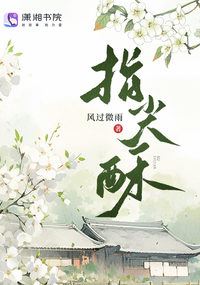
Delicate Fingers
Novel Info

Summary

... Read More

Shen Yunshu was the daughter of Shen Wangzhi, a merchant who had risen from humble beginnings to support his extended family. Despite his financial contributions to the Shen clan, he was disfavored by his mother, Old Madam Shen, who preferred her eldest and youngest sons. When Shen Wangzhi was arrested for allegedly embezzling military grain, the family refused to help, leaving his wife, Madam Wang, and children to face the crisis alone. Desperate and rejected, Madam Wang and Shen Yunshu requested to be expelled from the family. The matriarch agreed, severing all ties and leaving the trio with nothing but their own resources.

With Shen Wangzhi and Shen Yunshu’s brother, Shen Dun, sentenced to hard labor in the mines unless a thousand taels of silver were paid, the family faced a dire deadline. Having sold their home and possessions, they still lacked five hundred taels. Refusing to accept the men’s deportation, Shen Yunshu devised a plan to earn the money through commerce. She relocated her mother and younger brother, Shen Ji, to Bian City, a prosperous commercial hub closer to the mines, with the goal of raising the ransom within a year.

In Bian City, Shen Yunshu leveraged her culinary skills, which she had acquired from a past life as a pastry chef, to start a food business. She developed a recipe for mochi cakes using local ingredients like glutinous rice, malt syrup, and seasonal fruits. The product was an immediate success, appealing to both children and adults due to its low price and unique taste. She partnered with her new neighbor, Du Jinxiang, a young woman with medical knowledge who helped her scout locations and manage logistics. They also took in Liao Yuan and his younger sister, Liao Xiner, refugees from a flood who had fallen ill. Liao Yuan, a skilled carpenter, built a wheeled cart for Shen Yunshu, enabling her to increase her sales volume significantly.

As the business grew, Shen Yunshu expanded her product line to include festive wedding cakes, targeting wealthy households and banquets. The profits allowed her to send silver to the mines, improving the conditions for her father and brother. The family dynamic shifted as Madam Wang, once meek, became a confident business partner, while Shen Ji and Du Jintang formed a close friendship. Shen Yunshu also navigated social challenges, including the betrayal of her former fiancé’s family and the indifference of her relatives, reinforcing her resolve to rely solely on herself.

The story follows Shen Yunshu’s determination to save her family through hard work and intelligence. She balances the demands of running a growing enterprise with the emotional toll of her father’s absence. Her relationships with Du Jinxiang, Liao Yuan, and her brother deepen as they support each other through hardship. The narrative highlights her strategic thinking, from pricing models to market expansion, as she works toward the ultimate goal of redeeming her father and brother from the mines and restoring their family’s honor.

Latest Release
DateGroupRelease
2026-08-11shanghai fantasy c166
2026-08-11shanghai fantasy c165
2026-08-11shanghai fantasy c164
2026-08-11shanghai fantasy c163
2026-08-11shanghai fantasy c162
2026-08-11shanghai fantasy c161
2026-08-11shanghai fantasy c160
2026-08-11shanghai fantasy c159
2026-08-11shanghai fantasy c158
2026-08-11shanghai fantasy c157
2026-08-11shanghai fantasy c156
2026-08-11shanghai fantasy c155

Community Reviews

Rating(4.1 / 5.0, 9votes)
5 stars
3(33%)
4 stars
4(44%)
3 stars
2(22%)
2 stars
0(0%)
1 stars
0(0%)

Popular reviews

... Read More
"Words are easy to fake. Real actions show what someone truly thinks. So we should listen less and watch more. Understand?" This line from Yunshu to her brother is the kind of dialogue that sticks with you. It's not just plot-relevant—it's character-defining. Yunshu has been betrayed, abandoned, wronged. She knows how people perform kindness while planning cruelty. And she's teaching her brother this lesson not through lectures but through a single, perfect sentence. The dialogue throughout this batch feels remarkably natural for a historical setting. No archaic flourishes, no forced formality. When Madam Wang haggles with the broker, she sounds like a real mother trying to protect her family's last coins: "Look at this place—it probably leaks when it rains. Who knows how much repairs will cost?" That's not a novelistic line—that's a person negotiating. Brother Qian's dialogue is interesting because it's deliberately annoying. He's repetitive, self-absorbed, completely oblivious to Ah Xiang's discomfort. "Ah Xiang, I was wrong before. I'll change." "Ah Xiang, you've been avoiding me." "Ah Xiang..." The author uses repetition as characterization—he's not a villain, just a weak man who thinks persistence equals love. And Yunshu's interruption—"Sister Ah Xiang! Uncle Du said there's something urgent—he's calling you back!"—is comedy gold. She doesn't confront him; she creates a fictional emergency to rescue Ah Xiang. That's clever dialogue writing. Du Jinxiang's voice is quieter, more reserved, which fits her character. She speaks in shorter sentences, hesitates, blushes. But when she shares information about Bian City's food culture, her voice opens up—she becomes knowledgeable, confident, almost professional. The shift is subtle but noticeable. What impresses me most is how each character has a distinct relationship with language. Yunshu is strategic and direct. Madam Wang is practical and worried. Shen Ji is curious and honest. Du Jinxiang is shy but precise. Brother Qian is verbose and self-centered. They don't sound like the same author putting words in their mouths—they sound like different people who happen to be in the same story.
... Read More
This is the part that got me. Not the grand schemes or the business plans—just two siblings saying goodbye. Shen Dun is introduced as this tough, troublemaking kid who never cries. And then: "The usually tough, tearless troublemaker had red-rimmed eyes." That's it. That's all the author needed. One line and I was wrecked. But Yunshu is the real anchor here. Watch how she handles every relationship in this batch. With her father, she's the one holding it together—slipping silver into his bundle, promising to take care of everything, nodding when he calls her "precious daughter" like she's already proven herself. With her mother, she's the bright smile that says "things will get better" even when she has two taels and a mountain of debt. With Shen Ji, she's teaching him how to read people: "Words are easy to fake. Real actions show what someone truly thinks." And that moment when she sees her brother struggling to carry a thick quilt—she instinctively steps forward, then stops herself. That tiny hesitation says everything. She wants to protect him, but she knows he has to grow up now too. She's not abandoning him; she's trusting him. The relationship with Du Jinxiang is interesting because it's built on mutual respect, not pity. Yunshu admires her medical skills, calls her a "young doctor" with genuine enthusiasm. Du Jinxiang is shy but clearly pleased to be seen as competent. And the secret—Du Jinxiang treating patients behind her father's back—creates this little bond of trust between them. Yunshu becomes her confidante without even trying. Then there's Brother Qian, practically a background character but doing so much work. His desperation with Ah Xiang shows a different kind of male character—not the hero type, just a guy who made mistakes and is trying to fix them. It contrasts nicely with Yunshu's world, where people act instead of just talking. What I keep coming back to: Yunshu is never alone in this story. She has her family, she's building friendships, and she's surrounded by people who matter. That's not accidental worldbuilding—that's character-driven plotting.
... Read More
Can we just appreciate the visual writing in this thing? Because the author knows how to paint a picture and I am HERE for it. The description of the mochi cakes is genuinely stunning: 'The hues were perfectly balanced—like a spring painting of red blossoms and green willows.' Red from the amaranth, green from the spinach, white from the rice. This isn't just food description, this is worldbuilding through color. You can literally see these cakes sitting in the steamer and it's gorgeous. And the Baita Academy scene! 'During dismissal, the carriages lined up for a mile.' That one detail tells you everything about the social hierarchy of this city. The wealthy students arrive in carriages, the servants have money to spare, and Madam Wang is literally standing at the gate with a bamboo basket and a dream. The contrast between the luxury of the academy and the hustle of the street vendor is baked into the setting itself. Then there's the wedding banquet scene that changes everything. Madam Wang is hawking her cakes and a steward just... buys her entire batch. 'He chased her down and bought the entire batch to serve as wedding cakes for the guests.' This is the kind of organic worldbuilding moment that makes you realize this city has its own economy, its own social rhythms, its own opportunities if you're clever enough to spot them. The refugee village description is bleaker but equally vivid. Fenced-off land outside the city, people with 'no home to return to,' the government handing out porridge for a month and then kicking them out. It's not romanticized at all. This is a city with layers—wealthy courtyards with banquets on one side, fenced-off refugee plots on the other, and Shen Yunshu moving between them all.
... Read More
The pacing in this section is absolutely lethal and I respect it. Chapter 12 starts with Madam Wang's triumphant return from selling out at the academy, immediately pivots to the next morning's production, then drops the wedding cake bomb. One chapter, three major business developments. The author doesn't waste a single scene. Every paragraph either advances the plot or deepens character, and honestly it's exhausting just reading it because I keep wanting to turn the page faster. The transition from mochi to wedding cakes is where the pacing really shines. Shen Yunshu sees the banquet opportunity and her internal monologue goes: 'She'd already considered making wedding cakes and pastries after hearing about local customs from Du Jinxiang. They were more profitable and harder to imitate than mochi. But having seen the cutthroat competition in modern baking, she'd hesitated, thinking she needed capital and standout products first.' Then the wedding cake moment triggers the realization: 'But tiered pricing could work!' The idea chains together like dominoes—mochi becomes the affordable version, molds elevate the product, and suddenly they have a business model instead of just a side hustle. And then Chapter 13 introduces the partnership with Liao Yuan, and Chapter 14 ends with Shen Ji somehow getting permission when his sister couldn't. The structure is basically: opportunity → realization → expansion → new character → cliffhanger. It's a masterclass in momentum. The only thing I'd question is whether Du Jinxiang's role is getting enough room to breathe, but honestly the story doesn't seem interested in slowing down and I'm not mad about it.
... Read More
The market scene in Chapter 4 is one of those passages that just lives in your head. You can smell the sesame flatbreads, the fried dough sticks, the tofu pudding. The author doesn't need to say "it smelled amazing"—they just list the foods and let your brain do the rest. I keep coming back to the wild yam moment. Yunshu sees an old man selling vegetables and muddy sticks, recognizes the wild yams immediately, and has to walk away because she can't afford them. That single detail tells you everything about her new reality. She's a Michelin-level pastry chef who can't buy yams. The contrast is brutal and brilliant. The relay station at night—the prisoners separated, the guards at the next table, Yunshu ordering extra dishes to gather information. This is worldbuilding as survival strategy. Every scene is doing double duty: showing us the world while advancing the plot. And the house they rent! Broken windows, chipped eaves, overgrown courtyard, a well behind the house. The broker tries to justify the price by mentioning the school nearby, and Madam Wang immediately picks up on his tactics. These details make Bian City feel real—not a generic ancient Chinese city, but a place with specific economics, specific social dynamics, specific ways that brokers and customers negotiate. The alley with vendors sitting against walls, piles of vegetables and live chickens spread on cloth—this is street-level worldbuilding. Not the grand palaces and official buildings you'd expect in historical fiction, but the actual life of the city. The people who live here, the food they eat, the prices they pay. What I appreciate most: the world feels lived-in. The well water, the spices Yunshu packed, the grain store, the medicine Du Jinxiang makes. Every object has a purpose, every location has a function. This isn't a backdrop—it's a character in its own right, shaping what Yunshu can and can't do.
... Read More
Let me just say: the pacing in this batch is dangerously good. Chapter 7-8 (the exile and separation) moves fast but never rushes. The farewells are given space—enough time to feel the weight of each goodbye, but not so much that you're drowning in grief. The author knows when to linger (Shen Ji clinging to his father's leg) and when to cut away (the escort team pulling them forward). Then the journey to Bian City—brief, functional, a bridge between despair and possibility. The relay station scene is where the pacing really shines. Yunshu gathers crucial information (the mine conditions, the redemption timeline) while the narrative breathes. It's exposition disguised as conversation, and it works because she's paying for it with extra dishes. She's investing in information. Chapter 4 (settling in) slows down deliberately. Renting the house, unpacking, the first proper meal—these are quiet scenes that let the reader breathe after the emotional intensity of the exile. But it's not idle; every action builds Yunshu's new reality. Chapter 5 (the market and the encounter) picks up again. The food tour, the wild yam moment, the Brother Qian interruption, meeting Du Jinxiang—all of this flows naturally. The pacing feels organic because Yunshu's curiosity drives it. She's exploring her new world, and we're exploring with her. The structure across these chapters follows a clear arc: loss → journey → settlement → discovery. Each chapter ends with a forward momentum—the family parting at the fork in the road, Yunshu vowing to redeem her family within one year, discovering her neighbor's secret medical practice. No cliffhangers, but no lulls either. If I had one critique: the transition from grief to business planning happens very quickly. But honestly, that's probably realistic. When your family's survival is on the line, you don't have time to wallow. Yunshu's pace mirrors her psychology—she moves forward because stopping means facing the full weight of what she's lost.
See all reviews

Characters

See all characters

Custom lists

See all custom Lists