Summary

... Read More

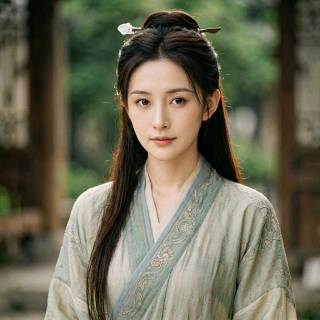
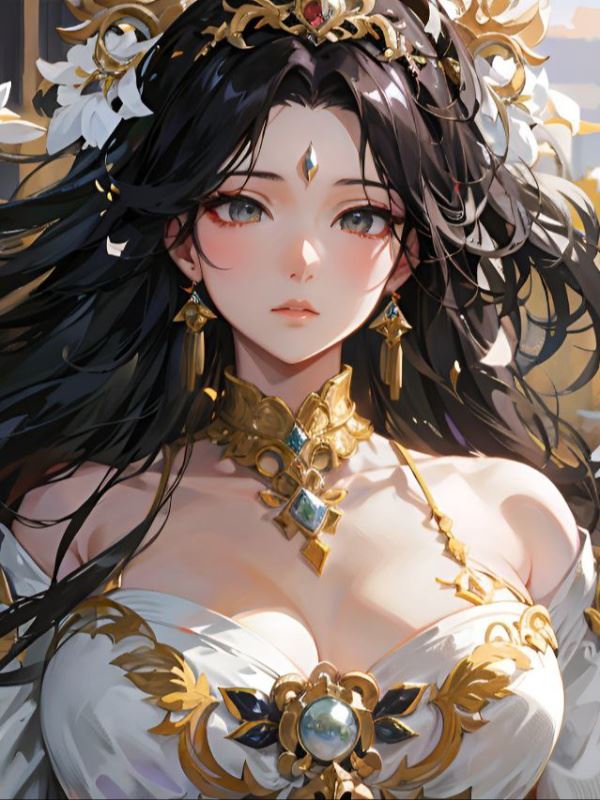
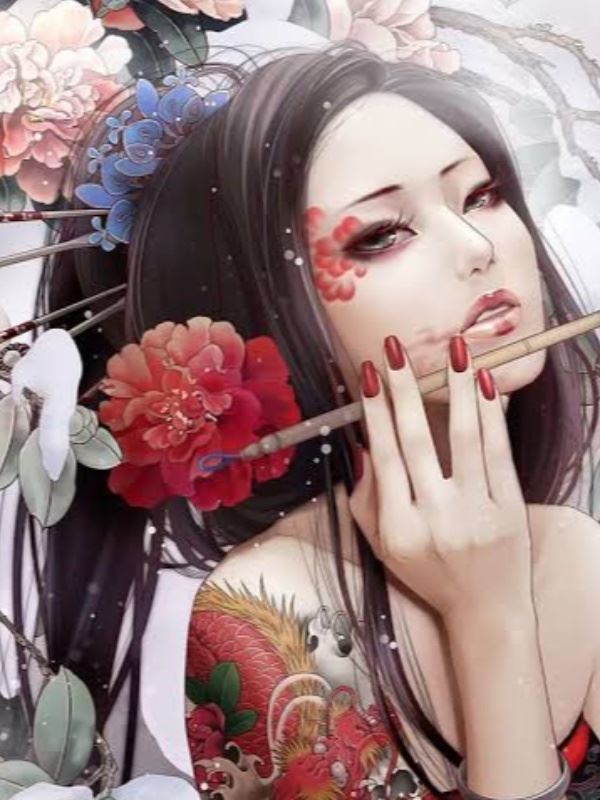
Tuoba Hu Shen is a half-Han, half-Xianbei woman living on the grasslands, raised by her elder brother Tuoba Hu Lang after their mother, a captive from the Central Plains, died longing for home. Hu Lang is a favored warrior of the Northern Wei Khan, while Hu Shen occupies a precarious position, neither fully accepted by the grassland tribes nor able to return to her mother’s homeland. The story begins in winter, a time of scarcity and violence, when the Xianbei capture a group of Southern Liang soldiers, including the renowned general Xie Xixiao, the third son of the prestigious Xie family. Xie Xixiao is a man of immense pride and martial skill, captured after a brutal fight and subjected to severe torture, including iron chains driven through his shoulder blades, to break his will.

The Khan, advised by a treacherous defector named Yuan Shigong, devises a psychological strategy to turn the stubborn prisoners. The plan is to bestow women upon them, grant them titles, and have them sire children, thereby creating attachments that would make them loyal to the grassland ruler and despised by their own people in the Central Plains. Hu Shen is chosen as one of three women to be given to Xie Xixiao. Her brother urges her to succeed in this mission, promising that if she can win Xie Xixiao’s loyalty, they will eventually return to the Central Plains to live in comfort. Hu Shen, however, is conflicted. She feels no hatred for Xie Xixiao and is repulsed by the cruelty of the plan, yet she feels obligated to support her brother who has raised her.

When Hu Shen first approaches Xie Xixiao, she feeds him broth with a spoon, avoiding physical contact after a moment of accidental intimacy frightens her. She realizes that forcing herself on him through violence or deception will only deepen his hatred. The turning point comes when her brother gives her deer-blood wine, an aphrodisiac, and sends her to Xie Xixiao’s tent. Hu Shen initially attempts to drug him, but when the other two women, Naye and Guzi, arrive to claim him, she intervenes. She tricks them into fighting each other, then subdues them in a wrestling match, asserting her right to Xie Xixiao. That night, she does not use the wine but instead initiates intimacy herself, driven by a mix of duty, confusion, and a strange sense of connection. The act is painful and awkward for both, but it establishes a complex dynamic between them.

Xie Xixiao is humiliated and enraged, viewing Hu Shen as an agent of his tormentors. He falls ill with a fever, and Hu Shen cares for him, applying medicine and tending to his wounds. Their interactions are fraught with tension; he threatens her life, and she threatens to bring others to share him, creating a twisted bargaining chip. Eventually, Xie Xixiao agrees to a truce: if Hu Shen does not resist his advances for three days, she will take him to see his five remaining comrades. During this time, Hu Shen stays by his side, sewing hides and feeding him, while Xie Xixiao watches her with a mixture of loathing and curiosity. He observes that she is not cruel like the others and seems genuinely concerned for his well-being.

When Xie Xixiao sees his comrades, he is devastated by the torture they have endured, particularly the man whose eyes were gouged out. This reinforces his resolve to escape and return home, but it also deepens his bond with Hu Shen, as she witnesses his grief and does not mock it. The story introduces Yelu Jian, a burly Xianbei warrior who has long harassed Hu Shen and claims she belongs to him. When Yelu Jian confronts Hu Shen and Xie Xixiao, Xie Xixiao, despite his injuries, attacks him with the iron chain, protecting Hu Shen. This act of violence on her behalf marks a shift in their relationship, as Xie Xixiao begins to see Hu Shen not just as a captor but as a complex individual. The narrative sets the stage for a prolonged struggle between Xie Xixiao’s loyalty to his homeland and his growing, albeit reluctant, entanglement with Hu Shen and the grassland life she represents.

Novel Items

More
Item
Soup made in the cafeteria for the returning expedition team.
Item
Chains binding the Hunchback to a chair during interrogation.
Kitchenware
Made by Lu Shen in the courtyard to hold the iron pot for cooking, since there was no kitchen in the house. Placed dry firewood underneath and lit it.
Item
A large stone spoon used by the cafeteria beastman to scoop meat into bowls for the lined-up beastmen.
Clothing
The outermost sheepskin cloak Hu Shen was wearing. She took it off and draped it over Xie Xixiao's waist and abdomen to keep him warm, since his back was still injured and the tent was bitterly cold. She tied a knot behind his waist to keep it from slipping off.
Concept
The grassland term for human beings, used as food during times of extreme scarcity. Hu Shen reflects on this when she sees the captured spy being tortured outside. She explains to Xie Xixiao that she does not like eating people either, having once considered it years ago during food shortages but being unable to do it due to disgust and fear.
Latest Release
DateGroupRelease
2026-08-11shanghai fantasy c10
2026-08-11shanghai fantasy c9
2026-08-11shanghai fantasy c8
2026-08-11shanghai fantasy c7
2026-08-11shanghai fantasy c6
2026-08-11shanghai fantasy c5
2026-08-11shanghai fantasy c4
2026-08-11shanghai fantasy c3
2026-08-11shanghai fantasy c2
2026-08-11shanghai fantasy c1

Community Reviews

Rating(4 / 5.0, 26votes)
5 stars
8(31%)
4 stars
10(38%)
3 stars
8(31%)
2 stars
0(0%)
1 stars
0(0%)

Popular reviews

... Read More
There are two main settings in this passage and they couldn't be more different, and the contrast is doing so much work. The bonfire feast outside the camp is this huge, open, brutal scene. The Khan is handing out rewards like they're trading livestock—wine, cattle, sheep, tents, women. The grassland people are eating and drinking, but the women aren't allowed to eat the roasted meat or drink the liquor. That detail alone tells you everything about the power structure. And then there's the darkness beyond the firelight, where the spies are hidden, waiting. The author keeps emphasizing the cold—the wind, the freezing women, the starving Zhongyuan captives. It's not just weather, it's atmosphere. The grassland is beautiful and deadly and you can't escape either quality. Then you move inside the tent and the world shrinks down to something intimate and claustrophobic. The low couch, the flickering firelight, the scent of blood and wine and animal skin. Xie Xixiao's wound on his back, the ropes digging into his wrists, the way his fair skin takes on a 'faint pink hue' under the firelight. These details are so specific they feel photographed. The author isn't just telling you what's happening, they're making you feel the heat of the wine pot in Hu Shen's hand, the roughness of the ropes, the way her braids brush against his lips. But what really makes the worldbuilding work is the cultural layering. The Xianbei language spoken in private, the Zhongyuan dialect used when Hu Shen needs to reach Xie Xixiao directly. The deer-blood wine that's normal on the grassland but shocking to him. The wolf-tooth chain on her brother's forehead, a gift from the Khan. The animal-skin skirts, the tents, the bonfires, the bears and wolves that wound the men. Every object and practice tells you something about how these people live and die. And the tent itself becomes this liminal space—neither fully Zhongyuan nor fully grassland, neither fully consensual nor fully violent. It's where the two worlds collide and something irreversible happens.
... Read More
I'm still processing the emotional complexity between Hu Shen and Xie Xixiao after reading these chapters. On the surface, it's a story about a captive and his captor, a political arrangement disguised as intimacy. But underneath all that, there's this incredibly raw emotional current that the author handles with such subtlety. Let me start with the moment where Hu Shen says 'Last night was my fault. I hurt you.' She's not just apologizing—she's acknowledging that she saw something in him that night that she didn't fully understand before. And Xie Xixiao's response—'Shut up'—isn't just anger. It's the response of a man who is terrified of what he felt and can't process it. Then there's the scene where he grips her wrist and she feels his feverish heat. The physical contact here is charged with so much—anger, frustration, but also something else that neither of them wants to name. And when Hu Lang arrives and Hu Shen makes him sound like 'a petulant cat or dog,' that's not just deflection. That's her trying to normalize the abnormal, to make something dangerous feel manageable. The most emotionally devastating moment for me, though, is Xie Xixiao's bargaining scene. He's offering to not resist in exchange for seeing his comrades. But underneath that transactional language, there's something else. He's choosing her—choosing to trust her, however reluctantly—over his pride. And she's choosing him—choosing to see him as more than an enemy—over her fear. The author never spells this out. It's all in the subtext, in the pauses, in what they don't say. And that's what makes it so powerful. I keep thinking about that line: 'If you don't resist, I'll find a way to take you to see them.' It's a promise. It's also the beginning of something neither of them expected.
... Read More
I need to talk about Hu Lang and Hu Shen's relationship because honestly it's the emotional backbone of this whole section and I'm not okay with how well-written it is. The scene where Hu Lang finds her after everything—his hand on her shoulder, asking 'Does it hurt?' and she shakes her head and forces a smile—that broke me. She's got a wound on her lip that makes her eye squint when she smiles, and she's hiding it from him because she doesn't want him to worry. And he KNOWS. He obviously knows something is wrong but he doesn't push because he respects her. The detail about him braiding her hair when they were young, the forehead ornament he gave her—that's such a small thing but it carries so much weight. It shows us that these two were close once, and now they're apart, and the distance between them is both physical and emotional. But then he says 'your life is the most important' and asks her to get closer to Xie Xixiao, and you can feel the guilt in his voice. He's asking his little sister to put herself in danger, and he HATES that he has to. Hu Shen's response—'I hope I can help you, brother'—is so simple and so devastating. She doesn't hesitate. She never hesitates. And that's what makes her such a compelling character. She's not doing this for glory or power. She's doing it for him. Meanwhile, Xie Xixiao watches all of this from inside the tent, and I bet he's processing the fact that this woman who just threatened to kill him has a brother who would throw himself at him without hesitation. It complicates everything. The relationship dynamics here are so layered.
... Read More
Okay so this entire sequence is basically one long trap and I need to talk about how the author layers it because it is genuinely clever. You start with the political context—the Southern Liang sending food as a plea for peace, the grassland people raiding to survive, this endless cycle of violence that Hu Shen is trapped in. Then you get the bonfire feast, the rewards, and suddenly Hu Shen's name is called. That's when the plot pivots from political maneuvering into something much more intimate and violating. The real twist isn't that her brother is using her—that's hinted at early when he's acting stiff and awkward around her. The twist is how methodical it is. Yuan Shigong, that treacherous little deputy general with the thin mustache, comes up with the whole scheme. The Khan rewards Xie Xixiao with three women—Hu Shen, Naye, and Guzi—and immediately her brother is feeding her deer-blood wine, telling her to make him drink it. The plot doesn't just suggest coercion, it shows the entire machinery of it: the spies watching from the darkness, the brother pushing her out of the tent, the two other women already there ready to pounce. What's interesting is the subplot of Hu Shen's mother, who kept trying to escape back to Zhongyuan and died wishing her ashes would blow home. That's the emotional through-line that makes Hu Shen's betrayal cut deeper—she's doing exactly what her mother refused to do, surviving by playing along with the grassland people. And then there's Xie Xixiao's five brothers, still holding out, still refusing to surrender. The plot keeps raising the stakes: if Hu Shen fails, what happens to him? To her? To all of them? The scene where she actually forces the wine down his throat is the turning point. Up until then, the tension is political—will she do it or not? After that, it becomes something else entirely. The plot shifts from external conflict to internal moral collapse, and honestly, I don't know if I'm supposed to root for her or hate her at that point. The author doesn't give you an easy answer.
... Read More
The author really understood the assignment when it comes to atmosphere. Let me just list the sensory details that made this chapter feel like I was actually there: The iron chain on Hu Shen's foot being tugged as she hurries to catch Xie Xixiao. The cold weather making Yelu Jian's unconscious body a potential death sentence. The warm fire in the tent contrasting with Xie Xixiao's desolation. Winter making water usage troublesome so she can't just wash the handkerchief. The thick tent flap through which she hears "the dull thuds of fists striking flesh" and thinks it sounds alarming—until Xie Xixiao emerges unscathed. But the scene that stuck with me the most is the Zama feast. The old Khan at the highest seat, the serving women dancing, the array of food Xie Xixiao hasn't touched because he misses chopsticks. This is a man who was once a general of Zhongyuan, now sitting in a grassland tent eating with his hands, chained to a woman who was gifted to him. The visual of him sitting upright, untouched food before him, watching Hu Shen walk in from behind the tent—this is cinema. Pure cinema. And the author's note about the historical context! The Yongle era inspiration, the Zhu Qizhen parallel, the Su Wu comparison. The author literally wrote an entire essay about how captured men in history seemed to have romantic entanglements while writing poetry about their loyal wives back home, and how that hypocrisy bothered them so much they decided to write a story that's honest about the power dynamics. That's worldbuilding at the meta level—building not just a setting but a whole philosophical framework for why the story exists.
... Read More
Okay I need to discuss the dialogue in this book because it is SO good and I have thoughts. First, let's talk about Xie Xixiao's voice. When he speaks, it's always measured, precise, and layered with meaning. His first line to Hu Shen is just "Miss Tuoba"—two words that tell us everything we need to know about who he is. He recognizes her status immediately, he addresses her with formal courtesy, and there's something almost predatory in the way he observes her. Later, when he asks "Is this… sheep?" and then follows up with "Is it… Two-legged Sheep?"—this is such a brilliant moment. He's testing her, probing for information, and simultaneously making a dark joke about the cannibalism happening outside. The fact that he can make this kind of dark, layered dialogue while chained to a wooden frame and barely alive shows exactly what kind of person he is. Hu Shen's dialogue is different—more practical, more direct, and often internally contradictory. She says very little to Xie Xixiao, but when she does speak, it's usually deflection or observation. "I don't like eating people either" is such a perfect line. It's honest, slightly awkward, and completely disarms the tension in the scene. She's not trying to be cruel or manipulative; she's just stating a fact, and that honesty makes her more trustworthy in his eyes. The narrative voice is also fantastic. The author writes with a tone that's simultaneously cold and warm, detached and deeply empathetic. When describing Hu Shen's thoughts about her own fate, the prose is matter-of-fact about her being destined to "sire cubs," but there's an undercurrent of sadness and resignation that makes the reader feel the weight of her situation. And that author's note at the end? "You fed me like a sheep. I'm going to humiliate you thoroughly. From now on, I must feed you every single bite of food you eat!" This single exchange tells us everything about how their relationship will evolve. The power dynamic flips, the intimacy remains, and Xie Xixiao's voice—demanding, possessive, yet strangely tender—shines through in just a few lines. The dialogue throughout is natural, distinctive for each character, and always serves the story. I'm genuinely impressed.
See all reviews

Characters

See all characters

Custom lists

Oops…There is nothing here.