Darkly Charming Seduction! Entwined Doting Kisses! Captured by Master Cen’s Secret Lure - Reviews

Darkly Charming Seduction! Entwined Doting Kisses! Captured by Master Cen’s Secret Lure
+Add to Custom List
Sort
Add review
... Read More
There's this one line that keeps looping in my head: "You even seized the right moment to escape this cage." The cage. Not metaphorically—well, yes metaphorically, but the author treats it like a real, physical thing. Qiao Zhiyang has been caged her whole life, and her act of running away isn't just rebellion, it's literally breaking out of a prison. And Cen Zhou reframes it for her—not as selfishness or rebellion, but as bravery. That's such a powerful thematic moment because it's about how the same action can be interpreted completely differently depending on who's telling the story. Then there's the candy. The blackcurrant crystal candy from a brand that supposedly doesn't exist anymore. It's described as having been like "the most dazzling beam of light shining into the life of a boy trapped in darkness." So this tiny, sweet thing is actually a symbol of how one small moment of kindness can echo through decades. It's also deeply ironic that he's using it now as part of his scheme—he genuinely believes he's being selfless, but the narrative makes it clear this is calculated. The candy represents both real warmth and manipulation, and that ambiguity is what makes it so interesting. The prayer beads on Cen Zhou's wrist keep appearing too. He fiddles with them when he's restraining himself. They symbolize his attempt at control, at maintaining his Buddhist, gentle persona, while inside he's this "destroyive desire" waiting to erupt. The beads are his armor, and every time he touches them, we're reminded that he's fighting a constant battle between who he pretends to be and what he actually wants. And the wolf imagery—"the wolf disguised as a good citizen," "walking wolf king," "big bad wolf." It's everywhere. The story is literally about appearances versus reality, about how the thing that looks most gentle might be the most dangerous, and how the thing that looks most dangerous might be the only one who truly protects you. The Qiao family calls her selfish for escaping, but Cen Zhou calls it bravery. Who's right? The story seems to be saying both, and that's what makes it complicated.
... Read More
I'm literally sweating just thinking about the stakes in this story and I need to process it. On the surface, the external conflict is simple: Qiao Zhiyang is running from her controlling family who want to capture her and bring her back. The bodyguards are closing in. She's trapped at an airport with no escape. This is classic cat-and-mouse tension, and the author executes it brilliantly — every chapter ends on a note that makes you immediately want to read the next one. But the REAL stakes are internal, and they're so much more complicated. Qiao Zhiyang has spent nineteen years being controlled, told everything is for her own good, living as a puppet. The moment she escapes, she finds herself in the arms of someone even MORE dangerous than her family. Cen Zhou isn't going to lock her in a cage — he's going to make her WANT to stay. He's going to be so gentle, so patient, so... perfect. And that's infinitely more terrifying than any physical confinement. The conflict between her desire for freedom and her growing attraction to Cen Zhou is what makes this story pulse with tension. Every time he gets closer, she feels safer from her family but more trapped by him. The bodyguards outside are a threat she can see and fight, but Cen Zhou is a threat she can't even name yet. And Cen Zhou's own conflict? He's been waiting years for this moment, but he can't just take what he wants. He has to be careful, methodical, not startle her away. The most sophisticated hunter is also the most patient. He's playing a long game, and the stakes for him are just as high — if he moves too fast, he loses her forever. The author keeps raising the stakes with every interaction. First it's about escaping the bodyguards. Then it's about maintaining the pretense of being lovers. Then it's about the thumb kiss that crosses a line neither of them can uncross. Each escalation makes the situation more dangerous, more intimate, more irreversible. What I love most is that the author makes you care about BOTH outcomes. You want Qiao Zhiyang to be free from her family, but you also want her to find something real with Cen Zhou. And you're terrified that those two things might be mutually exclusive. That's when you know the stakes are working.
... Read More
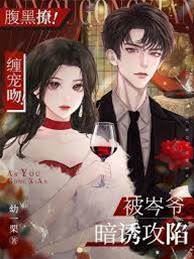
I need to talk about Cen Zhou because this man is an absolute menace and I love him for it. On the surface, he's this elegant, composed, 'Buddha-like' older figure. He wears glasses, he carries prayer beads, he speaks in this smooth baritone that could make anyone weak in the knees. But the narrative keeps reminding us—again and again—that underneath all that restraint, he's a HUNTER. The wolf avatar matching her lamb avatar? That's not an accident. He chose it. He's playing a long game and he knows it. 'He would become the most patient hunter, luring her over bit by bit'—the author literally spells this out and I was sitting there like 'oh no he is absolutely going to do this and she has no idea.' But here's what makes their dynamic so fascinating: it's not one-sided. Qiao Zhiyang isn't just some naive girl being manipulated. She's genuinely trying to maintain boundaries—sending him 'elderly' stickers, almost recording a voice message back and then CANCELING it, convincing herself he's just being nice. She's fighting her own attraction while simultaneously trying to convince herself it's inappropriate. And Cen Zhou? He sees every single one of those moments. He watches her chat page. He notices when the 'recording voice message' status flashes. He SAVES her lamb sticker. This is a man who is meticulously tracking every interaction, and he's enjoying every second of it. Then there's Cen Jinhuan, the best friend, who is basically the comic relief but also the emotional anchor. Her voice call where she's interrogating Qiao Zhiyang about the 'kind-hearted brother' while simultaneously complaining about her uncle cutting her allowance? Perfect. It grounds the story in something warm and real before everything gets darker with the medication reveal. The relationship triangle between these three—Cen Zhou's calculated patience, Qiao Zhiyang's flustered resistance, Cen Jinhuan's chaotic support—creates this really rich dynamic that I can't stop thinking about.
... Read More
Let's talk about conflict because this novel is stacking it on layers and I am invested. On the surface, there's the external conflict: the Qiao family sent people to catch Qiao Zhiyang at the airport. Cen Jinhuan's messages confirm this—'I heard the Qiao family sent people to catch you. Are you okay!!?' This is a real, ongoing threat. She's not just emotionally free; she's physically on the run. The fact that she had to be rescued at the airport means the family's reach is real and dangerous. Every chapter that passes without them catching her is a ticking clock. But the internal conflict is what really gets me. The Estazolam scene is where it all converges. She's been living under 'suffocating, oppressive control' her entire life, and the medication was her crutch—a way to numb herself into being 'normal' for her family. The anxiety, the insomnia, the loss of appetite—these aren't just plot details, they're the physical manifestations of abuse. And her family's response? 'If you don't want to be looked down upon, you must never tell anyone you're sick.' That's not just controlling, that's emotionally violent. They made her feel ashamed of her own mental health. The stakes escalate beautifully because both conflicts are intertwined. If the Qiao family catches her, she goes back to that life—back to the medication, back to the performance, back to being 'the obedient, well-behaved child.' Throwing away the Estazolam is her first act of true independence, but it also means she's facing her anxiety without her safety net. What happens when she has a panic attack and there are no pills? The story is setting her up to be vulnerable in a new way. Cen Zhou's role in all this is fascinating from a stakes perspective. He's positioned as her protector—the one who rescued her at the airport, who told her 'with me, you can be yourself.' But the narrative also hints that his motivations aren't purely altruistic. 'He would become the most patient hunter'—is he saving her because he cares, or because he wants to possess her? The tension between these two readings keeps the stakes high. We want her to be safe, but we're also worried about WHO she's safe with. That's smart conflict writing. It's not just 'will she get caught?' It's 'who is she becoming, and who is becoming her?'

Leave a comment

You must be logged in to leave comments. or
