Dark River, Ever Bright - Reviews

Dark River, Ever Bright
+Add to Custom List
Sort
Add review
... Read More
There is a specific kind of loneliness that comes from running across three streets at 2:30 AM carrying spicy crayfish for someone who forgot they asked for them. I kept coming back to this image throughout the chapter. Not because it's dramatic - though it is - but because it's so devastatingly ordinary. Xiao Hei isn't doing anything heroic. He's just trying to do his job. He's sweating in autumn air, grease on his hands, standing outside a door ringing the bell for the third time, wondering if he should just go home or keep waiting. And then the door opens and Lu Lianning is furious. He yells. He calls him crazy. The man has every right to be annoyed - it IS 2:30 AM - but the cruelty of it cuts deep. He forgets his own request, and instead of apologizing, he redirects all that frustration onto the person standing on his doorstep holding warm crayfish. Xiao Hei's response is this pathetic, trembling little voice: "But... but you said you wanted crayfish... You asked me to get it." I mean, come ON. That is the most small-person-in-a-big-world response I have ever encountered. He doesn't fight back. He doesn't walk away. He just... explains himself. Like a child being scolded. But then - and this is where the chapter actually breaks my heart - Lu Lianning's temper cools. Just a little. He lets Xiao Hei in. He watches him peel the crayfish. And then he makes this comment that could be read as appreciation or condescension or something entirely different: "You sure know how to serve people. How much is Gu Chen paying you?" The ambiguity here is doing SO much emotional work. Is Lu Lianning acknowledging Xiao Hei's devotion? Is he mocking him? Is he genuinely curious about the economics of desperation? I think it's all three simultaneously, which makes it infinitely more painful. What strikes me most is the contrast between this scene and the earlier one with Xiao Ming. One person shows up at 2 AM and gets told to leave with tossed clothes. The other shows up at 2 AM with food and gets yelled at but still gets to stay. Both are serving. Both are invisible in their own way. One is tolerated because of who he is; the other is used because of what he can do. The emotional intelligence of this writing is remarkable. The author doesn't tell us how to feel about any of this. We're just given the raw material - the greasy plastic container, the disposable gloves, the muted phone on the floor - and we fill in the emptiness ourselves.
... Read More
I need to talk about Xiao Ming because apparently nobody else at the table is going to mention him and I can't sleep until I do. Let me paint the scene for you: it's 2 AM. Lu Lianning has been dragged out of bed. His assistant is standing on his doorstep with greasy crayfish. And emerging from his bedroom is this... what even IS Xiao Ming? The text describes him as having a baby face, slightly curly hair, flashing sweet smiles, using words like "just this once" and "I missed him too much" while slipping into clothes and giving the new guy a curious glance before bolting. And Gu Chen - cold, organized, controlling Gu Chen - just tosses him his clothes and tells him to leave. Nothing. Absolutely nothing. About this encounter makes me feel comfortable. Let me be clear: I am not saying anything definitive about what is happening between these two. The text is deliberately vague, which is frankly the most effective technique I've seen in years. The author doesn't need to tell us anything explicit. We have the unmade bed, the clothes strewn everywhere, the ice water gulp (which could mean a hangover, which could mean nothing, which could mean everything), the 2 AM visit, the word "him," and the way Gu Chen repeatedly warns Xiao Ming not to show up because of negative press. But here's what genuinely frightens me: the power dynamics. Xiao Ming has access. He shows up unannounced at 2 AM, sleeps in Lu Lianning's bed, calls him with this intimate familiarity, and gets dressed in his space while the actual employee stands in the hallway holding crayfish. Meanwhile, Gu Chen is the one managing damage control, signing contracts, paying advances, and yet he's the outsider in his own friend's home. And Lu Lianning! God, Lu Lianning. He's furious at Xiao Hei for the crayfish incident - yelling, calling him crazy - but the moment he sees the food, his mood shifts. He's dismissive, entitled, completely unaware of the harm he's causing. And yet there's this underlying current of vulnerability too. The phone on mute, the deep sleep, the fact that he needed someone to bring him food at 2 AM in the first place. This is a man who performs control but is actually running on fumes. What I find most compelling is how the text makes us feel like voyeurs. We're standing in Xiao Hei's position - confused, out of place, witnessing intimacy we weren't meant to see. The reader becomes complicit in this invasion. And that's intentional design. We're supposed to feel uncomfortable. We're supposed to want to look away and keep looking at the same time.
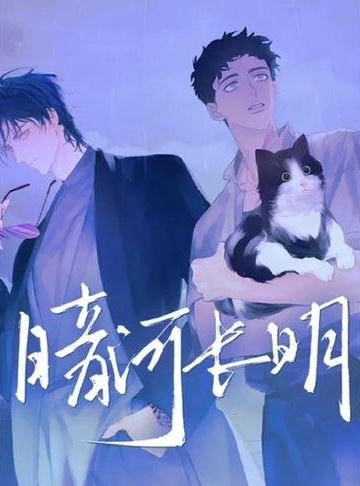
... Read More
Okay so this whole hospital sequence is wild when you think about it. Lu Lianning drags Li Yan into a check-up and Li Yan literally scrambles backward on all fours like a cornered animal? And then KICKS him in the stomach to get away? I mean, I get that Li Yan has needle phobia, but the way the author builds this escalation—first the refusal, then the scrambling, then the actual physical resistance—it hit different. And then the three-minute phone call with Chen Yu as a bargaining chip? That is some serious leverage playing right there. Also, the fact that Yu Ren and Ren Qi are just SPECTATING from across the street like some kind of Greek chorus? Classic narrative device and I love it. The plot keeps these two worlds colliding—the Lu family drama and the outside observers—without them ever actually interacting, which is clever.
... Read More
The atmosphere in this chapter is genuinely suffocating and I mean that as the highest compliment. Let me start with the underground parking lot scene — Lu Lianning kicks the car door and leaves a dent, then drags Li Yan away while the vehicle blocking Lin Sheng's car has already driven off. The fact that the blockage disappears but Lin Sheng's car stays tells you everything about how carefully this was set up. Someone wanted them found together. Then you've got the driver standing outside in biting November wind, legs numb, half a pack of cigarettes gone. The cold outside world pressing against the warm, pheromone-choked interior of the car creates this claustrophobic bubble where anything could happen. And it does. But the scene that absolutely destroyed me emotionally was the drive past the billboard. Lu Lianning glances at a giant advertisement showing a couple arguing, then holding a baby, with bold letters declaring 'Children make families more harmonious.' It's an ad for an Omega infertility clinic. Right. There. The cruel precision of that moment — Lu Lianning watching a fantasy of domestic peace roll by while his real life is a series of fights and silent breakdowns in the back seat. And cut to Li Yan at home, alone on the sofa with the cat, frantically searching entertainment channels for wedding dates that will never come. The world this author built isn't just backdrop; it's actively weaponizing everything around the characters to make them suffer. Every detail bites back.
... Read More
The word 'godson' hangs in that room like something rotten. Lu Lianning asks it with a smirk that says he knows exactly what it means—that this is supposed to be a bond, and yet he's using it to humiliate. And Li Yan? He doesn't defend the title. He just stands there until Chen Yu's name comes out. "I quit a while ago to save money for Chen Yu's treatment." That line breaks something between them, because suddenly the Alpha stops treating him like an enemy and starts treating him like prey who thinks he has morals. The relationship dynamic here is toxic as hell but the author writes it so you understand why Li Yan stays. It's not Stockholm—it's survival. He knows Lu Lianning has countless ways to drag him back, more discreetly. So he lets himself be dragged. The moment in the car when Li Yan tries to keep distance but ends up closer—that's the most honest scene in these chapters. No words, just two people who've been dancing around each other for nearly two years finally in the same small space, rain against the windows, neither one moving away because there's nowhere left to go. And Qin Liu at the end, watching with cold tea, saying something almost reasonable about regret, getting shut down with "you have your own son to look after you." That's the family theme right there: chosen bonds versus blood ties, and neither one protects you from what's coming.
... Read More
OK so let's talk about what happened at Wu'an Warehouse No. 3 because the tension here is absolutely suffocating in the best way. Chen Miao gets a text message in the middle of the night—"Wu'an Warehouse No. 3, East Suburbs"—and the stakes go from uncomfortable to life-or-death in a single heartbeat. What makes this sequence so gut-wrenching is that the antagonists aren't even cartoon villains. They just want money, right? They explicitly say so. "They were after money, not lives." But that realization doesn't make it any safer for Chen Yu. The leader's line about Chen Yu not having much time left, and that emphasis on the word "invite"—god, that is just cold. The real brilliance here is how the power dynamic flips when Chen Miao snaps. One moment he's getting beaten, groaning on the ground, and then he sees Chen Yu dying and he just breaks free shouting "If he dies, you get nothing!" That is a person with absolutely nothing left to lose, and even the thugs are like oh shit this guy is serious. They back off. They give him a week. That moment where Chen Miao goes from victim to threat in three seconds flat is exactly why I can't stop reading these chapters.
... Read More
The dialogue in this chapter is razor-sharp. Every line serves multiple purposes - advancing plot, revealing character, building tension. Let me just quote a few moments that absolutely destroyed me. Lu Lianning: "For Lin Zhe's sake, I'm letting you go this time." Translation: I could destroy you right now but I won't, because of family. But also don't test me. Lin Sheng: "This won't be the last time." Two sentences. Two promises. One threat. Lin Sheng doesn't yell, doesn't threaten explicitly, doesn't raise his voice. Just states it as fact, like he's talking about the weather. And that's somehow more terrifying than any scream. Li Yan: "Let's go home, Lu Lianning." He stops Lu Lianning from throwing a punch by wrapping his arms around his waist from behind. In that moment, he's not just de-escalating violence - he's choosing which battle to fight. He chooses Lu Lianning over himself, again. Then the car conversation where Li Yan says "I owe you, don't I? I deserve this." And Lu Lianning's response: "At least you know you owe me." That line is supposed to be triumphant, but it sounds hollow even coming from him. You can almost hear the frustration behind the words, like he wants something different but doesn't know how to ask. The narrator's voice is also doing heavy lifting here. Lines like "his head pressed against the trellis, chest heaving wildly" or "the heat Lu Lianning had stirred up instantly turned cold" - the prose is visceral, immediate, physical. The author doesn't shy away from uncomfortable details. And that final image of Xiao Hei standing confused at his apartment complex entrance, sweat stains on his shirt, phone ringing with his boss shouting? Perfect bookend to open the flashback. The contrast between that vulnerable young man and whoever he's become is the story's central question.
... Read More
Let me just say: the pacing in these chapters is absolutely masterful. You start with this sharp, almost comedic domestic tension — Li Yan pulling the blanket over himself like a toddler, snapping at Lu Lianning, the door clicking shut — and then within pages you're sprinting through a thunderstorm with a man who just threw open his car door and ran into ankle-deep rain. The chapter opens with what feels like a minor argument, right? Li Yan being difficult, Lu Lianning being patient but hurt, and then he leaves. You think, okay, this is a relationship squabble. And then the narrative drops you into Li Yan's head — the realization, the guilt, the silver ring on the table, the leftover red yarn — and suddenly the emotional weight shifts. Then comes the rain. The pacing accelerates HARD here. Thunderclap wakes Lu Lianning, he checks the time (nearly midnight, unusual), the lights flicker, and suddenly he's running. No transition, no gentle ramp-up — just immediate action. The sentence structure itself seems to speed up. Shorter sentences. More fragments. The crash inside the house, the muffled sounds, the pounding on the door. And then — and this is the genius part — once Li Yan is pulled into the car and safe, the pace slows dramatically. The sentences get longer again. The rain softens. The quiet moment of the kiss. The narrator takes time to describe Lu Lianning's eyelashes, the droplet of water, the way he sniffles. It's like the author understands that emotions need breathing room. You can't just dump the reader in a panic scene and immediately pivot to romance without letting them exhale. The structure itself mirrors what these characters are going through: tension, crisis, release, tenderness.
... Read More
"Bitter orange. The scent of bitter orange. It was everywhere, overwhelming." I need a minute. I need a lot of minutes. This is the most emotionally precise sentence I've read in forever. Think about it — the bitter orange smell was there the ENTIRE TIME Lu Zerui was living with Li Yan, and he didn't notice it. But the moment the kid leaves? It floods him. It's like grief does that, right? You don't feel it until the thing that was carrying it for you is gone. Was the smell Lu Lianning's? Or something else entirely? The author doesn't tell us and honestly that's what makes it so good. It hangs in the air like an unsaid confession. And then Li Yan goes to Liu Qing and just DUMPS everything. The alcohol-fueled breakdown, the flushed face, the way he can barely get through describing what happened to him. There's a moment where he says he'd "desperately want to sleep with him" and then has to pause and choose his words because EVEN SAYING IT out loud is humiliating and painful. That hesitation? That's a whole novel of trauma in three words. But here's what kills me — despite all of it, the way he remembers his abuser isn't purely with hatred. It's confused. There's fondness tangled up in the horror. "He was always like that. He'd hurt me, but it didn't seem to make him feel any better." Li Yan is analyzing his abuser's emotional state WHILE still bleeding from the wounds. That's not forgiveness, that's just someone who never learned how to separate love from pain.
... Read More
I need to talk about how the author uses dialogue like a scalpel here. The absolute masterpiece moment: Li Yan finally responding to Lu Lianning's desperate justification with "Keep dreaming." Let me just sit with that for a second. Lu Lianning has been saying—implied, thought, projected—everything will be fine once the baby is born. He's been building this entire future in his head and Li Yan just... punctures it. Three words. No elaboration, no anger, no anything. Just the coldest, flattest rejection possible. The author has Li Yan deliberately echoing words Lu Lianning once said to him, which adds this layer of poetic justice that made me literally gasp out loud. And then "Your pheromones are suffocating me. I can't sleep." So clinical. So specific. Li Yan isn't being dramatic or emotional—he's stating a fact the way someone might report the weather. That detachment is infinitely worse than any scream could be. Qi Zhen's elevator monologue is a different kind of brilliance. "There's this saying... Oh, right! It feels like my heart is shattered into pieces..." The casual way he dresses up his psychosis as a quote, the performative quality to it, the way he stops mid-sentence like he's genuinely trying to remember—if this were a movie I'd be leaning forward in my seat wondering what monster is talking to me. The author's voice throughout is restrained to the point of aching. No melodrama, no excess emotion. Just dry observation and devastating accuracy. I love it. I hate it. I need more.
... Read More
The pacing in these chapters is almost cruel in how efficiently it moves from public confrontation to private violation. We open with three bows, a title question, a hat being knocked off. Ten minutes of reading and Li Yan is being dragged through a house full of awake servants. Twenty minutes and he's pinned down. The author doesn't waste a single second on transition—there's no breather, no soft landing between scenes. It's like the narrative itself is suffocating. That's the structural choice that makes this work: the story doesn't let you exhale between the Qin house scene and the car ride and the villa entrance and the bedroom. Each escalation happens faster than the last, mimicking Li Yan's own panicked descent. The chapter endings are brutal little cliffhangers—Li Yan's thought trailing off mid-sentence, tears filling his eyes, no resolution, just continuation. And that third climax where he stammers "just do it... stop toying with me"—the author has Li Yan begging for an end to something that's designed to never end. The rain pattering against the car body, then the butler taking a coat, then fingers probing deeper—each sensory detail replaces the last without pause. It's relentless because the protagonist's experience is relentless. You don't get to look away because the narrative won't let you.
... Read More
I keep coming back to the snow imagery in this section. Chen Miao steps out of the hospital and snowflakes are drifting down. He stands at the hotel entrance in the cold, waiting to be led somewhere he can't escape. Snow feels like emotional isolation—everyone is alone in their respective traps. Chen Yu alone on the operating table. Chen Miao alone walking into that hotel. Lu Lianning alone at the dinner table, realizing his father holds all the cards. Even Gu Chen alone, drinking silently, two years of friendship passing between him and the others like water through fingers. And doors—so many doors. The hospital operating room doors that Chen Miao stares at for ten minutes. The dark wooden hotel room door he pauses in front of before turning the handle. The bathroom door swinging open to reveal the oldest, most dangerous Alpha. Every door represents a point of no return. Chen Miao could've walked away from the hotel. He didn't. He opened that door. The same way Lu Lianning can't walk away from his father's world, no matter how much he might want to. The pheromone scent is another layer—lemon and mint from the older Alpha cutting through the chaos, clean and controlled amid the degradation. Lu Anling's power operates the same way: wrapped in the appearance of normalcy, business, family obligation, while underneath everything is being consumed. What haunts me most is the pill. 'Drink this, it'll make everything a bit better and more enjoyable.' The word 'enjoyable' used in this context—what does that say about power, consent, and the erosion of both in a world where Betas have no protection? The author isn't just telling a story about drama. They're asking who gets to decide what someone else's body is worth.

Leave a comment

You must be logged in to leave comments. or
