Summary

... Read More

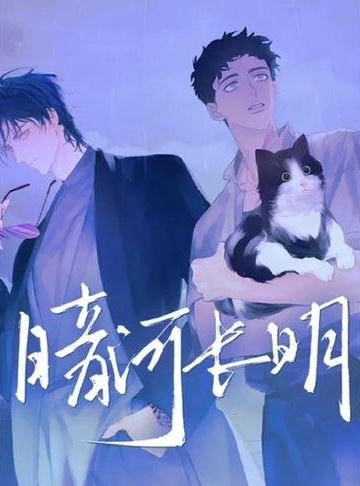
Li Yan is a Beta who has spent years under the control of Lu Lianning, a powerful high-tier Alpha who recently took over the Lu family business. Confined to the Lu mansion for two years following a traumatic imprisonment, Li Yan emerges with a fragile mental state and a strict curfew requiring him to return home by 7:30 PM. His life is defined by subservience; he survives by performing menial scams with an elderly man named Lao Yue and feeding stray cats, while enduring nightly sexual encounters that serve as both punishment and possession for Lu Lianning.

The narrative introduces Lin Sheng, a university student and top basketball player from a wealthy family, who becomes the catalyst for change. After Li Yan accidentally injures Lin Sheng’s leg with a broken umbrella, Lin Sheng insists on taking him to the hospital. This encounter sparks a curiosity in Lin Sheng, who is further intrigued when he learns Li Yan is wearing a rare, expensive designer shirt while engaging in street scams. Lin Sheng pursues Li Yan, offering him basketball coaching and eventually a job at his family’s hotel. For the first time, Li Yan experiences friendship and professional independence, forming a close bond with Lin Sheng and his social circle.

The core conflict intensifies when Lu Lianning discovers Li Yan’s double life. After encountering Li Yan at the hotel while dining with his arranged fiancé, Omega Song Ruan, Lu Lianning becomes violently jealous. He forbids Li Yan from leaving the house, severing his ties with Lin Sheng and the basketball team. The tension escalates during a gala where Lu Lianning forces Li Yan to attend as an unseen servant, highlighting the power imbalance and Li Yan’s degradation. Lin Sheng, unaware of the depth of Li Yan’s imprisonment, grows concerned by his sudden disappearance and begins investigating his background.

Lin Sheng’s inquiry reveals that Li Yan was brought to the Lu family years ago under mysterious circumstances and suffered severe psychological trauma during his confinement. While Lin Sheng sees Li Yan as a victim needing rescue, Lu Lianning views him as property that must be controlled. The arrival of Song Ruan as a formal fiancé threatens to eliminate Li Yan’s status entirely, pushing Lu Lianning to demand that Li Yan undergo artificial pregnancy procedures using forbidden catalysts to secure an heir, despite Li Yan’s Beta physiology and poor health.

As Li Yan attempts to reclaim his autonomy by working and socializing, he faces increasing hostility from Lu Lianning, who responds with physical abuse and sexual domination to reassert dominance. The story moves toward a climax where Lin Sheng’s protective instincts clash with Lu Lianning’s oppressive control. Li Yan finds himself torn between the safety of his abusive confinement and the risky freedom offered by Lin Sheng, setting the stage for a confrontation that could either save him or destroy his tenuous new connections.

Latest Release
DateGroupRelease
2026-09-26knoxt c6
2026-09-26knoxt c5
2026-09-26knoxt c4
2026-09-26knoxt c3
2026-09-26knoxt c2
2026-09-26knoxt c1

Community Reviews

Rating(4 / 5.0, 348votes)
5 stars
119(34%)
4 stars
114(33%)
3 stars
113(32%)
2 stars
2(1%)
1 stars
0(0%)

Popular reviews

... Read More
The dialogue in this chapter is so sharp I want to frame it. Lu Anling's lines are short, surgical, devastating. "Seems like Mr. Li has some issues with our family's educational philosophy?" Said with that cold, measured tone that makes you feel like you've been X-rayed. He never explains himself. Never justifies. Just asks the right question at the right time and watches Li Yan implode internally. Li Yan? He's all heat. "I…!" (cuts himself off because he KNOWS he's outmatched). "If you don't want to come home, then stay here." (defensive, reactive, emotional). His dialogue is messy because HE is messy. He's not playing a game — he's just reacting, and that's why he's compelling. But Lu Zerui?! OH MY GOD. The kid has more personality in six lines than most characters get in six chapters. "Li Yan, you should say sorry to me, and then I'll go home with you." That's not a brat — that's a six-year-old who knows exactly what he wants and isn't afraid to negotiate for it. Then later: "Mom. I'll apologize to the little coward tomorrow and share the bread you made for me." The shift from entitlement to sincerity in one scene? Chef's kiss. And Lu Lianning? Two lines: "You're the one who upset him, and now you're here to play the victim?" and "No respect. Get back to your room!" Cold, efficient, done. This is a man who doesn't waste words because he doesn't need to. Every character has a distinct voice. I could read just their dialogue and know exactly who was speaking.
... Read More
There are so many symbols layered into this chapter I could write an essay, but let me focus on the ones that hit me the hardest. Flowers. This whole relationship was mediated through flowers. His abuser couldn't care for them himself but made Li Yan tend them. The flowers were both a cage and a language — Li Yan discovering that cutting flowers for the study improved his captor's mood, that small acts of beauty could buy him moments of freedom (going outside). But going outside meant trying to escape. Every gesture of care was also a gesture of control. The ornamental sunflowers that grew "mutant" by year four — how many things in that house grew twisted because they were forced to grow in the wrong direction? Light and darkness. The white room that caused the fear of dark. The bathroom where he hid. The night light that was both torture and kindness. Light here isn't safety — it's surveillance, it's exposure, it's the absence of privacy. And darkness isn't comfort, it's vulnerability. There's no safe place to exist in his psychology anymore. The bitter orange smell — is this memory? Is it grief? Is it the physical trace of someone who is no longer there but whose presence is now overwhelming? The fact that it only becomes noticeable in absence is the whole thesis of trauma right there. And Lu Lianning watching Li Yan take two steps and stop — those two steps are everything. They represent every time Li Yan wanted to reach out and couldn't. Every boundary he built to survive. The walls crumbled from an impulse, not from logic. That's the thing about people you love — they bypass your defenses before your defenses even know they're under attack.
... Read More
What I love about this section is how every single character is locked in their own conflict while the main one simmers underneath. Lu Lianning is conflicted between being a captor who just apologized (awkwardly) and genuinely wanting to make things right—but can he even trust himself to change? Li Yan's internal conflict is the deepest: he found will to live through small joys (the cat, the flowers, the tassels) and now those things apparently don't matter anymore. What changed? Then there's Chen Yu, whose entire motivation is external—he's willing to break into a fortified mansion at 4:30 PM to rescue his friend. His conflict is simpler but no less intense: loyalty versus danger. And Du Lin bringing his sister with balloons to block security cameras—that's almost comedic relief but it also raises the stakes because if this goes wrong, everyone's involved. The biggest tension though is the pregnancy. Li Yan is full-term, vulnerable, and every character's actions are weighted by that fact. Chen Yu can't believe what he sees. Lu Lianning is terrified of losing him. The butler is just... watching. And somewhere in the middle of all this, Lin Sheng is trying to coordinate a rescue while questioning everything. Nobody is safe here. Not even the reader.
... Read More
Okay so this whole gym scene is absolutely devastating and I need to talk about it because the way Lin Sheng goes from barely looking at Li Yan to full-on confronting him is like watching a car crash in slow motion. When Li Yan sees Lin Sheng at the gym, his first instinct is just to watch him. He doesn't even approach right away—he just lingers, hoping for a glance, a sign. And when Lin Sheng does look, he looks away immediately. That single moment says everything about where they are now. Months have passed and nothing has healed. But then Li Yan chases after him, and I feel like this is the most painfully honest moment in the entire passage. He stammers through small talk about winter break, clearly not knowing how to restart something that was broken. And Lin Sheng's response? "Have you even been to the gym at all recently?" That line hit me like a slap. It's not just anger—it's hurt, and it's the hurt of someone who cared enough to notice the absence. The conversation about the 300,000 yuan loan is where things get real. Lin Sheng says "If only you hadn't taken that loan in the first place" and suddenly Li Yan is forced to explain the impossible choice: Chen Yu dying in a hospital bed versus borrowing from sharks. And then he says the most heartbreaking thing—"I actually considered selling my organs, but I was afraid that if I died and got scammed without receiving the money, Chen Yu still wouldn't make it." I literally stopped reading for a second. This is a person who has calculated his own bodily harm as a financial strategy. And Lin Sheng's reaction—genuine confusion, inability to understand this logic—reveals the unbridgeable gap between them. Not just a friendship falling apart, but two people who literally cannot comprehend each other's worlds anymore. And then Lin Sheng says the line that destroyed me: "You've been tamed by him." And it's not just about Lu Lianning. It's about Li Yan having stopped asking why. Stopped fighting. Just surviving. That's the real tragedy here—not the abuse, not the debt, but the moment someone decides that survival is enough and gives up on wanting more. The ending of this scene is perfect in its cruelty. Lin Sheng says "have Lu Lianning take you for ramen"—sarcastic, pointing out that his friend now belongs to someone else's schedule, someone else's rules. And Li Yan just walks away into the snow. No argument, no explanation. Because what is there to say? I keep thinking about that image of him trudging through the snow like a little bear, bundled up, belly hidden, completely alone. That's Li Yan in a nutshell now—wrapped in layers, nothing visible, nothing real.
... Read More
Symbols don't whisper here; they scream. That cat is Li Yan—scratched, vulnerable, hiding, yet still trying to survive in a too-small cage. When Lu Lianning orders it buried and Li Yan blocks the butler's path, it's not about a pet; it's about the last shred of something precious being threatened. And the needle? Gods, the needle. It's not just a vaccine; it's every forced intervention, every violation disguised as care. The author makes us sit with Li Yan's terror, then slowly recontextualizes it: Lu Lianning's fury masks his own discomfort, his realization that this fear is psychological, his awkward attempt to distract. Then there's the three-minute phone call. It's a tether to whatever world exists outside this house, a promise of normalcy that's been dangled for weeks. Every time Lu Lianning says "tomorrow," it's a beat of hope and dread. These symbols interlock: the cat for trapped innocence, the needle for invasive control, the call for fragile freedom. They're not heavy-handed; they breathe in the spaces between dialogue. The health report Lu Lianning flips through—that's another symbol, isn't it? Numbers and diagnoses mapping the damage done, making the abstract concrete enough to force action.
... Read More
This chapter broke me. Not with drama, but with silence. Li Yan at Chen Yaxin's grave, two bottles of Erguotou, the cicadas screaming in the heat. He says, 'I saved Chen Yu… I did everything I promised you.' No relief in his voice. Just exhaustion. And then the branch snaps. My heart actually jumped. For a second, I thought she was there. But it's just the wind, just the forest, just him alone with a memory. The way he leans in like he's sharing a secret with a child—it's devastating. She's gone, and he's performing for an audience of one. 'And you? Does it no longer hurt?' Who is he asking? The grave? Himself? The narrative doesn't say, and that's what makes it land. He's not just mourning her; he's mourning the version of himself that believed promises could keep people safe. Later, at the dinner with Liu Qing and the old gang, he's drunk, slumped under the white light. They're talking about coming back, about family, and suddenly that branch snap echoes in his head. He remembers the night at the grave, wondering if he imagined things too beautifully. That's the emotional through-line: every moment of connection is shadowed by loss. Even the laughter at the restaurant feels fragile. He's surrounded by friends, yet he's making a decision that isolates him further. Returning to Qin Liu isn't about ambition; it's about survival. It's about choosing a father figure because the blood family won't acknowledge him. The love story here isn't romantic—it's the love for someone who can't respond. And Li Yan's devotion to Chen Yaxin's memory drives every choice he makes. When he finally packs his bags in twenty minutes, it's not a dramatic declaration. It's quiet, desperate, and inevitable. I couldn't look away. The author doesn't waste words on sentimentality. Just a grave, a snap, and a man drinking alone with the past.
See all reviews

Custom lists

See all custom Lists