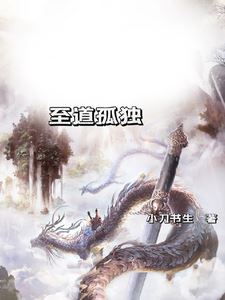
Dao Gu: The Ultimate Dao is Solitary
+Add to Custom List
Genres:
Tags:
Novel Info

Summary

... Read More

Xiao Chen, a young man from a modern world, finds his consciousness transferred into the body of a starving orphan in a dangerous, wild frontier. He joins a small group of destitute children, including the protective leader Huzi, the thin but resilient Shi Tou, and the observant six-year-old Xiao Ya. Living in a dilapidated temple near the ominous Luoshan Mountain, they struggle daily for survival, surviving on meager foraged food while evading the constant threat of ferocious beasts and hostile martial artists. Xiao Chen initially views their primitive physical training as useless but soon accepts his new reality, finding solace in the sibling-like bonds he shares with his companions.

His life changes drastically after a violent clash over food leaves him with a head wound. During his recovery, he discovers a mysterious stone fragment embedded in his mind, which he identifies as a piece of the Cosmic Wall from the creation of the world. This discovery grants him access to a unique mental space where a miniature version of himself demonstrates cultivation techniques, allowing Xiao Chen to absorb knowledge instantaneously. The Stone of the Cosmic Wall also reveals itself as a powerful artifact capable of restoring and upgrading incomplete cultivation methods, setting him on a path toward extraordinary power.

Tragedy strikes when Huzi and Shi Tou venture into Luoshan Mountain to find resources, returning only to be attacked by a swarm of ferocious wild rats and a powerful beast. Huzi is critically injured with his intestines exposed, and the precious Gold Stone Iron Essence they discovered is lost during the chaos. While Xiao Ya successfully stitches Huzi's wound, Xiao Chen realizes that ordinary medicine cannot save his friend. Driven by desperation and love for his new family, he decides to enter the dangerous wilderness alone to trade the remaining ore for healing medicine.

Xiao Chen travels to the nearby Qingshi Town, navigating deadly encounters with ghostly phantoms and monstrous creatures. At a mysterious shop called Tianxia Yi Ge, he sells the ore for four spirit stones and gold coins, unknowingly attracting the attention of greedy merchants and the violent Flying Eagle Gang. Upon his return, he is ambushed by gang members. Using his wits and the supernatural ability to see hidden threats granted by the Cosmic Wall, Xiao Chen tricks his pursuers. He leads them to a haunted lake where a terrifying entity devours his attackers, securing his survival and acquiring an incomplete cultivation manual from the fallen enemies.

Returning to the temple with medicine and wealth, Xiao Chen saves Huzi, who recovers rapidly under the effect of the high-grade martial artist medication. He also obtains candies for Xiao Ya and gold for the group, marking a turning point from starvation to stability. Later, meditating in a secluded clearing, Xiao Chen enters the Cosmic Wall's space again. There, he witnesses the miniature self completing the full cultivation process, opening ninety-two meridians instead of the standard twenty-seven. The artifact not only teaches him the technique instantly but also upgrades the fragmented manual he found, granting him access to a supreme cultivation method far beyond the common Kaimai Realm.

As Xiao Chen absorbs this divine knowledge, spiritual energy converges around him in massive quantities, causing strange phenomena in the sky. He successfully opens his Life Well, transforming it into a vast sea of spiritual energy that enhances his physical strength and senses to superhuman levels. The story concludes with Xiao Chen standing at the threshold of a new world, no longer just a survivor but a cultivator with the potential to reshape his fate. Armed with the secrets of the Cosmic Wall and the love of his found family, he prepares to face the greater dangers of the martial world that now surround his humble sanctuary.

Latest Release
DateGroupRelease
2026-10-01lightnovelasia c360
2026-10-01lightnovelasia c359
2026-10-01lightnovelasia c358
2026-10-01lightnovelasia c357
2026-10-01lightnovelasia c356
2026-10-01lightnovelasia c355
2026-10-01lightnovelasia c354
2026-10-01lightnovelasia c353
2026-10-01lightnovelasia c352
2026-10-01lightnovelasia c351
2026-10-01lightnovelasia c350
2026-10-01lightnovelasia c349

Community Reviews

Rating(0 / 5.0, 29votes)
5 stars
0(0%)
4 stars
0(0%)
3 stars
0(0%)
2 stars
0(0%)
1 stars
0(0%)

Popular reviews

... Read More
Let's talk about the Elder first because this guy gave me actual chills. You know that description—'Xiao Chen felt a chill. Looking at the Elder's smile, he suddenly felt that there was something more to that smile'? That's one sentence and the author has painted an entire villain. The Elder pretends to be a gracious buyer offering higher prices for future ore, but there's this undercurrent of calculation in every word. He's not being nice; he's assessing a resource. And when he admits to Xiao Qing that 'today, I almost had greedy thoughts,' that's not humility—that's a predator recognizing another predator and choosing restraint for now. The fact that he stops himself from exploiting Xiao Chen shows discipline, which makes him infinitely more dangerous than someone who would've just robbed the kid on the spot. Then there's Niu Da, and wow, what a study in greed consuming a person. At first he's playing along with this absurd charade, calling Xiao Chen 'Third Brother' with this obsequious bowing. But after Niu Er dies, everything shifts. The fake warmth evaporates and what's left is cold, calculating murder intent. He doesn't even consider that Xiao Chen might have killed Niu Er—it never occurs to him. Instead, he just decides the boy is responsible and plans to 'dismember this kid, flay him alive.' That line gives me nightmares. The speed at which he moves from 'let's cooperate' to 'I will skin him' tells you everything about what kind of person he is. But here's what really got me—Xiao Chen buying candies for Xiao Ya. Out of nowhere, this small gesture of affection appears in the middle of a tense survival situation. He's walking around with spirit stones and gold coins worth a fortune, yet he remembers a little girl who probably hasn't eaten candy before. It's such a human moment, completely unprompted, and it makes everything about him feel real. He's not just a calculated survivor; he's someone who still cares about people back home while walking into dangers he can barely comprehend. The dynamic between Niu Da and Niu Er is also fascinating—they're brothers in crime, bickering like siblings even while following a murder target. Niu Da slaps Niu Er constantly, calls him stupid, but when Niu Er dies, it's the route to the mine that hurts him more than the loss of his brother. That tells you everything.
... Read More
Okay, so we just watched Xiao Chen go from 'oh cool, I opened my destiny well' to 'I just killed two guys for sport' in like three pages, and my heart is still pounding. The plot here is doing something really smart—it's not just about leveling up, it's about the moment the mouse realizes it has claws. Remember when he first finds out he can cultivate faster in the Cosmic Wall? That's the setup. But the real payoff is when the Flying Eagle Gang shows up. Instead of running, he sets an ambush. That cliffside fight isn't just action; it's a plot pivot. He's no longer the stray kid hiding secrets. He's someone who can look a Kaimai First Layer martial artist in the eye and win. And then—plot twist—the fake surrender, the sudden slash at his throat. Xiao Chen's not just strong; he's becoming street-smart. The author doesn't let him win easily. That escape at the end, chasing into the dark, is a perfect hook. We're left wondering: does he catch him? Will the gang send more? The主线 is tightening like a garrote. It's no longer just ‘survive and grow.' It's ‘hunt and be hunted.' And honestly, I love that shift. The story feels alive now.
... Read More
I need to talk about the trio dynamic because honestly it's the emotional core of this entire story and I'm not okay. Let me start with Xiao Chen. There's this moment where he looks out at the vast wilderness and feels like a tumbleweed, and then he 'had come to consider the Ancient Temple his home.' I literally gasped. This guy who started as this lone wolf, this kid who just wanted to survive — and now he's formed a family. The Ancient Temple wasn't shelter; it was home. And watching him leave it, glancing back every few steps with Xiao Ya holding his hand, that's the most devastating imagery. Then the temple collapses. The dust rises. And all three of them just stand there. No words. Just... loss. Shi Tou's crooked smile gone. Xiao Ya's tears. Xiao Chen's silence. Three people who had found belonging, and now they're 'broken kites, with the whole world as their home.' But here's what got me — the moment Xiao Chen sees the village burning, his response isn't hesitation. It's immediate action. He tells Shi Tou to take Xiao Ya and go first. Not because he doesn't trust them, but because he's already made the choice to die. And then Xiao Ya says no, and Shi Tou says how could I miss this, and suddenly it's not a suicide mission anymore — it's a family standing together. Xiao Ya is fascinating. Her natural Life Well, her eye technique that absorbs all the spiritual energy... she's fundamentally different from everyone else, and the story keeps highlighting that isolation. She used three hundred spirit stones for one attack and felt pale afterward. She's powerful but fragile, and Xiao Chen immediately notices this and gives her more stones to practice with. The care is quiet but undeniable. Shi Tou cracking jokes even while cultivating, his crooked smile, his casual willingness to face death alongside them — he's the emotional comic relief that somehow grounds everything. When he says "Don't worry" about protecting Xiao Ya, we know nobody needs protection and nobody can protect anyone. That's the tragedy of it. And Xiao Chen facing Hong Tao — the shift from this contemplative cultivator to someone with eyes "like he was looking at a corpse" is terrifying. This is the moment he stops running and starts carving his own space.
... Read More
There's a moment during the fight where Xiao Chen gets so deep into his sword practice that there's literally *a mist before his eyes* and he feels like he's grasping something intangible. I keep coming back to this imagery because it's so vivid and almost mystical in a very grounded way. The mist isn't described as some magical effect — it's the mental state of someone who's entering flow, that place where practice becomes instinct. And then right after, the guy collapses, covered in sword wounds, described as if he'd been subjected to *Lingchi* — this really brutal historical execution method. The contrast between the ethereal mist and the brutal blood is jarring in the best way. Then there's the Cosmic Wall sequences. Xiao Chen gets kicked out after two spirit stones because apparently this sacred space charges *site fees.* I love that the author treats this otherworldly dimension almost like a gym membership. He also tries bringing a wild rabbit in and gets kicked out — living creatures can't enter. These small rules and quirks make the world feel like it has its own logic and texture rather than just being generic cultivation setting filler. And the scene where he descends into the well and feels his physical body transform — layers of grime being expelled, his muscles trembling with new strength — it's grotesque and visceral in a way that makes you feel the cost of power. Oh and the image of Xiao Chen sneaking through the night, avoiding powerful auras like a shadow, with that phantom on the riverbank barely having time to say *Brother* before he's already gone — that's pure cinematic atmosphere. The stars described as jewels embedded in the heavens, the wooden bridge, the quiet town at night — it all paints this world that feels lived-in and dangerous.
... Read More
I need to talk about the emotional whiplash in these chapters because it's relentless and I am here for it. The most devastating moment isn't even the bloody one—it's the candy. Xiao Chen just walked out of a transaction where he sold two mysterious stones and walked away with four spirit stones, a thousand gold coins, and healing medicine. He's sitting in a shop, checking his waist pouch to make sure everything's still there, feeling at ease for the first time since entering this world. And his first thought isn't about spending it all or securing his future. It's: 'The little girl probably hadn't eaten them before, and she would surely be very happy.' That's it. That's the entire emotional payload. No dramatic music, no inner monologue about how much he misses home. Just candy for a kid who probably thinks sugar is a myth. And yet it hits harder than any death scene because it reminds us that beneath all this cultivation and danger and conspiracy, Xiao Chen is still someone who notices the small things. Someone who remembers people. Then the author immediately punches you in the gut with Niu Er's death. One moment they're bickering about carrying grain, the next there's blood everywhere and a man is screaming. The contrast is brutal and intentional—I think the author wants us to feel exactly what Xiao Chen feels: that life in this world can pivot from mundane to apocalyptic in the span of a single breath. And what about that phantom child? 'Brother, come down and play with me! I brought someone to play with you, but you don't appear.' There's something hauntingly lonely about that line. A child calling out to someone who can't respond, in a world that's already killing people. Xiao Chen regrets missing that opportunity, and I think the author is using that regret to ask: what are we sacrificing as we climb higher in this dangerous world? What childhood, what innocence, what simple joys are we leaving behind? The ending leaves you攥着half a bag of grain and a heart full of dread, wondering if Xiao Chen will make it through Luoshan Mountain—or if the mountain itself is the real threat.
... Read More
'The Dao is the foundation, giving birth to all things, bound by the shackles of Heaven and Earth. Break them, and you can ascend to the heavens...' I can't stop thinking about this line from the Tongtian Secret Manual. It's basically the entire philosophy of cultivation fiction condensed into a few sentences, but the way it's woven into this chapter — right after Xiao Chen escapes a literal threat — it takes on a whole new meaning. The White Cloth at the lake IS one of those shackles. It's something that hunts in the natural world, something that traps and consumes. And Xiao Chen breaks free from it, physically. But the deeper symbolism is in the Life Well itself. The manual calls it a 'well' — a small, contained source of water — but when Xiao Chen opens it, it becomes vast and ocean-like. 'Why is it called the Life Well? This is clearly an ocean!' The gap between what the text tells you something should be and what it actually becomes mirrors the whole cultivation journey. You follow instructions, you do the practice, and then suddenly you're operating on a level the manual never prepared you for. And the Cosmic Wall — this space that appeared before during the creation of the universe, now returning to show him a miniature version of himself cultivating. It's almost like a cosmic mirror, reflecting back not what is but what could be. The wall doesn't just contain space; it contains potential. Every cycle the miniature self completes is a version of Xiao Chen who already succeeded, and those successes accumulate until the real one catches up. Water as life, walls as boundaries, the well as impossible depth — this story is drowning in symbols and I love it.
See all reviews

Custom lists

See all custom Lists