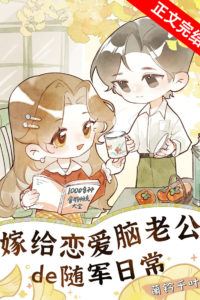
Daily Life Following My Love-Brain Husband in the Army
Novel Info

Summary

... Read More

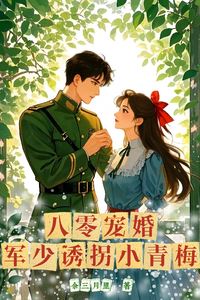
Liang Xin is a woman trapped in the body of a cannon fodder character from a novel titled The Legendary Tycoon’s Dazzling Life in the Seventies. She possesses memories of countless past lives spent traversing different worlds through a mysterious system, but her current existence is defined by her role as a tragic figure who supported the male lead, Wei Yuanyang, during his reeducation in the countryside. Wei Yuanyang used her food, labor, and sacrifices to secure a university admission, only to discard her once he achieved success and married into a powerful military family. Upon waking in this new timeline, Liang Xin resolves to sever her ties with him and reclaim her autonomy.

The story begins with Liang Xin being dragged to a blind date by her ambitious second sister-in-law, Ma Xiaoyan. The match is arranged by a relative to secure a husband for Liang Xin, but the process is chaotic. They are led through the Jiangjing Military District, passing various housing tiers, until they arrive at the residence of a general. Inside, Liang Xin encounters the commander’s wife and other high-ranking military women. When asked about her aspirations, she displays a stark indifference to the social climbing and political posturing around her, suggesting they plant chili peppers in the courtyard for practical eating purposes rather than ornamental flowers. Her blunt, unpretentious demeanor confuses and unsettles the women, who are accustomed to displaying their achievements and political awareness.

Shortly after the blind date, Liang Xin encounters Wei Yuanyang and his mother in the military compound. Wei Yuanyang is there to visit an old comrade of his father’s, hoping to secure a advantageous marriage with the commander’s daughter. He attempts to dismiss Liang Xin as a relic of his past, but she confronts him with cold precision. Instead of begging for affection, she demands repayment for all the material support she provided during his youth, listing items such as a television, a watch, clothing, and a bicycle. When he offers a meager sum and a television voucher, she accepts it but declares she will follow him until the debt is paid. Wei Yuanyang, confident in her former subservience, assumes she will return the gifts, but Liang Xin’s behavior indicates a complete psychological break from her past self.

Meanwhile, Wei Yuanyang’s mother, Wang Hongyan, visits the Lu family to propose a marriage between Wei Yuanyang and the commander’s daughter, Yueji. She attempts to leverage a past promise made between their husbands during the war, but Hu Fenglian, the commander’s wife, firmly rejects the proposal. Hu Fenglian clarifies that the promise was conditional and that she will not allow her daughter to marry into a family with questionable intentions, especially given the political complexities involving Wei Yuanyang’s connections.

Back in the countryside, Liang Xin’s father, Liang Tiezhu, attempts to punish her for raising extra chickens, viewing it as a capitalist tendency. However, the military district’s political department sends an investigation letter regarding Liang Xin’s background check for her upcoming marriage. This intervention saves her from public criticism and elevates her status within the commune. Her father, seeing an opportunity for social mobility, pressures her to proceed with the marriage to the sickly son of the military commander. Liang Xin agrees, but only on her own terms, demanding a substantial dowry and bride price from her father to cover her expenses and secure her financial independence.

The narrative follows Liang Xin as she navigates the rigid social hierarchies of the military compound and the rural commune. She is aware that the man she is marrying, Lu Chongfeng, is ill and that the marriage is partly a arrangement for care. Despite this, she approaches the union with strategic detachment, viewing it as a means to escape her previous life and the oppressive expectations of her family and society. The story highlights her transformation from a passive victim of fate into an active agent who manipulates the systems around her to secure her own survival and freedom.

As the wedding approaches, Liang Xin prepares to leave her rural life behind. She interacts with her family, who are eager to benefit from her new status, and maintains a distant, calculating demeanor. The contrast between her past self, who would have sacrificed everything for Wei Yuanyang, and her current self, who prioritizes her own well-being and autonomy, serves as the central conflict. The story sets the stage for Liang Xin to enter the military compound not as a submissive bride, but as a woman determined to rewrite her destiny and avoid the tragic fate assigned to her in the original novel.

Latest Release
DateGroupRelease
2026-08-11shanghai fantasy c56
2026-08-11shanghai fantasy c55
2026-08-11shanghai fantasy c54
2026-08-11shanghai fantasy c53
2026-08-11shanghai fantasy c52
2026-08-11shanghai fantasy c51
2026-08-11shanghai fantasy c50
2026-08-11shanghai fantasy c49
2026-08-11shanghai fantasy c48
2026-08-11shanghai fantasy c47
2026-08-11shanghai fantasy c46
2026-08-11shanghai fantasy c45

Community Reviews

Rating(4.1 / 5.0, 9votes)
5 stars
4(44%)
4 stars
2(22%)
3 stars
3(33%)
2 stars
0(0%)
1 stars
0(0%)

Popular reviews

... Read More
Let me just say this: the pacing in these chapters is absolutely ruthless and I am here for it. You start with an intimate bedroom scene—darkness, whispered dialogue, physical contact that's equal parts awkward and charged—and within three paragraphs you've got Lu Zewei doing push-ups against his own chest to prove he's not impotent. That is a tonal whiplash that works because it's genuinely funny and genuinely revealing of his character. He's a man whose entire identity is tied to being capable, and his wedding night just got him questioned on both counts. Then the morning bugle hits and we cut to the training field. This is where the pacing really shines. The author could have stayed in the domestic sphere for another chapter—more bedroom awkwardness, more mother-in-law dynamics—but instead we get this glorious sequence of Lu Zewei sprinting ahead of everyone else in a vest during a freezing morning, muscles gleaming, demanding validation from soldiers who are simultaneously impressed and confused. It's a power move, yes, but it's also deeply vulnerable. He needs them to confirm he's fit because Liang Xin's words from last night are still echoing in his head. The transition from the training field back to the house is where I almost put the book down—Commander Lu throwing his uniform jacket at his son, the parents arguing about authorization and discipline, all of it noisy and chaotic. But then Lu Zewei bypasses it all and goes upstairs, and she's gone. "Operation Remove the Label — total failure on the first attempt." That one line. That is the emotional pivot of the entire section. He ran six miles in freezing weather to come home and find her missing, and the brevity of that realization hits harder than any dramatic monologue could. After that, the pace accelerates almost comically: nosebleed, fainting, waking up, mother declaring they're getting the certificate, driving to the Civil Affairs Bureau, snow, the ride back, the department store, buying yarn, coming home for dinner. It's a lot of ground to cover, and the author handles it by making each scene do double duty—advancing the plot while simultaneously deepening character. The dinner scene at the end is a masterclass in controlled pacing. Hu Fenglian's exposition about the family structure comes woven into meal preparation and casual conversation. The political context (class struggle, suspended schooling, the Cultural Revolution backdrop) is dropped in naturally through the wedding banquet discussion. Nothing feels info-dumpy because it's all filtered through lived experience. My only minor gripe: the transition from the department store back to the family dinner felt slightly rushed. We go from an intimate yarn-buying moment to "once everyone was seated" in two paragraphs, and I wanted more of that domestic texture. But honestly, the author knows when to cut, and the ending on Hu Fenglian's complicated expression about Captain Wei's wife visiting is a perfect hook.
... Read More
I need to talk about this one detail that wrecked me. When Liang Xin casually steps back two paces from Wei Yuanyang — just two steps — and the narrative tells us his heart jolts because she used to act like a startled deer whenever he moved closer — that's it. That's the whole romance deconstructed in one gesture. The emotional arc between them is tragic in the most satisfying way. For five years, she was the girl who half-starved herself to send him food, traded her own mosquito net for cloth coupons, picked soap pods from trees because she saved everything for him. And he? He used her. Not even maliciously, I think — just carelessly. Like something that was always there and therefore didn't need gratitude. When he introduced her at university as just "the commune secretary's daughter," that wasn't just cold, it was erasure. He made her invisible to save his own reputation. But here's what gets me — the text says he wanted her to fade from his life, and when she finally does, he panics. "Yes, this was what he had wanted... But he hadn't wanted this: for her to stand before him, utterly indifferent." That line alone deserves an award. It's the classic regret-of-the-male-lead trope executed with surgical precision. He thought indifference was what he wanted because it was convenient. Now that it's real, it hollows him out. And Liang Xin? She's not angry. She's not crying. She's not even really mad. She's just... done. The most emotionally devastating thing about this whole scene is how calm she is. She recites her list of demands the way someone orders lunch. That's not revenge, that's something far more powerful — it's emotional independence. She doesn't need him to acknowledge her suffering. She's already moved on. That's the real gut punch.
... Read More
The snow imagery in these chapters is doing so much thematic heavy lifting that I need to sit with it for a moment. The marriage certificate scene takes place in snow, and the narrator explicitly frames Liang Xin's snow-dusted shoulders as a bride's veil: "The sight reminded him of a bride in an old Republican-era wedding portrait—Yet no photograph could capture what stood before him now." This is significant because it's connecting their present to a romantic literary tradition while simultaneously asserting that their reality surpasses any artistic representation. The snow veil is temporary, natural, and free—everything their arranged marriage is not, and everything it's becoming. But the snow also carries a darker undertone. "It was now 1976, deep in winter. The northern wind tore through the sky thick with frost and haze, carrying countless fluttering snowflakes. After the New Year, when spring came and the ice began to melt, the people who had endured so much hardship would finally welcome long-awaited warmth. In the decades that followed, it would never again be this cold." This passage operates on at least three levels: the literal seasonal cold, the political cold of the Cultural Revolution era, and the emotional cold between two people who are learning to care for each other. The promise of spring is both personal and historical. The red cashmere yarn is another symbol I can't stop thinking about. Lu Zewei insists on buying red yarn for Liang Xin, and she refuses it. He asks why she stopped wearing her red scarf, and she says it's the only one she has and she wears it because she has to, not because she likes it. His response—"Then what colors do you like?"—is deceptively simple. He's asking about her preferences, which is an act of genuine curiosity about who she is as a person, not just as his wife. The red yarn he wanted to buy her represents the romantic gesture he doesn't yet know how to make, and her rejection of it (preferring black and gray) represents her practical, survival-oriented mindset. But he buys it anyway, or rather, he buys the black and gray and the conversation about red becomes a kind of proxy for everything he can't yet say directly. The marriage certificate itself is loaded with symbolism. It's described as looking "more like a commendation award"—a red emblem with a five-pointed star and flag, bearing the Chairman's quotation about planned birth. This is a document that merges the personal with the political, the romantic with the revolutionary. The phrase "Marriage by mutual consent" is particularly charged in this historical context, where arranged marriages were the norm and individual choice was often subordinated to family or political necessity. Lu Zewei fixing his eyes on those four words—"Marriage by mutual consent"—suggests he's reading them as a kind of victory, a personal triumph of choice over circumstance. And the brown sugar water—small, domestic, tender. He makes it for her after she faints. It's not grand or dramatic. It's just warm sugar and water in an enamel mug, offered quietly. This is where the novel's deepest theme lives: care as action, not declaration.
... Read More
Okay so let me just say this plot twist hit me like a freight train. You know how most novels with transmigrator protagonists just have them being secretly OP while pretending to be weak? This one actually commits to the bit. Liang Xin comes back from her system-hopping, sees the whole setup — she's cannon fodder, Wei Yuanyang is the male lead, the whole nine yards — and instead of groveling or trying to win him back, she just... reclaims herself. And then when he shows up with his fancy cigarettes and liquor like he owns the place, she doesn't flinch. She asks for a BLACK-AND-WHITE TELEVISION. A PANDA-BRAND one. In a village that literally doesn't have electricity yet. The structure here is so satisfying because every scene builds on the last. First the blind date scene where she tanks her own chances on purpose — that was delicious. Then her second sister-in-law drags her away and we get the exposition dump about who she is and what this world is. Then Wei Yuanyang appears, and the whole dynamic has shifted. She used to be the timid girl who defended him against accusations. Now she's the one holding all the cards, calmly listing off every single thing she sent him like receipts. The author really knows how to pace this — the tension ramps up from the blind date awkwardness to the confrontation at the military compound, and by the time Liang Xin starts naming her demands, you can feel Wei Yuanyang's world crumbling. What I love most is how the plot rewards attention. Every detail about the Japanese fertilizer sack underwear, the mosquito net turned into a mock collar, the soap coupons — these aren't just flavor, they're ammunition. She's not just being petty, she's building an irrefutable case. And the ending? Wei Yuanyang staring at her like he's seeing a stranger? Chef's kiss. This is the moment the novel declares its thesis: the cannon fodder is done being cannon fodder.
... Read More
Okay I need to talk about the nosebleed scene because I am STILL not over it. Liang Xin walks out of the bathroom, looks up at Lu Zewei in his damp vest, and sees every single muscle line for the first time—no darkness to hide behind, no ambiguity—and she literally faints. From attraction. Not from fear, not from shock at his personality, but from looking at his chest and her body just short-circuited. And then he catches her by the nape like some kind of dramatic Republican-era leading man and she wakes up on their bed with his mother hovering over her like a proud phoenix. I cannot breathe. But here's what actually got me—the coat scene. She takes off her red wool coat to put it on him because he refused to wear his thick cotton overcoat, and his immediate reaction isn't gratitude, it's taking her to the department store to buy her yarn. He noticed she only owns one red scarf and wears it because she has to, not because she wants to. He noticed she only likes black and gray. These are the kind of details a man pays attention to when he's already fallen and is just now admitting it to himself. "Didn't you always wear that red scarf? Why not now?" — that line destroyed me. And the marriage certificate moment in the snow. She's standing there with snowflakes on her shoulders like a natural veil, and he's looking at her like she's the most beautiful thing in 1976 China. The narrator says no photograph could capture what stood before him. I'm sitting here like—yes I am, show me, I need to see this. The CP chemistry between these two is built on this incredible foundation of mutual care that neither of them knows how to express properly. He proves his masculinity by running laps in a vest and then immediately comes home to "accidentally" bump into her. She takes care of him when he's sick, massages his calloused hands, worries about whether he'll catch a cold. They're both terrible at saying anything tender but absolutely terrible at NOT showing it. That gap between what they feel and what they can say is where all the electricity lives.
... Read More
This author's dialogue writing is exceptional, and Lu Zewei's voice in particular is so distinct that I could identify his lines blind. His speech pattern is characterized by short, clipped sentences that often function as deflections rather than genuine communication. When Liang Xin tells him his hand hurts from her grip, he responds with "What's a little pain? You barely have any strength in your hands!" — which is simultaneously dismissive, slightly concerned (he notices her weakness), and completely missing the point that he's the one who caused the pain. Classic Lu Zewei. The most telling exchange is probably this one: "Are you angry?" "Why would I be?" Liang Xin: … "You didn't hear my tone? I was asking a question." "Who were you asking?" Lu Zewei said, glancing toward the driver. "Him?" This is dialogue that does three things at once: it reveals Lu Zewei's emotional illiteracy (he genuinely doesn't understand that her question was about his feelings, not a factual inquiry), it shows his deflection mechanism (looking at the driver instead of engaging), and it creates this delicious comedic tension where Liang Xin is trying to have a real conversation and he keeps steering it toward practical matters. The ellipsis after her silence is doing so much work here. Hu Fenglian's dialogue is equally distinctive. Her voice is warm, rapid-fire, and full of practical wisdom wrapped in maternal authority. "Look at the daughter-in-law I chose for you—she's barely woken up, and the first thing on her mind is your health!" This is the kind of line that reveals character through what she chooses to highlight. She's not just being proud; she's reinforcing the narrative that Liang Xin is exactly the right person for her son. Commander Lu's dialogue is almost entirely imperatives and rebukes, which makes the rare moments of vulnerability land even harder. His concern for Liang Xin is shown through action (pacing outside her door) rather than words, which is consistent with his established voice throughout the novel. The narrative voice itself deserves mention—it has this dry, observant quality that occasionally breaks into wry commentary without ever becoming intrusive. Lines like "The battle for dominance in this household could wait. It wasn't surrender — merely a temporary ceasefire" are funny precisely because they frame domestic marital dynamics in military terminology, which is exactly how Lu Zewei processes the world. One thing I want to flag: Liang Xin's dialogue is notably sparse compared to Lu Zewei's. She speaks in short sentences, often with ellipses or silence. But this sparseness is deliberate and effective—it makes her rare moments of directness ("I don't like it" about the red scarf) carry disproportionate weight. The author trusts the reader to understand that her quietness isn't emptiness; it's a different kind of presence.
See all reviews

Characters

See all characters

Custom lists

See all custom Lists