Summary

... Read More

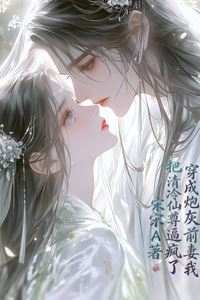
Xu Qinghuan transmigrates into the body of the villainous daughter of Xu Youde, a corrupt county magistrate in the Great Qian Dynasty. In the original novel, her family is destined for extermination by the new emperor, and she is to be executed for her cruelty. Upon awakening, she discovers the 'Wealth Without Virtue System,' which mandates that she must squander ten million taels of silver in villainous acts or face soul erasure. To survive and return to her modern life, she must embrace the role of a spendthrift scoundrel.

Her first task requires her to squander five thousand taels within twenty-four hours. She rushes to her father, who is embezzling disaster relief funds, and demands the money to buy out all local rice supplies to waste them. Her father, initially shocked, quickly interprets her actions as a brilliant money-laundering scheme. By purchasing moldy, rotten rice at triple the market price, he can record the embezzled funds as legitimate grain purchases while shifting public blame onto greedy merchants. He happily hands over the silver, praising her political acumen.

Xu Qinghuan buys the spoiled rice and prepares to distribute congee made from it at the city gates, intending to humiliate the starving refugees and incite a riot. However, the Third Prince, Xiao Jingyan, incognito among the crowd, recognizes the strategic genius behind her actions. He explains that only inferior food would deter bullies and wealthy opportunists from stealing relief supplies, ensuring the starving poor actually receive aid. When Xu Qinghuan defiantly adds sand, dirt, and animal feed to the porridge to further degrade it, Xiao Jingyan praises her as a saint bearing infamy to save lives. The refugees, desperate for survival, kneel and thank her, cementing her reputation as a benevolent figure rather than a tyrant.

Returning home, Xu Qinghuan finds her father views the entire incident as a masterstroke of political economy. Distressed that her attempts at villainy are being misinterpreted as acts of great mercy, she receives a new system task: spend one hundred thousand taels through exploitation and extravagance within thirty days. Finding the family coffers empty due to bribery expenses, she decides to extort the local wealthy merchant class.

She summons the county's richest families under the pretense of a banquet and demands entry fees. When they hesitate, she sells VIP protection cards for two hundred taels each, claiming they guarantee safety from official harassment. Xiao Jingyan again reinterprets her schemes, framing the extortion as a regulated market system that protects merchants from arbitrary taxation. The wealthy, fearing exclusion and potential targeting, eagerly purchase the cards, flooding Xu Qinghuan with silver.

With the funds secured, Xu Qinghuan hires dozens of local thugs to form a City Patrol Brigade, dressing them in menacing black uniforms. She orders them to patrol the streets, tearing down stalls and fining citizens arbitrarily to create chaos and hatred toward the Xu family. As the brigade patrols the market, they intimidate vendors and scare children, causing widespread fear. The subprefect, observing these events, begins drafting a memorial to impeach the Xu family for harboring seditious intent, believing Xu Qinghuan is building a private army. Unaware that her malicious acts continue to be misread as order and discipline, Xu Qinghuan remains trapped in a cycle where her every move toward villainy only deepens her legend as a capable, albeit ruthless, administrator.

Latest Release
DateGroupRelease
2026-09-26akknovel c509
2026-09-26akknovel c508
2026-09-26akknovel c507
2026-09-26akknovel c506
2026-09-26akknovel c505
2026-09-26akknovel c504
2026-09-26akknovel c503
2026-09-26akknovel c502
2026-09-26akknovel c501
2026-09-26akknovel c500
2026-09-26akknovel c499
2026-09-26akknovel c498

Community Reviews

Rating(0 / 5.0, 43votes)
5 stars
0(0%)
4 stars
0(0%)
3 stars
0(0%)
2 stars
0(0%)
1 stars
0(0%)

Popular reviews

... Read More
First off: I was not prepared for how much I like this man. Not in a 'ooh the mysterious pretty stranger' way. In a 'this guy is genuinely terrifying because he understood the entire scam better than the scammer did' way. He walks in wearing expensive fabric but no jewelry, picks up the cardboard, rubs it with his thumb like he's inspecting a product at a trade show, and then just... talks to her like a peer. 'Miss Xu. Is this card truly good for unrestricted passage throughout this county town?' No fear. No anger at being extorted. Just a calm, professional inquiry. And she immediately falls apart with 'forced bravado,' which the narrator flags specifically. She's the villain. She's supposed to be the one in control. And she's the one getting 'a bit unnerved under his gaze.' The power dynamic flipped before a single word of his sales pitch even landed. Then he does the rebrand. 'What is this, if not merely a card? This is a franchise license.' And I need to talk about the fact that he says 'Miss Xu is a genius' with 'eyes shining.' Not mockingly. Not condescendingly. Genuinely proud of her. As if she'd just presented a new business model at a conference. The whole room shifts because of it—Squire Wang's eyelid twitches, Zhao Si tumbles out playing his planted role, the merchants descend on the table. He catalyzed an entire economic event through one reframing sentence. And his reward? A slight, approving nod from across the crowd. 'As if looking at a kindred spirit.' That's the line that got me. Because we know—she knows—she wants to throw the cardboard at his face. 'This world had gone mad. Extortion had become franchising.' She's furious. But the narrator softens it into something almost tender. He saw what she was doing and instead of reporting it, he made it better. And she can't be angry at that. Not really. Not when he's the only person in the room who looked her in the eyes instead of looking at the floor. The relationship is brand new but it's already got this weird... intellectual intimacy. He's her translator. He takes her criminal instinct and gives it a coat and tie. I need to know if this becomes a friendship or a partnership or something else entirely, because the fact that he nodded at her like they were co-authors on a white paper while she was internally screaming 'I just wanted to be a villain' made me feel like I was witnessing the founding of a very unholy alliance. What's his actual endgame here? Did he read her card, rub the ink, and calculate his own profit margin in three seconds? Because I think he did. And I think that's the most Xiao Jingyan moment in the entire book.
... Read More
One line stopped me cold: 'For those on the verge of starvation, you could mix sand or even knives into the porridge, and they'd still drink it.' I read that three times. Not because it was the dirt incident or the cow dung or the grass. Because of the KNUFE. The author could have said 'stones' or 'gravel.' They escalated to knives. And it's true. If you haven't eaten in nine days, a knife chip in your soup is just... a texture issue. You swallow. You live. The whole scene is this grotesque parable about dignity as a luxury good. The rich get clean rice. The poor get moldy rice. The starving get contaminated rice with actual cow dung in it. And every single tier is 'better than nothing.' The hierarchy isn't just economic, it's about who gets to refuse. The hooligans can refuse because they're fed. The old man can't refuse because he will literally die. And Xu Qinghuan - the girl whose whole motivation is to be seen as vicious so she can get exiled - accidentally becomes the person who FEEDS the unrefusable class. The irony writes itself. There's also that offhand 'core socialist values' line that I initially thought was a typo or a joke about the author. 'Beneath this exterior, after all, was someone shaped by the core socialist values.' And then immediately 'But she couldn't show it. She was the vicious supporting female character!' Like, the author is saying: the modern consciousness IS the socialist one, the caring one, the 'everyone gets food' one. And the performance of villainy is a mask over that. The mask is the role. The mask is the script. And the whole question the book keeps asking is: how long can you perform cruelty when the people in front of you are actually alive and actually hungry and actually looking at you with 'living Bodhisattva' in their eyes? The stale rice isn't just an economic tool. It's a symbol of the minimum threshold of 'worthiness.' You have to be hungry enough to accept this. You have to have NO options. And the moment you have an option, you're no longer 'real' enough for the aid. That's the system the story is circling. And I'm not even sure I'm reading that far into it. Maybe I am. The knife in the porridge line is doing a lot of work for like fifteen words.
... Read More
Li Sheng. That's the character I keep thinking about actually. Not even Xu Qinghuan. The guy just... exists in the background, emerges from the crowd, swings the cudgel, 'Thwack,' done. No dialogue, no inner monologue, just function. But that's the point. He's an extension of her will. When he asks 'Young Mistress, what is this all about...' at the end and she just shuts him down with 'Generating turnover' and then he 'opened his mouth, wanting to say more, but ultimately swallowed his words' - man. That one line tells me everything about their power dynamic. He's not her equal. Not her friend. He's the hand she uses to break things. And Pockmarked Liu - he reaches for the silver thinking he's taking it, thinking his violence and notoriety give him leverage. 'I'll take this money. As for whether I listen or not, that's another matter.' Classic street king delusion. He thinks the transaction is between equals. Xu Qinghuan doesn't even blink. Doesn't flinch. Just says two words: 'Li Sheng.' And the whole power structure inverts in one syllable. I love how after the cudgel moment, Pockmarked Liu is described as 'alternating between green and pale' while watching others kneel. He was the top dog three paragraphs ago. Now he's watching a scrawny nobody go first and his ego is crumbling in real-time. The relationship between Xu Qinghuan and her subordinates isn't loyalty, it's transactional terror. Cui'er is just the logistics arm, distributing contracts. Nobody here loves her. They comply. And that's scarier than any friendship or alliance. Is she going to develop someone who actually sticks around voluntarily or is this all going to be a house of cards the moment the silver stops?
... Read More
This whole section made me feel a weird protective tenderness toward Xu Qinghuan that I didn't expect. I was going in thinking 'lol villain girl selling fake police cards is funny' and I came out thinking 'god this woman is so alone in what she's trying to do.' The system task is her whole identity right now—be the heartless rich, collect the money, get exiled to Lingnan, done. Three birds, one stone. Simple. Efficient. But every single beat the narrative gives her is 'here's the money, now what? Spend it? HOW? In a way that makes you look worse?' And she can't even spend it normally because normal spending would make her a NORMAL rich lady, which is not the persona. She's trapped in the persona by her own rules. The Cui'er moment was small but it stuck. Cui'er comes in with tea, places it carefully at the corner of the table like he's approaching a feral cat. 'Young Mistress, this silver is enough for our family to live on for years.' And she pushes the banknotes aside. 'This money burns my hands; it needs to be spent, and fast.' There's something almost lonely in that line. She's sitting in a room with more money than she'll ever need and she's pacing. Her maidservant looks at her like she's losing her mind. Because she IS losing her mind. She's a person playing a role and the role keeps succeeding beyond the script. There's no one in that room who gets it. Cui'er gets the money. Li Sheng gets the 'oh no, the mistress is insane' read. Xiao Jingyan gets the 'you're a genius' read. Nobody gets the 'I am not actually evil, I am performing evil, and I am losing control of the performance' read. And that gap is where the emotional weight lives. She's not sad. She's not crying. She's white-knuckling a stack of cardboard and muttering 'I just wanted to be a villain. Why was it so damn hard.' Which is... actually kind of devastating when you let it land. The exasperation is doing emotional labor that sadness would do in a normal story. I read that line three times. Three. The 'damn' hit different on the third pass. And I don't even have a real emotional LINE here yet, no romance, no deep friendship, no family bond getting tested. What I have is a woman making a very convincing 'I will absolutely wreck this town' face while internally filing a formal complaint with the universe. The emotional thread is her own isolation inside the performance. And I'm weirdly invested. Like, I want her to get the exile. I want it to END. She's earned a break.
... Read More
I was reading this section at 1am and I did not want to stop and that tells you everything about the pacing here. The structure is essentially: insult, counter, escalation, counter, surrender. Five beats. But the author stretches each beat differently and that's what keeps your legs from wanting to put the book down. Beat one: Xu calls the congee dog food. Short, sharp, three sentences. Boom, she's committed to the persona. Beat two: the old man rages. Also quick, two lines, 'you venomous woman.' Then the man's laugh. 'The laugh was icy, like shards of winter frost crashing into the heated scene.' One sentence, but it physically breaks the rhythm of the argument and resets the temperature. You feel the room go quiet. Beat three is the long one. The man's entire speech about refined rice and the ruffians and the skeletal figures. This is where the author lets you breathe, lets the logic land, lets you follow the finger-point to the huddled thugs against the wall and back to the old man who can't answer. It's the longest paragraph and it earns its length because you need that time to feel the argument's weight. Beat four: Xu dumps the rice bran. And THIS is where the pacing tightens up to almost violent speed. 'Without a second word'—no transition, no breath. She snatches the sack. Shoves the worker aside. Charges. Dumps. Whoosh, dust, coughing. Stirs. Shouts. The whole sequence is staccato, no connective tissue, and it mirrors her panic. She's not thinking anymore, she's just moving, escalating, and the prose matches that. And then beat five: the clap. 'Clap!' One word. On its own line. The entire noise of the scene, the dust, the coughing, the old man's cursing, all of it cuts to silence because of a single hand-strike. And then he talks, and the pace slows back down for the math, for the 'one catty becomes three, five portions,' and the kneeling happens in this slower, almost reverent tempo. 'Then came the second, and the third.' Two beats. Quiet. I think the author is really good at using length as emotion here. Long paragraph = intellectual processing. Short bursts = physical panic. Single word = the moment everything changes. And the cliffhanger at the end, where the text just cuts off mid-kneeling, those refugees still in the middle of their bow, is genuinely annoying in the best way. I closed the app at exactly that spot and sat there for four minutes before opening the next chapter. Would not recommend to people who are reading on public transport. You will look stupid. You will be vibrating. You will apologize to the person next to you when you finally look up because you've been staring at the ceiling for twenty minutes.
... Read More
Okay so I genuinely did not see the twist coming here and I need to process this for a minute. Xu Qinghuan feeds the whole crowd this disgusting muddy sand-porridge, right? And her INTENTION is to look like a total monster so her family gets disgraced and she can get shipped off to Lingnan. Simple. Clean. Done. But NO. The old beggar guy shows up, kowtows, and goes 'this is the compassion of a bodhisattva!' And then the WHOLE crowd drops to their knees. And then the Third Prince, who's been watching in disguise, literally eats a spoonful of that raw moldy sludge, wipes the grime off his lip like he's tasting fine wine, and bows to her. And calls her a national hero. And the system pings 'retirement bonus 100,000 yuan.' She is losing her mind. She literally screams internally 'I don't want this kind of prestige! Dad please be corrupt!' And her dad, counting gold coins in another county, just sneezes and thinks his daughter is being filial. The plot is running on pure irony. Every time she tries to dig her family into the ground, the narrative slams the shovel back into her hand. And then the old scholar shows up going 'this is trampling upon human decency!' and suddenly the scholars' faces shift and the timid commoners start hesitating, and Xu Qinghuan is literally lighting up inside because FINALLY someone is calling it what it is! And I'm sitting here going... is this a comedy? Is this a satire on performative virtue? Because the more I think about it the more it hits. The rich and 'decent' people would have snatched the fine congee, only the undignified mud-soup is left for the 'worthless' to survive on. That line actually stopped me cold for a second. Then the Third Prince rebrands it as genius strategy. Ugh. So is the plot coherent? Yeah, structurally it tracks, but the engine driving it is this relentless reversal machine. She tries X, the world reads it as anti-X, and she has to scramble for a new angle. I wonder if by the next batch we're gonna see her finally SUCCEED at looking evil, or if the universe just refuses to let her be the villain she desperately wants to be. That would actually break her in the best way possible.
See all reviews

Custom lists

See all custom Lists