Summary

... Read More

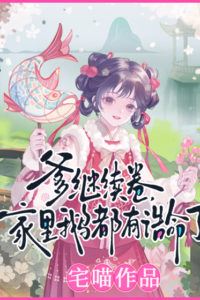
Tang Li, an eight-year-old girl in the Jing Dynasty, transmigrated into the body of a sickly child from a declining branch of the Tang family. Upon regaining her modern memories, she discovers the existence of the Virtuous Empress Cultivation System, which demands she undergo grueling daily training in the Four Arts, astronomy, geography, and medicine to become a historically revered empress. Recognizing the system as a burden that would sacrifice her well-being for the benefit of others, Tang Li refuses to bind with it. Instead, she negotiates a loophole, transferring the system's binding to her father, Tang Xun, a lazy and selfish man who had previously squandered the family's assets and driven their grandmother to an early grave. Tang Xun, initially horrified by the prospect of becoming a "virtuous empress," eventually accepts a modified contract that requires him to study and complete tasks in exchange for intelligence boosts and silver rewards, while Tang Li enjoys the benefits from the sidelines.

The core conflict arises from Tang Xun's forced transformation under the system's strict supervision. He is subjected to daily lessons in the Sea of Consciousness and punished by lightning strikes for failures or distractions. Despite his initial resistance and attempts to seek help from a fraudulent monk named Liaoran at Qingniu Temple, Tang Xun is repeatedly humiliated when the system strikes him with visible lightning in public, an event that inadvertently boosts the family's reputation. Tang Li manipulates these events to her advantage, using the system's Dream-Visitation skills to influence her grandmother, Yang Taohua, and secure her own elevated status within the family. She is renamed Tang Li, meaning "dawn," and is treated as a blessed child, shielding her from the hard labor that previously defined her life.

As Tang Xun diligently studies to pass the imperial examinations, Tang Li focuses on securing her family's future and protecting vulnerable relatives. She visits her aunt, Tang Mei, who is married into the household of the Assistant County Magistrate, and discovers she is being physically abused by her mother-in-law, Madam Su. Through subtle questioning and observation, Tang Li uncovers the truth of her aunt's suffering, including the forced kneeling and scripture copying that has left bruises on her knees. This discovery highlights the precarious position of women in this society and adds a layer of urgency to Tang Li's efforts to stabilize her family's social standing.

The story progresses with Tang Xun enrolling in school and rapidly acquiring knowledge, driven by the promise of silver and the fear of punishment. His intelligence increases, allowing him to outperform expectations and even teach his family to write their names. Meanwhile, Tang Li leverages her position as the "blessed daughter" to gain resources and protection. The narrative sets the stage for Tang Xun's rise through the imperial examination system, aiming to restore the family's honor and wealth, while Tang Li continues to orchestrate events from behind the scenes, ensuring her own comfort and safety in a world where her original branch was destined for ruin.

Novel Items

More
System
A system that aims to cultivate a Virtuous Empress for the Ages for the Jing Dynasty. It offers tasks, Achievement Points, a system mall, and skill classes. Initially bound to Tang Li, she refused and negotiated to have it bound to her father Tang Xun instead. It has a Sea of Consciousness Space for studying and can modify the host's body. If the mission fails, the system faces being recycled.
Skill
A guaranteed item in the Newcomer Gift Pack from the system. It allows the user to enter someone's dreams and plant ideas or beliefs. Tang Li planned to use it on her father Tang Xun to make him believe she would become the future Virtuous Empress, motivating him to spend money on her education.
Item
A benefit given to the host upon binding with the system. It is guaranteed to contain a Dream-Visitation Skill. Tang Li used this to her advantage when redirecting the system to her father.
Concept
A feature of the Virtuous Empress Cultivation System where the host can study by closing their eyes. The space can conjure relevant books for study. One lesson lasts half a shichen, and the system requires ten shichen of study per day.
Arcane Treasures
A time-limited skill from the newcomer's gift pack, valid for one year, that can be used on outsiders. Tang Li has one use available but has not yet used it in this text.
Currency
Chi Dahu gave thirty taels to Chi Ye (ten to repay Qin Mu, twenty for supplies). Chi Qiao took two hundred taels for preparations. Chi Yu kept seventy taels from the Qi Family compensation. A pound of refined rice costs twelve wen.
Latest Release
DateGroupRelease
2026-08-11shanghai fantasy c10
2026-08-11shanghai fantasy c9
2026-08-11shanghai fantasy c8
2026-08-11shanghai fantasy c7
2026-08-11shanghai fantasy c6
2026-08-11shanghai fantasy c5
2026-08-11shanghai fantasy c4
2026-08-11shanghai fantasy c3
2026-08-11shanghai fantasy c2
2026-08-11shanghai fantasy c1

Community Reviews

Rating(3.8 / 5.0, 20votes)
5 stars
5(25%)
4 stars
6(30%)
3 stars
9(45%)
2 stars
0(0%)
1 stars
0(0%)

Popular reviews

... Read More
The Li family residence is described in this deceptively casual way—three-entry courtyard, eight servants, spacious. On paper, this is a dream marriage for a village girl. And that's exactly the point, isn't it? The author doesn't need to describe blood and chains because the opulence IS the cage. Every detail about the house reinforces Tang Mei's isolation: she's surrounded by servants who report to Madam Su, in a house built by the Li family's wealth and status, far from her natal family. The scene where they first arrive is so carefully staged. Madam Su's coldness to the 'unsophisticated' gifts, her warmth to Tang Zheng the Xiucai, her complete ignoring of Tang Xun—it's a masterclass in showing social hierarchy through micro-interactions. And then Tang Mei emerges in that peach-colored skirt with the silver-plated plum blossom hairpin, and her face is 'like a melon seed' instead of its original round apple shape, covered in thick powder to hide exhaustion. The visual contrast between the beautiful exterior and the ravaged interior of both the house and the person is devastating. You can almost smell the incense from the Buddhist scriptures and the ginseng soup that Madam Su offers as performance. The world feels so lived-in, so real, and so cruel all at once.
... Read More
The dialogue in these chapters is absolutely phenomenal. Every character speaks differently, and you can tell who's talking just from their words without needing name tags. Yang Taohua's voice is perfect — she sounds like a shrewd village woman who knows exactly how to play the system. When she asks the abbot 'Do I need to kneel while copying to show sincerity?' she's not actually asking for religious guidance. She's setting up her trap. And her line 'I thought it was just my lack of knowledge, but it turns out this is just a rule from my in-laws' side' — that's delivered with such casual innocence that it's devastating. She's publicly shaming the Li family while pretending to be confused. Tang Li's dialogue is even better. Her suggestion about 'blood scriptures' comes out with such childlike innocence: 'Would offering blood scriptures to worship the Buddha show more sincerity?' She sounds like a genuine child who doesn't understand the cruelty of her suggestion, but we know she does. That gap between her innocent delivery and the malicious intent is comedy gold. Li Ruida's outburst is equally well-crafted. 'Our family has been ruined by you, you foolish woman!' — this isn't just anger, it's genuine panic about social reputation. His dialogue reveals everything about his character: he's obsessed with face, he's pragmatic, and he's terrified of losing the Tang family alliance. The author also uses dialogue to show power dynamics. Mrs. Zhang's subtle jab about Madam Su looking 'quite well' at the jewelry shop ten days ago — that single line dismantles the entire fabrication. No shouting, no drama, just a quiet truth bomb delivered with a smile.
... Read More
I need to talk about Yang Taohua and Tang Li's relationship because it's genuinely one of the most heartwarming things in this book. This grandmother didn't just take in her granddaughter — she's actively fighting for her. When Yang Taohua says 'My daughter is an honest person—her knees were so bruised from kneeling that they were almost unrecognizable,' she's not just spreading gossip. She's channeling every ounce of maternal and grandmotherly fury she has into protecting her family. And Tang Li watching her from the side, adding fuel to the fire with that innocent face... the author writes it like this: 'Her words, paired with her innocent-looking face, were particularly amusing.' I think what makes this scene work emotionally is that both of them are playing different roles perfectly. Yang Taohua is the concerned grandmother, Tang Li is the naive child. But they're both fully aware of what they're doing. It's like they have this unspoken understanding — this bond forged through suffering together. There's also this bittersweet undercurrent about Tang Mei. The fact that she's now being tormented by her own mother-in-law for not being pregnant yet, and she can't even fight back because she's recovering from leg injuries... it makes you feel for her in a complicated way. She was cruel to Tang Li, sure, but she's also a victim of the same patriarchal system. The emotional layers here are way more complex than a simple good-vs-evil story.
... Read More
Let's talk about the author's notes because they are an art form. "Fifteen minutes ago, Tang Xun: Hehe. Fifteen minutes later, Tang Xun: Not hehe." This is the single funniest thing I've read all year and it perfectly bookends the entire emotional arc of Tang Xun's day. The pacing in these chapters is also surprisingly tight for what could easily have been info-dump territory. You've got the system reward scene, the silver-from-the-sky spectacle, the secret family meeting, Tang Xun's midnight study session, Tang Zheng's quiet disbelief, Tang Li practicing calligraphy — and somehow every scene transitions smoothly without feeling rushed or dragged out. The chapter titled "She Spoke Too Soon — The Eldest Son Was Still the Same…" is a masterclass in ironic titling. Yang Taohua praises Tang Xun and the very next beat undercuts it. That's not just comedic timing, that's structural awareness. And ending on Tang Xun's scheme with the doctor while the Li family remains clueless? That's a cliffhanger that doesn't feel manufactured — it feels earned because we've watched Tang Xun actually grow into someone capable of this kind of maneuvering.
... Read More
Let me ask you something — when was the last time a novel made you genuinely worried about a guy becoming a Xiucai? Not because of political intrigue or life-or-death stakes, but because you somehow cared about this regular dude's educational advancement? That's what's happening here and I need to figure out why. The external stakes are clear: Tang Xun has one year to become a Xiucai or whatever consequences the System has in store. The text mentions ten taels of silver were already taken away for violating the System contract, which establishes that the System isn't just a helpful assistant — it's punitive. That's real stakes. But what's interesting is how the author layers internal conflicts on top of that. Tang Xun's relationship with his fatherhood is the biggest internal conflict. He's a reincarnated adult in a father's body, and he's figuring it out as he goes. The System literally has to remind him: "As a father, you should personally teach your daughter." He's not naturally parental — he's a guy who used to be told to give way to his younger siblings, and now he's the one in charge. Every interaction with his children is a conflict between his instincts and his intentions. Then there's the family conflict — the suspicion that his mother favored his younger brother. When Yang Taohua agrees to pay for Tang Li's school without hesitation, Tang Xun is genuinely surprised. This shakes his entire understanding of his family history. Is she actually fair? Was he wrong about everything? That's a conflict that doesn't have a clear answer yet, and it's making me want to keep reading to find out. The stakes with Tang Li are different — she's the one with the most to lose because she's the strategist. If her father fails, all her manipulation falls apart. But here's the thing that makes me actually care: she's doing this partly for him too. The System mission about not letting the eldest suffer? She triggered it. She sees her father's resentment about being the firstborn and she's trying to fix it. That's emotional stakes, and they're real.
... Read More
"Grandma, you keep this money. It must be a gift from heaven to help our family." Tang Li said this and I am NOT okay. She's a child. She just received six taels of silver that fell from the SKY and her first instinct was to give it to her grandmother. And Yang Taohua — this woman who had been doting on her intensely, who was willing to slaughter her precious young chickens for her, who was measuring her for new clothes — she got genuinely moved. She thought her affection hadn't been wasted. The scene where she promises to stew chicken and mushrooms for her is so domestically tender and it contrasts SO sharply with the fact that this little girl is secretly carrying the fate of an entire clan on her shoulders. And then Tang Xun's shame when he sees the vision of his family dying on the streets — that's a different kind of love, the love of a father who realizes he was almost destroying the one person who trusted him most. These two threads of family love braiding together, one through sacrifice and one through redemption, is what makes this book actually hurt in the best way.
See all reviews

Characters

See all characters

Custom lists

Oops…There is nothing here.