Summary

... Read More
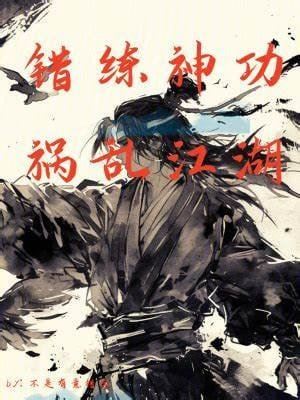
Shi Feizhe is a transmigrator who finds himself in a dangerous Jianghu world as an impoverished orphan with no martial arts background. After witnessing the Yellow Heaven sect conquer his city, he discovers a blood-stained martial arts manual called the True Origin Sword Finger Formula. Despite having no formal training or strong physique, he manages to cultivate True Qi through this mysterious technique while working at a medical clinic to study meridian anatomy.The story takes a critical turn when Liu San, a member of the Four Directions Gang, discovers Shi Feizhe practicing the manual and attempts to kill him. During the confrontation, Shi Feizhe instinctively uses his newly cultivated sword Qi to fatally pierce Liu San's throat. Forced to flee Yiyang City to escape gang retaliation, Shi Feizhe begins his journey into the Jianghu.During his travels, Shi Feizhe encounters Hua Xiaomei, a skilled martial artist who explains the cultivation realms and the dangers of improperly deciphered manuals. Hua Xiaomei directs him to Three Talents Manor, where martial arts secrets are displayed on stone tablets for scholars to study and interpret. At Three Talents Manor, Shi Feizhe discovers a talking great cat demon and copies the Dark Spring Divine Shadow Record, a manual requiring visualization of underworld deities.The narrative explores the chaotic nature of martial arts inheritance, where different copies of the same manual contain contradictory techniques. Shi Feizhe discovers that multiple versions of the True Origin Sword Finger Formula can all be successfully practiced when one understands the core principles, allowing him to accumulate True Qi at an accelerated rate. This revelation transforms his understanding of martial arts cultivation from a solitary struggle into a systematic quest for knowledge.The story establishes a world where martial arts serve as the primary means of social mobility, yet access to proper instruction remains scarce. Gang warfare, sect rivalries, and the constant threat of violence characterize daily life in cities under Yellow Heaven control. Shi Feizhe's journey from exhausted clinic worker to cultivator with sword Qi represents the harsh reality that survival in this world demands both determination and adaptability.As Shi Feizhe continues his cultivation journey, he faces the challenge of deciphering complex manuals while navigating the treacherous politics of competing martial arts factions. The discovery that multiple manual versions can coexist suggests that martial arts mastery requires not just physical practice but intellectual analysis and comparative study. His unique position as someone who can simultaneously practice multiple interpretations gives him an advantage over other cultivators who typically rely on single sources.The narrative concludes with Shi Feizhe establishing himself as a determined cultivator willing to gamble his life for advancement. Having survived initial encounters with gang members and demonstrated the effectiveness of his unorthodox cultivation method, he sets out to gather more manual versions and increase his power. The story presents a realistic portrayal of Jianghu life where the strong prey on the weak, and only those who actively seek opportunities can hope to survive and thrive.
Latest Release
DateGroupRelease
2026-10-01lightnovelasia c336
2026-10-01lightnovelasia c335
2026-10-01lightnovelasia c334
2026-10-01lightnovelasia c333
2026-10-01lightnovelasia c332
2026-10-01lightnovelasia c331
2026-10-01lightnovelasia c330
2026-10-01lightnovelasia c329
2026-10-01lightnovelasia c328
2026-10-01lightnovelasia c327
2026-10-01lightnovelasia c326
2026-10-01lightnovelasia c325

Community Reviews

Rating(3.9 / 5.0, 25votes)
5 stars
7(28%)
4 stars
9(36%)
3 stars
9(36%)
2 stars
0(0%)
1 stars
0(0%)

Popular reviews

... Read More
"He had already died once, what else was he afraid of! Death was not the most terrifying thing; what was terrifying was dying without a single thing to be proud of or reminisce about in one's life!" There. That's the thesis statement for the entire protagonist. Most transmigrator stories give you a character who's eager, ambitious, maybe a bit naive. Shi Feizhe is none of those things. He's exhausted. He's practical. He transplants his old-life work ethic into this new world and gets absolutely zero reward for it. He's a "workhorse before transmigrating, and after transmigrating, he was still a workhorse." That's not irony, that's tragedy with a dark sense of humor. But then something snaps. The Yellow Heaven descends, the city changes hands, corpses appear in alleys, and he realizes survival isn't enough anymore. He needs agency. The manual isn't just power—it's proof he can change his trajectory. And Liu San? He's not even a real antagonist. He's a plot device with a personality. "Master Liu is in a good mood today, so I'll let you die knowing the truth!" That's not menace, that's bureaucratic cruelty. He's just passing through, completing a favor, laughing at a joke. The power imbalance is so extreme that when Shi Feizhe wins, it doesn't feel like a triumph of skill—it feels like a fluke, a divine intervention, or maybe the manual was never useless. But here's what fascinates me: the relationship between Shi Feizhe and his own body. He studies meridians by changing dressings on bleeding gang members. He learns anatomy through trauma. He literally absorbs the world's violent logic into his bones. When he finally stands in the courtyard and channels Qi through the Hand Shaoyang Sanjiao meridian, it's not magic—it's applied knowledge, desperation, and sheer stubbornness. His arc isn't about becoming stronger; it's about refusing to be erased. And the ending? He doesn't gloat. He eats. Then he searches the body. Then he decides to flee. That's not a hero's moment, that's a survivor's calculation. I want to know what breaks him next.

... Read More
"The sky turned yellow. A beam of yellow light drifted from the northeast, dyeing the entire sky a yellow ochre color." There are moments in fiction where the environment itself tells you everything you need to know before the characters even speak, and this is one of them. I immediately felt dread. Not because the author explained it — but because the image was so VISUAL. The whole sky, one color, unnatural, hanging over a battlefield like a judgment. And then Shi Feizhe recognizes it: "Yellow Heaven." Sun Daoren. The guy he's been watching for two months in Yiyang City. The author doesn't need to dump exposition about who Sun Daoren is — we just FEEL the weight of his presence through Shi Feizhe's reaction. His heart pounds, his face goes pale, he can barely breathe. And Mister Wang's explanation of True Person Realm aura is brilliant worldbuilding disguised as dialogue: "It's even simpler than that, like hitting an insect." That's it. That one comparison tells you everything about the power gap in this world. Ordinary people are insects to True Person experts. The martial arts system feels TERRIBLY real because of details like this — the aura alone can crush unprepared bodies. And the Northern Sea setting? The harsh environment that "tempered" Mei Ren's will? You can feel the cold salt air and the violence of those waves just from the descriptions of Black Wind Energy and storm-driven combat. This world has WEIGHT.
... Read More
Let's talk about stakes for a second, because this chapter is quietly TERRIFYING and I need to process it. Shi Feizhe just killed members of the Four Directions Gang. He's injured. He's traveling alone through wilderness at night. He stumbles into a cultivation session and a demoness appears who wants to have sex with him until he dies — and that's the LEAST dangerous thing about that encounter. Hua Xiaomei says she's only "a demoness who has recently entered the Transcendence Realm, otherwise it would have been really troublesome." So what does TROUBLESOME look like from a higher realm?! I don't even want to know. And yet, Shi Feizhe's biggest immediate problem isn't the demoness or the gang or the journey. It's his own body. "After a few days of rest, although his flesh wounds hadn't completely healed, the meridians in his body no longer hurt, and he could try standing meditation and circulating his energy." He's trying to level up WHILE HEALING. That's not a strategy, that's desperation. He knows he's weak. He knows the world is dangerous. And he's trying to catch a break before something else kills him. The gang wants him dead. The Celestial Maiden Sect wants... well, they wanted him dead or worse. He's alone. He has no master. He has a manual that everyone else has failed to master. The stakes aren't just "will he survive" — they're "will he survive long enough to become someone who CAN survive?"
... Read More
I keep coming back to this passage: "Martial arts inheritance is not only about secret manuals but also requires personal instruction from a master, explaining the manual. The dialects, terminology, ambiguous words, and metaphors in the manual must be thoroughly explained before one can fully understand it." This is such a brilliant metaphor for how knowledge actually works in the real world. You can buy the book. You can find the PDF. But without the context, the cultural literacy, the oral tradition that explains what the author ACTUALLY meant — you're not learning. You're just rearranging symbols. The woman from Cinnabar Monastery who wrote the Lapis Lazuli Sutra used Buddhist terminology and metaphors that she assumed her reader would understand. She didn't. She went mad. That's not a plot device — that's a commentary on how knowledge without context is dangerous. And then the larger point: "In his previous life, ancient officials had undergone years of study, and there were strict writing and formatting requirements for official documents. In this chaotic Jianghu, where were there writing and formatting rules? Martial arts manuals were written however the author felt like writing them!" The author is drawing a direct line between imperial examination systems and martial arts sects. Both are gatekeeping mechanisms. Both use obscurity as a weapon. The only difference is that in the Jianghu, the penalty for misunderstanding isn't failing a test — it's going insane or dying. That's a world where knowledge literally controls who lives and who dies, and the people who control the manuals control everything. Also the bit about "No wonder, where is there no madness in martial arts training?" — that double meaning hit me like a truck. The phrase works as both literal madness from bad cultivation AND the systemic madness of a world where the only way up is through increasingly dangerous gambles on opaque information.
... Read More
"She grasped her fist, as if grasping her fate." I read that sentence three times because it hit me so hard. This chapter gave us this incredible window into why Jiang Ning is the way she is. She grew up in a decadent family where her value was measured by what she could trade — a daughter of a concubine from a side branch, destined to be married off to seal some deal. Everyone expected her to be small and compliant. And instead she chose the Questioning Heart Hammer, a technique so painful that NO ONE in her family would touch it. Do you understand what that means? She looked at the martial art that everyone else rejected and said "that's mine." The lightning on her fists isn't just power — it's her will made visible. Every punch first strikes her own heart, her own will, before it strikes the enemy. That's not just a combat technique, that's a philosophy of survival. And when she hears Hua Xiaomei offer more money mid-fight, she doesn't flinch. She pushes harder. Because money is another tool, another weapon, another way to refuse to be powerless. The scene where she and Mei Ren are trading blows in a storm of lightning and black wind energy, thunder crashing around them, neither caring — that's two people who have BOTH decided they will not be controlled. And honestly? Their fight is the most emotionally honest moment in the entire chapter.
... Read More
Okay can we just talk about how Jiang Ning negotiated her way into a 30% profit share mid-battle like she's haggling at a street market not joining a life-or-death clash against the Northern Sea Demon Sect?? "Twenty percent!" "Fifty percent!" "Thirty percent!" "Deal!" I literally screamed at my phone. This is peak resourcefulness and also the funniest thing in the entire chapter. The fact that Hua Xiaomei is out here risking his life and his friend is busy doing business negotiations is both hilarious and kind of genius strategy. And then — AND THEN — the Zhan Yunfan betrayal drops in the middle of all this chaos like a bomb. One second he's fighting alongside Hua Xiaomei, the next he's channeling Yin-Yang energy into his buddy's back and laughing about it. The plot twist wasn't even subtle about being a twist. Hua Xiaomei literally says "You!" and Zhan Yunfan just goes "I knew it!" like he's been waiting his whole life for this moment. But here's what really got me: the Sun Daoren arrival at the end. The sky turns yellow and suddenly we're not just dealing with a betrayal inside our alliance — an ENTIRE True Person Realm expert is showing up. The stakes just escalated from "maybe we lose the manor" to "we might all die and it won't even matter because someone way above our level is watching." The plot doesn't slow down for a single breath in this chapter.
See all reviews

Custom lists

See all custom Lists