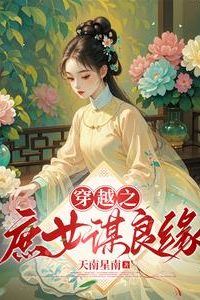
Crossing Over: The Scheming Concubine’s Quest for a Good Marriage
+Add to Custom List
Genres:
Novel Info

Summary

... Read More
Song Yuning is the reincarnation of Song Ping'an, a modern woman who died from congenital heart disease after years of medical trauma. She awakens in the body of an eight-year-old illegitimate daughter in ancient China, raised in seclusion by Madam Wei, a woman forced into concubinage by Song Yuning's biological father, Song Hongzhi. After three years of peaceful life, Song Yuning is summoned back to the Song residence, a powerful general's mansion, under the pretense of attending her third sister's wedding. She suspects ulterior motives and prepares for the dangers ahead, knowing her father is a ruthless man who views his children as tools for social climbing. Upon returning, Song Yuning encounters a family structure defined by complex hierarchies and hidden agendas. She is welcomed by Old Madam Song, who treats her with unusual warmth, and meets her four sisters, all daughters of concubines. Song Yuning quickly deduces that the family's kindness stems from a prophecy made by a Taoist priest, Qingsong Zhenren, who predicted that the five illegitimate daughters would marry into wealthy and noble families, bringing prosperity to the Song clan. Meanwhile, her third sister, Song Yuru, is forced into a marriage with the notorious Sixth Young Master Zhang, a violent man known for killing his previous wives. Yuru attempts suicide to avoid the match but fails, and she is eventually wed against her will. During a temple visit, Song Yuning reclaims a Twin Fish Jade Pendant she had buried years earlier after saving a young boy who later revealed himself to be Xiao Yunzhan, the Seventh Prince. She learns that the boy she saved is actually a prince of the royal family, a connection she intends to leverage for her own survival and escape from the Song family's manipulations. Shortly after, she receives news that her mother, Madam Wei, has died in a fire, a death Song Yuning suspects was orchestrated to sever her ties to the past and ensure her compliance within the Song household. She performs the role of the grieving granddaughter perfectly, gaining Old Madam Song's trust while secretly mourning her loss. The narrative shifts to the aftermath of Yuru's marriage. Sixth Young Master Zhang dies suddenly, leaving Yuru a pregnant widow. The Zhang family, eager to avoid scandal, allows Yuru to remain in her home, providing her with a fragile independence. Back at the Song residence, the family's attention turns to Song Yuqing, the legitimate second sister and wife of the Heir Apparent of Marquis Pingyuan. Yuqing, unable to conceive and facing pressure from her mother-in-law to produce an heir, devises a scheme to steal the fortune of her five half-sisters. She convinces Old Madam Song to request that the girls embroider a Hundred Children Painting and add drops of their blood to it, a superstitious ritual intended to transfer their auspicious destinies to Yuqing. Song Yuning recognizes the malice behind the request and the potential danger to her sisters, setting the stage for further conflict within the household as she navigates the treacherous politics of the Song mansion.

Latest Release
DateGroupRelease
2026-08-11shanghai fantasy c48
2026-08-11shanghai fantasy c47
2026-08-11shanghai fantasy c46
2026-08-11shanghai fantasy c45
2026-08-11shanghai fantasy c44
2026-08-11shanghai fantasy c43
2026-08-11shanghai fantasy c42
2026-08-11shanghai fantasy c41
2026-08-11shanghai fantasy c40
2026-08-11shanghai fantasy c39
2026-08-11shanghai fantasy c38
2026-08-11shanghai fantasy c37

Community Reviews

Rating(5 / 5.0, 5votes)
5 stars
5(100%)
4 stars
0(0%)
3 stars
0(0%)
2 stars
0(0%)
1 stars
0(0%)

Popular reviews

... Read More
I need to talk about Concubine Zhao and Yurou because something genuinely tender lives in their relationship, and it's easy to miss under all the scheming. There's this scene where Yurou comes to her mother's quarters after being summoned to Evergreen Hall, and she's clearly shaken. Concubine Zhao doesn't dismiss her. She doesn't scold her for being weak. She pulls her daughter into her arms and says: "Wait for the right moment. There will come a day when we are strong and they are weak." That's not just strategy — that's a mother trying to give her child something to hold onto when the future looks like a wall. And later, when Nanny Zhao comes to tell Yurou the story of the Fourth Madam, Yurou's reaction isn't panic. It's this quiet, almost reverent consideration. She's weighing her life against possibilities, and the fact that she even entertains the gamble tells you how trapped she feels. She'd rather risk everything than accept being someone else's stepping stone. Contrast that with Song Yuqing, who treats her sisters like spare parts. When she hears Yurou agreed to make the doll, she literally celebrates: "I'm going to have a child!" She doesn't think about the cost to Yurou. She doesn't think about anything except herself. That's not just selfishness — it's a kind of emotional blindness that the text seems almost ashamed of. Zhou Shi is another interesting case. She's pregnant, she's thriving, she's being praised by Old Madam — and yet the text gives her this almost mechanical quality. She's good at everything, but where's the warmth? Where's the fear? She's the perfect daughter-in-law and it makes me wonder if she's already lost something of herself to survive here.
... Read More
This section opens with Zhou Shi's pregnancy news, and I need to talk about how the author uses it as a structural pivot. Zhou Shi is pregnant. Everything seems to be going well. Old Madam is praising her, the household is running smoothly, the five sisters are learning from a competent teacher. It's almost idyllic — and that's precisely why it feels like the calm before something terrible. Because the very next thing that happens is Song Yuqing's infertility crisis, and suddenly all that domestic harmony gets pulled into a completely different orbit. The pregnancy that should be a celebration becomes a mirror that highlights everyone else's lack. Zhou Shi's fertility becomes the unspoken accusation hanging over Song Yuqing's head. The chapter transitions are also doing interesting work. We move from the warm, sunlit scenes of household management — New Year's Eve banquets, Lantern Festival preparations — to the cold, incense-choked atmosphere of Lotus Temple. The seasonal shift from spring joy to spiritual desperation is almost imperceptible but it works. And then the ending. Song Yurou's decision to "sew the doll herself" comes at the very close, and it's such a quiet moment after all the drama. No explosion, no confrontation, just a young woman making a choice in the dark. The author could have ended with more fanfare, but instead chooses restraint. And it's more powerful for it.
... Read More
The scene at Lotus Temple is one of those moments where the setting does so much heavy lifting without the author having to explain anything directly. Master Liaohui isn't just a temple abbot — he's a power broker. The fact that Old Madam and Madam Xu can only meet him after "a considerable amount" in incense money tells you everything about how spiritual authority and material wealth are intertwined in this world. Religion here isn't about faith; it's about transactions. And then there's the note. Four characters: "What is borrowed must be returned." Delivered by a young novice who just happens to be waiting for Concubine Zhao's servant. The precision of this detail — the elegant handwriting, the premium incense scent that only someone from a spice-trading family would recognize — it makes the world feel impossibly dense. Every object, every scent, every word carries weight. The contrast between the warm, cluttered interiors of the Song residence and the cool, calculated atmosphere of the temple is striking. Inside the mansion, there's Zhou Shi's flushed cheeks and Old Madam's affectionate hand-holding. Outside, in the temple, there's only calculation and incense smoke. I also love how the text uses Song Yuning as a kind of atmospheric anchor. Her Snow Bamboo Pavilion is "right next to Evergreen Hall" — a simple geographical detail that tells you everything about proximity, surveillance, and the constant awareness these women have of each other's movements. The architecture itself is a character.
... Read More
Let me be clear: the stakes in this passage are absolutely brutal, and the author makes you feel every single one of them. On the surface, this is a story about a woman who can't conceive and her family's desperate attempts to solve the problem. But beneath that, it's about what women are willing to do to survive in a system that treats their bodies as currency. Song Yuqing is willing to sacrifice her sister's lifespan. Concubine Zhao is willing to gamble her daughter's life for political advantage. Master Liaohui is willing to facilitate it all because the incense money is good. The concept of "borrowing a child" is horrifying precisely because it's presented as normal. Old Madam doesn't hesitate. Madam Xu doesn't question it. They've already accepted that Yurou's body is a resource to be allocated. The only person who seems to resist is Yurou herself — and even her resistance takes the form of a gamble, not a refusal. What makes this scene so tense is that we know, from the Fourth Madam story, that borrowed children come with consequences. The text doesn't need to spell it out — we understand that someone's lifespan will be shortened, possibly fatally. And yet everyone proceeds anyway. The ending line — "I will sew the doll myself" — is Yurou's way of reclaiming agency in a situation designed to strip it from her. She's not refusing. She's choosing how to participate. And that's somehow both more courageous and more tragic than a simple "no" would have been.
... Read More
"What is borrowed must be returned." Four words on a slip of paper, delivered by a novice at Lotus Temple, and suddenly the entire power dynamic in this household shifts on its axis. This note from Master Liaohui is the kind of line that makes you sit back and re-read a scene three times. Let me talk about Concubine Zhao because honestly, she is the most dangerously interesting character in this entire passage. On the surface she's just another concubine maneuvering for position, but her relationship with Yurou is genuinely layered. She tells her daughter: "In this world, aside from me, no one will treat you kindly without reason." That's not paranoia — that's hard-won survival wisdom from a woman who knows exactly what this household eats people for breakfast. And yet, she's also playing the same game. The Fourth Madam story Nanny Zhao tells is chilling — the concubine herself was once the "borrowed" mother, and now she's orchestrating something similar for Yurou. The cycle of exploitation continues, and Concubine Zhao is both victim and enabler in the same breath. But what really got me is Yurou's decision at the end. She could have refused. She could have played the dutiful sister and made the doll like a good little girl. Instead she says: "I will sew the doll myself." Not because she's naive — she's fully aware of the risks. But because she's willing to gamble. That moment, right there, tells you everything about her character. She's not a passive victim waiting to be sacrificed. She's a player entering the board, even if the board is rigged against her.
See all reviews

Characters

See all characters

Custom lists

See all custom Lists