Could You Not Tease Me? - Reviews

Could You Not Tease Me?
+Add to Custom List
Sort
Add review
... Read More
There's something really cinematic about how this chapter moves through spaces. It starts in this small, soft-lit hotel room where Winston checks Hunter's hair to make sure it's dry, switches off the bedside lamp—so domestic and quiet, almost domestic in a way that feels earned after everything. Then the next morning, Hunter is walking through the flower shop and the author specifically mentions the fresh flowers looking exquisite in the morning light. There's a whole moment where he's standing there, pen hovering over the card, thinking about Winston's poem, and the sunlight is just... there, framing everything. And then—bam—he's on a plane, landing in Tokyo, meeting Owen, seeing that Porsche at the hotel entrance with Owen wearing sunglasses like some celebrity arriving. The contrast between the warm, still intimacy of Winston's room and the sharp, fast-paced energy of Tokyo is striking. It's not just a change of location; it's a change of mood entirely. The author also uses that vending machine moment—Hunter debating between Coke and Pepsi—and Owen appearing behind him with this sarcastic comment. It feels like a scene from a movie where the camera pulls back and suddenly there's a new player on the board. Tokyo becomes this liminal space where old connections and new tensions collide. What I love is how the environments mirror the emotional states. Quiet mornings with Winston = safety and vulnerability. Tokyo = chaos, unpredictability, someone always watching from behind.
... Read More
There's a theme running through these chapters that I can't stop thinking about, and it's bigger than just racing. It's about what it means to carry someone else's dreams. Winston crashes protecting others and his first act— from his car, possibly injured, surrounded by debris— is to tell Hunter through the radio: Finish this race for me. Not for your team. Not for the championship. FOR HIM. Hunter responds not by stopping to check on him (which is what any normal person would do) but by channeling every ounce of his grief and fear into driving faster than he ever has before. "I will finish this race. I will come to you at the fastest speed!" This is devotion as performance. Love as velocity. There's also the recurring image of the narrow street circuit itself. So tight. So unforgiving. No room for error. This mirrors their entire dynamic— everything between Hunter and Winston happens in narrow spaces, razor edges, split-second decisions. There's never a wide open road for them. Just curves and corners and moments where one wrong move means everything falls apart. And Ciel— the champion, the leader, the one who should be comfortable in his position— is the one who feels most threatened. "For the first time, Ciel felt genuinely pushed to his limits." Maybe the theme here is that love makes someone dangerous in a way that skill never could. Ciel can drive fast. Hunter can drive with purpose. And purpose fueled by caring about someone? That's untouchable. The debris is another symbol I can't shake. Fiber debris scattering everywhere. Penny's rearview mirror shattering. Owen's front suspension malfunctioning. The sport is literally falling apart around them— but Hunter holds together. Or tries to. "His thoughts were like waves crashing against the shore, having traveled through storms from afar, yet losing none of their strength as they hit the cliffs." The storms are real. The cliffs are real. And Hunter keeps hitting them at full speed because that's what Winston asked him to do.
... Read More
Okay can we just talk about HOW MUCH SUBTEXT is packed into this bathtub scene? Like three paragraphs and I need a minute. Hunter asking Winston to help with the massage buttons - that's clearly not about the buttons. And the moment Winston accidentally touches Hunter's calf? Hunter thinks his palm is “so hot” that he wonders if it was an illusion. Meanwhile Winston is out there touching his nose to Hunter's discarded desert coat like he's savoring the scent. BRO. Winston literally pressed his face into that jacket collar, closed his eyes, and Hunter had no idea. The dynamic here is SO specific - Hunter is all outward-facing chaos (flipping off Winston, joking with Owen, dramatic sighs) while Winston operates on this completely different wavelength. He says things like “If you're asleep, how can I look at you?” which is equal parts tenderness and menace. And then he actually DOES stay in bed until ten AM, which is completely out of character based on what we know about his routine. That line about hugging Hunter afterward? “Suddenly, something hugged him tightly, followed by a familiar and comforting scent.” Winston initiates physical contact but frames it almost casually. Yet Hunter's immediate reaction is to snuggle back into the warmth like it's the most natural thing in the world. And that exchange about Shen Chuan's T-shirts where Hunter asks “Can't you guess his size like you did with mine?” and Winston responds “I've hugged you before, but I've never hugged him”? THAT IS A LOVE CONFESS. It's wrapped in practical conversation but the subtext is screaming. Winston knows Hunter's body intimately and has deliberately never learned Shen Chuan's the same way. Hunter's reaction - “After a couple of seconds of being stunned, Hunter tilted his head and smiled unconsciously” - tells us everything about how badly he wants to believe Winston feels the same.
... Read More
I need to sit with the calorie count device a bit longer because I think it's doing far more philosophical work than the surface joke suggests. On the simplest level, Winston is quantifying intimacy—breaking down acts of physical closeness into expendable energy, the same currency he uses to measure everything else in his life. F1 drivers are obsessed with marginal gains, with every gram and joule accounted for. Winston applying this framework to sex is almost comically reductive, which is precisely why it works as character revelation. He's translating the unquantifiable into numbers because that's the only language he trusts. But read deeper and the calories become a metaphor for risk and investment. "Don't you waste my time and energy on irrelevant people"—Winston frames everything as an economy of attention, and Hunter is the only person he's spending his reserves on. Every calorie mentioned is a calorie spent choosing Hunter over self-protection. The condom line is where it all crystallizes: "You won't need to put it on anyway." In the context of their relationship arc, this isn't just sexual banter. It's about vulnerability, about removing barriers, about choosing direct contact over protection. Winston later clarifies in the author's note—"Because I don't like using it, I don't need you to put it on for me." The literal and the symbolic are the same thing here. Then there's the heart imagery. "Hunter suddenly felt like Winston was holding his heart"—Winston's hand is on Hunter's chest, over his heart, and the narrator makes the connection explicit. All this time counting calories and discussing positions, and the real transaction has been happening silently. Winston isn't burning calories, he's investing them. The warmth spreading through Hunter isn't from exercise—it's from being chosen, known, held. Shen Chuan's comment about torment being inevitable once you like someone threads through this whole passage too. The theme seems to be: control is the illusion, and surrender is the only honest response.
... Read More
There's a reason this entire chapter takes place in and around water and it's not accidental. The hot spring is literal liminal space — not quite indoor, not quite outdoor, covered but exposed, private but shared. They're sitting in water that obscures everything except faces and upper bodies. Symbols everywhere: the shishi-odoshi marking time like a heartbeat, the floating boat appearing from nowhere like opportunity, the blue cups plain and unadorned matching the unadorned truth they're barely admitting to each other. Water as boundary-breaking is the core theme. Clothes come off. Personal space dissolves. Words fail. Hunter reaches into dark water and grabs something he can't understand — a metaphor for how he's reaching into his own feelings about Winston and can't parse what he's touching. And Winston, eyes closed the entire time, knows exactly what's in that water. He's the one who can navigate the depths while pretending to float. The cherry blossom scent Hunter imagines — that's the idealized version of this moment, the movie in his head. But the reality is messier, funnier, more uncomfortable. The author keeps pulling between the cinematic and the real: 'Did you kiss the back of my head?' / 'No.' / 'When I was lying down...' / 'Your what?' — this Q&A at the end reads like a screenplay direction. The theme here is clear: love isn't the perfect image, it's the awkward reaching, the mistaken grip, the 'I never thou...' that gets cut off because neither of them has the vocabulary yet.
... Read More
I need to talk about how each character's voice is so distinct it's almost unfair. Winston's dialogue is this perfect mix of dry sarcasm and sudden moments of devastating honesty. He goes from 'Stingy...' as a response to Hunter's towel complaint to 'I will pull the other party down, feel the other party in my arms, then turn over and press on them at the most passionate moment' in the span of, what, three sentences? The tonal whiplash is intentional and it's GENIUS. His voice carries this quiet confidence that makes every line land differently depending on context. When he says 'Are you a child?' it's mockery. When he says 'I know you're not going to leave,' it's something entirely different—a promise wrapped in statement form. The author understands that the same words can mean completely different things depending on WHO says them and WHAT they're feeling underneath. Hunter's voice, on the other hand, is pure chaotic energy. 'I've got everything you have... what's so nice about it?' followed immediately by an internal monologue that completely contradicts everything he just said outwardly. His dialogue is full of deflection and self-sabotage, which is honestly the most realistic portrayal of someone who's attracted to their friend and terrified of it. The gap between what Hunter says and what he thinks is WHERE the comedy AND the tragedy live. And the narration itself deserves credit because it sometimes adopts Hunter's POV so fully that you can feel his brain short-circuiting. 'Hunter felt deeply satisfied in his heart as he pondered on this'—this line about him feeling satisfied that Winston might not be able to 'do it' because he's not interested in Audrey Wilson. The naive optimism is killing me. The author writes internal thoughts with such specificity that you can literally hear Hunter's voice in your head.
... Read More
I need to talk about pacing because these chapters move at an absolutely unhinged speed and I was NOT ready. It starts almost calm— well, calm for F1. Lap 17, pit stops, the usual rhythm. Hunter chasing Winston, Enzo lurking behind. Then Owen spins and everything detonates in about three paragraphs. THREE. From normal racing to two cars destroyed to Hunter having an existential crisis. The author doesn't linger on the crash itself— they zoom past it at full speed, which is actually the RIGHT choice because that's how it feels in real life. One second everything's fine, the next— chaos. After the crash, the pacing shifts again. Instead of slow emotional processing, we get Hunter accelerating like crazy. Short, punchy sentences. "Hunter gritted his teeth." "The radio in his car crackled." "Winston... Winston..." The prose itself starts racing. And then— the race resumes as a proper chase narrative. Hunter vs. Ciel, lap after lap, inch by inch. The author uses pit stops as natural breather points. "Ciel and Hunter entered the pits for the second time in sequence." These mini-pauses let the reader catch their breath before the next wave of intensity hits. What really works is how the author layers the tension. While Hunter is chasing Ciel, we also get Enzo crashing out behind them. While they're battling, Donald gets passed with that casual "Safe travels!" line. The field is collapsing around them, making the remaining duel feel even more isolated and intense. The chapter ends on a high note with Hunter still pressing Ciel, the media losing their minds, and the overall sense that something monumental is building. I need the next chapter immediately. Absolutely need it. My fingers are itching to swipe to page one.
... Read More
I keep coming back to the cigarette imagery throughout these chapters and I think it's carrying way more thematic weight than I initially gave it credit for. Cigarettes burn down whether you light them or not - that's the fundamental impossibility Hunter is confronting. Time with Winston is finite, consumption is self-destructive, and the only question is whether to let it consume you or transform it into something else. The kiss that replaces the cigarette isn't just romantic substitution; it's about claiming agency within impossibility. 'Wouldn't it be better to use the time to kiss?' is essentially saying: if we're both going to burn, let's make sure the burning means something. And then there's the possession theme, which the text explores through Winston's entire network of bars and clubs. Ownership. Territory. Surveillance. These are the mechanisms of control, yes, but they're also expressions of a love language that's been shaped by something deeper than simple jealousy. When Nicky says Winston wants to 'keep you within his territory,' what he's describing is the paradox of protective love - the desire to create a space so safe that nothing harmful can enter, even if that safety requires constant monitoring. Hunter's realization that he'd 'rather be manipulated by him than never have met him at all' is the thematic climax of the entire arc up to this point. It's an acceptance that love and control are intertwined, that the thing that threatens him is also the thing that completes him. The racing itself becomes another layer of this - Hunter wants to overtake Winston, but the deeper desire is to be possessed BY Winston, to have his attention and direction fully claimed.
... Read More
Let me just say — the atmosphere in this chapter is UNREAL. The author builds this entire world of underground elegance and I am obsessed. You've got tall thin women in elegant clothing emerging one after another, blond with blue eyes, brown wavy hair, Asian women with black hair. The guests are 'raising their chins and opening their eyes wide, as though looking up at an altar.' An altar. That word choice is deliberate and it chills me. Then the music changes and steel pipes rise from the T-stage. The girls rip their long skirts and perform 'an array of alluring maneuvers.' The contrast between the polished, almost sacred presentation at the beginning and the raw sensual performance that follows creates this incredibly tense atmosphere. It's beautiful and horrifying at the same time and I couldn't look away. The auction itself — prices going from $30,000 to $60,000 to $70,000 to $100,000 — each number landing like a hammer blow. The opulence is so thick you can taste it. And right in the middle of this gilded cage, Hunter is thinking about his childhood home being auctioned off. The parallel between what's happening on that stage and what happened to his family is devastating. The author is weaving these two worlds together without saying a word about it. I feel like I'm watching a film where the camera lingers too long on the chandeliers while something terrible happens in the background.
... Read More
I keep coming back to the spatial dynamics of this chapter. The entire sequence takes place in one small room—a hotel room where Hunter was being held against his will—and somehow the author makes every square foot feel loaded with meaning. When Merlin has Johnny by the throat, the room feels tiny, suffocating. 'Hunter spread his arms, appearing defenseless'—this image of an open body in a confined space is devastating. He's literally exposing himself to survive. And Merlin? He's half an arm's length away, close enough to kill, close enough to touch. That proximity is where the danger lives. Then Winston enters and the ROOM CHANGES. The text says 'Winston saw Johnny with blood all over his head and immediately strode inside.' No hesitation, no asking permission, just momentum. And when he breaks Merlin's arm, the violence happens so close to the ground, so close to Hunter's face, that you can feel the reverberations. 'There was no hesitation, and Winston's profile looked as cold and stern as a cliff.' The description of Winston's face as a CLIFF is brilliant because cliffs don't bend. They don't negotiate. They just exist, enormous and immovable. The photo discovery scene uses the closet differently. 'Winston opened the closet and took out some clothes that Hunter often wore.' This is such a small detail but it transforms the room from a crime scene into a SHARED space. Winston has clothes here. He comes here. He's been here before. The room belongs to both of them even though Hunter was supposed to be trapped here. The medical arrival brings external world into the room—police, ambulance, reporters waiting outside. The personal becomes public. But Winston handles it with such cool authority that the room seems to shrink around him, becoming his domain again. The final image of the chapter is Winston leading Hunter away from the team, toward another hotel, toward privacy. The room has given everything it could. Now they need a new space to continue whatever this is becoming. And I'm sitting here wondering what that new space will look like.
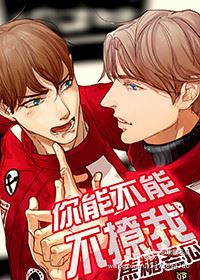
... Read More
Let me just say this: the stakes in this chapter are EVERYWHERE and they're all rising. External stakes first — the stalker. Someone broke into a hotel room, filled a bed with dead cockroaches, left unidentifiable puddles, and apparently has insider access through hotel staffing. The police are involved. Red Bull switched hotels. And yet Owen is still walking around unprotected because Ciel couldn't stop him. This isn't resolved. It's not even paused. It's just... waiting. And the fact that it's sitting in the background of a chapter where the main action is a guy touching another guy's leg under a restaurant table makes it feel EVEN more threatening. Like the story is saying: you're worried about romance when there's actual danger outside. Internal stakes for Hunter are through the roof. He wants to push Winston's face into his burger. He wants to pull his leg away. He also... doesn't? The text never lets us forget that the pressure is calibrated perfectly — not uncomfortable, but undeniable. He's caught between disgust, desire, and the sheer impossibility of addressing this in front of four other people who are all acting completely normal. And then Marcus adds the final layer: the Versace photoshoot. Now the secret physical contact has a PUBLIC counterpart. They'll be posing together, photographed, analyzed, paired by a fashion house. The private tension becomes public spectacle. What happens when the cameras are rolling and Winston looks at him the same way he looked at his leg? The chapter ends on this note of multiplied conflict — external danger, internal turmoil, and impending public exposure — and I am NOT OKAY. The author has built a pressure cooker and is just sitting there watching the whistle scream.
... Read More
Winston's dialogue in this chapter is possibly the most dangerous weapon in all of fiction and I say that as someone who is deeply affected. Let me just start with this exchange: "You actually do things like that all the time. On the way to the hamburger place earlier was a perfect example. That's the signature Evan Hunter style." Hunter: "The Evan Hunter style? Give examples. Why don't I know about this?" And then Winston goes on this entire unhinged tangent about Hunter lying on his stomach playing with his phone and how from his shoulders down to his waist it makes Winston want to... God. The fact that Hunter asks for examples like he genuinely doesn't know what he's doing to people. Like he's completely oblivious to his own effect. That's character voice mastery right there. But what I love most is how Hunter's dialogue shifts throughout the chapter. He starts defensive and flustered—"Shut... shut up!"—and by the end he's tugging at Winston's tie on the street like it's the most normal thing in the world. The progression is subtle but it's there. Hunter is slowly being seduced out of his own armor, and he doesn't even realize it's happening. And Owen's voice lives in the background too, mentioned in passing. "Owen taught you how to seduce me"—three words that carry so much history and betrayal. You don't need a paragraph to establish that relationship. The author trusts the reader. Also: "I wasn't seducing you! It's your mind that's messed up..." This is Hunter's thesis statement and also the funniest line in the entire chapter. I laughed out loud.

Leave a comment

You must be logged in to leave comments. or
