Could You Not Tease Me? - Reviews

Could You Not Tease Me?
+Add to Custom List
Sort
Add review
... Read More
There's a running motif in this chapter about things that are imperfect, unpolished, wrong-but-right. Winston mentions that Hunter “buys food without checking the expiration date, doesn't know how to pack a suitcase, gets easily tricked.” On the surface it's banter, but look at it again. Hunter is all these messy, unoptimized, careless things—and Winston finds them appealing precisely because they're uncalculated. In a world where every move on the track is precision-engineered, every interaction with the media is choreographed, Hunter's chaos is a relic of something real. The hand-holding under the table operates on the same logic. It's inappropriate, inefficient, risky—and therefore deeply human. The interview is supposed to be about professional achievements, about lap times and contracts, but the real story happens in the forbidden spaces between. Winston choosing to link his pinky with Hunter's ring finger, teasing the “hollow space between them as if trying to extend the gap”—that's not just flirtation, that's a philosophical statement. He wants to widen the space between them until there's nothing left but closeness. And then there's the looming retirement of Owen and Ciel. The chapter ends with Hunter feeling melancholy about it, about the fact that “This year… might be their last season.” The theme of impermanence threads through everything—the competitive world is temporary, relationships are fragile, and the only things that matter are the ones you claim in stolen moments. The burger becomes almost symbolic too: a place of normalcy and hunger and forced socializing, where everything beautiful is happening alongside everything mundane.
... Read More
This chapter is paced like a thriller that keeps pretending to be a comedy. And I am obsessed. It opens with high energy — Owen showing off the cockroach photo, Ciel complaining, Winston ordering burgers. Fast dialogue, quick exchanges, lots of movement. Then it slows down. Slowly. Deliberately. The shoe lifts. One inch. Two inches. The prose itself seems to lean in closer, watching Hunter's leg like we're all watching it. The speed of the narrative matches the speed of Winston's foot — measured, unhurried, impossible to look away from. And just when you think it's all going to stay in this taut, quiet space, BOOM — Owen interrupts with the Alina/Christina bit. The tension breaks like a rubber band snapping, and for a moment you forget about the shoe entirely. Then it comes back. Harder. On the other leg. Bolder. "The top of the foot even pressed boldly against his calf!" The structure here is basically a heartbeat monitor. Tension spikes, drops, spikes again — but each spike is higher than the last. By the time Winston's shoe moves away and Hunter thinks he's safe, Owen delivers the line that changes everything: "He's been staring at you this whole time!" And then — AND THEN — the author does something almost cruel. Just as Hunter gets a moment of relief, his phone rings. Marcus. Versace. New York. Photoshoot. Two days. With Winston. The chapter doesn't end on the shoe moment or the confession-of-sorts or even the blush. It ends on a commercial opportunity that will absolutely complicate every single thing that just happened. The pacing is ruthless. It gives you a breath and then takes it away. It makes you comfortable and then reminds you that nothing is safe — not Owen's hotel room, not Hunter's pants, not his heart.
... Read More
Let me just say this—Chapter 160-164 is a masterclass in tonal control and I need the author to take notes. It starts as what I can only describe as a rom-com. Hunter getting advice from Owen, failing at seduction, Winston being accidentally hot in the bathroom, the whole 'Apocalypse Bombing' mobile game subplot—it's light, funny, playful. I was giggling through half of it. And then Winston asks 'Are you dating someone?' and the entire room temperature drops twenty degrees. In one sentence. One single question and the comedic pacing goes from bounce-bounce-bounce to a hard brake. Hunter freezes. Owen's joke about spreading legs suddenly isn't funny anymore. The reader is like 'oh no oh no oh no' and Winston is sitting there completely calm. What's brilliant is how the author uses the game itself as a pacing mechanism. Winston says 'if you lose, you answer a question' and suddenly Hunter is playing for his life. Every round of the game becomes a ticking clock. Winston crushes him systematically—first round to last—and with each victory, the stakes get higher. By the time Winston asks to see the phone, you're not even mad at Hunter for being nervous. You understand exactly why. The chapter ends on 'For the first time, Hunter felt like he was being too damn impatient' and then cuts. No resolution. No safe landing. Just Hunter realizing he might have gone too far too fast while Winston is literally holding his phone and waiting for an answer. That cliffhanger is going to haunt me.
... Read More
The dialogue in this section is absolutely razor-sharp, and Winston's voice dominates it in the most perfect way. Every line he speaks carries weight because the author has trained us to notice his cadence: short, declarative, occasionally laced with dry humor that masks genuine emotion. Consider: "You wear boxers, not briefs. You lack a sense of security, and briefs would make you feel insecure and uncomfortable." This is Winston diagnosing someone's psychological state through their underwear preference. It's clinical, it's funny, it's invasive—and it's THE most Winston thing ever written. Then the shift when he's talking to Hunter privately: "Of course, if you want to see it." The voice drops an octave. The tone softens. The playful edge remains but now there's heat underneath. The author doesn't use action tags to signal this change—they let the dialogue DO the work. We know Winston is being tender without a single adverb. Contrast this with Ciel's drunken monologue: long, rambling, repetitive sentences full of ellipses and emotional desperation. "I've already divorced... I just want to be with you... Please look at me... Don't be with someone else..." The syntax itself reveals Ciel's mental state—fragmented, pleading, unhinged. And Owen's lines are functional, weary, almost comical in their exhaustion: "It's better for him to cling to you than to me." Three words of backstory in one sentence. Perfect. The author's command of character voice through dialogue alone is genuinely impressive. No narrator intervention needed.
... Read More
There's a lot happening beneath the surface of this chapter that makes me want to re-read it three times. The central theme is clearly about perfection and the damage it does—even when it's not malicious. Hunter looks at Winston and sees someone who never makes mistakes, someone who "wouldn't have lost his dad" if he were more mature, more composed. But Winston literally says he's not perfect. He just... shows up. He tolerates Hunter's nonsense. He forgives. That's not perfection—that's choice. Then there's the symbol of the wine bottle. Hunter remembers his father taking his prize money to buy expensive wine, and him snatching it back. That image of his dad using money as both comfort and weapon, destroying their family over something trivial—it's what fuels Hunter's entire emotional architecture. His envy of Winston, his fear of abandonment, his need to test relationships by threatening to break up—all of it traces back to watching his parents tear each other apart. And Winston, the "perfect" one, becomes both his aspiration and his safe harbor. The kidney joke is also weirdly symbolic when you think about it. Winston saying "your kidneys need to be well taken care of. They're very important" twice in one conversation—could this foreshadow some medical drama later? Or is it just a ridiculous metaphor for taking care of each other? Either way, it stuck with me. And the line "I thought you'd leave me like my parents did… It would be easier than a divorce"—that's the theme in a single sentence. Fear of abandonment masquerading as strength, the willingness to end things first so you can't be left. Hunter's entire behavioral pattern is a defense mechanism. Honestly this book has layers. I came for the F1 racing and the slow burn romance and stayed for the actual psychological depth.
... Read More
okay first of all can we just take a moment to appreciate that hunter's entire emotional state in this batch is basically a golden retriever who just discovered tennis balls, and winston is the tired but fond owner trying to keep the chaos contained? the whole thing starts with hunter being nervous before the race, which is already sweet because it shows how much winston's presence means to him, but then it just spirals into absolute comedy gold. hunter's running around in circles because he's excited, organizing his closet like he's preparing for war, dragging his broken suitcase through the hotel room — and winston just comes out of the shower in a towel and hunter's like, “baby you're so handsome i want to bite you all over.” winston's reaction? a slight frown, taking the suitcase, telling him to shower. but hunter *still* bites him on the shoulder before diving into the bathroom. not even a warning. just a chomp. i am wheezing. and then the bathtub scene — hunter pulling winston in by his towel, winston catching him so he doesn't hurt his head, the whole thing dripping with that specific kind of romantic tension where they're both obviously completely obsessed but winston's playing the long game by pretending he's not interested. “if i really did join you, you wouldn't have the possibility to fool around after thirty seconds.” that line is a weapon. hunter's disappointment is immediate and tragic and i love it. but then winston caves and plays a hundred rounds of apocalypse bombing with him just to keep him calm. the intimacy here is in the mundane — folding the quilt over hunter, throwing underwear at his face, letting himself be used as a human weighted blanket. hunter's entire “you're my king” speech gives me chills every time. it's not just romance, it's devotion wrapped in chaos, and winston's quiet acceptance of it all is everything.
... Read More
I can't stop thinking about the atmosphere of this place. The Beauty and Beast themed party with performers dressed as "the most alluring women" while the audience members are also performers—everyone is playing a role, everyone is masking. The opening description of the club alone is so cinematic: "There were numerous rooms inside the club. Nikki lightly pressed her fingertip against a certain room's door, and it opened." Simple, elegant, almost futuristic. That fingertip gesture suggests some kind of biometric or keyless entry system, hinting at a high-end, exclusive venue where wealth and status are the actual entry requirements. And the room itself! "the bed behind them, adorned with hanging curtains"—this is such a specific visual. Silk or satin drapes, dim lighting, intimate and theatrical. It screams expensive nightlife with a touch of fantasy. The whole setup feels like a world where money buys access to experiences that exist outside normal social contracts. What really sold me was the revelation that this isn't just a club—it's a performance space where identity is fluid. The stage performers are VIPs who get to enchant audience members, and the audience members are also players in some larger game. Nikki explains it so perfectly: "those on stage are players, those in the audience are players too, and I'm the only one being played?" Wait, no—he means HE is the one being played by the entire setup. Every woman on stage is actually a man in disguise. The "beauty" is an illusion; the "beast" is the reality underneath. The contrast between the glittering surface—the dresses, the high heels, the seductive performances—and the hidden truth beneath is incredibly rich worldbuilding. This isn't just backdrop; the setting itself is commenting on performance, identity, desire, and deception. The three-hour locked-room mechanic adds this weird temporal pressure too—you can't leave until time runs out unless you "break the rules." What rules? The text leaves it ambiguous but suggestive, and that ambiguity is delicious. It makes the entire club feel like a liminal space where normal social boundaries dissolve and people reveal unexpected versions of themselves.
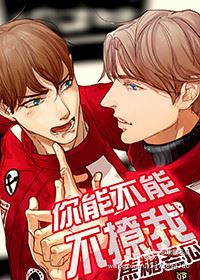
... Read More
On the surface, this scene is about two guys arguing over who has better kissing skills and then wrestling on a bed. But if you actually pay attention to what's at stake, every single conflict in this chapter is rooted in something much deeper and much more terrifying. Hunter explicitly states it: "To commit to lasting love, regardless of the outcome." He's saying that the real challenge isn't winning at racing or seducing someone—it's committing to something that might not work. That is the actual conflict driving every interaction in this scene. Hunter wants to dominate because he's afraid of being vulnerable. Winston wants to stay in control because he's afraid of being seen. Their physical struggle is a metaphor for their emotional one, and the stakes are enormous because both of them have spent their whole lives building walls and neither knows how to tear them down without help. When Hunter says "I couldn't catch up to you even in my next life! I've decided to be content with the present!" on the surface it sounds like he's giving up on winning the wrestling match. But emotionally, it's the closest thing to surrendering his defenses that he's ever going to do. And Winston, who throughout this entire scene has been one step ahead, who has predicted every move Hunter makes, loses track completely at the end. He's holding a sleeping man and kissing him with restraint so tight it's almost painful. The stakes here aren't about who pins whom down—they're about whether two people who have spent their lives planning everything can learn to just be unpredictable together. Hunter's admission that he only plans things when he's with Winston is both a confession and a threat: if Winston can't handle this level of dependence, Hunter will keep pushing until he does. The suspense isn't whether they'll end up together—it's whether either of them is brave enough to want it badly enough to change.
... Read More
"When their eyes met, Hunter felt as if his soul was pulled away in an instant." I've read that sentence five times now and it still hits different. Let me explain why. Throughout the entire chapter, Hunter's emotions are this wild rollercoaster—he's frustrated after failing to overtake, exhilarated driving side by side with Winston, angry that Winston overtook him intentionally, happy that he finally competed at that level, and then RIGHT WHEN he thinks he's processed all of that, Winston turns and LOOKS at him. Just looks. Through a helmet. Through a fireproof mask. And Hunter feels his SOUL leave his body. That's not a plot device. That's the author dropping a cinematic emotional bomb on us with zero warning. And the fact that Winston might have smiled? We don't even know for sure—it says "It seemed like Winston smiled"—which makes it infinitely more potent. Is Winston acknowledging him? Flirting? Just being Winston? The ambiguity IS the romance. Meanwhile Shen Xi's lightning threat earlier in the series comes back to haunt us when Hunter completely forgets her in his post-race euphoria and she's like... yeah, I'm watching you. But the real emotional core here is Hunter's realization that he doesn't just want to beat Winston—he wants to BE him. Everything Hunter aspired to have, Winston possessed. That's admiration bordering on devotion, and the author WRITES it so cleanly.
... Read More
Alright, let's talk structure for a second because this chapter is doing a lot of heavy lifting while pretending to just be fluff. On the surface, it's a slice-of-life interlude—eating, swimming, flirting, packing luggage. But underneath, the plot threads are tightening. Chen Mobai enters the conversation like a storm cloud. Winston warns Hunter: "Don't let your guard down. Chen Mobai is no less skilled than Enzo." And then he lists exactly what makes this driver dangerous—brake control, cornering duels, optimal exit timing. This isn't just worldbuilding; it's foreshadowing. The author is planting the seed that Malaysia won't be simple. Meanwhile, Marcus is obsessing over Miller from Ferrari greeting him at the airport, and the PR manager immediately flags the poaching risk. This subplot about team loyalty and competition is simmering in the background while the main romance storyline takes center stage. Two narratives running in parallel, and they're going to collide soon—I can feel it. The pacing here is intentionally slow, which is a smart move. After whatever intensity built up in previous chapters (the pool party, the tension with Owen, the injury drama), this chapter lets the characters breathe. But the author never lets you forget what's coming. Every sweet moment is shadowed by the knowledge that the Malaysia race is approaching, Enzo is out, and a new dangerous driver is entering the arena. And that ending—"Just thinking about how there were only a few races left in the season made Marcus anxious"—that's the chapter's thesis statement. Time is running out. For the championship, for the season, maybe for something else entirely. The sweetness makes the impending pressure hurt more.
... Read More
This scene is a masterclass in pacing. The author could have rushed through to the physical act, but instead, they stretch every moment, making you feel the weight of hesitation, the building tension, the almost-painful waiting. The structure moves in waves. It starts with kisses—intense but contained. Then Hunter speaks, and the whole dynamic shifts. The pauses. The stammering. 'You… you…' followed by Winston's immediate pullback. That's not just dialogue—that's emotional choreography. Each beat earns its space. Then comes the longest section: the preparation. The fingers, the stretching, the doubt. The author deliberately slows down here, making you experience Hunter's anxiety alongside him. When Winston adds that third finger and Hunter gasps 'It's going to tear,' the tension peaks. You're holding your breath. And then—the arrival. 'Something hard and hot was pressing in.' Shorter sentences. Faster rhythm. The pacing accelerates to match Hunter's anticipation. The author uses sentence length as a pacing tool without being obvious about it. The climax arrives with that F1 engine metaphor—not just describing pleasure but changing how we hear it. The world 'shatters' and Winston 'reshapes it.' After that explosion of sensation, the pacing drops again. Hunter is 'limp,' 'weak,' speechless. The structure mirrors a race: buildup, competition, victory, cooldown. What I admire most is that the author never loses sight of the emotional core while building physical tension. Every pacing choice serves the relationship, not just the scene.
... Read More
I need to sit down after reading this. Actually, I need to stand up. My heart is racing just thinking about the tension in these chapters. Let me start with what destroyed me: the moment Hunter says "Don't come in! There's still a race!" and Winston replies in that low voice—like a dying star about to explode. The metaphor alone gave me chills. Winston could be consuming everything around him right now, but he chooses restraint. For Hunter. Even when he's burning up inside. And Hunter? Hunter realizes he meant to torment Winston but ended up the one tormented. That realization changes everything. He went in wanting to tease, wanting to play with fire, and Winston turned it into a conflagration. The vulnerability here is staggering. Hunter has never experienced anything like this—his panic, his confusion, his desperate need to regain control—and Winston calmly talks him through it. "Don't be afraid, Hunter... trust me, this will feel really good." What killed me though, was the aftermath. Hunter lying there, spent, nose nuzzling Winston's leg like some kind of love-struck cat. The sheer intimacy of that moment—their bodies pressed together, their breathing syncing, the unspoken understanding that neither of them is pulling away—made my chest ache. He's weak in the knees and all he can do is indicate "let me rest for a bit." Then the next morning, Hunter alone in bed, running his fingers over those indented lines of Winston's handwriting. Reading his own feelings back to me through the physical evidence of Winston's presence. The warmth still lingering on the sheets tells us everything that words can't capture. And Hunter's internal monologue about how even if it leads to his death, he still likes Winston? That's not just romantic—it's existential. This isn't about physical pleasure anymore. It's about finding someone who sees you completely, who pushes your boundaries, and who comes back every single time. The emotional journey here goes from desire to something deeper, something that frightens them both because it's irreversible.

Leave a comment

You must be logged in to leave comments. or
