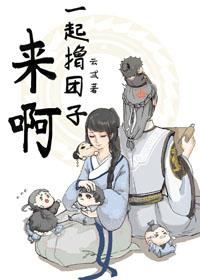
Come on, Let’s Make Dumplings Together!
+Add to Custom List
Genres:
Novel Info
  • Author:
  • 雲弎
  • Status:Ongoing

Summary

... Read More

Nie Long, a modern kindergarten teacher, awakens in the body of the second daughter of Duke Nie in the fictional Kingdom of Xuan. The original host is about to marry the Qi Yuan Emperor, Chu Ji, as Empress. Nie Long quickly realizes she has transmigrated into a novel she read in high school, titled Path to the Throne. In the story, Chu Ji is the tyrannical villain emperor who is eventually overthrown and killed, while the original Empress dies early and is never mentioned. Nie Long, now a background character with no plot significance, decides her primary goal is survival. She must navigate the dangerous imperial court while hiding her true identity and avoiding the fate of the original character.

The story begins with the death of the previous emperor, Chu Ji's father, after a prolonged illness. Chu Ji ascends the throne and immediately arranges his marriage to Nie Long to secure political stability and the support of the powerful Nie family. Nie Long is married into the palace, where she meets Chu Ji for the first time on their wedding night. Chu Ji, who had previously experienced a near-death episode and a spiritual journey, is deeply affected by Nie Long's presence. He recognizes her face from his memories and feels an inexplicable connection. Unlike the original plot, where he was indifferent to the Empress, Chu Ji is protective and affectionate toward Nie Long from the start.

During the wedding festivities, Nie Long encounters Consort An, a key antagonist from the novel. Consort An attempts to manipulate Nie Long into abandoning her sick stepson, the heir to Prince An, hoping the child will die and Consort An will avoid blame. Nie Long, refusing to be manipulated, takes charge of the situation. She orders the child to be moved to a palace villa for treatment and confines Consort An to her residence for a year. Chu Ji supports her decision, further strengthening their alliance and punishing Consort An's family. This incident marks the first deviation from the novel's plot, as Nie Long actively intervenes in events that were originally minor background details.

As Nie Long settles into her role as Empress, she struggles with the constant surveillance of the palace and the looming threat of the novel's future events. She observes Chu Ji's behavior, noting his intense protectiveness and the way he anticipates her needs. Chu Ji, meanwhile, is determined to change the tragic fate that awaits him and his loved ones. He has returned from his near-death experience with a renewed sense of purpose and a deep desire to protect Nie Long. Their relationship evolves from a political marriage into a genuine partnership, with Chu Ji relying on Nie Long's modern perspective and Nie Long relying on Chu Ji's power and protection.

The narrative explores the dynamics of the imperial court, where factions vie for power and influence. Nie Long must navigate these political waters carefully, using her knowledge of the novel's plot to anticipate threats and make strategic decisions. She forms alliances with key figures, such as her brother Nie Jue, who is a trusted advisor to the emperor, and other members of the imperial family. The story highlights the challenges of living in a rigid hierarchical society while maintaining one's integrity and humanity.

Key turning points include Nie Long's successful handling of the Consort An incident, which establishes her authority and earns the respect of the court. Additionally, Chu Ji's growing affection for Nie Long leads him to make decisions that diverge from the novel's original trajectory, potentially altering the fate of the empire. The story sets the stage for a struggle against the predetermined plot, as Nie Long and Chu Ji work together to forge a new future. Their journey is marked by political intrigue, personal growth, and the development of a deep emotional bond that transcends their initial roles as ruler and subject.

The novel continues to develop the relationship between Nie Long and Chu Ji, showing how their interactions change the course of history. Nie Long's modern sensibilities and Chu Ji's imperial authority combine to create a unique dynamic that challenges the traditional power structures of the kingdom. As they face external threats and internal conspiracies, their partnership becomes the foundation for a new era of governance. The story promises a reimagining of the original plot, where the villain and the background character rewrite their destinies through cooperation and mutual support.

Latest Release
DateGroupRelease
2026-08-11shanghai fantasy c19
2026-08-11shanghai fantasy c18
2026-08-11shanghai fantasy c17
2026-08-11shanghai fantasy c16
2026-08-11shanghai fantasy c15
2026-08-11shanghai fantasy c14
2026-08-11shanghai fantasy c13
2026-08-11shanghai fantasy c12
2026-08-11shanghai fantasy c11
2026-08-11shanghai fantasy c10
2026-08-11shanghai fantasy c9
2026-08-11shanghai fantasy c8

Community Reviews

Rating(3.7 / 5.0, 6votes)
5 stars
1(17%)
4 stars
2(33%)
3 stars
3(50%)
2 stars
0(0%)
1 stars
0(0%)

Popular reviews

... Read More
The dialogue in these chapters is genuinely funny. Chu Ji going Baobei, Baobei, Long'er, Long'er is the kind of teasing that feels so natural and playful. And then he just casually says My treasure shall ride with me! when he picks her up. The man has zero filter and I love it. But what I appreciate most is how each character has a distinct voice. Nie Sheng is formal and cautious—his internal monologue about not presuming to be the Emperor's father because such a thought alone was enough to shorten one's lifespan is both funny and shows his genuine fear mixed with gratitude. Nie Jue is barely there dialogue-wise but that's the point—he's the composed older brother who doesn't show emotion. His one line Behave to his fidgeting little brother says everything about his personality. Nie Hu's dialogue is pure child energy—Elder Brother you lied to me again and I don't like you anymore! And then there's the narration itself which has this warm, slightly wry tone. When it describes Nie Long's ears turning slightly red because Chu Ji is being openly affectionate under the table during dinner, that's the author's voice shining through. The humor is gentle, never mean-spirited.
... Read More
So the family gathering is all warm and fuzzy on the surface but then Chu Ji drops this bomb: Any unusual movements recently? And just like that we're back in political territory. The Shanxi governor has been a figurehead for years and there's infiltration by Jiang Yue's faction happening right under everyone's nose. This is the kind of subplot that makes me sit up straighter because it's woven so naturally into what should be a domestic scene. They're sitting around a table, eating, and the Emperor is discussing treason with his father-in-law and brother-in-law like it's Tuesday. What's interesting is the structure here—the author takes us from the most intimate family reunion moment right into statecraft and back again. The banquet itself is significant because Chu Ji specifically suggested treating it as an ordinary family gathering rather than a formal imperial event. He wants this to feel normal for Nie Long. But underneath that normalcy, the political world is still moving. Jiang Yue's faction is infiltrating Shanxi. The Emperor is keeping a close watch. And Nie Long—she's caught between these two worlds, the warm family home and the cold political reality she married into. The plot doesn't let you forget that danger is always lurking.
... Read More
Okay so I need to talk about Chu Ji because this man is NOT the villain from the book at all. Like, when Nie Long first marries him, she's basically avoiding him like the plague, right? And then what happens? Three days in and he's already calling her Baobei and Long'er in the same breath, teasing her until she's smacking him with a pillow. The guy catches her hand and kisses it like it's no big deal. The man is shameless but also genuinely attentive—he notices when she's uncomfortable about not having a separate palanquin and just scoops her into his carriage with zero hesitation. What got me is the scene with Nie Sheng. The father literally kneels and thanks the Emperor for being good to his daughter, and Chu Ji responds with this line: Since you are Bao'er's father, you are also mine. That's not just political charm, that's him genuinely trying to make the Nie family feel comfortable. He's the Son of Heaven and he's saying family stuff like that. I'm not sure if this is love at first sight or if he's just really good at this, but either way, Nie Long's guard is definitely coming down. The way she's lowering her defenses without even realizing it—that's the most dangerous kind of intimacy.
... Read More
This chapter ends with Nie Long deciding to paint the evening garden scene and I keep thinking about what that means. She asks for hemp paper, cotton paper, and charcoal from the kitchen. The lotus pond is described specifically—the lotuses haven't bloomed yet, just broad green leaves floating on water with one or two buds beginning to peek out. A scene full of charm. She wants to capture this moment of potential, of things not yet fully revealed. I think that's deeply symbolic for where Nie Long is in her story. She's just started this new life in the palace, everything is still in bud form. The marriage is fresh, her relationship with Chu Ji is developing, and she's only beginning to see her home with new eyes. The fact that she's a transmigrator who misses having a camera is also meaningful—she's trying to preserve moments because she knows this life is fragile. And Chun Feng's reaction, thinking her mistress is a celestial being, adds this layer about how extraordinary Nie Long seems to everyone around her, even in simple moments like wanting to paint a garden. The painting itself becomes a symbol of her desire to hold onto beauty in a world that's constantly shifting.
... Read More
Nie Sheng's internal experience in this chapter is genuinely tense and I think a lot of readers might overlook it because everything feels so warm on the surface. The man is walking on eggshells the entire time. His daughter just married the young villainous emperor from the book and now this emperor is calling her by her childhood nickname and offering to accompany her home. Nie Sheng nearly loses his composure. He's scrutinizing the Emperor's face for clues. He assumed his daughter was destined never to receive this emperor's love and now everything is different. The stakes here aren't just personal—they're political. If the Emperor truly favors the Nie family, that makes them targets. But it also makes them protected. Nie Sheng kneels and thanks the Emperor, his legs trembling, and the reader feels that genuine fear beneath the gratitude. Meanwhile, the political subplot about Jiang Yue's faction infiltrating Shanxi adds another layer of stakes. The Emperor is playing a long game, being gentle with his father-in-law while simultaneously discussing treason and rebellion. Everything feels safe but nothing is. The tension between domestic warmth and political danger is what makes these chapters so compelling. Nie Long gets to have her sweet family moment because someone is keeping the real threats at bay.
... Read More
The little brother Nie Hu is absolutely everything. This kid was so upset about his sister getting married that he stopped talking to his entire family and claimed they were all in league with whoever kidnapped her. Who does that? A four-year-old with commitment issues apparently. When he finally sees Nie Long, he runs straight to her and asks if she was taken by bad people, then points at Chu Ji and calls HIM the scary one. I literally laughed out loud. Then the mom repeats his words and he hides behind his sister saying I don't like you anymore Mom! The family dynamics here are so warm and normal after everything that's happened. But the moment that really got me was Nie Long looking at the Nie residence plaque and feeling that thin layer of separation dissolve. She's been here before in her memories but this time she sees it with her own eyes and suddenly it's real. That spontaneous warmth in her heart—she's not just visiting, she's coming home. And then there's the whole scene with her and her mother walking arm in arm while the men go elsewhere. Madam Nie winks at her daughter and they just share this quiet understanding. No words needed.
See all reviews

Characters

See all characters

Custom lists

See all custom Lists