Summary

... Read More

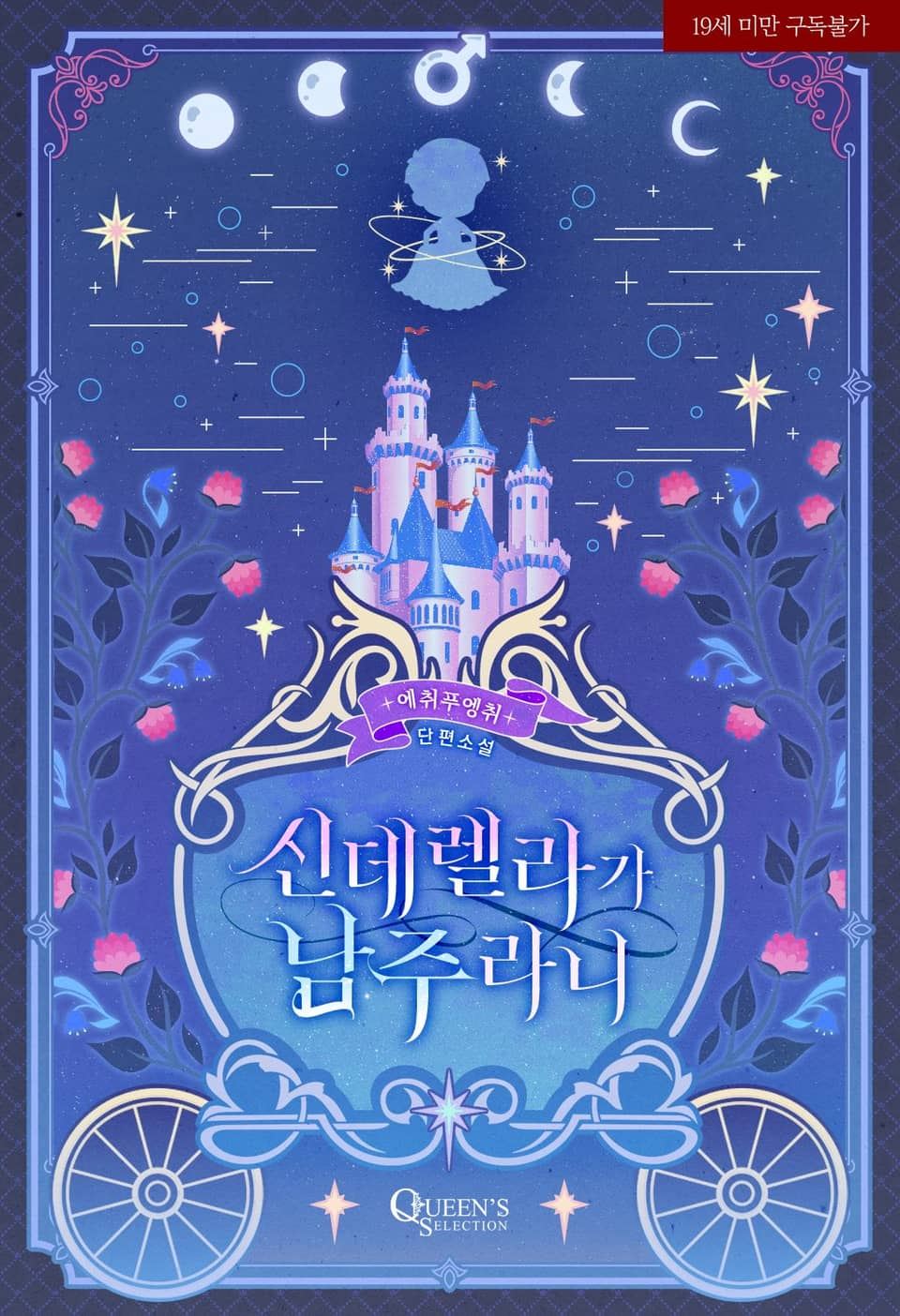
Rona, a woman from a modern era, transmigrates into the body of the wicked stepsister in an R-rated fairy tale rewrite titled "Cinderella With Neither Blood Nor Tears." In the original novel, Cinderella endures torment from her stepmother and stepsister, only to awaken as a powerful necromancer and enact a gruesome revenge that leaves the villains dead and reanimated as undead soldiers. Rona realizes she has survived only by remembering her past life after a concussion. She discovers that her companion, whom she believed to be her mother, is actually a nanny named Susan, and together they are con artists who scammed Cinderella’s family fortune. The plan is to torment Cinderella until she flees, allowing them to claim the estate in one year when Rona becomes the legal head of the household.

Fearing the horrific fate destined for her in the novel, Rona attempts to change the outcome by befriending Cinderella. She tries to convince Susan to treat Cinderella well, but Susan remains obsessed with their scam. Rona secretly helps Cinderella with household chores and successfully persuades Susan to hire five new servants by staging ghostly phenomena to frighten her into submission. As Rona grows closer to Cinderella, she begins to suspect that the protagonist is not acting like the passive victim from the book. Cinderella frequently catches Rona during her escape attempts, displaying unnatural strength and awareness that suggests she knows more than she lets on.

Rona sneaks into Cinderella’s attic room to read her revenge diary. She finds entries detailing plans for bloody retribution, which confirms Cinderella’s hatred. However, she also notes that Cinderella is aware of her impending magical awakening. While in the attic, Rona discovers men’s underwear and clothes hidden in Cinderella’s wardrobe, leading her to mistakenly believe Cinderella is suffering from poverty. Unbeknownst to Rona, Cinderella is actually a male named Prince Cinderella of the Loren family, who was raised as a girl to protect him from assassins due to a curse that requires him to fall in love to fully awaken his powerful magic. He is aware that Rona and Susan are frauds but chooses to wait until the royal ball to deal with them.

The dynamic between Rona and Cinderella shifts as Rona’s genuine kindness confuses and slowly softens the prince’s heart. Cinderella begins to monitor Rona not out of malice, but out of curiosity about her sudden change in behavior. Rona continues her efforts to integrate into Cinderella’s life, hoping to become her maid after the ball to secure her safety. Meanwhile, Susan’s mental state deteriorates due to the hallucinations induced by Rona’s pranks, making her increasingly paranoid and willing to consider leaving the mansion.

Rona devises a plan to send Susan away temporarily to prevent her from resuming the torment of Cinderella. She uses Susan’s fear of ghosts and curses to convince her that leaving is the safest option. Susan, exhausted and terrified, agrees to depart, leaving Rona alone in the mansion with Cinderella. This development allows Rona to focus entirely on building a rapport with Cinderella without interference. However, the tension remains high as the royal ball approaches, which serves as the critical turning point for both Cinderella’s magical awakening and the confrontation with the con artists. Rona must navigate this precarious situation while hiding her knowledge of the future and Cinderella’s true identity.

As the story progresses, Rona’s initial desperation to survive evolves into a complex relationship with Cinderella. She struggles with guilt over her past actions and the deception she maintains, while Cinderella battles his own emotions and the constraints of his disguise. The narrative explores the thin line between victim and predator, as both characters realize they are trapped by circumstances beyond their control. Rona’s attempts to rewrite her fate introduce unpredictability into the novel’s plot, challenging the deterministic nature of the story she once read. The looming ball represents a point of no return, where secrets may be revealed, and the future of both their lives will be irrevocably altered.

The central conflict revolves around Rona’s need to avoid her canonical death and Cinderella’s struggle to maintain his secret identity while preparing for the magical awakening that will define his power. Their interactions become a delicate dance of trust and suspicion, with each event bringing them closer together yet deeper into danger. Rona’s transformation from a feared stepsister to a devoted companion tests Cinderella’s resolve, forcing him to reconsider his plans for revenge. The story moves toward a climax where the truth about their identities and intentions will finally surface, determining whether they can escape the tragic ending foretold in the novel.

Latest Release
DateGroupRelease
2026-09-27citrus aurora c61
2026-09-27citrus aurora c60
2026-09-27citrus aurora c59
2026-09-27citrus aurora c58
2026-09-27citrus aurora c57
2026-09-27citrus aurora c56
2026-09-27citrus aurora c55
2026-09-27citrus aurora c54
2026-09-27citrus aurora c53
2026-09-27citrus aurora c52
2026-09-27citrus aurora c51
2026-09-27citrus aurora c50

Community Reviews

Rating(4.1 / 5.0, 39votes)
5 stars
14(36%)
4 stars
14(36%)
3 stars
11(28%)
2 stars
0(0%)
1 stars
0(0%)

Popular reviews

... Read More
This chapter is packed with conflict on multiple levels, and that's what makes it so gripping. First, there's the external conflict - Rona's fear of becoming a necromancer's minion. The novel has set up this destiny where she's supposed to be defeated by Cinderella's revenge. But she's actively trying to change her fate by getting close to the female lead. This is her survival mechanism, and every interaction with Cinderella carries the weight of 'will this help me or hurt me?' Then there's the internal conflict - both characters are struggling with their true desires vs. their stated goals. Rona wants to be close to Cinderella but feels guilty about how good the massage felt. She's torn between her mission and her body's response. Cinderella wants to confess his identity but is afraid of shocking her. He's also holding back from crossing further because he needs to maintain his disguise until his awakening passes. The romantic tension is through the roof. Both characters are attracted to each other but neither can act on it - Rona because she thinks Cinderella is a girl and there's some confusion about her own feelings, and Cinderella because he's hiding his true gender. Every touch, every glance, every 'good morning' is loaded with meaning. And there's the suspense about WHEN and HOW Cinderella will reveal himself. The chapter ends with him having just completed his awakening, glowing with power, ready to tell her - but then the text cuts off before we see the confession. What's the stakes if he DOES tell her? Will she reject him? Will their relationship survive the truth? The author has built this ticking clock perfectly.
... Read More
I need to talk about how BOTH of these characters are playing a role and neither knows the full truth about the other. This is some next-level miscommunication and it's giving me life. Rona thinks she's manipulating Cinderella by being nice to her, trying to avoid her fate as a necromancer's minion. She's constantly calculating - 'I need to get closer to the female lead to survive.' Meanwhile Cinderella is also playing a part, pretending to be the sweet, enviable girl who wants to touch Rona's chest. But it's NOT enviable - it's a MAN who's been压抑ing himself, and that breakfast scene after? He's smiling brightly because he got what he wanted, and Rona is sitting there all flustered thinking it was just...girl talk? The power dynamic is fascinating. On the surface, Rona thinks she's in control, pulling strings to change her fate. But actually Cinderella has been the one calling the shots this whole time. He initiated the sleeping together, he initiated the touching, and he's been holding back from revealing himself. Meanwhile Rona is just here patting her cheeks trying to process what happened like it was nothing. And the best part? Cinderella FORGOT about his revenge. The text literally says 'Cinderella had long forgotten her initial resolve to take Rona to the ball and humiliate her.' His entire motivation shifted from revenge to wanting to confess his true gender. That's some next-level character development right there. He went from 'I'm gonna destroy her' to 'I wanna tell her I'm actually a boy' and I am HERE for it.
... Read More
I keep coming back to how the house itself feels like a character here. The text keeps reminding us it's too empty, too large, echoing with ghostly wails that Rona has strategically deployed. "The mansion feels too empty sometimes, which is a bit eerie" — and then Rona makes it genuinely eerie on purpose. That's such a rich layer. The well scene is one of the most visually striking moments I've read in a while. Cinderella at the well, washing rags, the cold water flying, the damp dress clinging — you can literally see the light on wet fabric, the way Rona's shoulders shake when she shivers, Cinderella's golden eyebrows twitching. It plays like a film sequence. The contrast between Cinderella's blue eyes and her blonde hair, already noted as making her the only blonde in the mansion — it paints her as almost otherworldly, which makes the human clumsiness of her red face even more powerful. And the bedroom scene — steam rising from the stew, pink nightgown, sunlight through the window catching Cinderella's ears turning red. The domesticity of it all. This isn't a gothic horror mansion anymore. It's becoming a home. That's the slow transformation the setting is making alongside the characters, and I love how the author never announces it directly. You just feel it.
... Read More
Okay so let me just say this whole arc is doing SOMETHING and I need to talk about it. Rona is clearly operating on two different timelines here — the "I remember what I did and I feel awful" version and the "old me would have absolutely lost it" version. And Susan? Susan is this ghost of who they used to be, clinging to the same toxic patterns but visibly running out of steam. The line about Susan's hair graying hit me like a truck. That's not just detail, that's the physical cost of their lifestyle showing up on their bodies. But the real plot machinery here is what I'd call the reverse haunting. Rona is intentionally scaring Susan with ghost noises to manipulate her into hiring servants. Think about that — the person who was once the abuser is now using supernatural terror as a tool for gradual rehabilitation. She's weaponizing fear, but toward an end that's… actually good? That's morally garish but strategically brilliant storytelling. And then Cinderella splashes water on Rona. On purpose. And then later brings her stew. And then CAN'T look at her when Rona changes clothes. The escalation of conflict into something genuinely ambiguous — is it hatred? Is it shame? Is it something else? — is where the plot is actually alive. This isn't a clean arc. It's messy and uncomfortable and I'm here for it.
... Read More
Okay so like, the whole premise here is wild and I need to talk about it. Rona wakes up in a Cinderella story with memories of her past life, knows exactly how the original plot ends for her (spoiler: not well), and decides the smartest move is just… run away? At night? With a packed bag? But then Cinderella catches her, and instead of confronting her, drags her on a 'night walk.' This is either the most chaotic protective instinct ever or the most possessive behavior disguised as companionship. Either way, the author has me completely hooked. What really sells this plot for me is the reversal of expectations. In the original story, Cinderella is the sweet girl. Here? She's basically a ghost haunting the halls, watching Rona at night, stopping her from leaving. But the text is careful not to make it one-dimensional—Rona herself suspects that Cinderella might already have magical powers and is hiding them. The stakes are clear but the 'how' is deliciously uncertain. And then there's the subplot with Susan—Rona's literally gaslighting her stepmother by staging animal noises and broken cheese to force her to hire help. It's manipulative, yes, but it's also strategic survival. The plot isn't just 'she runs, she hides,' it's a chess game where every move has to be calculated because one wrong step means that bloody festival. Also? The scene where Rona trips over a bucket after trying to comfort Cinderella? Perfect comedic relief right when the tension peaks. The author knows how to pivot between dread and humor without it feeling jarring.
... Read More
Okay so I need to talk about this moment where Rona finds the men's clothes in Cinderella's wardrobe and her immediate reaction. She doesn't think 'huh weird'—she thinks poor Cinderella must be so desperate she's wearing dead dad's underwear. And THEN she decides to buy her new clothes with her allowance. Girl, you are literally the villain of this story and you're out here shopping for her?? The guilt she feels about tormenting Cinderella instead of the real 'Cinderella' (from her past life memory) shows she's not actually a bad person. This isn't manipulation, this is genuine care accidentally wrapping itself in villain logic. And the best part? Cinderella is down in the garden the whole time, watching, knowing exactly what she's doing, and—get this—he's weirdly flattered. The fact that Rona saw the underwear and assumed the WORST for Cinderella instead of being suspicious or cruel? That's the emotional core of this whole book. We're rooting for the villain to accidentally become the hero because she can't stop being kind.
See all reviews

Custom lists

See all custom Lists