Summary

... Read More

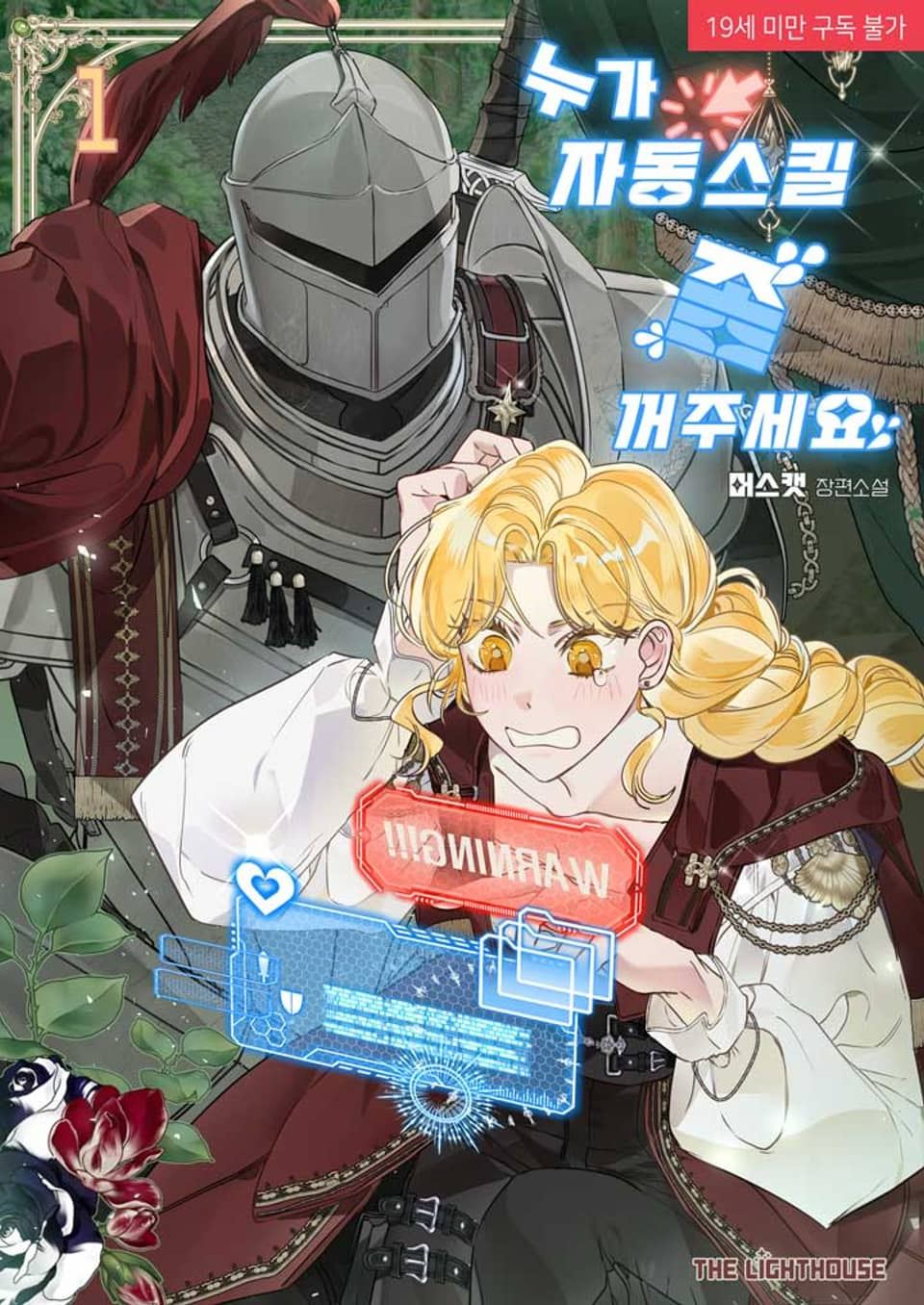
Nancy is a mercantile adventurer whose primary motivation is profit rather than heroism. When she acquires a dazzling diamond ring from a mysterious customer, she wears it as jewelry without understanding its significance. The ring is actually the heirloom of Aaron, a paladin whose grandfather was the hero that sealed the Demon King fifty years prior. Aaron confronts Nancy in her inn room, suspecting her of demonic collusion and demanding to know how she obtained his family’s relic. His hostility escalates rapidly, triggering system warnings that conflict between them is inevitable if his anger is not quelled.

Trapped with no escape, Nancy activates an automatic survival skill that forces her to use Seduction. The attempt appears to succeed, but the side effects are catastrophic: Aaron collapses into a feverish stupor, muttering incoherently about bell peppers before suffering a cardiac episode. Nancy performs CPR to revive him, but the physical contact triggers a rebound effect that hyper-sensitizes her nervous system. When Aaron recovers sufficiently to touch her, the sensitivity causes involuntary moans of pleasure, creating a sexually charged trap that threatens to destroy both their bodies and minds.

The narrative then shifts to explain Nancy’s predicament through a flashback. Desperate for capital during the Hero’s Festival, she orders three thousand units of salted pork, only to accidentally place an order for thirty thousand. The resulting debt of eighteen thousand gold threatens her soul with erasure. To survive, she sells every piece of pork to a mysterious customer who pays her with a hero’s ring. The customer is revealed to be a low-ranking demon named Chuck, who has captured Nancy to force her into becoming the hero. The demons need a champion to punish the Ferron tribe, who are extorting tribute from the lower demons. Chuck coerces Nancy into the contest by threatening to expose her deal with demons to the temple.

Aaron is also introduced as a paladin burdened by a prophecy that he will be dishonorably discharged from the Holy Order due to a woman. To protect his chastity, he casts a spell that makes all women appear to him as bell peppers. Despite this mental block, his encounter with Nancy creates an anomaly: she is immune to his perception filter, allowing him to see her true face. This breach of his defensive magic destabilizes his vow of chastity and aligns him with his prophesied downfall.

During the Hero’s Festival, Nancy attempts to draw the Sword of the Hero to fulfill her bargain with the demons, expecting failure. Instead, the sword yields to her touch effortlessly. The system recognizes her as the hero but detects her lack of combat qualifications. Rather than revoking her status, it activates an automated defense protocol that downloads one hundred and forty-four subordination skills to compensate for her incompetence. Simultaneously, the crowd reacts violently to her aggressive marketing of popcorn, nearly crushing her to death before Aaron intervenes.

The story establishes a dual conflict. Externally, Nancy must navigate the Hero’s Festival and confront the Ferron demons while hiding her illicit alliance from the holy order. Internally, she battles the consequences of the Seduction skill, which has left her in a state of perpetual hyper-sensitivity. Aaron struggles with the erosion of his magical protections and the resurgence of repressed desire. Their relationship is defined by mutual danger: Nancy is a dark merchant who cannot fight, and Aaron is a paladin on the verge of breaking his sacred vows. The narrative points toward an inevitable collision between Nancy’s greed-driven survival tactics and Aaron’s rigid adherence to divine law.

Key turning points include the activation of the hero’s sword by an unworthy candidate, the permanent alteration of Aaron’s perception magic, and the binding of the Demon King’s resurrection plot to Nancy’s new title. The story direction suggests that Nancy will be forced to grow into her role as hero through a series of humiliating and dangerous encounters, while Aaron must choose between his religious duties and the overwhelming pull of his newfound vulnerability. The comedic framework masks a darker trajectory involving demonic politics, holy order corruption, and the potential collapse of the seal on the Demon King.

Latest Release
DateGroupRelease
2026-09-27citrus aurora c105
2026-09-27citrus aurora c104
2026-09-27citrus aurora c103
2026-09-27citrus aurora c102
2026-09-27citrus aurora c101
2026-09-27citrus aurora c100
2026-09-27citrus aurora c99
2026-09-27citrus aurora c98
2026-09-27citrus aurora c97
2026-09-27citrus aurora c96
2026-09-27citrus aurora c95
2026-09-27citrus aurora c94

Community Reviews

Rating(3.8 / 5.0, 26votes)
5 stars
6(23%)
4 stars
10(38%)
3 stars
9(35%)
2 stars
1(4%)
1 stars
0(0%)

Popular reviews

... Read More
Okay so I have to talk about this specific detail because it completely wrecked me in the best way. All this buildup, this intense physical scene, and then—Nancy bites Aaron's lip. Hard. And the text literally says 'the taste of blood filled his mouth' and then 'her smug grin after biting him reminded him of a cat, scratching someone's face and then looking down at them with arrogant eyes.' I SCREAMED. Because finally. After all this dominance, all this power play, SHE pushes back. She's not just some passive recipient here—she has agency, she has teeth (metaphorically... mostly), and she lets him know she's not just going to lie there and take it. And the way Aaron responds? He doesn't get mad. He gets louder. 'You started this, so I won't hold back anymore.' That shift—from gentle questioning to ruthless pursuit—is everything. But then what kills me is later, when he pulls out and watches her. When he sees her tears and actually asks 'why are you crying?' and she snaps 'I don't know!' at the system instead of at him. That moment where she's redirecting her frustration away from him even in her broken state—that's not just physical chemistry, that's emotional intimacy layered underneath all the filth. She's protecting him from her pain without even realizing she's doing it. And he notices. The system literally shows 'Nancy's stress level has dropped to 0' and he sees those tears and his 'blue eyes... now looked at her with concern.' The CP chemistry here isn't just 'they're hot together'—it's that they keep seeing each other even when they're half-mad with desire. He keeps adjusting, slowing down, asking if it hurts. She keeps pushing back, biting him, glaring. They're not just bodies anymore; they're two people negotiating power and vulnerability in real time. And when he finally turns her around to face him at the end? She's not crying anymore. She's embarrassed. She's trying to hide her face. And he just... pauses. Looks at her. Doesn't push. That silence says more than anything else in this whole chapter. I'm not even mad that the system is making everything more complicated. That's the real romance here—the human moments underneath the kink and the mechanics. The way he learns to read her, the way she learns she can fight back and he'll still want her. That's the stuff that sticks with me long after the physical scene ends.
... Read More
I need to just appreciate how funny this book's voice is because it's genuinely one of my favorite things about it. Nancy's inner thoughts are SO distinct from how she speaks out loud and that gap is where all the comedy lives. Watch this: Outwardly she's all polite and flirty—'Aaron! You're the kind shopkeeper who sheltered me from the rain.' But internally? 'Not just any face, but he can't remember women's faces? Is he one of those paladins who value chastity above all?' She tells the crowd 'Shut up! It's not like I wanted to be here either!' after they're heckling her and honestly I respect the honesty. That's not a hero speech, that's just a tired merchant who wanted to sell snacks and accidentally became something huge. And then her first words as the newly minted Hero of the story are 'Can I put this back in and cancel it...?' followed by 'I can't?' and the narration calls it 'her official first words as the new hero, which would go down in history as a source of endless discussion.' THE AUDACITY. The fact that she's more concerned about losing her shop promotion opportunity than the monumental weight of what just happened is perfectly in character. The system voice is also great—just dry, clinical, completely deadpan: 'Preparing to download the patch... Scanning 30 items...' It contrasts so nicely with Nancy's chaotic internal spiraling. One is cold logic, the other is pure panic, and they're happening at the same time in her head. Also the announcer absolutely deserved that comeuppment for calling her 12 instead of 22. Poor kid was just trying to promote his popcorn.
... Read More
Let me just say—the pacing in these chapters is unhinged in the best way. The author starts this scene almost in slow motion. We get Aaron's entire internal journey from hesitant touch to confident exploration, and it unfolds over paragraphs. He's learning her body like he's solving a puzzle, and the reader gets to watch every piece click into place. The scene breathes. You can feel the deliberate, almost reverent pace of his discovery. Then Nancy's system warning drops and everything changes. The tempo shifts from languid to frantic in a single paragraph. Her panic about the size thing, her bargaining, her attempt to crawl away—it all happens in quick succession. The narrative starts shortening its sentences, cutting off mid-thought, mimicking her spiraling state of mind. But then—just when you think it's all going to culminate in penetration—the author slams the brakes AGAIN with "I can't do it." Nancy renegotiates. The tension doesn't resolve; it REROUTES. Aaron drops to his knees instead, and the scene explodes into a different kind of urgency. The oral sequence that follows is written with faster, sharper sentences, more fragmented thoughts, more physical reaction than internal reflection. The structure itself is doing something clever here: it mirrors Nancy's experience of the scene. She thought she knew what was coming, prepared herself for one thing, and then the entire landscape shifted beneath her. The pacing BETRAYS the reader the same way the situation betrays Nancy's expectations. And that final line—"I'm going to…!" cut off mid-sentence? That's not a cliffhanger, that's a gut punch.
... Read More
I'm gonna be honest with you—the pacing in these chapters is making me slightly uncomfortable because it's SO well-controlled. Let me walk through it. Chapter 60 opens IN MEDIO RES, basically mid-act, with Nancy pouting and Aaron trying to figure out what's wrong. No preamble, no context needed—you're thrown right into the sexual tension and the emotional friction simultaneously. That's a bold opening move and it pays off because you're immediately invested in both the physical and emotional dynamics. Then you get the release—literally and figuratively. The scene breaks open, the barrier between them shatters, and instead of cooling down, Aaron doubles down. This is where most romance novels would pull back, give the characters a breather. But no—she passes out, he wakes up, he touches her, and suddenly you're right back in the heat of it again. The pacing here is breathless, almost frantic, which mirrors exactly what Aaron is experiencing physically and emotionally. Morning comes and—plot twist—the conversation happens. The conflict. The fallout. This is the chapter structure doing what it should: each scene escalates the previous one instead of repeating it. Intimacy → morning confrontation → emotional distance → physical consequence (her weakness) → journey dialogue → worldbuilding reveal. And then, just when you think the tension has shifted entirely to the quest plot, the author drops the Seduction skill revelation like a bomb. The skill is STILL ACTIVE. He's still under it. The feelings he expressed—was any of it real? This single line recontextualizes the entire previous chapter and turns what felt like genuine connection into something deeply ambiguous. The cliffhanger with Bije and the seal being broken? Chef's kiss. Just when you're processing the relationship drama, the author pulls the camera back to show you the整个世界 is also falling apart. I'm obsessed and mildly concerned about my sleep schedule.
... Read More
There's something really interesting happening with the whole hero premise here and I keep coming back to it. Nancy didn't want to be the hero. She went to the festival to sell popcorn. She literally says 'There was a bigger reason, but that was a secret she wouldn't share even if her lips were sealed shut.' She has a promise to little demons, she's carrying a thirty-year-old hero's ring hidden under her clothes, and the system already flagged her as a Dark Merchant in league with demons. And somehow, against all odds, she pulls the sword. The sword itself is a symbol of divine choice—traditionally, the hero is someone God selects, someone worthy. But Nancy is the exact opposite of worthy by any conventional standard. She's a merchant, she's manipulative, she's hiding a demonic pact, and her first instinct after pulling the sword isn't 'I am destined!' it's 'can I put this back?' The system then rejects her hero patch—28 out of 30 items are unsuitable—but then the 'Can't Stand Losing' automated defense system activates and forces the download anyway. So the system itself is broken, or at least operating on logic that has nothing to do with merit. She becomes hero not because she's chosen, but because she refused to lose. That's the real theme here, I think. The story keeps asking: what makes a hero? And the answer so far seems to be... nobody knows, and maybe it never mattered. Nancy's dealing with paladins who could execute her, a legendary rival named Leo that everyone worships, and a title she never asked for. Meanwhile she's worrying about popcorn margins. The absurdity IS the point.
... Read More
"[ Nancy's stress has dropped to 0. ]" Four fucking words. That's it. That's the entire paragraph. And somehow it hit me harder than any confession scene ever has. Because what that notification means is that the battle is over. She's stopped fighting. Not just the spell, but herself. And I know exactly what that costs her. Let's talk about Aaron though, because his emotional journey in this batch is catastrophic and I'm here for it. Start with him hearing "no" for the hundredth time and just... sighing. Following her anyway. That's not weakness, that's devotion dressed up as resignation. He's a man who built his identity on rules and vows and duty, and every single interaction with Nancy chips away at it. Not dramatically, but cumulatively. Like water wearing down stone. By the time the spell breaks, he's already halfway gone—he just didn't know it. And the physical escalation? God, the author writes touch like it's language. First it's just accidental proximity in the inn, then it's the ring touching his skin and triggering memories, then it's her face appearing in front of him after a decade of enforced blindness. That moment when he says her name and touches her cheek and the pain actually eases? That's not lust. That's recognition. His body knows something his mind is still trying to process. Then the kisses—so many kisses. Forehead, cheek, nose, eyes. It's almost tender until it isn't. The way he calls her name like a plea, like he's begging her to understand what's happening to him. And Nancy's response, twisting away, whimpering, saying "wait"—she's not saying no to him. She's saying no to losing control. She's saying no to the fact that part of her is relieved he won't let go. That's the emotional core of this whole sequence: not desire, but surrender. Both of them are surrendering to something they can't name. And then—"you can touch me wherever you want." That line. That absolute, exhausted capitulation. It's not romantic. It's devastating. She's giving up. And he's about to take everything.
See all reviews

Custom lists

See all custom Lists