Bursting After He Transmigrated into the Cannon Fodder Omega - Reviews

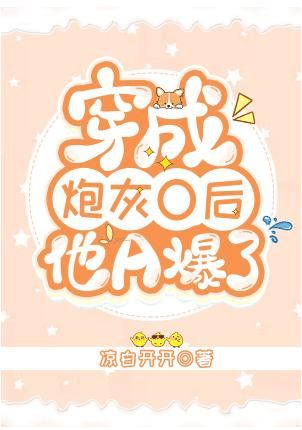
Bursting After He Transmigrated into the Cannon Fodder Omega
+Add to Custom List
Sort
Add review
... Read More
I finished this chapter at like 2am and I genuinely cannot explain why I couldn't put it down. Let me break down what the author did here because it's actually really clever. The chapter opens IN MEDIA RES — we're already watching Yun Xingze modify the mech, already in motion, already past the point of no return. No preamble, no 'previously on.' Just hands on tools, steel being cut. That's bold. Then you've got Ke Lei as the audience surrogate going absolutely feral — 'You don't have to draw sketches?!' — which does double duty of both creating comedy relief AND raising the stakes. Every time Ke Lei screams, I scream with him. But then the pivot is where it gets good. The modification succeeds, the arm moves beautifully, and just when you think the chapter could exhale — boom, Yun Xingze asks to drive the mech and gets shut down. The emotional whiplash is intentional and it works. Then we cut to Ke Lei's POV and the whole dynamic shifts. Now we're in this slow-burn anxiety of him preparing to report to Luo Wenchuan, the five-minute wait that feels like five hours, the trembling fingers typing the message. The author understands that suspense isn't always about action — sometimes it's about a man staring at his phone waiting for a reply. And then Luo Wenchuan's 'Not bad' followed by 'thank you' with that 'politely showing estrangement' note — the chapter lands on this perfect note of restrained emotion. No explosion, no dramatic confession, just two words that carry the weight of an entire relationship. The pacing here is almost musical in how it builds and releases and builds again.
... Read More
The dialogue in this section is doing SO MUCH heavy lifting and I want to unpack it because the author really knows how to differentiate voices. Oriel's lines are perfectly calibrated to be insufferable in the most satisfying way. "What are you doing running over for fun? Do you know how difficult it is to use a mecha?" — classic alpha bullying disguised as concern. Then after Yun Xingze persists: "Yun Xingze, can you climb up?" which immediately turns into "Yun Xingze, hurry down, don't waste everyone's time!" when he actually does it. And his crown jewel: "No matter what you say, even if it's Tianwang Lao Zi here today, Yun Xingze is a waste that can't activate the training mecha!" This guy is basically writing his own redemption arc waiting to happen. But Lu Ranxu's voice is where it gets interesting. First he's anxious and caring on the optical brain: "Where are you Xingze! Mecha practical class is about to begin!" Then deadpan shutdown of Oriel: "Your mecha is voice-controlled?" That line is PERFECTION. Three words that completely dismantle someone's attempt to humiliate your friend. No drama, no escalation, just cold efficiency. It tells us everything about Lu Ranxu's character in one sentence. Zhuo Feiyue's voice is also distinct — that teasing quality when he says "This time you arrived in time. En, there is progress" with "a bit of teasing in his tone." He's clearly observant and amused by Yun Xingze but not unkind about it. And then his shift to serious: "I'm glad you finally became interested in the mecha class, but you are not qualified yet." The teacher who's firm but ultimately yields to sincerity. Every character sounds different. Every line reveals personality. This is how you write dialogue.
... Read More
Chi Yu's whole arc in this chapter hit me like a truck. He genuinely believes Yun Xingze still harbors some kind of tangled feelings for him — love, hatred, it doesn't matter, as long as there's emotion. So when Yun Xingze looks at him with absolutely zero expression and says something so casually devastating, I nearly dropped my phone. "You are, at most, a teammate I don't know very well." That's it. That's the kill shot. No dramatic shouting, no lingering sadness — just pure, clinical detachment. Chi Yu spent the entire chapter building himself up, thinking maybe if he's useful, maybe if he's a good teammate, Yun Xingze will see him as more than garbage. And Yun Xingze basically just reclassified him as a stranger. What's fascinating is that Yun Xingze wasn't even being cruel on purpose. He was being honest. He actually doesn't have personal feelings for Chi Yu. The old Yun Xingze might have, but this Yun Xingze? He trained all day without showing any emotion toward the man who previously betrayed him. That's not coldness — that's healing. And then there's Luo Wenchuan waiting outside the training room, pretending he was just "passing by." His voice had "dull jealousy" in it, apparently. The man is a mess, and he knows Yun Xingze is lying about Mecha Star, and he's watching Yun Xingze get emotionally dismantled by Chi Yu from ten feet away, and he can't say anything about it. Meanwhile Kaleb treats Yun Xingze like a little bro he's protecting. The social dynamics here are a minefield.
... Read More
I literally gasped when Chi Yu looked at Su Zinan. The way the text describes it—"His eyes were full of disgust. It was the look he showed whenever he saw Yun Xingze." That detail crushed me. It's one thing to be angry at someone; it's another to realize you've become the person you hate. Su Zinan is still clinging to Chi Yu's pants, sobbing, trying to play the victim, completely oblivious to the fact that he's lost everyone. He brings up the "Rose Rain Forest" memory, the star beast, the comet mecha—trying to weaponize their shared history. It's manipulative, sure, but it's also sad. He genuinely thinks those moments mean something now. But Chi Yu? He's done. The disgust is palpable. And then Yun Xingze steps in. The demand for ten kowtows wasn't just cruelty; it was Yun Xingze forcing Su Zinan to face the reality of what he did. When Su Zinan actually does it, knocking his head on the ground, it's horrifying. It's the lowest point. But the real emotional gut-punch is Yun Xingze's final line: "I don't need such a cheap apology." It's not just about refusing the kowtow; it's about rejecting the idea that an apology fixes everything. He's setting a boundary. He's saying, "Your guilt doesn't absolve you." And then He Haomin shows up with that whisper about avenging Su Zinan. It's like, no, you don't get to be the hero here. Su Zinan is alone now. The tragedy is that Su Zinan probably still doesn't understand why he lost his friends. He thinks it's because he's an omega from a barren star, but it's because he's a terrible person. I'm so mad for Yun Xingze and Chi Yu. Do you think Su Zinan will ever reflect on his own behavior, or will he just blame everyone else forever?
... Read More
I keep coming back to that image of Yun Xingze touching the gland on his neck. That single gesture contains the entire tragedy of the original story. The original owner cut off his glands to escape being a tool, and died alone in the rain. Now here's the new owner, sitting with the same gland, asking the same impossible question: is there another way? The plot is essentially threading two needles at once. On one side, you've got this brutal family dynamic where Qin Shuang literally says your value as an omega is only in marriage, your pheromone match is worth more than your person. On the other side, there's this sweet-ass breakfast scene with Luo Wenchuan that somehow carries more emotional weight than half the dramatic confrontations. What I found most interesting is how the author uses the Mecha Research Institute as a MacGuffin-like object that represents everything Yun Xingze can't have. 'It is a place you will never enter in your entire life.' That line hit me like a wall. It's not just about omega discrimination — it's about how the system designs certain doors to stay locked for certain people, and then calls it natural order. But here's what made me sit up: the original owner's solution (gland removal) is presented as understandable, even sympathetic. Yun Xingze actually says 'Perhaps doing so is his only way to find relief.' He doesn't immediately reject it. And yet he's also standing right there, touching his own intact gland, having this conversation with his mother about whether his value extends beyond marriage. That tension — between knowing escape might mean self-mutilation and believing there could be another path — is the plot engine right there. Who wins? Does he find a way into the Institute, or does he end up where the original owner ended up? I'm hooked.
... Read More
I need a moment. I literally needed to put the book down and stare at the ceiling after that scene where Luo Wenchuan was wiping Yun Xingze's mouth and his rough fingertips accidentally brushed Yun Xingze's lips and BOTH of them froze. "The tips of his fingers seemed to be scalded." — I REPEAT, THE TIPS OF HIS FINGERS SEEMED TO BE SCALDED. This man is a prince, he's composed, he's dignified, and he just got short-circuited by touching someone's MOUTH with his fingertips. What is WRONG with him lol And then he recovers so fast and immediately pivots to telling Yun Xingze to stay away from Ashley, all while trying to play it cool. But then he CAN'T play it cool because Yun Xingze starts SNICKERING and Luo Wenchuan gets genuinely jealous and says "Are you listening to me?" in a tone that absolutely screams "I care about you more than I should." Then he rubs Yun Xingze's sweaty hair and walks away before Yun Xingze can even process what just happened. This man is a disaster. He is a complete, utter romantic disaster and he doesn't even know it yet. Meanwhile Chi Yu is walking away looking lonely from the back and honestly? I felt bad for him but also... the writing is making it very clear who the actual romantic interest is here. The narrative is basically shoving it in our faces at this point.
... Read More
I need to talk about the umbrella scene because WOW. The author just casually drops this object into Luo Wenchuan's perfectly organized closet and suddenly the entire emotional weight of the story sits on a folded piece of plastic and metal. Let me set the frame for you: Luo Wenchuan walks into his room after Ke Lei tells him about those forum posts showing Yun Xingze giving Chi Yu cakes. He says DELETE with this cold, controlled voice. He goes to the freezer, grabs red wine — which is already a tell, because as we learn, he only drinks red wine when he is genuinely shaken. He comes back, closes the door, and then... he opens his closet. And there it is. Sealed in a transparent bag. A black old-fashioned folding umbrella with a golden handle faintly exposed under layers of black. He doesn't even have the courage to open it since that day. The word SINCE is doing SO MUCH WORK here. Something happened with that umbrella. Something in the rain. And then the prose just opens the floodgates: "Closing his eyes, what poured into his mind was a pheromone that made him crazy in the cherry blossom forest. The eyes of a young man looking at him in the rain like a wounded kitten, and an image of the young boy slumped over, lying in his arms." Cherry blossoms. Rain. Pheromones going wild. A body in his arms. This is all implied, never stated outright, and yet it is so vividly rendered that I could SEE it. The umbrella becomes this impossible container for every unreleased feeling, every moment of vulnerability, every word that was never spoken. His fingers tighten until the hardness of the umbrella hurts his palm and he doesn't even notice. That detail — the physical pain going unregistered — is the kind of writing that stays with you. He puts it back. He presses his lips together. His jaw tightens. He walks to the window and stares outside for a long time. The scene doesn't end with a dramatic declaration. It ends with him whispering Ke Lei's own words back at himself: "What does he like about Chi Yu?" And the jealousy in his tone is so transparent.
... Read More
The chapter structure in this batch is masterclass stuff. It opens TENCHERLY — just Chi Yu, Su Zinan, and Luo Wenchuan having what seems like a low-key conversation. You could skim this section and miss it, but it's doing HEAVY lifting: establishing character dynamics, planting the Luo Wenchuan/mecha clue, setting up Su Zinan's tenth place reveal. Nothing is wasted. Then BAM — "Xinghai Military University Mecha Contest First-Year Group Competition: Start!" and the pace accelerates like someone hit the gas. The author doesn't linger on setup; they give you just enough rule explanation (teams vs solo, the map system, what the colored spots mean) and then immediately throw you into the action. What I love most is how the narrative switches POV mid-section. We go from the spectator area (Zhuo Feiyue watching, teachers joking) to INSIDE the competition with Yun Xingze's team executing their strategy. The transition is seamless — no jarring chapter breaks, just a natural shift from observation to participation. And the cliffhanger energy! The text ends mid-sentence almost: "A lot easier than I expect" — trailing off as if Yun Xingze is about to reveal something big. The author knows exactly when to cut. It's the literary equivalent of a trailer ending right before the punchline. Also side note: the Zhuo Feiyue comedy relief is perfectly paced. His frozen expression → the other teacher laughing → his weak excuse "Proper avoidance is wise" → back to genuine amazement. The comedic beat lands every time without slowing down the actual plot momentum.
... Read More
There's this one detail that I cannot stop thinking about. The nano-driving suit still has a faint mint fragrance on it. Just one sentence, literally, but it haunted me. It's Yun Xingze sleeping inside someone else's old life, quite literally wrapped in their residual scent, and he doesn't even know it. That's not accidental writing, that's the author doing something deeply intentional. The mint becomes this ghost—something pleasant and comforting that belongs to a different person's history. And then there's the mecha itself, which was originally Luo Wenchuan's, being repainted and refitted with Barbie pink accessories and chicken-wing jet devices. It's about transformation, about taking what was and remaking it into something new while the old owner remains completely invisible in the process. The ugliness of the accessories is also thematically rich—Yun Xingze doesn't care about appearance, only function, which says everything about who he is versus what the world expects fighters to look like. The black market itself is a symbol of the underground economy that exists alongside the official school system, a place where people like Yun Xingze with limited means have to navigate to survive.
... Read More
This match was everything I hoped it would be and then some. Yun Xingze, the guy everyone wrote off as a clumsy omega, just dismantled Kaleb—a literal favorite for the school team—in a double-star mecha. And get this: he didn't even come prepared. He modified that mech himself overnight, pulled an all-nighter refitting it, and showed up sick to fight. The tension building from the moment Chi Yu realizes his prize opponent isn't the useless fiancé he mocked anymore is chef's kiss. The author loves planting little breadcrumbs too—Chi Yu keeping saying Can you learn from Su Zinan? and then Yun Xingze goes and outperforms BOTH of them on the field. The twist with Luo Wenchuan refusing to acknowledge Yun Xingze's skill, even after Ke Lei practically begs him to, sets up this whole rival-subscriber dynamic that I am SO ready to see unravel. Also, Yun Xingze sitting on Kaleb's mech like a cat? Iconic move. The plot has been teasing this moment since chapter one and the payoff is delicious.
... Read More
Let me just sit with the STAKES in this passage because they are IMMENSe. On the surface, we have a romantic conflict — Chi Yu wants Yun Xingze, Yun Xingze doesn't want him back, and now Chi Yu's father is weaponizing politics to force them together. But beneath that, there are layers of conflict that make this so much richer. The political stakes: Empire-Alliance negotiations are deadlocked. War could break out. There's a bill about to pass that could FORCE high-matching alphas and omegas to combine for population reasons. This isn't just family drama — it's a society on the brink, and these characters are pawns in something much larger. If war comes, Yun Xingze's NCLM performance could determine his survival. If the bill passes, his autonomy as an omega is gone regardless of anyone's wishes. The family stakes: Chi Yu is being told his entire life — his career, his romance, his future children — is a political calculation. Yun Xingze is being told his value is measured by his ability to bring prestige to a family that barely hides its disappointment in him. Yun Wu gets to be a kid because he's the favorite. Yun Xingze is the liability that needs to be managed. The internal stakes: Chi Yu genuinely loves Yun Xingze, but he's also a product of his upbringing — obedient, ambitious, jealous. Can he separate love from possession? Yun Xingze is torn between his duty to his family and his own desires, between past hurt and present reality. And the interpersonal stakes: Luo Wenchuan exists. Yun Xingze and Luo Wenchuan's closeness is what triggers Chi Yu's jealousy and ultimately seals his compliance. But we don't know Luo Wenchuan's side of things. Is he aware? Does he care? This triangle is about to get complicated. What I find most compelling is that NEITHER protagonist has real agency here. Chi Yu thinks he's choosing, but he's been conditioned to obey his father since childhood. Yun Xingze thinks he's preparing for competition, but his entire family is orchestrating his future behind his back. The question isn't whether they'll end up together — it's whether they'll ever make a choice that's truly theirs. And that's what keeps me up at night reading this book.
... Read More
The pacing in these chapters operates like a well-tuned engine, constantly shifting gears without ever losing momentum. The author opens with a domestic scene that is deceptively calm. A family celebration for Xingxing, conversations about marriage prospects, a brief argument about class origins, and then the departure. This section could have been filler, a simple bridge between competition and competition, but it functions as necessary exposition disguised as drama. Every line reveals character and worldview. Then the transition to the training ground is immediate and jarring, which is exactly what the reader needs. Yun Xingze goes from the suffocating social performance of a family gathering to the physical demand of predawn running, and the shift mirrors the protagonist's own movement from a world of appearances to a world of substance. The ten-lap punishment is a brilliant structural choice. It forces Yun Xingze into physical exertion, which creates an opportunity for the rival confrontation with Chi Yu to unfold organically. The author could have dropped us straight into dialogue, but instead they make us watch Yun Xingze struggle through laps while Chi Yu shadows him, creating a parallel track of physical and social competition. The He Haomin scene that follows serves a different pacing function entirely. It slows the tempo down, moving from external action to internal mystery, and it gives the reader a moment to breathe before the chapter builds toward its final beat. Richard's question about Yun Xingze's true skill level is the kind of closing note that makes you immediately open the next chapter. The author understands that the best cliffhanger is not a dramatic event but an unsettling question, and the final lines deliver exactly that. The rhythm throughout these chapters follows a pattern of tension-release-tension that never becomes predictable because the conflicts keep changing form, moving from family politics to athletic discipline to romantic rivalry to tactical mystery, each one more personal than the last.

Leave a comment

You must be logged in to leave comments. or
