Summary

... Read More

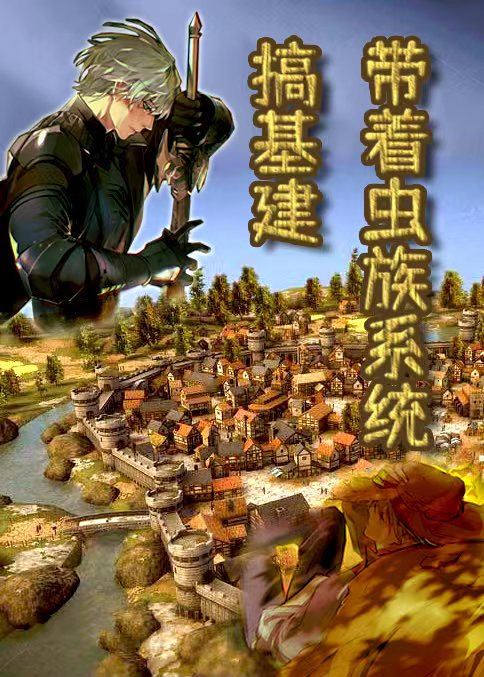
Ren Yinian, a twenty-six-year-old man from the modern world, awakens in the body of Louis Walton, a twelve-year-old blacksmith's apprentice in a backward, feudal kingdom. After surviving a fatal car accident in his previous life, he accepts a mysterious "system" that grants him survival-based tasks. Upon completing his first month-long survival mission, he receives a reward: a conceptual model of a mechanical bellows. Recognizing its potential to revolutionize his father Rubin’s forge, Ren Yinian reconstructs the device from memory and presents it to Rubin. The invention significantly increases furnace temperatures and reduces charcoal consumption, marking Ren Yinian’s initial integration into this harsh world through practical innovation rather than combat.

The benefits of the bellows quickly attract the attention of Mr. Luhn, the steward of the local lord. Rather than rewarding the increased productivity, Luhn manipulates the pricing structure for iron tools and weapons, forcing Rubin to lower costs while claiming the profit margins as the lord’s prerogative. This economic exploitation leaves the Walton family and their fellow smiths financially strained. Ren Yinian’s internal frustration peaks as he realizes that talent offers no protection under the current feudal system. His mother, Gillian, shares the tragic fate of Virgil, a stonemason who escaped oppression only to be maimed and driven mad when his family was separated by the lord’s political dealings. This anecdote cements the reality that flight is impossible; the web of serfdom and noble authority traps everyone equally.

Driven by anger and a desire to reclaim agency, Ren Yinian’s emotional surge triggers a system notification, unlocking a new interface. He discovers the ability to summon creatures from another realm, specifically stone-armored beetles capable of consuming rock. Initially envisioning a scheme to secretly mine minerals from the lord’s protected lands to generate illicit wealth, Ren Yinian plans to present this power as a newly awakened psychic ability. In this world, psychics are rare and revered, with abilities emerging between ages eight and fifteen. He fabricates a narrative that his latent talent was triggered by the injustice inflicted by Luhn.

The revelation is immediate and volatile. When Ren Yinian summons the two-meter-long beetle in front of his parents to demonstrate his power, Gillian collapses in terror, mistaking the creature for a demonic entity. Ren Yinian hastily withdraws the beast to stabilize his mother. This event marks a critical turning point, shifting his path from that of a humble artisan to a hidden practitioner of psychic arts. With his father already warning him that talent attracts danger in the lord’s castle, Ren Yinian now possesses a dangerous secret that could either elevate his status or mark him for destruction. The story establishes a central tension between Ren Yinian’s modern ethical framework and the brutal, oppressive realities of a feudal society where commoners are mere resources, forcing him to navigate a precarious balance between survival, economic subversion, and the concealment of his supernatural asset.

Latest Release
DateGroupRelease
2026-09-26knoxt c3
2026-09-26knoxt c2
2026-09-26knoxt c1

Community Reviews

Rating(3.9 / 5.0, 22votes)
5 stars
7(32%)
4 stars
5(23%)
3 stars
10(45%)
2 stars
0(0%)
1 stars
0(0%)

Popular reviews

... Read More
Here's what's interesting about the conflict structure in these chapters: there are TWO layers operating at once, and they rarely acknowledge each other directly. Layer one is internal/survival. Louis died in a car crash. He remembers the pain. The system told him he needs to complete tasks to survive. He just finished his first month. That's a concrete stake—he stays alive or he doesn't. It's primal, immediate, personal. The narrative keeps returning to this undercurrent of 'I almost died and I want to stay alive.' It grounds everything. Layer two is external/political. Rubin's warning. 'Something terrible must have happened to make Rubin so concerned.' We don't know what. The author deliberately withholds this information. But the stakes are implied: talent gets punished. Young people with promise disappear or get controlled. The lord's castle is not a safe place for exceptional kids. This is a slow-building, atmospheric dread rather than an action-setpiece threat, but it's no less real. What makes the conflict work is that both layers feed each other. Louis's desire to survive pushes him to innovate (the bellows). His innovation proves his talent. His talent puts him at risk. Every step toward safety is also a step toward danger. That's sophisticated stakes management. Most books pick one lane—要么是external冒险要么是internal生存. This one merges them and the tension compounds. And the best part? Neither layer gets resolved here. The bellows works (small win). But the warning hangs in the air like a storm cloud. I genuinely want to know what happened to make a father terrified of his son's success. That's the kind of hook that doesn't need explosions.
... Read More
Okay so let me just start by saying I was NOT prepared for this whole arc. One moment you're reading about some blacksmith guy and his bellows invention, and the next Mr. Luhn waltzes in like he owns the place—which, honestly, he basically does—and drops a price cut on Rubin like it's nothing. An 8 copper coin reduction on a longsword? And that sheepskin coat 'reward'? The guy's wearing a NEW deer antler ring while giving the blacksmith his own worn-out coat. I literally had to pause and stare at my screen. That is such a quiet, everyday kind of cruelty that hits harder than any dramatic villain monologue ever could. But then—AND THIS IS WHERE IT GOT ME—Ren Yinian's inner voice starts chipping away at the whole system. He's not just sitting there taking it. He's actively questioning everything: Is his invention bad? No. Is Luhn entirely evil? Not really. Then his mom drops that absolutely devastating story about Virgil the stonemason who escaped another territory, brought gems to the lord, and still ended up with his hand SEVERED, his daughter taken, his wife turned into a serf. ALL IN ONE DAY. 'He went mad,' Ren Yinian finished the sentence. And yeah. He did. That single line broke me. Because the stakes here aren't some epic kingdom-level war— they're so much more terrifying. They're the stakes of a guy who thought maybe, just maybe, if he worked hard and got smarter, he could change things. And the world saying: no. You can endure. That's what Gillian tells him. 'The life of commoners is like this. We can endure.' But Ren Yinian's response? 'This is not right. We shouldn't endure such exploitation just because we haven't been pushed to a dead end.' That line right there changed the entire trajectory of the story for me. This isn't a tale about surviving oppression anymore. This is about someone who refuses to just endure it. And then the system RINGS. Combat emotions detected. Threshold reached. And suddenly all that pent-up frustration, all that helpless anger he felt watching Luhn walk out... it unlocks something. A Stone Armor Beetle. Two meters long. The exoskeleton CLECKING as it moves. Ren Yinian's first thought isn't about fighting or power or anything heroic— it's about making. A. Fortune. 'The proletariat's duty to fleece the capitalist's wool.' I screamed. I actually laughed out loud at a novel at midnight. The stakes have shifted from 'will Rubin survive exploitation' to 'what happens when someone who just wants to be left alone discovers he has the power to completely undermine the entire system?' And I am HERE for it.
... Read More
Can we talk about how efficiently this author moves? Like, genuinely. You start with this devastating image of suffering children, then—BAM—you're inside Ren Yinian's head reliving his car accident. Shattered bones, dizziness, blood loss, the whole thing. The author doesn't linger on it for pages. Just enough to make you feel the trauma, then immediately pivots to: 'Having died once, he truly didn't know that his yearning for life was so strong.' And then we're back to the present, checking off a system task, getting a bellows reward. That's a lot of emotional ground covered without the pacing ever feeling rushed or bloated. The chapter flow is basically: 1. World establishing shot (serf kids) 2. Internal reflection (death memory, survival instinct) 3. System check-in (task complete!) 4. Daily life normalcy (Nick and Barton coming to pick him up) 5. The bellows invention sequence 6. The payoff (it works!) 7. The warning (don't tell anyone) Each beat serves multiple purposes. The daily life stuff isn't filler—it's showing us what Louis is fighting to keep living for. 'Only by being alive did he have the right to care about gains and losses.' That's not just theme-dropping, that's the emotional engine of the whole section. And the ending? Doesn't resolve anything. Just drops a warning and leaves us wondering what happened to make Rubin so scared. That's how you keep someone turning pages. No cliffhanger drama, just a quiet 'something terrible must have happened' and you're hooked.
... Read More
Let me just say this—author, you opened a chapter with a kid in adult clothes that are falling apart, one pant leg at his knee, the other dragging to his heel, barefoot in dust, and I was immediately DONE. Like, I was not prepared for how much that image bothered me. You don't even need to explain the social structure. The description does it for you. And then Ren Yinian thinks about it—these are serfs. Children of serfs. Herding livestock while kids their age in regular families are playing. They've learned to conserve energy because they're underfed and overworked. The author just drops this info like it's nothing, which makes it worse somehow. 'Very important detail: In peacetime, seeing children like this would bring compassion to anyone's heart.' That line! The author writes it almost casually but it carries so much weight. Because we know this world isn't peaceful. We know better things are coming. What I love about this kind of worldbuilding is how it doesn't stop at the grim stuff either. The bellows scene—the clay sealing gaps, the charcoal flaring up, Rubin's face illuminated by flame, the joy on both their faces when they realize it works—that's a different kind of atmosphere. Warm workshop light, sawdust, the sound of metal being worked. It makes this world feel lived-in, not just oppressive. The author knows how to shift tones without it feeling jarring.
... Read More
This chapter reads like a series of photographs taken in different lighting, and I cannot stop thinking about the atmosphere. Let me start with the very first scene—the gloomy and rainy afternoon when Luhn arrives. Rain, hats coming off, boots being polished. It's such a specific, grounded moment. You can smell the wet leather. You can hear the rhythmic scraping of the brush. And then Luhn just... sits down. Takes his time. Lets the apprentice polish his shoes like it's the most natural thing in the world. The forge itself—the rhythmic sound of iron beating—is everywhere in this chapter. It's the backdrop, the heartbeat, the constant reminder that this is a world of labor. Of hands and fire and muscle. And every strike of the hammer seems to echo in Ren Yinian's skull, each one punctuating his growing frustration. Then there's the scene with the Beetle summoning. This is where the chapter goes from gritty historical fiction to something else entirely, and I love how the author handled the transition. Ren Yinian is alone in the room while Rubin and Gillian are busy. He clicks the button. The creature appears—'over two meters long and almost a meter high, nearly filling the cramped room.' The description is so tactile. 'The bright and sturdy exoskeleton clinked as it moved, and the sharp pincers gleamed.' You can hear it. You can see it. And the crucial detail: 'if told to move forward, it did so.' It's almost mundanely obedient, which makes it even creepier. The church scenes Ren Yinian remembers—Cleric Kra, Bloody Knight Kedra, scholar Lynn Gracey—are brief but they paint this enormous world. A world where psychic abilities awaken at different ages for different reasons. Where a healer who treats infertility gets invited to the capital as a guest of wealthy ladies. Where a scholar's decades of accumulated knowledge make his soul 'incredibly heavy.' These aren't just listicles of cool powers—they're glimpses into a society that categorizes and exploits every human trait. And dinner. Just... dinner. Ren Yinian finishes in a few bites and stares at his parents. The domestic normalcy of that scene, contrasted with the supernatural ability he's about to reveal, gave me actual chills.
... Read More
I can't unsee the chains now. Once the author put that image in my head — Virgil's iron chain on his foot, the absence of fingers on his hand — I started SEEING chains everywhere. Ren Yinian's own situation: he's a twenty-six-year-old man trapped in a twelve-year-old body, chained to a life he didn't choose, performing childhood while his mind is ancient. Is he any less chained than Virgil? The blacksmith father — Rubin Walton — he SHAPES metal. He works with chains, with iron, with binding materials. And Ren Yinian is learning from him. There's something haunting about that. The church appears as both sanctuary and prison — it provides food for Virgil but also keeps him chained. It tells heroic stories of freedom (Devotee Clara leading a team against invaders) while maintaining social control. Even the children's games are bound by invisible rules — Nick controls who plays what, Sally is punished for wanting agency, and the adults enforce fear around Virgil through vague threats. The whole world is structured around who has power and who doesn't. And Ren Yinian, with his adult consciousness in a powerless child's body, is navigating ALL of it while pretending he's just a kid playing games. The symbolism is so rich I need a whole document just for this.
See all reviews

Custom lists

See all custom Lists