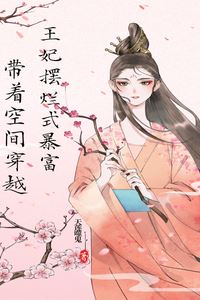
Bringing a Space Along When Transmigrating: The Princess Consort Gets Rich by Doing the Bare Minimum
+Add to Custom List
Genres:
Novel Info

Summary

... Read More

Wen Jinhe is a modern woman whose life changes irrevocably after a total solar eclipse triggers a prophetic dream. In the dream, she time-travels to an ancient dynasty, becoming a princess forced into a political marriage. Upon waking, she discovers she possesses a mysterious storage space and realizes the dream is a premonition of her future. Knowing she will travel to this era in one month, she liquidates her assets, selling her apartment for 3.2 million yuan to fund an extensive preparation. She spends her savings stockpiling essential supplies, including seeds, encyclopedias, medicines, and survival gear, intending to fill her storage space completely before the transition occurs.

When the time comes, Wen Jinhe wakes up in the body of Wen Xianhe, the Third Princess of the Lin Yue Kingdom. She is abused and neglected, having been raised in the Cold Palace since birth. Her only value to the kingdom is as a diplomatic bride sent to the Beidi Kingdom to secure peace. During the journey, she asserts dominance over her assigned maid, Cui'er, punishing her severely for disrespect. This display of ruthlessness surprises Murong Nie, a captain in the escort team, and catches the attention of her husband-to-be, Li Juntche, the Second Prince of Beidi. Upon arrival, Wen Jinhe completes the wedding rites and enters the Prince's Manor, where she finds Li Juntche to be handsome but distant.

Wen Jinhe quickly establishes her authority within the manor. She executes the two hundred guards from Lin Yue who she suspects are spies or thieves, consolidating her power through fear and decisiveness. She discovers that Li Juntche is financially strained, having used his personal wealth to support his troops rather than maintain his household. Determined to secure her future, she sells her meager dowry and invests in real estate, purchasing shops, farmland, and a forest with rubber trees. She also acquires a blacksmith shop and hires literate servants with disabilities, whom she trains for her growing enterprise.

As she integrates into Beidi society, Wen Jinhe navigates complex political and social dynamics. She attends a banquet hosted by the Heng Prince, the eldest brother, where she encounters hostility from other noblewomen. Using her wit, she humiliates the Lin Princess Consort and intervenes to ruin a marriage alliance between the Heng Prince and the Minister of Justice's daughter. This act inadvertently strengthens the political position of Li Juntche by alienating his rivals. Li Juntche observes her actions with growing interest, noting her intelligence and strategic mind, which contrasts sharply with the timid image expected of a Cold Palace princess.

Wen Jinhe begins implementing modern agricultural techniques and industrial ideas, such as bicycle manufacturing and rubber processing, to build economic independence. She maintains a pragmatic relationship with Li Juntche, balancing domestic cooperation with her own ambitions. The story follows her efforts to survive and thrive in a hostile ancient world, leveraging her modern knowledge and storage space to reshape her destiny while navigating the treacherous court politics of the Beidi Kingdom.

Latest Release
DateGroupRelease
2026-08-11shanghai fantasy c11
2026-08-11shanghai fantasy c10
2026-08-11shanghai fantasy c9
2026-08-11shanghai fantasy c8
2026-08-11shanghai fantasy c7
2026-08-11shanghai fantasy c6
2026-08-11shanghai fantasy c5
2026-08-11shanghai fantasy c4
2026-08-11shanghai fantasy c3
2026-08-11shanghai fantasy c2
2026-08-11shanghai fantasy c1

Community Reviews

Rating(3.8 / 5.0, 5votes)
5 stars
2(40%)
4 stars
0(0%)
3 stars
3(60%)
2 stars
0(0%)
1 stars
0(0%)

Popular reviews

... Read More
This entire passage is basically a masterclass in how the story critiques the system of using women as political currency—and what happens when someone refuses to play along. Let me break this down because it's layered. The Heng Prince wants Wang Shuyao as a secondary consort to secure the Minister of Justice's support. Li Zhilin does the same thing. Every prince in this story is treating marriage as a transaction. The text makes this explicit when Murong Nie says: "Marriage alliances were one of the best ways to consolidate power." But then you have Wen Jinhe, who isn't just refusing to be a pawn—she's actively dismantling the board. And Li Junche's declaration that using women for power makes you "unworthy of ruling" isn't just personal morality; it's the story's thesis statement on what legitimate leadership looks like. The plum blossom cake is such a perfect symbol here. Wen Jinhe eats it contentedly after destroying a marriage alliance. Sweet, delicate, seemingly harmless—but she's wielding it like a weapon. The flower itself carries meaning in Chinese culture: resilience, purity, thriving in adversity. That's basically Wen Jinhe's entire character arc in one bite. And Madam Wang bringing her mother from the countryside? That's the old world pushing back. The rural matriarch arriving to protect her granddaughter represents a different kind of power—one based on family loyalty rather than political ambition.
... Read More
Okay, can we talk about how the author paints this banquet scene? Because it's NOT just background—it's practically a character itself. The text gives us these incredibly specific visual details that make the whole thing feel like a period drama you could watch. The Heng Princess Consort at the main seat, "forcing a smile." Madam Wang's face growing "unpleasant." Miss Wang hiding in her room, refusing to come to dinner. Yang watching Wen Jinhe's "faint smile" and silently predicting the fallout. These aren't just plot beats—they're cinematic moments. And the settings keep shifting in ways that feel very intentional. We move from the banquet hall (public, performative) to Minister Wang's home (private, familial tension) to Li Junche's study (where political philosophy gets discussed) to the rear palace (where Wen Jinhe is actually running her business operations). Each location has its own atmosphere and reveals different layers of the story. The detail about the tavern renovation is my favorite worldbuilding moment: "Arrange the shelves on the open floor; keep it simple." This woman is thinking about interior design while the men are fighting over thrones. The contrast between the grand political machinations and the mundane details of shop management creates this rich, lived-in world that feels incredibly real.
... Read More
I need to discuss the stakes in this passage because they escalate SO smoothly and the tension is relentless. It starts small—social embarrassment at a banquet. But by the end, we've got a marriage alliance destroyed, two brothers at odds, a minister sweating cold, and a prince smashing teacups in rage. The escalation feels earned because each conflict naturally feeds the next. The external conflict is obvious: Heng Prince vs. whoever is blocking his marriage plan. But the internal conflicts are where this really shines. Minister Wang's internal struggle between being a father and being a politician—"His son said nothing, and the daughter's position was still vacant, leaving him frustrated"—this line is devastating. He's trapped between his ambition and his family, and the text doesn't judge him, it just shows him. Madam Wang's conflict is even sharper. She's not just protecting her daughter from a bad marriage; she's defying her husband's political strategy. When she says "you risk her entire life for political connections," that's the emotional core of the entire passage. And Li Yuheng's rage? The text says his "voices of furious reprimand echoed through the rear courtyard" and servants kept their heads low. This isn't just anger—it's the sound of a man who realizes his plans are falling apart and he has no control. The stakes have never been higher, and the author makes you feel every bit of it.
... Read More
I need to talk about Wen Jinhe because this woman is absolutely fascinating and I am HERE for it. On the surface, she's the perfect princess consort—graceful, composed, never losing her temper. But the text drops these tiny details that show she's actually running an entire operation behind the scenes. She's managing shops, a rubber workshop, farmland, a blacksmith's forge, AND planning to open a tavern with modern delicacies. While everyone else is playing palace politics with marriage alliances, she's building an economic empire. The contrast is almost comical. But what really got me is her relationship with Li Junche. Look at this exchange: "She's clever and quick to react. Upon realizing Yang Shi's identity, she knew to win her favor. She anticipated Li Yuheng's intentions and didn't hesitate to intervene immediately. Such actions clearly signaled that Wen Jinhe was aligned with him." This is HUGE. She didn't just defend herself—she made a strategic choice to side with Li Junche. And Li Junche recognizes it. This isn't just a marriage; it's a partnership forming in real time. And then there's the contrast with Li Yuheng. His fury is almost cartoonish—smashing teacups, voices echoing through the rear courtyard. Meanwhile, Li Junche is sitting in his study, calm, letting Murong Nie laugh about it. These two brothers couldn't be more different, and their relationship dynamic is everything.
... Read More
Let me just say—this plot is so satisfyingly tight. Wen Jinhe sits at a banquet, says a few words, eats a plum blossom cake, and BOOM. An entire political marriage alliance is destroyed. That's the kind of cause-and-effect chain that makes you want to highlight entire pages. What I love is how the sabotage unfolds. The Heng Princess Consort tries to assert dominance before Wang Shuyao even enters the residence. Wen Jinhe doesn't fight fire with fire—she just 'expands the matter with a few words,' and suddenly the whole room is watching. The ladies who 'knew the inner situation' are already reading the tea. This woman understands social dynamics like a chess grandmaster. Then the aftermath ripples outward like stones in a pond. Minister Wang's reaction—calm on the surface but sweating cold—shows he's already calculating. Madam Wang's decision to bring her mother from the countryside to find another match? That's the real plot twist. The father was willing to sacrifice his daughter for power, but the mother drew the line. And Li Yuheng smashing that teacup? Perfect closure to his arc in this section. The narrative structure here is brilliant because every scene serves two purposes: it advances the plot AND reveals character. When Li Junche says "A true man should have the world in his heart. If I need to use women to obtain the throne, then I am unworthy of ruling," that's not just a character moment—that's the thematic thesis of the entire story, dropped right when the plot needs it most.
See all reviews

Characters

See all characters

Custom lists

See all custom Lists