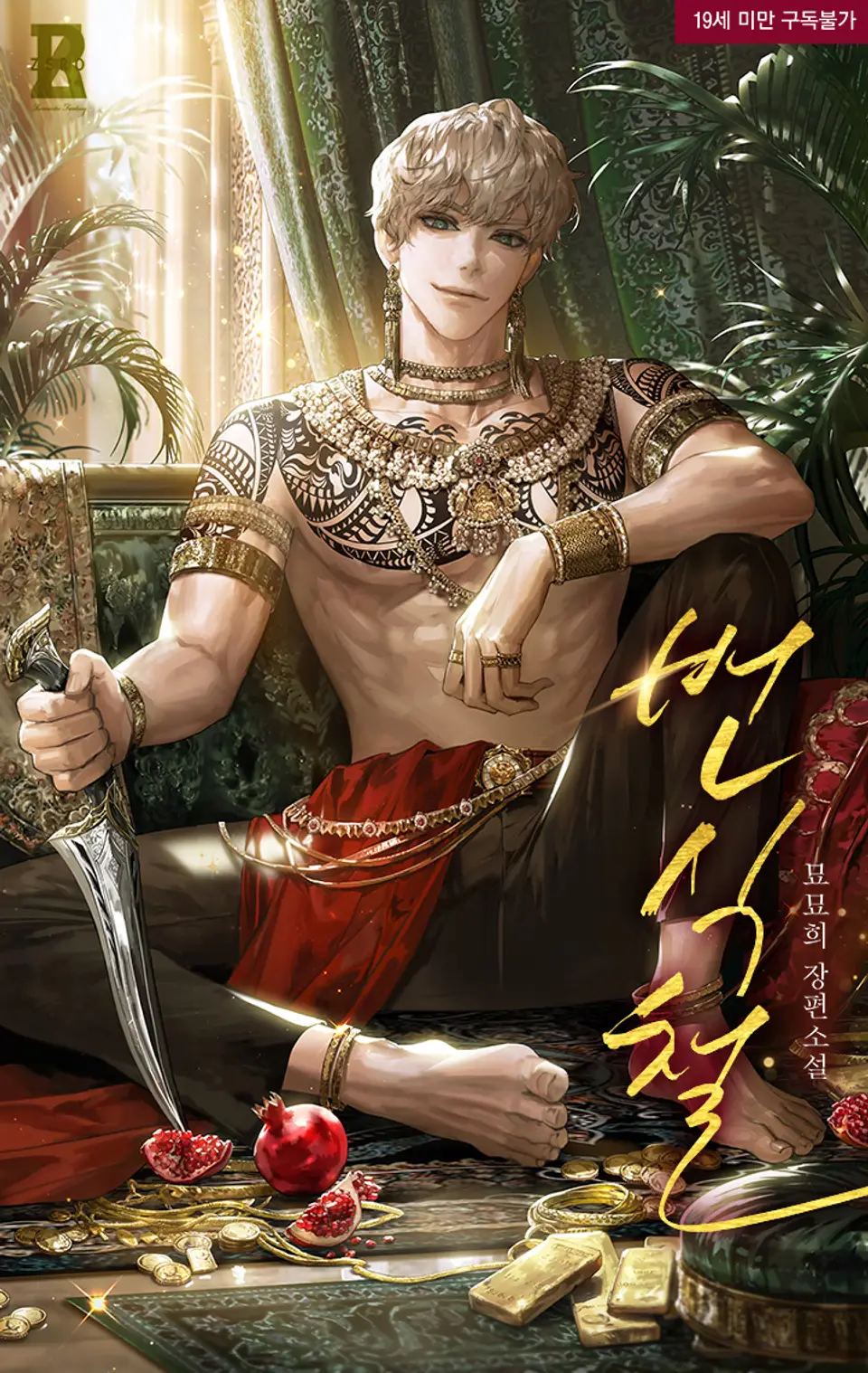
Breeding Season
Novel Info

Summary

... Read More

Siren Wilkeron is the discarded daughter of King Wilkeron, treated as worthless trash by her family and constantly tormented by her perfect half-sister, Angelique. Suffering from a childhood injury that leaves her with a limp, she has lived a life of abuse and neglect within the opulent but cruel royal castle. On the day of her arranged marriage to Yasamin, the Grand Duke of the South, Siren views the union as a final disposal of her life. The southern territories are despised by Wilkeron as heretic lands plagued by undead creatures known as the Infected, yet Yasamin has united these tribes into a formidable power.

During the wedding ceremony in the grand cathedral, King Wilkeron initiates an ambush, attempting to assassinate Yasamin by locking the doors and sending knights to kill him. Yasamin, however, anticipated the betrayal. He slaughters the royal guards, King Wilkeron, Angelique, and Siren’s younger brother with terrifying efficiency. Siren, terrified but oddly relieved that her abusers are dead, begs for her life. Yasamin spares her, not out of mercy, but because she is the sole surviving heir of the Wilkeron dynasty, making her a political necessity. He forces her to sign a marriage contract using her father’s severed finger as a seal.

As they travel south, Siren struggles to survive in a world vastly different from the sheltered castle life she knew. She witnesses the harsh realities of the desert, including a mutation incident where a loyal cook turns into an Infected. Yasamin reveals his supernatural ability to manipulate bone protrusions from his body for combat, horrifying yet protecting Siren. Throughout the journey, Siren adopts a survival strategy of obedience and feigned ignorance, clinging to Yasamin as her only shield against the hostile southern warriors who despise her lineage.

Yasamin eventually formalizes their relationship through a Southern subjugation contract, known as Diet, wherein Siren becomes his possessed property in exchange for his protection. This arrangement grants her a status higher than a mere wife, shielding her from immediate execution by the southern clans. However, Yasamin harbors hidden motives connected to an ancient prophecy regarding Aquafuran, the water goddess kidnapped by the first King of Wilkeron, which caused the desertification of the south and the creation of the Infected. The prophecy foretells the return of the goddess, identified by blue eyes, suggesting that Siren may be central to restoring the south.

Siren begins to learn the culture, history, and language of the south under the tutelage of Yasamin’s strategist, Eltan. She discovers that the Wilkeron dynasty knowingly abandoned the southern people to suffering, ignoring their pleas for aid while monopolizing resources. As Siren acclimates to her new role, she finds a strange sense of peace in her submission to Yasamin, contrasting sharply with the torment of her past. Yet, political tensions rise as the three ruling clans of the south—followers of the Moon God Kalik, the Water Goddess Aquafuran, and the Sun God Nu—have conflicting agendas regarding Yasamin’s rule and the fulfillment of the prophecy.

The narrative follows Siren’s transformation from a broken, invisible princess into a calculated survivor navigating a treacherous political landscape. Her relationship with Yasamin evolves from predator and prey into a complex partnership bound by necessity and hidden truths. As they approach the heart of the southern territories, Siren must leverage her identity as the potential reincarnation of Aquafuran to secure her place, while Yasamin maneuvers to consolidate his power amidst brewing conspiracies and ancient curses.

Latest Release
DateGroupRelease
2026-09-27citrus aurora c200
2026-09-27citrus aurora c199
2026-09-27citrus aurora c198
2026-09-27citrus aurora c197
2026-09-27citrus aurora c196
2026-09-27citrus aurora c195
2026-09-27citrus aurora c194
2026-09-27citrus aurora c193
2026-09-27citrus aurora c192
2026-09-27citrus aurora c191
2026-09-27citrus aurora c190
2026-09-27citrus aurora c189

Community Reviews

Rating(4.1 / 5.0, 66votes)
5 stars
24(36%)
4 stars
25(38%)
3 stars
15(23%)
2 stars
2(3%)
1 stars
0(0%)

Popular reviews

... Read More
Okay, let's talk about the hair moment because this is where I got completely hooked. Siren watches Yasamin tie her hair and immediately her brain goes to… who else? She doesn't have the right to ask, she tells herself, but you can feel the little sting of it. And then Yasamin just casually drops that he can do seven other hairstyles, used to do it often, and when she presses him, he reveals he had a little sister named Nazla who died young. AHHH. I lost it. The way he explains it so matter-of-factly — "In the South, there's no time to mourn every single death" — while Siren is sitting there internally crumbling, wondering if the dress she's wearing belonged to that dead girl… that contrast hit me like a truck. And then he calls her like a little sibling and she gets all flustered about being jealous and he just laughs and taps her head. This dynamic is SO good. The tension between warmth and something sadder underneath. He's being gentle with her but carrying all this history she can't fully access. And she's starting to feel something that isn't just gratitude or fear, and neither of them are naming it yet. I need to know more about Nazla.
... Read More
Can we talk about how this author weaponizes pacing like it's a superpower?? The chapter opens with this intensely intimate, almost suffocating scene—Yasamin making Siren thank him, the power play, the emotional tension—and then just... pivots. Breakfast. Morning light. A conversation about favorite colors that feels so mundane it's disarming. You lower your guard and then BAM: underground museum, ancient artifacts, the revelation that she might not even be human. The pacing is deliberately unpredictable, which honestly mirrors Yasamin's own personality. Just when you think you know where the story is going, it changes direction and you're left scrambling. I also love how the author uses those tiny domestic moments as breathing room between the heavier scenes. The glasses conversation. The walk down the corridor. The question about sour versus sweet. These aren't filler—they're the calm before storms, and they make the storms hit harder because you've had time to settle in. And THAT ending. "I'm bored. I played with you, so now it's your turn to play with me." Coming right after the Siren revelation? The sheer audacity of placing that line there? It's almost cruel. But it's also so YASAMIN that it works. Some parts of this chapter made me want to reread slowly, savoring every detail. Other parts made me fly through pages like my life depended on it. The author controls my heart rate like a conductor and I am HERE for it.
... Read More
Yasamin's internal monologue when watching Siren wash is genuinely chilling in the most fascinating way. He literally thinks of her as a dog. Not in a derogatory, cartoon-villain way — more like he's observed her closely enough to categorize her accurately. "A dog abused by its previous owner... A small, timid animal with tears in its eyes, yet unable to shed them, with a crushed spirit." And you know what? That's probably the most honest assessment anyone's ever given of her. She WAS abused. By her family. By her circumstances. By everything. But here's where it gets weirdly tender — he gives her soap and perfume. Just... offers it casually. And her entire reaction makes my heart ache. "She was grateful, so she accepted the bowl of perfume with both hands. For some reason, tears welled up in her eyes. It was because she thought—those she shared blood with were much less kind than this complete stranger." That line hit me like a truck. This man who sees her as less-than-human is the first person to treat her like she deserves basic dignity. And she knows it, which makes everything even more complicated. Then the subjugation contract scene? Chef's kiss. He offers her a formal role — not as wife, not as prisoner, but as something he will "cherish and raise." In return, she gives him everything. And his reasons for keeping her are hilariously mundane: "I sleep better when you're around" and "it's amusing." This man who just described her as a piece of junk is now essentially saying she's his emotional support human pillow. The cognitive dissonance is delicious. He never explains why [this] wants her, which I think is the author being smart about keeping the mystery alive while letting the relationship develop on its own terms.
... Read More
Let me talk about how deeply layered this dog metaphor is, because I've been thinking about it nonstop. Yasamin compares Siren to a dog several times throughout this section. But it's not just about power dynamics — it's about something much darker and more meaningful. Dogs don't question their masters. Dogs don't expect fairness. Dogs just want to survive, and if someone feeds them and doesn't hit them, they'll be the most loyal creature on earth. That's exactly what Siren has become through trauma: someone whose survival instincts have rewired her entire sense of self-worth. When she says "If you take me with you… we're husband and wife, aren't we?" it's not romantic. It's tactical. She's using the only language she knows to secure her position. And when Yasamin calls her out on it — "do you only call us that when it's convenient for you?" — he's actually giving her agency for the first time. She CAN choose. The contract is framed as her choice, not his imposition. The subjugation contract itself is a brilliant piece of worldbuilding-as-theme. In the south, where survival is uncertain nightly, people trade autonomy for protection. It's a literal manifestation of the story's core question: what are you willing to give up to live? Siren trades her independence for safety. Yasamin trades... well, he says he trades nothing meaningful, but the fact that he offers her a real role rather than just keeping her as a trophy says something he won't admit out loud. "In exchange for offering everything you are to me, I take responsibility for your life." That single sentence contains the entire moral ambiguity of this world. Protection purchased with freedom. Love bought with submission. The line between cruelty and care is thinner than either character wants to admit.
... Read More
Before this chapter, the stakes were basically: can Siren survive her awful family? That's sad, sure, but it's a familiar kind of sad. The kind you read and feel bad for the protagonist and turn the page. Then her father tries to assassinate her husband AND fails, and suddenly the stakes are: can Siren survive a man who just slaughtered her entire family and decided to keep her alive as a novelty? That escalation is VIOLENT. Not just in action—the prose is violent too—but in narrative terms. Her father's plan created a paradox: by trying to kill the Grand Duke, he proved that the Wilkeron family can't be trusted, which means Siren has nowhere to go back to. She is now permanently, irrevocably tied to the man who murdered her blood. There is no safe option. There is no neutral ground. She must either win his favor or die. And the internal conflict? Oh, it's layered. She wants to live—"despite all the times she had wished for death, now that it was upon her, she wanted nothing more than to live." This is such a human, honest observation. The irony is brutal. She spent her whole life wishing for escape, and the moment escape becomes permanent death, she clings to existence. The suspense isn't whether she'll die—it's WHEN and HOW. Will he grow bored? Will he decide she's no longer amusing? The contract offers a thread of hope, but every word he says is ambiguous enough to be a threat or a promise. "As long as you keep acting this cute"—is that protection? Or is it possession? I am deeply, thoroughly stressed and I can't look away.
... Read More
Can we just take a moment to appreciate how Yasamin speaks? Every line he delivers is calibrated to reveal exactly who he is without any exposition dump. "I told you. Next time, I'll handle it more delicately." Said while dragging away a corpse. He's apologizing to Siren for being messy, not for killing the assassin. That is CHARACTER. That is VOICE. And the way his dialogue shifts depending on who he's talking to. With Siren, it's almost gentle—even when he's being commanding. "Stop thinking too much and just lie down." "Well done." "Is it delicious?" He's treating her like something fragile that he's determined to keep intact, but he'd never say that outright. His care is encoded in commands and practical instructions. With the servants, he's brutal and familiar at the same time. "Shut up. I was hurrying. Just treat her." No respect for hierarchy, no performance of royalty. These people know him and they know how he operates. The old man scolds him and Yasamin doesn't even flinch. That tells us everything about their history. The dialogue also reveals what Siren doesn't understand. When Yasamin explains the prophecy, the circlet, the politics of the three tribes—he speaks in this casual, almost bored register, like he's explaining why the sky is blue. But Siren hears it differently: "It felt like she had entered a mythical and fairy-tale-like world." That gap between how Yasamin experiences his own world and how Siren experiences it? That's where the drama lives. And the author never once breaks that perspective.
See all reviews

Custom lists

See all custom Lists