Bloodstained Waters
+Add to Custom List
Genres:
Tags:
Novel Info
  • Author:
  • Status:Ongoing

Summary

... Read More

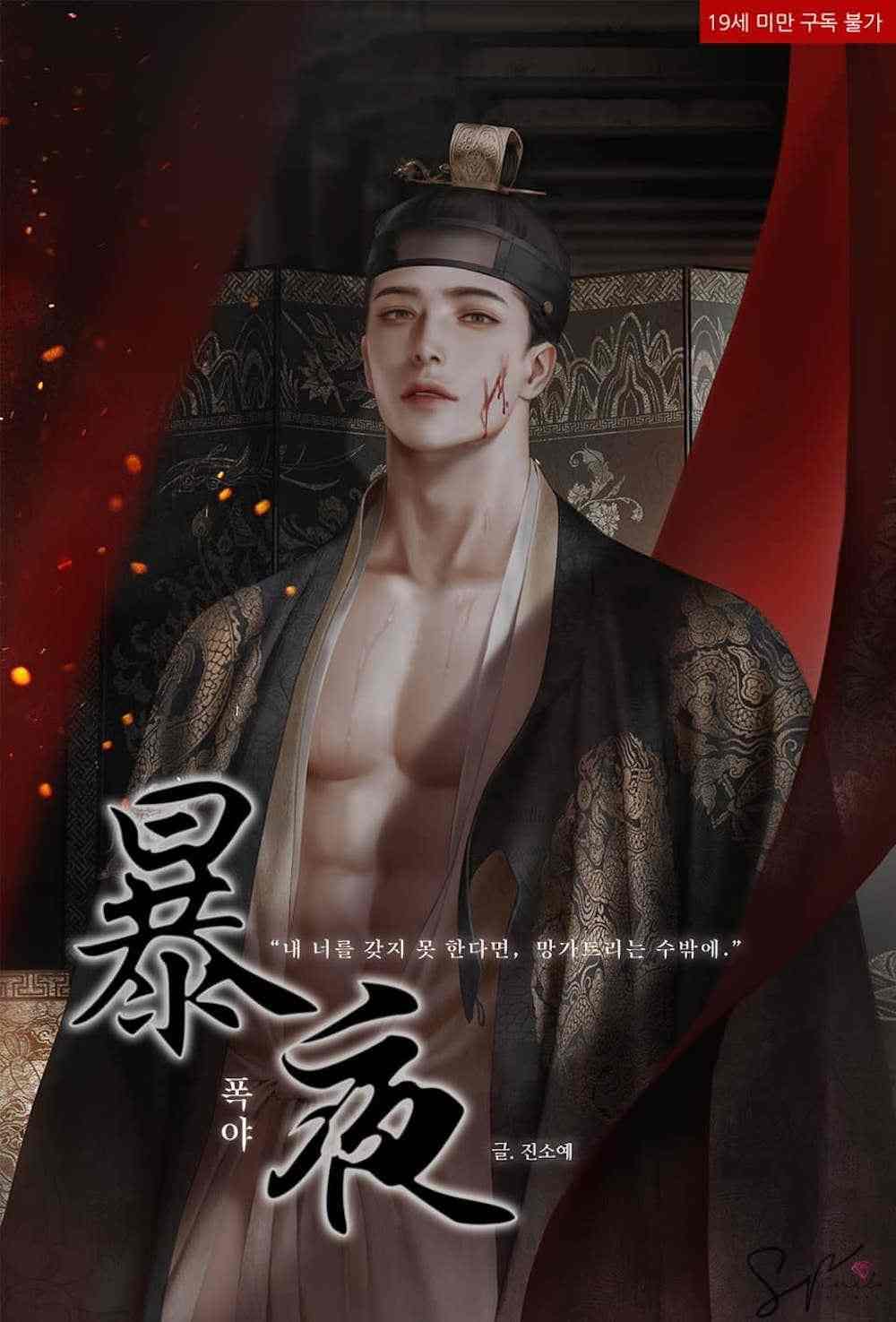
Hoeun Choi is the youngest son of a wealthy family in the capital city of Hanyang. Born frail and plagued by constant illness, he has spent his entire twenty years confined within his home's walls, rarely venturing out except for hospital visits. His body is too weak for combat, and he has long accepted his role as a quiet, overlooked family member while his three older brothers built reputations through military service, business, and social standing. The only bright spot in his existence is his pet dog Nureong, whom he envies for the freedom to roam outside.

The story begins when Hoeun experiences severe fever and awakening pain at the hospital. A doctor delivers unexpected news: Hoeun has awakened as a Guide, a person with the rare ability to stabilize and support Military Gods—supernatural warriors who fight monstrous creatures called Shikgoe that threaten humanity. While Military Gods possess incredible strength, speed, and durability, they eventually reach physical limits that cause their bodies to break down painfully. Guides serve as their essential partners, relieving suffering and allowing Military Gods to continue fighting.

Hoeun's father reacts with panic and opposition to this development. Remembering how their eldest brother—a powerful Military God without a suitable guide—died ten years ago in agony, bleeding from every opening, the father desperately tries to conceal Hoeun's awakening. He offers money to the doctor and attempts to declare that Hoeun merely suffered a fever. When Hoeun discovers his father's scheme, a heated confrontation erupts in their home. Hoeun accuses his father of abandoning duty to the nation and to those who have sacrificed everything to defend them.

The conflict escalates when Hoeun mentions his deceased eldest brother by name, triggering his father's rage. Deokwoo, the family's enormous servant, intervenes to protect Hoeun from his father's violence. The argument reveals deep family trauma around the eldest brother's death, which occurred because no guide could sufficiently sustain him. This history fuels Hoeun's determination not to repeat the same mistake by hiding away.

Despite his father's efforts, Hoeun attends the Fate-Matching Ceremony at the Imperial University, where guides and Military Gods seek their destined partners through physical contact. The ceremony reveals stark social divisions: all guides present appear to be commoners, while the Military Gods arriving are nobles and elite soldiers, many bearing visible injuries from battle. Among hundreds of handshakes, none produce the match sensation until Lee Taemuk, commander of the legendary Jeokudae unit known as the "Red Rain," approaches.

Taemuk is the empire's most famous Military God, a towering general with a fearsome reputation built from killing more monsters than any living soldier. Whispers suggest his hunting has evolved into something darker—that he may consume human flesh. When he touches Hoeun's hand, an intense, searing sensation confirms they are fated partners. However, Taemuk initially walks away, causing panic before returning to claim Hoeun forcefully.

The matching disrupts the ceremony when Taemuk grabs Deokwoo by the throat and throws him across the hall, fracturing the servant's ankle. After hospital treatment, a Jeokudae sergeant arrives to escort Hoeun immediately to the front lines. Before departing, Hoeun's father arranges provisions for the unit and gifts Hoeun a horse, symbolizing his reluctant acceptance of his son's path.

During a private conversation in a hotel corridor, Taemuk reveals his crude and threatening nature. He kisses Hoeun roughly, displaying dominance and impatience. When Hoeun asks for one night with his family, citing uncertainty about survival, Taemuk eventually relents but treats him with consistent contempt. The interaction establishes a relationship defined by power imbalance and mutual adjustment.

Hoeun departs with Jeokudae at dawn, riding through streets that feel foreign despite being within his home city. Soldiers carry enormous loads with casual ease, highlighting the physical disparity between ordinary guides and military veterans. The narrative ends as Hoeun leaves his former life behind, entering a world of warfare, monsters, and an uncertain bond with a man who views him as both essential possession and burden.

The central tension drives toward Hoeun's adaptation to military life and his evolving relationship with Taemuk. Will this pairing prevent the fate that destroyed their eldest brother? Can a frail guide survive on actual battlefields? The story explores themes of duty versus family, the cost of war, and whether fated bonds guarantee harmony or merely obligation.

Latest Release
DateGroupRelease
2026-10-03puffberry c255
2026-10-03puffberry c254
2026-10-03puffberry c253
2026-10-03puffberry c252
2026-10-03puffberry c251
2026-10-03puffberry c250
2026-10-03puffberry c249
2026-10-03puffberry c248
2026-10-03puffberry c247
2026-10-03puffberry c246
2026-10-03puffberry c245
2026-10-03puffberry c244

Community Reviews

Rating(0 / 5.0, 25votes)
5 stars
0(0%)
4 stars
0(0%)
3 stars
0(0%)
2 stars
0(0%)
1 stars
0(0%)

Popular reviews

... Read More
This scene is such a mood shift after the hospital. You have all these elite soldiers—people who hunt monsters for a living—packed into this high-end Korean restaurant in Jongno, eating boisterously, drinking, making crude jokes. One guy actually gets up shouting "first time since I sprouted hair on my balls!" and his friends are roasting him. And Taemuk? He just sits at the far end, back to the wall, watching everything like a king holding court. The contrast with Hoeun walking in—jade silk, pale, out of place—is so visual. You can feel the warmth of that room even though it's chaotic. And those soldiers throwing around insults at Hoeun but also genuinely thanking him? That's not hostility, that's rough affection. The worldbuilding here is doing so much work without any exposition.
... Read More
I need to talk about how the author controls the rhythm across these chapters because it is *deliberate* and I love it. Chapter 14 starts slow—domestic, quiet, almost intimate with Hoeun's family. Then Chapter 15 explodes into the ceremony with this wall of exposition about the rules and the stakes and the horror of what's expected. You absorb all of that along with Hoeun. It's overwhelming on purpose. Then Chapter 16 pulls back into this almost meditative repetition—hand after hand after hand—until your own patience thins alongside his. The author lets the ceremony drag just enough that you feel the exhaustion. "As he kneaded his tingling fingers and let his eyes droop—" That line. That is the calm before the storm. And then: "Squelch… thud. Squelch… thud." Two onomatopoeias and suddenly the pace shifts from tedious to menacing in three words. Footsteps that sound like they're dragging something heavy. And then Taemuk enters and the prose itself becomes faster, more urgent, more physical. The sentences get shorter. The actions get bigger. The chapter ends mid-dialogue because the tension can't sustain another complete thought. This is how you pace a meet-cute that feels like a collision.
... Read More
There is a dog. A yellow dog named Nureong. And this single detail broke me. After the entire explosive confrontation with his father—ripping the imperial plum blossom emblem off the car, getting told he's becoming a guide, nearly getting struck, bringing up the dead eldest brother, watching his father's hand tremble with rage and then Deokwoo throw himself in the way—Hoeun does something completely unexpected. He notices the dog. "Pat, pat, pat—small footsteps sounded from a corner of the yard. It was Nureong, the yellow dog they kept." And then later, sitting with his mother after the ointment scene, he says: "I only want to live a life better than Nureong's." Let me explain why this is so devastating. Nureong roams outside freely. Eats with gusto. Barks hard. Runs every day. And Hoeun—a twenty-year-old nobleman who has everything materially—envies a DOG. He says it to his own mother, calmly, and she's baffled because he's never lacked for anything. But he's never lacked for nothing that mattered. He's been confined to one room for twenty years. He dreams of dying in that room unseen. When he slides open the paper door that morning and the cold predawn air hits his neck and raises goosebumps—he doesn't go back inside. He sits on the veranda and puts on his shoes. Enduring pain because "if there's one thing he did well, it was enduring pain." The emotion here isn't in big declarations. It's in the space between what Hoeun says and what he means. "I'm afraid, Mother. Of my future—of wasting away in this room until I die unnoticed." That's not a teenager having a fit. That's a person who has been quietly terrified their entire life and finally found a way out. And his mother? She just listens. Cupping his ointment-slick hand, checking his forehead for fever, asking him to lie down—and then letting him go when he asks her to persuade his father. She doesn't break down again. She just... nods. "Yes, perhaps so." I swear the most powerful emotional moment in these chapters is two people who love each other desperately, trying not to show it, while their son prepares to walk toward whatever fate awaits him.
... Read More
"I've only ever been the one in pain. I've never seen you hurt..." I literally read this sentence twice and had to sit with it. This kid has spent his whole life being the patient, the fragile one, the one everyone fusses over—and now he's on the OTHER side of it. The text says his heart felt like it was being crumpled in a fist, and that image just stayed with me. What's crazy is how quickly he moves from tears to scolding Deokwoo about his ankle, to worrying he'll set off another fever. Classic Hoeun—panic, then practical care, then more panic. And then the nape thing! He keeps touching where Taemuk grabbed him, like his skin still burns. This isn't fear anymore, is it?
... Read More
Everything about hands in these chapters. It starts with the Fate-Matching Ceremony being reduced to literally just holding hands. "The method of finding a partner was quite primitive: holding hands." A ritual built on physical contact as the sole pathway to connection—your entire destiny determined by whether your skin recognizes another skin. That's either deeply romantic or deeply terrifying. Probably both. And then there's the class symbolism running underneath everything. Hoeun notices immediately that there are no nobles among the guides. Not one. "If there were no nobles among the guides, then among the Military Gods—who had to stake their lives and fight monsters directly—the proportion of nobles would be obvious without even seeing it." The law says everyone who awakens serves or dies, but the reality is staggeringly unequal. The poor go to the battlefield; the nobles stay behind. Taemuk's entrance disrupts this entire system visually—he's a general, the highest rank, walking among common guides, and he moves differently. "He walked past the outstretched hands, flicking each with the tip of an index finger—tap, tap—tap—like testing a line for slack." He doesn't even bother with the handshake. He treats the ceremony like a quality inspection. And yet, when he finally touches Hoeun properly, it's almost desperate. "It felt desperate. He wanted to find his partner, no matter what." Even the most powerful man in the empire is trapped by this system. The title of this story—"Bloodstained Waters"—and the imagery throughout: red rain, brown-drying blood, crimson clouds on black capes. Water and blood keep replacing each other as symbols of purification and violence. The nation demands service, but the cost is written in bodily harm. Every touch in the ceremony is both a search for salvation and a march toward death.
... Read More
Let me break down something I think the author is doing with the plot that's really clever here. This entire exchange between Taemuk and Hoeun isn't actually about sex—it's about power dynamics and what both of them are willing to surrender. Taemuk demands Hoeun 'take him with his ass,' and Hoeun's immediate reaction isn't disgust or anger—it's confusion. He genuinely doesn't know if this is what guides and Military Gods do. He's never thought about it. This tells you everything about Hoeun's isolation: he hasn't just been sheltered from intimacy, he's been sheltered from knowledge about it too. Meanwhile Taemuk is operating on pure impulse and frustration, but the moment Hoeun offers to 'practice sucking cock' as a compromise, something shifts in Taemuk. He doesn't accept it immediately. He makes Hoeun repeat the phrase ten times. TEN TIMES. Why? Because he needs to hear it. He needs to hear Hoeun say it willingly, even if it's a bargaining chip. And then he gives him what he actually wanted all along—a kiss that borders on violence but ends up being something far more complex. The plot thread here is the unspoken contract between them: Hoeun will endure whatever Taemuk demands, and Taemuk will... what? Not stop? Push further? The story hasn't decided yet, and that tension is exactly what keeps you turning pages.
See all reviews

Custom lists

See all custom Lists