Blind Marriage: The Disabled Officer's Addictive Love - Reviews

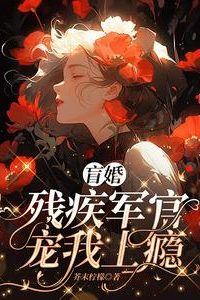
Blind Marriage: The Disabled Officer's Addictive Love
+Add to Custom List
Sort
Add review
... Read More
I need to talk about this dog. Lei Ting is not just a pet - he's a full character with a voice, and honestly? He might be the funniest thing in this novel. "Sister Huan, I feel that woman has bad intentions and she wants to kidnap me." - said a dog. To his owner. While she's literally feeding him. And then when she says it's a small situation, his internal response is just... "Thunder:........" The silence speaks volumes. He's processing whether he's going to get stewed one day and his response is just dots. The dog is traumatized and he's just sitting there accepting his fate. Later: "Sister Huan, do you think I should do something too?" After watching all these humans plot and scheme around him. And she replies: "Aren't you already doing it? You work with me every day, and you chat with me when you have nothing to do. Aren't you happy?" And his response is the most devastating line: "What's the difference between a dog without ideals and a salted fish?" I'm not crying, you're crying. This dog has more existential dread than most protagonists in literature. And the way the dialogue flows between characters - Ye Yunzhou being all smooth and confident, Zhou Jian being loud and obnoxious, Qiao Huan being cold and direct - everyone has such a distinct voice. The author really knows how to let characters sound like themselves.
... Read More
Okay so let me just say this - the Yan Yue and Lin Yiyan subplot is SO good. These two from the National Security Bureau showing up and immediately being suspicious of Qiao Huan? Chef's kiss. The author dropped this line: "Originally, such a small character was not worthy of attention, but the situation has been tense recently, and some people have set their sights on the Qiao family." And suddenly the whole story feels bigger, you know? Like there's this whole political undercurrent happening beneath the surface. And then Lu Shijing just casually reveals that Qiao Huan is targeting Ye Yunzhou for marriage?! I literally gasped. The way he explains it - checking her background, finding out about Ye Yunzhou being the deputy commander, concluding she married into a military family "willingly" - it's so smooth. But here's what gets me: are they wrong? Or is Qiao Huan actually playing a deeper game? The plot is building this tension where we don't know who to trust. The NSA agents think she's suspicious, Zhou Jian is sneaking around with his own agenda, and Ye Yunzhou's family is completely in the dark. Meanwhile Qiao Huan is just living her life, treating patients, training her dog, completely unaware that everyone around her is running calculations about her. That dramatic irony is killing me.
... Read More
I need to talk about Jian Ying because my heart is actually hurting for this girl and also warming at the same time. She's this poor kid who can barely afford scraps of cloth for her grandma, and she's so careful with money—stuffing her three dollars into her belly button pocket like it's the most precious thing in the world. And Qiao Huan notices ALL of it. The restaurant scene destroyed me. Jian Ying brings out three cucumbers she saved from home, tries to split the scrambled eggs evenly, offers to share her buns. And Qiao Huan just— takes the plate and says "Half each." No big speech, no dramatic moment, just this quiet act of care that says everything. "Lei Ting won't have any complaints" is the most Qiao Huan thing to say and also the most loving. Then Jian Ying calculates that after buying rags and buns she'll have one dollar and fifty cents left for her grandma's winter cotton. One dollar and fifty cents. She's doing math in her head like this while an adult is buying her food and treating her to a meal. The fact that Qiao Huan sees all this and doesn't pity her but instead gives her real responsibility—teaching her to make money, calling her an apprentice—this is the kind of found family I live for. And Jian Ying's little internal monologue about Lei Ting: "This female educated youth is so annoying!" — she's already defending her sister. That's bond.
... Read More
So the pacing in these chapters is actually really smart and I want to break down why. It starts with the village aunts coming to interrogate Qiao Huan about her relationship with Yunzhou — that's a quick, almost comedic scene that establishes the social pressure and then moves on. Then we cut to the tender moment between Qiao Huan and Yunzhou where she says goodbye and he watches her leave. That's the emotional beat. Then dinner with the mom, the pig intestine scene, the whole family dynamics. Then we shift to Qiao Huan's home where she's cooking and training Jian Ying — this is the growth and preparation section. Then the next morning, the mountain, the exams, passing scores. Then the Public Security Bureau, the forensic lecture. Each section serves a purpose and none of them drag. The author knows when to speed up (the exam scenes are quick and efficient) and when to linger (the family dinner, the cooking process). One thing I noticed is that the chapter breaks are well-placed too. The transition from the Ye family home back to Qiao Huan's place feels natural, like we're following the food from preparation to delivery. And the ending with Yan Yue offering Lei Ting a bone and Qiao Huan's sharp 'my dog won't eat from strangers' — that's a perfect little hook. It's subtle but it creates this tension. Who is Yan Yue really? What's her agenda? I immediately wanted to keep reading. The author doesn't overstay any scene but also doesn't rush through the important emotional moments. It's a good balance.
... Read More
Let's be real—Qiao Huan's dialogue is the reason I keep coming back to this book. The woman does NOT suffer fools. When Tang Yue tries to confront her at the market, Qiao Huan's response is absolutely legendary: "Learn how to behave before you start yelling, or else you'll end up in a mental hospital." I literally laughed out loud. That's not just a comeback, that's a full character statement in one sentence. And the humor! The dog's internal voice is consistently funny without ever feeling forced. "Sister Huan, the wind-related ability is also very good. At least it can help you escape and create a tornado when the enemy comes." This dog is out here giving unsolicited advice like a tiny life coach. Then later: "Can't you rest for a while?" after being kicked gently. The dog has boundaries and I respect it. But what really stands out is how natural the everyday dialogue feels. The exchange with the butcher about buying so much meat on a hot day, the negotiation with Zhou Zhiqing about the tractor fare, the casual way Qiao Huan tells Jian Ying to call the pharmacy boss "Uncle Chen." Nobody's monologuing. Nobody's delivering speeches. People are just talking, and the voices are distinct—Qiao Huan's dry and direct, Jian Ying's earnest and careful, the matchmakers' busybody energy all comes through in their words alone. The author clearly understands that dialogue isn't just about what characters say, it's about who they are.
... Read More
Let me just lay out the stakes because WOW. Qiao Huan: She's a forensic pathologist in a time when that's unheard of. Her parents are sent to the hardest farm in Northwest China. She's trying to survive, build a life, and apparently marry into a military family for protection. But she's also being watched by the National Security Bureau. If they find out anything - anything at all - her whole life is over. Ye Yunzhou: He's injured, recuperating, and about to marry a woman with a mysterious past and foreign connections. His father is proud as hell about Doctor Qiao, completely unaware that his son's future wife might be a spy. The stakes here are personal AND political. Zhou Jian: This old man sneaked out to find Ye Yunzhou. He has his own agenda, wants to recruit Qiao Huan, and is clearly hiding something about his identity and purpose. When he says "I was saved once by both of you. It must be a great fate" - what does that even mean? And the NSA agents? They're under pressure to find something wrong with the Qiao family. If they can't find anything, they look incompetent. If they find something real, they might start a political incident. Every character is walking a tightrope. The tension is incredible because everyone has everything to lose.
... Read More
This story is about so much more than a murder mystery, and I think the author knows it. The central image of the book is burial—literal burial. The victim was buried in a shallow pit, then dragged to a cliff and thrown into the river. But the story is full of other kinds of burial too. The educated youth are buried under expectations and prejudice. Qiao Huan's past life—the apocalypse—is buried but never forgotten. Captain Lu's son is physically buried under the weight of his disabilities, carrying invisible wounds. And the village itself is a place where truths are buried under gossip, silence, and the social contract of "what happens in this family stays in this family." The river is a powerful symbol here. It's both a source of life—villagers draw water from it—and a conveyor of death, carrying the dead body downstream. Water in this story is ambiguous: it sustains and it conceals. The cliff edge is another potent symbol. It's the boundary between the known world and the unknown, between life and death, between truth and cover-up. When the body is thrown off the cliff, it's not just disposal—it's an attempt to erase, to let the water take the evidence away. But Qiao Huan, with her forensic training and her apocalypse-hardened perspective, sees what others miss. She reads the soil, the dragging marks, the willow leaves. The story seems to be asking: what happens when someone who has seen the absolute worst of humanity returns to a world that still believes in order and justice? Qiao Huan is that question made flesh.
... Read More
I need to talk about Ye Yunzhou and Qiao Huan because honestly the slow burn is killing me in the best way possible. So these two are basically already acting like a married couple but neither has said it out loud yet, and the author just keeps dropping these tiny intimate moments that hit different. Like, remember when Qiao Huan comes back from the scene all sweaty and disheveled and Ye Yunzhou immediately stands up with his cane to gently remove a branch from her head? That is such a domestic, effortless gesture. He doesn't make a big deal out of it, he just does it. And then she's like "I'm gonna go shower first, then we'll have dinner" and invites his comrade along like it's totally normal. They're planning their entire wedding in the same conversation—certificate, no banquet, just candy and a family meal—and it's so matter-of-fact that it actually made my heart swell. The fact that she already has her "three turns and a ring" and just casually mentions it? She's not waiting for him to provide everything, she's already prepared. And Ye Yunzhou's reaction isn't to be threatened by her independence, it's just "then I'll do as you say." He respects her. He listens. That's the dream right there. The only thing I'm slightly worried about is Zhou Fang showing up with that marriage application and the whole arranged marriage setup—will it create drama or is the author just using it as a comedic device? Because from what I've seen, Ye Yunzhou is already fully committed and Qiao Huan has clearly made up her mind. The real tension isn't whether they'll end up together, it's how they navigate the social expectations around them. And honestly, I'm here for it. The fact that Lei Ting the dog is basically their wingman—following them around, observing their expressions, wagging its tail—adds this whole extra layer of warmth. Even the dog knows these two are meant to be. I just need more scenes of them together, please and thank you.
... Read More
This chapter doesn't have a villain. There's no murder mystery, no life-threatening danger, no dramatic confrontation. And yet I was genuinely invested in every scene. Here's why: the stakes are personal, not plot-driven. The central tension is Jian Ying's integration into this household. Will she trust Qiao Huan? Can she handle the work? The scene where she's plucking chicken feathers while Qiao Huan bakes pancakes—there's a quiet anxiety underneath it. Jian Ying is an orphan who has probably spent her whole life being a burden. Every task she completes, every chicken leg she earns, is a small victory against that fear. Then there's the Lu Shijing conflict, which is internal rather than external. He likes her. She's marrying someone else. The tension isn't in what happens—it's in what doesn't happen. The unsaid things, the paused moments, the way his eyes widen when he hears "get married." The author understands that the most painful conflicts are the ones where everyone is being decent and nothing can be done about it. Even the minor conflicts work. Lei Ting's fertilizer disaster isn't just comedy—it's a moment where his good intentions lead to failure, and he has to clean it up himself. The broken egg. The children wanting to learn medicine when Qiao Huan has already chosen her student. Each small friction point reveals character and deepens the emotional landscape. What's remarkable is that the author never lets the stakes drop to zero. Even in the most peaceful scenes—the herb gathering, the morning run—there's an undercurrent of something at risk. Jian Ying's future. Qiao Huan's departure. The fragility of a family built from scratch. The tension doesn't come from explosions. It comes from caring about people who have so little to hold onto.
... Read More
"Doctor Xiao Qiao, please take me with you." — I literally laughed out loud at this opening line. Old Man Zhou just appears behind someone with his hands behind his back and a smile on his face, and this is his grand entrance. The man has zero filter and it is glorious. His dialogue throughout these chapters is consistently the highlight. When he tells Ye Yunzhou "I've got a crush on your future wife's dog" and then has to clarify it's a male dog—Ye Yunzhou's reaction of spitting out water is comedy gold. And then Zhou Jian completely misses the implication and keeps talking about breeding Lei Ting for the military dog base like this is a totally normal conversation. The author's voice in the narrative is also doing a lot of funny work, especially with Lei Ting's internal monologue. "Sister Huan, this old man has no morals" and "We'll talk about it later"—the dog has more personality than half the characters in these novels. The grandfather-grandson dynamic between Zhou Jian and Zhou Fang is also brilliantly written. Their conversations bounce between genuine concern and ridiculous teasing in a way that feels completely natural. Zhou Jian going from "I'm going to have a wife soon, so what's wrong with being a little spoiled?" to aggressively pushing his grandson to get married is such a specific, authentic energy. And then the whole scar removal tangent where Zhou Jian admits he was going to give his chubby daughter to Zhou Fang but changed his mind because of the scar—this is peak comedic dialogue. The way he just blurts it out to the grandson's face while the grandson is plucking chicken feathers? "You little bastard, why are you throwing chicken feathers at me? I'm doing this for your own good." The generational humor, the casual cruelty, the love underneath it all—it's perfectly calibrated. Qiao Huan's dialogue is more restrained, which works because her voice is different. She's practical, dry, occasionally sarcastic. "If you can't keep up, then forget it" when Zhou Jian asks to follow her into the mountains—that's a whole personality in one sentence.
... Read More
Okay I need to talk about Lin Meijuan because this woman is absolutely my favorite character now and I am not even slightly sorry about it. So Qiao Huan cooks these pig intestines for Yunzhou and the mom gets mad at him for making her work so hard, right? And then she's like 'once you're confirmed as my wife you should hand over your wife certificate ASAP.' Wait. She's already planning the wedding and defending her daughter-in-law before they're even married. That is WILD. I literally squealed when I read that. Most moms in these novels are either scheming or cold, but this one is out here making sure her son doesn't take Qiao Huan for granted. And the line about 'bamboo shoots fried with meat' had me wheezing. That's a threat wrapped in a cooking recipe. Also the moment where Yunzhou can finally see a little bit and his mom breaks down crying — that hit different. She was so worried about her son being blind and now she's just relieved and immediately pivoting to making sure he treats Qiao Huan right. The emotional whiplash was real. And Yunzhou's internal reaction of just being speechless at his own mom? Relatable. This family dynamic is so warm and chaotic in the best way. The romance between Qiao Huan and Yunzhou is also just so quietly sweet. He touches her hand, she grins at him, they have this whole thing where Lei Ting delivers food and he can't stop watching her leave. No grand confessions needed. It's built on care and respect and honestly that's way more romantic to me than any dramatic love declaration.
... Read More
I need to be honest with you — the surgery scene is where this book went from 'fun romance' to 'I'm emotionally compromised.' Let me set the scene: Qiao Huan puts Ye Yunzhou under with acupuncture, they enter her space, and she performs surgery on him. Three hours pass. She checks his vitals, does a full body exam, gives him strengthening medicine. All while he's completely unconscious and vulnerable. There's something deeply intimate about that — she's touching him, caring for him, keeping him alive, and he has zero awareness of it. And then she wakes him up and they're both acting completely normal about it, except she's the one who's flustered. She initiates the hand-holding. She asks if they're 'objects' (I'm assuming this means dating/official). She kisses him on the cheek and then acts like nothing happened when she walks out. The emotional beat that got me was when he woke up and asked 'Is the operation over?' and she was just sitting there disinfecting needles like nothing happened. But then she asked about the chicken he ate the night before — that casual switch from life-saving surgeon to girl who wants to make sure her love interest is eating properly. It's so domestic and so tender. And Ye Yunzhou's reaction to the kiss — 'the man's reaction after being kissed was really cute' — the narrator herself acknowledges how adorable he is. I couldn't handle it. This is the kind of slow-burn romance where every tiny gesture carries weight because the world around them is falling apart.

Leave a comment

You must be logged in to leave comments. or
