Before You, I Will Cry Again
+Add to Custom List
Novel Info
  • Author:
  • Status:Ongoing

Summary

... Read More

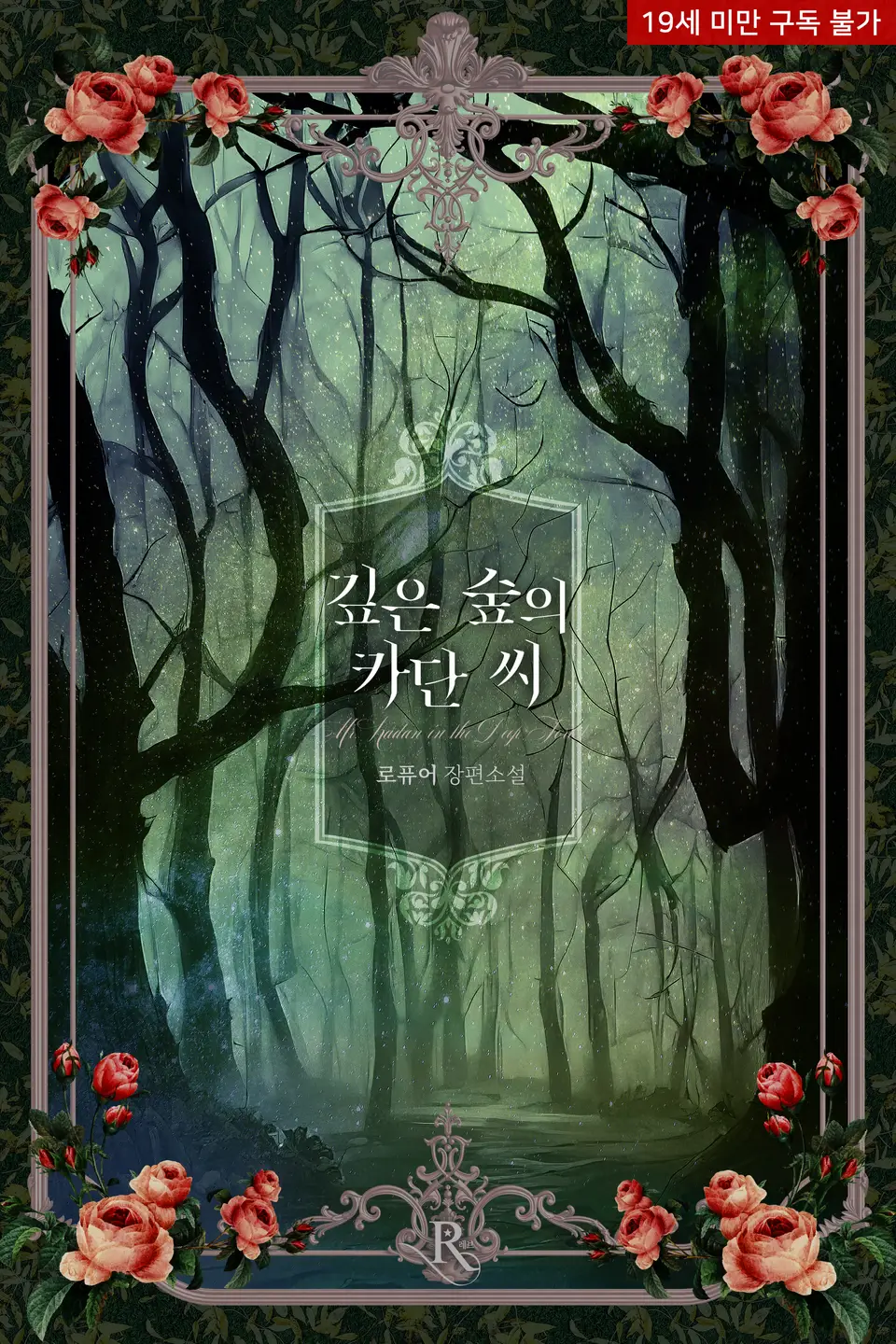
Jung Hee-won is a twenty-eight-year-old pharmacy student living in the staff quarters of Ryu Gil-jae, the sprawling estate of the Wigang conglomerate. Her life is defined by a crushing debt left by her deceased father to illegal loan sharks. To survive, she works part-time tutoring while her mother, a housekeeper for Wigang, pays the monthly interest. The family’s only respite is their housing and meals at the estate. Hee-won harbors a secret, unrequited love for Ryu-il, the thirty-two-year-old Senior Executive Director of Wigang Construction and heir to the company. They shared a brief childhood friendship before social hierarchy drove them apart, but she has quietly cherished him from afar ever since.

The fragile peace of Hee-won’s life is shattered when two men re-enter her world. First, her half-brother Kyung-won, a scarred and criminal figure who owes his freedom to the same loan shark organization, appears. He reveals he has found a way to wipe out their entire debt, but the condition is brutal: Hee-won must sleep with Ryu-il repeatedly. Simultaneously, Ryu-il himself arrives at a remote countryside pharmacy where Hee-won works a part-time job, creating an unnerving physical proximity that forces her to confront the reality of her feelings and her powerlessness.

The conflict escalates when Hee-won is sent on an errand to deliver snacks to Ryu-il’s room. There, she discovers a small window overlooking the rear garden where she spent her lonely childhood. Ryu-il catches her窥视ing and confronts her. During their tense conversation, she observes photos on his desk revealing that his arranged fiancée, Lee Min-hee, is unfaithful. When Ryu-il asks her perspective on such affairs, Hee-won describes them as acts of impulse and desire. This bold answer provokes Ryu-il, who kisses her passionately, breaking years of restraint.

Ryu-il’s perspective reveals he has watched Hee-won grow up through the garden window, intrigued by her from afar. After the kiss is interrupted by his secretary, he orders an investigation into Hee-won, specifically looking for recent contact with his aunt, President Ryu Ga-yeon, who opposes his rise. Meanwhile, Hee-won returns home to discover her mother is pregnant and plans to marry the estate’s driver. The mother reveals she met with Kyung-won, who claims he can secure the money to pay off the debt, pulling Hee-won deeper into a web of familial obligation, corporate intrigue, and her impossible desire for a man who belongs to a different world entirely.

Latest Release
DateGroupRelease
2026-10-03dusk blossoms c9
2026-10-03dusk blossoms c8
2026-10-03dusk blossoms c7
2026-10-03dusk blossoms c6
2026-10-03dusk blossoms c5
2026-10-03dusk blossoms c4
2026-10-03dusk blossoms c3
2026-10-03dusk blossoms c2
2026-10-03dusk blossoms c1

Community Reviews

Rating(0 / 5.0, 39votes)
5 stars
0(0%)
4 stars
0(0%)
3 stars
0(0%)
2 stars
0(0%)
1 stars
0(0%)

Popular reviews

... Read More
"Honestly, if you stay like this, that's the only path left for you." That line from Kyung-won hit me like a freight train. It's the fulcrum upon which the entire plot pivots. Up until this point, Hee-won's life had this terrible, suffocating equilibrium—she's drowning in her mother's debt, stuck in a tiny room with her mom, working errands at the mansion where Ryu-il lives, and maintaining this quiet, eight-year crush that gives her life some color. But then Kyung-won offers the "solution": sleep with Ryu-il and erase everything. The plot doesn't just twist here—it detonates. What makes this so brilliantly constructed is that every single plot thread converges in these chapters. The debt subplot, the unrequited love storyline, the class divide between them, her mother's secretive behavior—all of it crashes together when Hee-won gets sent to deliver tea and snacks to Ryu-il's room. The author sets this up so perfectly: you have the mother avoiding eye contact, looking up real estate, lying about where she was. Then there's the encounter itself—Hee-won stumbling upon that window overlooking the rear garden, and Ryu-il appearing behind her like a ghost. The scene where he catches her looking at the garden she's spent her whole life in? That's not just a romantic meet-cute. That's the plot saying: everything changes now. I'm also fascinated by the structural choice of having Hee-won already imagining a "strange compromise" before Ryu-il even appears. The author gives us her internal negotiation first, so when the physical encounter happens, we're not just watching a romantic moment—we're watching a girl who's already mentally preparing to sell herself for her family. That's devastating plotting. And the cliffhanger? Ryu-il telling her to lift her head, his quiet intense eyes meeting hers after she's breaking down in tears? Absolute perfection. The plot doesn't resolve anything here—it opens the door wider.
... Read More
I need to talk about Ryu-il and Kyung-won for a second because the dynamics here are chilling. Let's start with him. On paper, he's the arrogant male lead trope—tall, imposing, 'languid yet dangerous aura.' But the text gives us these terrifyingly specific details that make him feel real and horrifying. Remember when he grabbed her wrist? 'Even that light touch burned like fire.' That's not romance; that's trauma response. And the flashback! It's brutal. 'You were the one who came to me first.' He frames their entire history as her begging, her clinging, reducing a complex, painful bond to a simple power move. Yet, he also wipes her tears. He holds her. It's so manipulative it makes my teeth ache. He's caught her in this impossible loop: she hates what he does to her, but she also misses the only comfort he occasionally offers. That line 'I'll probably get scolded' when she talks about the stock? She's so conditioned to worrying about rules and being good, even when he's right there violating her space. Then there's Kyung-won. Her half-brother. We barely got five pages with him, but the author did a masterclass in showing decay. 'Eyes had grown dull.' 'Long tattoos running down his arm.' He's not just changed; he's been broken by something else. And he's trying to pull her into his orbit again. The relationship between these three—her, Ryu-il, Kyung-won—feels like a triangle where every side is barbed wire. She's the center, stuck between a past that abuses her emotionally and a family that seems to be falling apart. It's tragic because we know she's trying so hard to be strong for these grandmas, for her job, but she's completely hollowed out inside.
... Read More
Let me just lay out what happens here because this is some masterclass in how a single scene can reorganize an entire story. Chapter 40-47 basically does three things: it executes the long-awaited intimate scene, shows the brutal aftermath, and then sets up a new pattern that traps both characters. The first sex scene is obviously the payoff — every chapter leading to Hee-won finally surrendering her body to the person she's loved since childhood. But here's what's genius: the author doesn't let us enjoy the payoff. Within minutes of the scene ending, everything flips. She's crying. He's cold. She flees into the night. Then comes the false escalation — her bringing honey water, pretending she enjoyed it, begging for more. This isn't plot progression; it's the trap closing. She's now committed to a cycle she can't escape from without jeopardizing her mother's livelihood. The stakes just went from emotional to survival. The second sex scene is structured as the dark mirror of the first. Last time: slow, painful, overwhelming, her first time, tears of confusion. This time: fast, intense, him demanding she stroke him, her performance, his quick climax followed by his turn to please her. He's learned her body; she's learned to perform. The novelty has curdled into routine for both of them in different ways. The ending — her trying to dress and leave, unable to move — is the perfect cliffhanger. She's physically trapped in his bed and metaphorically trapped in this arrangement. The plot has shifted from will-they-won't-they to now-she-can't-leave. And that's somehow even more agonizing.
... Read More
Okay, so I just finished these first chapters and my brain is still spinning. The plot here is deceptively quiet on the surface—sounds like a slice-of-life about a pharmacist in the countryside, right? But then *he* walks in. Ryu-il. Just the name itself seems to crack the whole fragile atmosphere wide open. What struck me immediately is how the author uses a mundane object to carry a massive narrative weight: the business card tucked inside the 50,000 won bill. It's not just contact info; it's a landmine. And the way the protagonist's internal monologue fragments when she reads it—it's not a calm realization, it's a panic attack in text form. The plot isn't moving through grand events; it's moving through these violent, quiet intrusions of the past into a meticulously constructed present. She built this quiet life. She's feeding the grandmas, she's tolerating the construction noise, she's even trying to be kind. And then one man shows up, buys an energy drink, and rewrites her entire history in a single glance. The subplot with the half-brother feels like the next fault line opening up. Five years of no contact, and he shows up with scars and tattoos, pulling her away from the pharmacy bench. It's classic, but it's executed with such precise tension. You don't get a dramatic confrontation; you get a cigarette haze and a cold scan from head to toe. The main storyline seems to be about a woman trying to outrun a specific kind of pain, only to find that pain has a name, a title, and a construction company behind it. How long can this 'quiet' last before the resort—the very thing representing her escape—completely swallows her?
... Read More
The setting in these chapters is absolutely breathing. I love how the author establishes this world not through exposition, but through sensory overload of the mundane. Let's talk about that pharmacy. It's not just a location; it's a character. 'Worn-out chairs,' 'faded, old-fashioned floral pattern,' 'lint stuck to the chair.' It's cozy, yes, but there's a poverty to it that contrasts sharply with the 'languid yet dangerous' entrance of Ryu-il. The world feels incredibly tactile. You can smell the old coffee stains, hear the 'ding' of the doorbell, feel the 'crisp bedding' and 'pink floral blanket' she sleeps in. This is her sanctuary. Director Kim leaving it to her rent-free, the kimchi jar, the rice full in the kitchen—it's all these tiny details that show she's been given a haven. But then, the world outside starts intruding. The 'construction noise.' The 'golf course.' The 'hot spring water.' The author is using the environment to mirror her internal state perfectly. The countryside was supposed to be quiet, but now it's vibrating with the machinery of Wigang Construction—the very company her ex-lover runs. There's this one gorgeous, haunting line: 'The sound of birds crying could be heard in the distance.' It's so peaceful, so idyllic, and yet, right after it, the bell rings and Ryu-il enters. The contrast is violent. Later, when she's lying awake at night, the hallucinated construction sounds mix with the 'secret, wet sounds' of their past. The world-building isn't just backdrop; it's actively working against her. The physical space is shrinking. The resort is coming, and with it, he is coming. I felt so claustrophobic reading this, despite it being set in an open countryside. The atmosphere is thick with dread masked by warm, trivial gossip.
... Read More
The pacing here is a masterclass in controlled unraveling. It doesn't rush. It lingers. Look at the first scene—the grandmas chatting about pain relief patches, Bacchus drinks, the boring beauty of a lazy afternoon. It's slow, almost hypnotic. We're lulled into thinking this is a low-stakes story. And then, 'Ding.' The bell rings. The pace instantly snaps from languid to sharp. The transition from the grandmas' chatter to Ryu-il's entrance is handled with this brutal efficiency. One moment they're laughing about Soonbok's grandson, the next, 'He was a tall young man... radiating a languid yet dangerous aura.' The author doesn't waste a word. The silence that follows is deafening. 'A moment of silence filled the pharmacy.' I love how the pacing mimics her heartbeat. When he grabs her wrist, the sentences get tighter, more urgent. When he leaves, there's this lingering, agonizing wait before she discovers the business card. That's where the pacing really shines—it denies us the catharsis of immediate reaction. We have to sit in that silence with her, just like she sits alone in the pharmacy. Then, Chapter 1 hits us with a jarring time jump and a new character. 'One day, Kyung-won contacted her.' The fragile peace is 'finally breaking.' It's a structural punch. And then the chapter just... stops. Mid-sentence. 'She tried to sound as c...' It's a cliffhanger that feels earned because the tension has been building like a pressure cooker since page one. The alternating structure between the slow, atmospheric prologue and the sudden, sharp intrusions of the past and the brother creates a rhythm that feels like anxiety itself. You never know when the next 'Ding' is going to shatter the moment.
See all reviews

Custom lists

See all custom Lists