Summary

... Read More

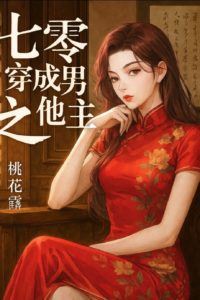
Lin Wan, a modern woman suffering from a terminal illness, dies after being struck by a falling chandelier at an art exhibition. She transmigrates into the body of a young woman with the same name, who is in the midst of a wedding disaster. The original owner, Lin Wan, was to marry Lu Zhengqi, a cultured and handsome man she had loved since childhood. However, on their wedding day, Lu Zhengqi elopes with another woman, leaving the bride humiliated and abandoned. In the ensuing chaos, the original Lin Wan strikes her head against a wall and dies. Upon waking, the modern Lin Wan learns she has entered a historical romance novel where the original owner’s tragic fate involves marrying the male lead’s disabled third brother, Lu Zhengting, out of spite. Determined to avoid the original plot’s misery, she decides to stay in the Lu family and rebuild her life.

The Lin and Lu families are embroiled in a heated dispute over the broken engagement with Lu Zhengqi. The Lin family, weak and impoverished, cannot support their daughter, whose father is ill and brothers are disabled. To save face and secure her future, the modern Lin Wan proposes that she marry Lu Zhengting, the deaf and crippled third brother, instead. The Lu family, eager to resolve the scandal and secure a wife for their disabled son, agrees. Lin Wan negotiates a fifty-yuan compensation from the Lu family, a significant sum that she manages to keep private despite the matriarch’s greed. She enters the Lu household with a clear plan: survive, gain independence, and use her medical system to improve her circumstances.

Lu Zhengting is a former military prodigy who lost his hearing and leg function due to injury. Though physically disabled, he is intelligent, handsome, and possesses a sharp, cold demeanor. Initially, he views Lin Wan’s marriage as a act of spite against his brother. However, he quickly notices her transformation; she is confident, resilient, and unafraid to challenge the oppressive family hierarchy. Lin Wan, in turn, recognizes Lu Zhengting’s worth and sees him as a potential ally. Their relationship begins to shift from one of mutual suspicion to tentative cooperation. Lu Zhengting, who has long been neglected and mistreated by his family, finds himself drawn to Lin Wan’s genuine care and respect.

Conflict arises immediately with Old Madam Lu, the ruthless matriarch who controls the family’s finances and abuses her grandchildren. Lin Wan refuses to submit to the old woman’s tyranny, openly defying her demands for money and labor. She stands up for the abused children, sharing food with them and protecting them from Old Madam Lu’s violence. This earns her the enmity of the matriarch but the loyalty of the younger generation. Lu Zhengting, though initially distant, begins to support Lin Wan, even speaking publicly for the first time in years to advocate for her appointment as a barefoot doctor.

Lin Wan demonstrates her medical knowledge by passing a literacy and medical test, outshining the nephew of a local cadre who opposes her. She is appointed as the apprentice barefoot doctor for the Wiliu Brigade, a position that gives her social standing and a source of income. With the help of her system, she begins studying traditional medicine and gathering herbs to repair her system’s capabilities. As she grows more confident and skilled, she and Lu Zhengting’s bond deepens. He provides her with resources and protection, while she offers him emotional support and a partner who sees him as an equal. The story follows Lin Wan’s journey to establish herself in this new life, navigating family politics, rural hardships, and her growing relationship with Lu Zhengting, all while avoiding the tragic fate prescribed by the original novel.

Novel Items

More
Arcane Treasures
An omnipotent medical system that offered to bind with Lin Wan, transport her through time and space, and grant her a new life. It activated after she was struck by a falling chandelier at an art exhibition. With this system, Lin Wan believes she can live a good life, compensate Lu Zhengting for the original owner's wrongs, and strive to cure his disability.
Document
The official certificate obtained by Xi Xingye and Shen Qinci at the Civil Affairs Bureau. Shen Qinci later tosses it into a toolbox beside her motorcycle, showing her disregard for it.
Money
Jiang Ze gave Song Wanyue fifty yuan along with coupons, telling her to spend it on food. He said he is about to be her man and spending money on her is the way it should be.
Item
Gifts exchanged for the engagement between Su Xiaoyin and Lin Tianyang. Mother Lin mentioned they had already been returned to Yuan Songzhi.
Chest
Lin Wan's dowry chest which Old Madam Lu demanded the key to. Lin Wan claimed it was unlocked and contained only old clothes, and offered the clothes in exchange for new fabric.
Household Items
One teapot and two teacups that Lin Wan pretended to accidentally break after stumbling. This was a tactic to avoid doing chores and to make Old Madam Lu let her rest.
Latest Release
DateGroupRelease
2026-08-11shanghai fantasy c108
2026-08-11shanghai fantasy c107
2026-08-11shanghai fantasy c106
2026-08-11shanghai fantasy c105
2026-08-11shanghai fantasy c104
2026-08-11shanghai fantasy c103
2026-08-11shanghai fantasy c102
2026-08-11shanghai fantasy c101
2026-08-11shanghai fantasy c100
2026-08-11shanghai fantasy c99
2026-08-11shanghai fantasy c98
2026-08-11shanghai fantasy c97

Community Reviews

Rating(3.8 / 5.0, 36votes)
5 stars
9(25%)
4 stars
11(31%)
3 stars
16(44%)
2 stars
0(0%)
1 stars
0(0%)

Popular reviews

... Read More
Okay so let me just say—this opening is a masterclass in subverting expectations. The original plot had Lin Wan becoming this bitter, destructive force who drags everyone down with her, right? Marries the disabled brother out of spite, ruins his life too, tragic ending for everybody. But our girl? She wakes up, takes in the situation, and immediately goes: nope. Instead of letting grief and rage consume her, she calculates. She looks at the Lu family scheming behind her back, looks at her own family being powerless, and she makes a play that completely changes the board. The moment she says "have Lu Zhengting take his place as the groom"—I literally gasped. That is not what the original owner would have done. The original Lin Wan was described as stubborn, infatuated, unable to think straight when it came to Lu Zhengqi. But this transmigrated Lin Wan? Cold, strategic, reading the room like a chess player. She sees that if she goes home, her reputation is ruined, her uncle will pawn her off to some old bachelor, her father will die within two years anyway and she'll just be a burden. So she stays. She turns a disaster into a negotiation. And the compensation demand? Two hundred yuan first, then holding firm at fifty? That's not desperation—that's someone who understands leverage. The Lu family wanted her gone, wanted the betrothal gifts kept, wanted no trouble. She gave them exactly what they feared most: a woman who would fight. The plot twist here isn't just that she transmigrated. It's that she transmigrated into a character who was written to be tragic, and she refuses to play her role. That's the kind of agency that makes you want to keep reading. What happens when the original plot tries to pull her back? How does Lu Zhengting react to being chosen? I need to know.
... Read More
I need to talk about THE scene. You know the one. Lin Wan is practicing emergency hemostasis on Lu Zhengting's arm, bent over him, and he's sitting there trying desperately not to notice how close she is, how her fragrance is getting into his system, how his body is betraying him at every turn. She looks up at him from below, cheeks slightly flushed, and just blurts out 'You're so handsome!' like it's the most natural thing in the world. My heart. My actual heart. She says it so casually, so genuinely, and he completely short-circuits. The text describes him unconsciously curling his fingers inward, suppressing his emotions so she won't notice. And then he practically flees. I was screaming. I was absolutely losing it. What makes this moment hit so hard is that Lin Wan has no idea what she's doing to him. She's just being herself—warm, direct, unguarded—and that's exactly what undoes him. He's this composed, commanding figure who runs everything with quiet authority, but one genuine compliment from her and he can't even stay in the same room. The contrast between his usual self-control and this complete loss of composure is everything. And the system, 39, being the chaotic wingman it is, immediately points out that he's embarrassed. Of course the system notices before the heroine does. 'I think... he's embarrassed.' And Lin Wan's response? 'You think everyone's like Little 39? Waaah?' She's still not connecting the dots. The slow burn is killing me in the best possible way. This is the kind of romantic tension that doesn't need grand declarations or dramatic confessions. It's in the stolen glances, the accidental touches, the way a man who never loses his cool suddenly can't meet a woman's eyes. Chef's kiss.
... Read More
I need to talk about how the author controls the pacing here because it's genuinely masterful. The chapter opens with this almost mundane detail—the oil jar, hidden under a lid—and then it accelerates with terrifying efficiency. Within a few paragraphs, we've gone from domestic detail to family-wide confrontation to physical violence to a complete power shift. And it doesn't feel rushed at all. Every beat lands. The pacing structure is built around this incredible rhythm of escalation and release. Lin Wan cooks → the family smells it → Old Madam wails → Lin Wan plays victim → the bruises are revealed → the family eats → Old Madam refuses to eat → Lin Wan offers to wash dishes → Old Madam panics and takes over cooking duties → Lin Wan is "disappointed" she's been stripped of her duties. Each beat raises the tension slightly higher, then releases it just enough to let you breathe before the next escalation. The author knows exactly when to slow down (the scene where Lu Mingliang shows his bruises, the quiet observation of Lu Zhengting's gaze) and when to accelerate (Old Madam leaping off the kang, Lu Dage striding toward Lu Dasao, Lin Wan shoving the hot pot). The structure also mirrors the power dynamics perfectly. The Old Madam's scenes are loud, theatrical, sprawling—she fills space with her wailing and accusations. Lin Wan's scenes are quiet, precise, economical. She says less, does more, and controls the room through silence and strategic action. The pacing of her dialogue is deliberately sparse, which makes every word hit harder. And that ending! "She glanced at Old Madam Lu and deliberately provoked her"—the chapter doesn't resolve cleanly. It ends on a note of ongoing tension, with Lin Wan clearly planning her next move. The pacing leaves you wanting more without feeling unsatisfied. It's the literary equivalent of a cliffhanger that makes you immediately open the next chapter.
... Read More
Can we just take a moment to appreciate that this system is genuinely hilarious? 'Xiao Jiu loves you more and more!' 'Waaah! Miss's poison attacks are indiscriminate!' 'Xiao Jiu may be clumsy, but Xiao Jiu really wants to help Host become a super medicine god!' This thing has more personality than half the human characters in this novel and I am living for it. The system's voice creates this wonderful contrast with everything else. The human characters speak in a more formal, restrained way—typical of the era and setting. Lu Zhengting barely says more than a sentence at a time. Doctor Jin is all business. But 39? 39 is chaos incarnate. It wheedles, it whines, it gets excited about smelling herbs like a toddler at a bakery. The juxtaposition of this adorable, slightly unhinged AI voice against the serious medical training and rural setting is pure gold. And the dialogue between Lin Wan and Lu Zhengting? So understated it hurts. He says 'Don't worry about tomorrow's competition. Doctor Jin is an upright man.' That's it. That's the whole conversation. No grand speeches, no emotional vulnerability. Just quiet reassurance and then a hasty exit when she calls him handsome. The restraint makes every word count. Lu Zhengxia's dialogue is equally telling—her fake sweetness ('try not to get too nervous later') immediately followed by her internal monologue revealing pure contempt. The gap between what she says and what she thinks is where the real characterization lives. And Lin Wan's response—'It's not a matter of life or death. Why so tense?'—shows her complete emotional intelligence compared to everyone else in the room. The author's narrative voice itself is warm and observant, never over-explaining, always trusting the reader to catch subtext. It's a comfortable, confident style that lets the characters speak for themselves.
... Read More
Let me just appreciate how the author uses physical space to tell the story here. The Lu family compound isn't just a backdrop—it's a character in itself. You've got the east room where Old Madam Lu hides her money (bought with Lu Zhengting's own funds, the audacity), the courtyard where the confrontation happens, and that stove pit that becomes the ultimate symbol of this family's dysfunction. The stove pit! Think about it. This is where a terrified old woman curls up like an animal, hiding her head and thinking she'll be safe. It's dirty, it's cramped, it's humiliating. And Lin Wan deliberately forces her there. The imagery of Old Madam Lu emerging covered in ash, ears ringing, completely disoriented—it's almost cinematic. You can see it frame by frame. And the detail about neighbors not showing up when Old Madam Lu goes crying for help? That worldbuilding is subtle but devastating. Everyone knows she's abusive. Everyone heard the commotion. No one wants to get involved because they know she'll come back angry. The village is complicit through silence. The contrast between the warm sunlight hitting Lin Wan's forehead when she's kneeling beside Lu Zhengting and the dark, soot-covered chaos of the stove pit scene—these visual opposites reinforce everything about the story's emotional landscape.
... Read More
I need a minute. I genuinely need a minute because this chapter just wrecked me and I don't know how the author does this - how they take something so devastating and make you keep reading anyway. The moment that destroyed me was when eleven-year-old Zhengqi was crying behind his mother's back, saying "Third Brother, it's my fault! Beat me to death! Beat me to death, and then you won't be sad anymore." Zhengting couldn't hear him - he was already going deaf from the beating - but he somehow UNDERSTOOD. He understood the meaning behind those tears. And in that moment, this kid who had just been beaten nearly to death by his own mother was still protecting his little brother from guilt. That is the most heartbreaking thing I have ever read in my entire life. And then there's the part where Zhengting stands on the brink of madness. He's eleven years old. He's been told for his entire life that he's a monster. His mother beat him until he lost his hearing, and she called it punishment for being vicious. His siblings' futures were ruined and she blamed him. And in his head, this thought kept coming: he wanted to kill her. Kill them all. His little sister too, even though she was just a toddler who had done nothing wrong. But he didn't. He held onto this one sliver of reason - if he killed someone, he would TRULY become a monster. Not just in his mother's eyes, but in the eyes of everyone who mattered. The village. His uncles and aunts. The people who cared about him. He's not a monster. I read that line three times. He's eleven years old and his entire identity is being crushed under the weight of someone else's delusion, and his only anchor is the fact that he refuses to become what they say he is. The author writes about love and family in such a brutal way here. There's no warm family scenes, no comforting moments. Just this kid trying to survive his own mother's hatred while also protecting the siblings who were used as weapons against him. And when he finally escapes with Instructor Zheng, he doesn't feel relief - he feels SEVERED. Completely cut off from everything he's ever known. "He understood that opportunities were rare and fought fiercely for them." That line hit me like a truck. This kid who had nothing but abuse his entire life learned to seize every opportunity because he knew what it meant to have nothing. And now look at him - deaf, in a wheelchair, but still fighting, still trying to be useful, still trying to prove he's not a monster. I'm sitting here with tears in my eyes and I don't even know why. This book just owns me emotionally and I hate it and love it at the same time.
See all reviews

Characters

See all characters

Custom lists

Oops…There is nothing here.