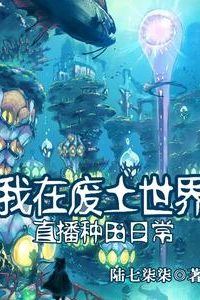
Became a National Treasure After Binding the Treasure Hunting System
+Add to Custom List
Genres:
Novel Info

Summary

... Read More
Qiu Yunzheng is a brilliant but impoverished history student at a prestigious university in the capital. Orphaned and lacking social connections, she has spent three years enduring the obsessive harassment of Wang Wende, a wealthy and manipulative young man who uses his family's influence to sabotage her academic and professional future. As graduation approaches, Wang Wende colludes with teaching assistants to block her application to the archaeology research department and threatens her with severe consequences unless she agrees to be his girlfriend. Simultaneously, Qiu Yunzheng loses her tutoring job due to Wang Wende's interference and receives notice that she must vacate her rented apartment within a week. Facing total ruin and with no viable options left, she is approached by an extraterrestrial entity known as System 288, which offers her a lifeline in exchange for completing archaeological missions. The System binds with Qiu Yunzheng and issues an immediate mission: to locate and develop the tomb of a Spring and Autumn period monarch. The System provides a map indicating the tomb's location in a remote, desolate area on the outskirts of the capital. Although Qiu Yunzheng is initially terrified by the illegal nature of tomb excavation and the danger posed by Wang Wende's thugs, she decides to proceed, hoping to use the discovery to gain leverage and official protection. She travels to the designated site and begins digging, successfully uncovering the outer rammed earth wall of an imperial mausoleum. However, before she can contact authorities, she is ambushed and subdued by Gu Hanfeng, a high-ranking military officer with exceptional combat skills and a formidable, intimidating presence. Gu Hanfeng takes Qiu Yunzheng into military custody, suspecting her of being a tomb raider or a spy. During interrogation, he quickly deduces that she is bound to a supernatural system, noting her strange behavior and the inability of lie detection equipment to penetrate her silence regarding the System's existence. Recognizing the potential strategic value of her knowledge and the unique nature of her binding, Gu Hanfeng and his commander, Yang Jianshe, decide to cooperate with her rather than imprison her. They verify her claims and determine that she poses no threat to national security. Instead, they leverage her System to conduct a state-sanctioned excavation of the tomb, which is located near a sensitive military zone. The expedition team, consisting of Gu Hanfeng, Qiu Yunzheng, and Professor Bai Lishen, enters the tomb. Guided by the System's maps and warnings, they navigate through sacrificial pits filled with human and animal remains, neutralize ancient poison traps and mechanical defenses, and eventually reach the main burial chamber. There, they discover that the tomb belongs to King Ping of Zhou, a historical figure traditionally depicted as a weak puppet emperor. The inscriptions reveal a different reality: King Ping was a cunning strategist who maintained power for fifty-one years through political manipulation and balance of power, secretly constructing this lavish tomb to conceal his true legacy and wealth from rival states. The tomb also contains the remains of hundreds of loyal followers who committed suicide to accompany him, preserving the secret of his burial site. Qiu Yunzheng, now integrated into this high-stakes archaeological and military operation, must continue to navigate her dangerous relationship with Wang Wende while managing her volatile partnership with the naive System 288 and the stern, dangerous Gu Hanfeng.

Latest Release
DateGroupRelease
2026-08-11shanghai fantasy c70
2026-08-11shanghai fantasy c69
2026-08-11shanghai fantasy c68
2026-08-11shanghai fantasy c67
2026-08-11shanghai fantasy c66
2026-08-11shanghai fantasy c65
2026-08-11shanghai fantasy c64
2026-08-11shanghai fantasy c63
2026-08-11shanghai fantasy c62
2026-08-11shanghai fantasy c61
2026-08-11shanghai fantasy c60
2026-08-11shanghai fantasy c59

Community Reviews

Rating(4.8 / 5.0, 4votes)
5 stars
3(75%)
4 stars
1(25%)
3 stars
0(0%)
2 stars
0(0%)
1 stars
0(0%)

Popular reviews

... Read More
Okay, I need to talk about how this whole arc subverts every single trope I thought I knew about System novels. Usually, the protagonist gets captured, gives away all the info, and then there's some dramatic reveal. But here? Qiu Yunzheng is literally trembling, rambling, trying to sell herself as harmless while the System behind her is having a full meltdown about how scary Chinese authorities are. And the funniest part is—she's not wrong. The author keeps this running joke that both Qiu Yunzheng AND the System are equally useless when it comes to dealing with trained professionals. That scene where she tries to bluff Gu Hanfeng and just ends up saying 'I just need to be present, I won't do anything, I have a map, I can only look at it myself'—she's basically confessing to everything while trying to sound cooperative. Classic. But then the real plot twist hits: Gu Hanfeng isn't some cartoonishly evil interrogator. He's intense, sure, but he's also practical. He sees she's genuinely terrified, not scheming, and he adjusts. And Commander Yang? The guy literally has a scar from forehead to temple and eyes described as 'an unfathomable ocean.' He watches the whole thing and his first thought isn't 'threat neutralized'—it's 'she seems harmless, let's hear her out.' That's a genuinely smart narrative choice. The author doesn't make the Chinese officials into villains or caricatures. They're competent, cautious, but also reasonable. It makes the whole situation feel grounded despite the supernatural System element. Then BAM—you think the plot is about extraction and negotiation, and suddenly we're transitioning into the tomb exploration with zero fanfare. No big ceremony, no drama about who gets to go. Just: 'Alright, let's go.' And the fact that the first people in are a young girl, a military officer, five soldiers, and an elderly professor? That's an interesting team composition. The plot is setting up something bigger, I can feel it. The tomb isn't just a tomb, right? There's got to be a reason the System is so desperate to get in there. What's waiting inside that's worth all this risk?
... Read More
Let me just say this upfront: the pacing in this section is absolutely ruthless and I love it. The author doesn't waste a single moment. You go from high-tension interrogation to a brief comedic beat with the System bickering, to a quiet moment of scholarly connection, to the actual descent into the tomb—and none of it feels rushed or dragged out. It's like the author knows exactly when to speed up and when to let the reader breathe. The interrogation scene is where it all starts, and it's tense but never melodramatic. Qiu Yunzheng is terrified, Gu Hanfeng is intimidating but not cruel, and the System is having an existential crisis in the background. The humor from 288—"Wuwu, Earth is so terrifying! Chinese people are so scary too!"—acts as a pressure valve. Without those moments, the whole thing would be suffocating. But with them, you get this rhythm: tension, release, tension again. It's textbook but executed perfectly. Then there's the Bai Lishen scene. This is where the pacing does something clever—it slows down deliberately. Qiu Yunzheng meets her academic idol, and suddenly we're in this warm, almost nostalgic mode. Two people bonding over history, the old professor recognizing young talent, the girl who's been terrified moments ago now shining with excitement. It's a breathing room scene, but it's not filler. It's character development disguised as conversation. And it works because it makes Qiu Yunzheng feel like a real person with desires and passions beyond just surviving. The transition into the tomb entry is where the pacing picks back up again. No ceremony, no speeches—just "Location locked. Please enter the tomb quickly." The System's urgency mirrors the reader's urgency. We've been waiting for this. The tomb is the promise the book made, and now we're finally going in. One thing I will say: the chapter ends on a slightly abrupt note. We're at the entrance, drones are scanning, and then—cut. It's a cliffhanger, but a mild one. Not the kind that makes you scream at your phone. More the kind that makes you sigh and tap 'next chapter' anyway. Which, honestly, is the best kind of cliffhanger. It trusts the reader to keep going without yanking their hair.
... Read More
"Her eyes were narrowed from the harsh lighting, and she lay weakly against the table, looking somewhat drained." This one line. That's all it takes. The observation room scene is so stark and clinical that it becomes almost oppressive. Pure white walls, one table, two chairs, a bright light that hurts your eyes. No furniture to hide behind, no corners to slip into. It's a room designed to make you feel exposed. And Qiu Yunzheng in that room—small, delicate, trembling—she looks like a specimen under a microscope. The author doesn't over-describe it, which is exactly right. Sometimes the emptiness of a space says more than a thousand adjectives. Then we cut to the desert. "The sun's relentless assault, the already sparse leaves on the crooked-neck tree became even fewer, as if a single gust of wind would strip them all away." This contrast is everything. From the sterile, controlled brightness of the observation room to the vast, indifferent wasteland outside. The desert doesn't care about you. It never has. And now there are soldiers everywhere, drones, infrared sensors, archaeologists with professional gear—it's like a military operation colliding with an academic expedition, and both are converging on the same hole in the ground. But the most vivid scene isn't a place. It's Yang Jianshe's face. Let me just say it: "A thick scar ran from his forehead to his temple, a testament to past dangers. His pitch-black eyes, weathered by hardship, were as deep and terrifying as the abyssal sea." This man has lived through things that would break most people, and he's not even the main character. He's a supporting figure who appears for three paragraphs and already feels more real than half the protagonists in these novels. The worldbuilding here isn't about magic systems or elaborate lore—it's about making every person in this story feel like they occupy real space, with real history behind their eyes. And the tomb entrance itself—"an entrance large enough for two people to walk through side by side"—is described with this matter-of-fact precision that makes it feel ancient and real. Not some fantasy dungeon, but an actual hole dug into the earth thousands of years ago, now being pried open by modern technology. The juxtaposition is what makes the setting sing.
... Read More
This section keeps circling back to one idea, whether the author intends it or not: what does it mean to be brave when you're terrified? Qiu Yunzheng is, by every measure, a scaredy-cat. She bickers with her System like a child, she trembles in interrogation rooms, she nearly rambles herself into a confession. And yet—she went to that tomb alone. She faced whatever was down there without backup, without the state's protection, just with a System and a map and a desperate hope. That's not courage in the traditional sense. It's not the fearless charge of a hero. It's something more interesting: courage as stubbornness. Courage as 'I'm scared but I'm doing it anyway because this matters to me.' The System itself is almost a symbol of this theme. 288 is pathetic, comedic, constantly whining about how dangerous everything is. But it never abandons Qiu Yunzheng. It's her partner in incompetence, her mirror in fear. And yet, it also guides her. It knows where the tomb is. It has the map. It's the brain to her heart, even if that brain is currently hugging its own body and sobbing about Chinese people being scary. There's something beautiful about that relationship—a system that's as scared as its host, but keeps going anyway. Then there's Gu Hanfeng, who represents a different kind of courage. His is the courage of someone who accepts that his life could end at any moment. "For someone like me, whose life could end at any moment, why should I make others live in constant fear?" That line hit me hard. It's not self-pity. It's a philosophy. He's lived with mortality so closely that he's made peace with it, and that peace makes him both terrifying and gentle. And the tomb itself—what is it, really? It's a metaphor for the past, for knowledge, for the things we dig up that were meant to stay buried. Qiu Yunzheng wants to explore it not for treasure or glory but because she loves history. The professor wants it for the same reason. The soldiers want it for duty. Everyone has a different relationship with the past, and the tomb is the crossroads where all those relationships collide. The recurring imagery of eyes is striking too. Yang Jianshe's eyes described as an abyssal sea, Qiu Yunzheng's eyes narrowing from the harsh light, Gu Hanfeng's imposing gaze—eyes are how we see and are seen in this story. They're windows into fear, into authority, into curiosity. The whole narrative seems to be about what happens when different kinds of vision converge on the same dark space.
See all reviews

Characters

See all characters

Custom lists

See all custom Lists