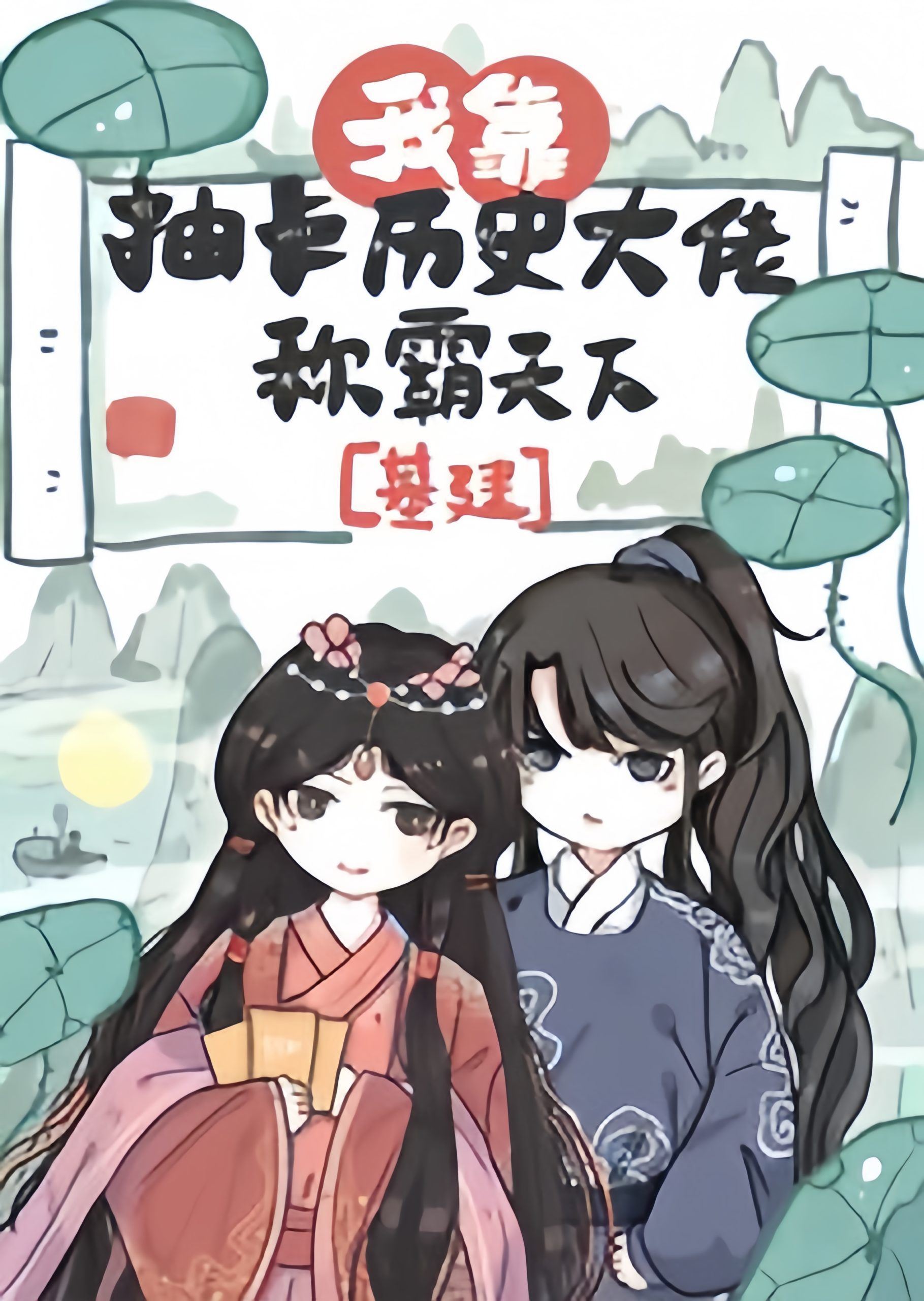
Beauty with Brilliance: Drawing Historical Cards to Conquer the World
Novel Info

Summary

... Read More

Ying Yue, formerly known as a merchant's daughter, lived a quiet life until her adoptive parents died and she was taken in by greedy relatives. Nine days before the story begins, she was forcibly returned to the Marquis's Mansion, where she was told she was the missing daughter of the Li family. Upon arrival, she discovered that her new mother and sister, Li Nian, viewed her solely as a scapegoat. They planned to force her into a marriage with the foolish and lecherous Prince Rui to save Li Nian from the union. Ying Yue overheard this conspiracy while attempting to bring pear soup to her new family, but she was discovered by the housekeeper and knocked unconscious before she could escape.

Ying Yue woke up in a wedding sedan chair, drugged and dressed in bridal attire. As she was carried to the bridal chamber, she despaired of her situation, wishing only for rescue. At that moment, a mysterious voice in her mind introduced the Lord Cultivation System. The system offered to bind with her and grant her the ability to draw cards to recruit historical figures as subordinates. Desperate, Ying Yue accepted and drew an SSR card, summoning Bai Qi, the legendary God of War from the Qin Dynasty. Bai Qi appeared in the chamber, cold and imposing, and immediately asked how to leave. When Prince Rui entered the room, Bai Qi killed him with a hairpin and then proceeded to slaughter the entire household to eliminate witnesses.

After the massacre, Bai Qi returned to find Ying Yue stunned by his ruthlessness. He also revealed that another card, Zhao Kuo, had been bound to him in the system. Zhao Kuo, a young general from the State of Zhao who had been killed by Bai Qi at the Battle of Changping, appeared with a resentful attitude. Despite their historical enmity, they were forced to cooperate under Ying Yue's command. Bai Qi, Zhao Kuo, and Ying Yue fled the mansion in Prince Rui's carriage, escaping the capital. During their journey, Ying Yue learned about the system's main quest: to fight for world domination. The first mission required her to acquire a territory, prompting Bai Qi to suggest they become bandits by seizing a mountain stronghold.

The trio traveled west toward Yongzhou, a harsh border region known for its bandits and proximity to the nomadic Hu people. Ying Yue lacked confidence in her abilities, feeling she was useless compared to the legendary generals she had summoned. However, both Bai Qi and Zhao Kuo began to recognize her potential. Zhao Kuo, moved by her trust and kindness, pledged his loyalty, while Bai Qi, though initially viewing her as weak, found himself inexplicably drawn to protect her. Along the way, they encountered a group of villagers who pretended to rob them but were actually warning them about the vicious Black Wind Camp, a bandit stronghold that traded with the Hu people and practiced cannibalism.

Zhao Kuo defeated the villagers easily and turned the tables, threatening them until they revealed the location of Black Wind Camp. The group decided to confront the bandits directly. Upon reaching the area, they learned that the bandit leader collaborated with the Hu people, a fact that enraged Bai Qi and Zhao Kuo due to their historical hatred of barbarian invasions. The story concludes with the group preparing to assault the Black Wind Camp, marking Ying Yue's first step toward building her power base. She remains uncertain of her path but is determined to survive and protect those who have pledged themselves to her, setting the stage for her eventual rise to power.

Latest Release
DateGroupRelease
2026-08-11shanghai fantasy c200
2026-08-11shanghai fantasy c199
2026-08-11shanghai fantasy c198
2026-08-11shanghai fantasy c197
2026-08-11shanghai fantasy c196
2026-08-11shanghai fantasy c195
2026-08-11shanghai fantasy c194
2026-08-11shanghai fantasy c193
2026-08-11shanghai fantasy c192
2026-08-11shanghai fantasy c191
2026-08-11shanghai fantasy c190
2026-08-11shanghai fantasy c189

Community Reviews

Rating(3.8 / 5.0, 20votes)
5 stars
6(30%)
4 stars
4(20%)
3 stars
10(50%)
2 stars
0(0%)
1 stars
0(0%)

Popular reviews

... Read More
The shift in atmosphere when they enter Yongzhou is SO well done. The author doesn't even need a big description—the fact that Bai Qi and Zhao Kuo can FEEL the difference in how people treat them is enough to tell you everything. This is a border region, harsh, survival-mode territory, and it immediately sets the tone for what's coming. Then there's the scene where Ying Yue lifts the carriage curtain and sees the bloody machete stuck in the ground. I could literally see this in my head like a movie frame. The horse screaming, the men bursting from the sides, the leader's ridiculous declaration. It's chaotic and slightly absurd, which makes it feel REAL. These aren't polished bandits from a wuxia novel—they're desperate people in a desperate place. And the detail about the pig blood! The machete was bloody but it was just pig blood. That small detail does so much work—it tells us these are ordinary villagers playing dress-up as bandits, which makes the whole scene both funnier and more tragic. They're risking their lives to warn strangers, and they have to do it through a ridiculous performance because the actual bandits are too terrifying to confront directly. The capital scenes are darker but equally vivid—the night watchman smelling blood at Prince Rui's palace, officials dragged out of bed, the whispers that become an unsolved mystery. Two different tones, two different worlds, both rendered with equal specificity.
... Read More
Let me just say this: the author knows EXACTLY when to hit you and when to let you breathe. The journey sequences—Bai Qi and Zhao Kuo taking turns driving, Ying Yue falling asleep around 3am, the long road west—these are the calm before the storm. You feel the exhaustion, the monotony, the false sense of safety. And then BOOM, the capital massacre scene drops in like a sledgehammer. I love how the narrative cuts away from our protagonists to show what's happening back home. It's not just worldbuilding—it's dramatic irony. We KNOW something terrible happened, we KNOW Ying Yue's father disowned her, but she has no idea. Every peaceful moment on the road becomes tense because we're carrying knowledge she doesn't have. That's sophisticated pacing. Then the bandit encounter comes in and completely shifts gears again—from horror to comedy to horror in the span of a few pages. The author uses the villagers' fake robbery as a pressure valve, letting us laugh, then immediately deflates it with the Black Wind Village reveal. By the time we hit "they eat people" and Bai Qi's eyes darken, I was fully hooked. The chapter structure here is tight. No filler, no dragging. Every scene either advances the plot, develops character, or builds the world. Three out of three.
... Read More
Okay so let me just say—this whole escape sequence is actually really smartly constructed. Zhao Kuo wants a place with bad security and bandits to build a base, and then Ying Yue casually drops that Yongzhou is literally the worst place possible according to her mother. The irony is delicious. And Bai Qi immediately locks in on it like, yeah, that's our direction. But then—plot twist within a plot twist—they don't actually know which direction is west. Zhao Kuo's geographic illiteracy is comedic gold, but it also raises the stakes because now they're literally driving blind. What I love is the Qingzhou feint. Bai Qi sends Zhao Kuo to ask about Qingzhou specifically to plant a false trail. That's military-grade misdirection from a 20-year-old summoned general. The fact that he's already thinking three steps ahead while Zhao Kuo is still trying to figure out east from west says everything about their dynamic. And the geography lesson Zhao Kuo gives—Yongzhou west, Jizhou east, Fen River between them, Beidi County at the far western edge—this is worldbuilding that actually matters to the plot, not just exposition dumps. The tension of the pursuit is always there in the background too. Nobody's found the bodies yet, but they will. Every mile they put between themselves and the capital is a mile closer to safety or closer to disaster. I kept waiting for a confrontation and the author keeps pulling the rug out—no, they're just driving, buying supplies, changing clothes. But that ordinary-ness is what makes it tense. They're trying to live normally while everything is falling apart.
... Read More
"I'm fine. There's just a tear in my clothes, but no real injury." That line hit me like a truck, and not just because of what it means for Bai Qi's character. It's the ENTIRE SCENE that's unforgettable. Let me paint this for you: Bai Qi walks through that door. Four hundred people. Four. Hundred. And he's covered head to toe in blood — not a heroic, cinematic blood splatter, but the kind of thorough, exhausting drenching that comes from actually killing that many human beings up close. The text says he looked like a ghost. And the smell. GOD, the smell. Ying Yue compares it to the last time he came back from the palace, and this time it's so much worse it makes her physically uncomfortable. But here's what the author does that's brilliant — they contrast this visceral, almost horror-adjacent imagery with the quiet domesticity of the room Zhao Kuo prepared. He spread out a mat, carefully avoiding blood stains, let her sit down. He cleaned up, burned the bodies. This is someone who's been through war and still thinks about courtesy. And then Bai Qi walks in and shatters that whole carefully maintained atmosphere. The mountain itself is a character too. Bianchun Mountain — the name is mentioned but never really explored, which is interesting. The guide says it looks close but is far away. That distance, that false proximity, mirrors the whole arc: these bandits seemed like they were just 'over there' but their influence had festered for years. And the lax guards at the bottom? The cats and dogs? That's the author showing us how complacent fear makes people. The five counties were so terrified they didn't even maintain proper defenses. The time progression from noon to evening while Zhao Kuo rambles — that slow, almost mundane passage of time makes the violence feel more real. This isn't a quick battle scene in a novel. This is hours of waiting, of normal conversation, of life going on while death happens upstairs.
... Read More
I've been thinking about the whole Ying Yue / Li Yue situation and it's been bothering me in the best way. Her biological father reports her as a victim, then when they can't find her body, he publicly disowns her and claims she was "dishonored." He ERASES her from the family records to protect himself. This girl survived a massacre, escaped with two legendary warriors, and her own father treats her like a stain on the family name. The name "Li Yue" vs "Ying Yue"—that's not just a detail, that's the whole theme right there. She's being stripped of her identity layer by layer. First the massacre tries to kill her, then her father tries to erase her, and now she's traveling under a new name with people who aren't her family but are treating her better than her actual family ever did. There's also the symbolism of the Hu people and the border region. Bai Qi and Zhao Kuo both come from states that fought the Hu constantly. Their entire identities are shaped by this conflict—Qin and Zhao may war with each other, but the Hu are the ultimate "other," the enemy that unites them. When the villagers mention Black Wind Village dealing with the Hu, both men react viscerally. This isn't just plot—it's about how trauma and cultural identity shape people's deepest instincts. And Ying Yue's beauty as a kind of currency or vulnerability in this harsh world? The villagers are stunned by her appearance because she looks like she came from another world. In Yongzhou, beauty is almost alien. It marks her as different, as someone who doesn't belong—which is exactly how she feels.
... Read More
The stakes here are escalating in the best way. Let's count what our trio is up against: the Emperor's investigation (which could catch them if they're not careful), Ying Yue's biological father (who wants her dead or disappeared), Prince Rui's allies (who definitely want revenge), AND now Black Wind Village, which is run by people who eat humans and work with the Hu barbarians. That's not a typo. That's four separate threats converging on these three characters, and they're driving into the worst one completely unaware. The Black Wind Village reveal is particularly chilling because it's not just "dangerous bandits." The villagers specifically say no one comes back alive. They're not exaggerating. And the fact that they have to stage a fake robbery to warn strangers tells you everything about how terrified the local population is. This isn't a place you negotiate with. What makes me really invested isn't just the external danger though—it's the internal stakes. Ying Yue just wants to survive and find safety. Bai Qi is driven by duty and a sense of responsibility. Zhao Kuo is along for the ride but clearly attaching himself to this cause. They're not fighting for glory or power. They're fighting to stay alive, and that's infinitely more relatable. The author also does something smart with Zhao Kuo's reaction to the Hu mention—his fists clench, his voice turns cold, he spits out "they all deserve to die." This isn't a calm, calculated response. This is personal. Whatever history he has with the Hu, it's raw and real, and it raises the stakes because now we know this conflict goes deeper than we thought.
See all reviews

Characters

See all characters

Custom lists

See all custom Lists