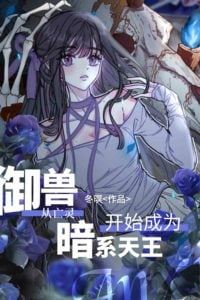
Beast Taming: Starting with Undead, Becoming the Dark-Type King
+Add to Custom List
Novel Info
  • Author:
  • 冬暝
  • Status:Ongoing

Summary

... Read More

Mu Huiyue, a seventeen-year-old high school student and daughter of legendary Beast Master Mu Tong, awakens in the Necromancer’s Castle, a secret realm teeming with undead creatures. Having transmigrated from her original world after falling while distracted by her phone, she inhabits the body of a girl who suffered fatal injuries upon entering the realm. Stranded with a fractured leg and no signal, Mu Huiyue encounters a tiny, low-level elite creature known as a Little Skeleton. Unlike the terrifying undead surrounding her, this small skeleton is timid and helpful, offering her dried food and attempting to heal her wounds using its innate Reassemble skill. When a massive, rotting entity patrols the castle, the Little Skeleton shields Mu Huiyue by scattering its bones and cloaking her in dark mist, allowing her to pass unnoticed. Realizing she cannot survive her injuries without aid, Mu Huiyue asks the skeleton to retrieve a realm core to forcibly awaken her Beast Master abilities, a dangerous gamble that could kill her. The Little Skeleton returns with ethereal blue petals instead, which Mu Huiyue consumes, triggering an awakening that stabilizes her wounds and grants her a Beast Space merged with a mobile game interface called Elf Ranch Story.

After recovering, Mu Huiyue forms a contract with the Little Skeleton, naming it Ellen. She discovers that her Beast Space is unusually large and contains a World Tree and a gacha system, allowing her to draw items and skill books. She acquires a Shadow Meld skill for Ellen, enhancing its stealth capabilities in the dark environment. Using Ellen to scout the castle, Mu Huiyue identifies the realm’s exit on the second floor, guarded by powerful creatures including Stone Gargoyles and a mid-tier battle general known as a Licker. Ellen distracts the enemies with the blue petals while Mu Huiyue navigates the corridors, avoiding detection. When the Licker attacks, Ellen intervenes, striking the creature to create an opening for Mu Huiyue to reach the spatial distortion. She escapes the realm just as the Secret Realm Affairs Bureau locates the entrance, and she is hospitalized for three days before being discharged.

Upon returning to her father’s dojo in Changning City, Mu Huiyue learns that the realm was identified as the Count Star Dragon’s Mansion, a historical relic linked to Ellen Mittedra, a legendary Beast Master from 780 years ago. Her family dynamics are strained; her mother disappeared during an S-class realm exploration, and her younger sister, Mu Yixia, was brought home by the rescuer. Mu Yixia awakened as a Beast Master before Mu Huiyue, deepening the rivalry and her father’s disappointment. Mu Huiyue, who had failed to awaken until entering the realm, now seeks to prove her worth. She trains Ellen, discovering that the skeleton feeds on emotional energy, specifically the sense of acceptance and recognition from its master. She also reconnects with Pali, a Redflame Combat Wolf and her father’s former contracted beast, which was abandoned after failing to evolve further.

Seeking to test Ellen’s combat potential, Mu Huiyue arranges a sparring match against Ah Yue, a university student contracted with a Little Cloud Dog. The Little Cloud Dog, an Earth-type battle general, proves to be a formidable opponent with skills like Mud Bomb and Earthquake Wave. During the battle, Mu Huiyue demonstrates advanced tactical use of Ellen’s Reassemble skill, shattering its body to dodge attacks and repositioning via Shadow Meld. Ah Yue attempts to overwhelm Ellen with a Maximum Earthquake Wave, but Mu Huiyue counters by enhancing Ellen’s Bone Strike with dark energy resonance. Ellen delivers a critical hit that defeats the Little Cloud Dog, securing Mu Huiyue’s first victory. The win draws attention to her combat prowess, though she remains distant from her father’s expectations. After the match, she introduces Ellen to Pali, signaling her determination to grow stronger alongside her new partner while navigating the complex social and familial landscape of the Beast Master world.

Latest Release
DateGroupRelease
2026-08-11shanghai fantasy c116
2026-08-11shanghai fantasy c115
2026-08-11shanghai fantasy c114
2026-08-11shanghai fantasy c113
2026-08-11shanghai fantasy c112
2026-08-11shanghai fantasy c111
2026-08-11shanghai fantasy c110
2026-08-11shanghai fantasy c109
2026-08-11shanghai fantasy c108
2026-08-11shanghai fantasy c107
2026-08-11shanghai fantasy c106
2026-08-11shanghai fantasy c105

Community Reviews

Rating(4 / 5.0, 44votes)
5 stars
16(36%)
4 stars
15(34%)
3 stars
12(27%)
2 stars
1(2%)
1 stars
0(0%)

Popular reviews

... Read More
There's a symbol in these chapters that I can't stop thinking about: the World Tree. When Mu Huiyue enters her meditative state after consuming the petals, she sees her heart expand into a vast universe, and in that universe, a tiny seed falls to the ground and grows into a towering tree. Its branches stretch to the sky, its leaves shimmer with life, and they flow back into her body like a river of vitality. This isn't just a cool visual—it's the central metaphor of the entire story, and I think it's brilliant. The World Tree represents potential. It starts as a seed, small and fragile, buried in the dark soil of Mu Huiyue's heart. It grows through her effort, her will to survive, her connection to the Little Skeleton. And the leaves—that's interesting. The leaves fall and transform into dark orbs of light that heal the Little Skeleton. The tree gives back what it grows. It's a cycle of life and reciprocity that mirrors the relationship between Mu Huiyue and her contracted beast. She feeds it, it feeds her. She protects it, it protects her. The tree is the physical manifestation of that bond. But here's where it gets even more layered: the World Tree is also her Beastmaster space, which has merged with the game interface of "Elf Ranch Story." In the game, the ranch starts empty—just a tree and locked facilities. The player has to build everything from scratch. This is exactly where Mu Huiyue is. She's not a legendary Beastmaster with a sprawling domain. She's a novice with a single tree and a broken skeleton. The emptiness of the ranch is symbolic of her starting point, but it's also hopeful—because every empty space is a space that can be filled. The gacha system is another symbol worth examining. In the game, it's a mechanic that drains players' money and patience. Here, it becomes a tool of survival and growth. The Spring Drops, the skillbooks, the stat fruits—these are the resources that will determine how far Mu Huiyue can go. But they're earned through quests, not purchased with real money. The author is subtly commenting on the nature of value: in the game world, progress was measured in yen and luck. In this world, it's measured in effort and choice. The system that once exploited her is now serving her. And then there's the necromancer's castle itself—a place of death, darkness, and decay—where life is being born. Mu Huiyue awakens in a realm ruled by undead, yet she creates a space of growth and vitality. The World Tree growing in a necromancer's castle is almost ironic, but also deeply appropriate. This is a story about finding life in places that should have none. About building something from nothing. About a girl who was told she wasn't enough and decides to become everything anyway.
... Read More
I have to give credit where it's due—the worldbuilding in these chapters is surprisingly grounded. Changning First Beast Taming High School isn't just a backdrop; it feels like a place with its own rules and rhythms. The training grounds are 'already filled with students' before classes even start, which tells us everything about the pressure-cooker environment these kids live in. The fact that internal school competitions happen two months before the national tournament, that there are ranked matches with official records, that the selection committee makes 'special arrangements' for high-profile battles—this all creates a sense of a functioning, competitive ecosystem. The economic layer is also really well done. Mu Tong's businesses—the Changning Dojo, the Little Cloud Hound Breeding Center, the Blasting White Cattle Ranch that produces 'several times richer in calcium than regular milk'—these details make the world feel lived-in. The Mu family isn't just powerful; they're embedded in the infrastructure of this beast-taming society. And the social hierarchy is clear: academic rankings matter, but battle strength matters more. Luo Song's average grades don't disqualify him because 'at Changning's top Beast Taming school... power and skill were everything.' The gossip among students about whether Mu Huiyue's skeleton is 'disguised as another pet' adds this layer of skepticism and social pressure that makes the world feel real. The battle arena scene has that cinematic quality I love—crowds gathering, whispers erupting, the referee making official announcements, the charged atmosphere. But what strikes me most is how the physical space mirrors the emotional dynamics. Mu Huiyue stands on her side of the stage, 'completely unfazed by the chatter outside,' while the crowd swirls around her like a sea of judgment. And Yixia, standing apart in the crowd, looking at her sister across the arena—that visual of two girls separated by space and misunderstanding is just perfect.
... Read More
Let me start by saying this: the pacing is ruthless in the best possible way. There is no filler. Every paragraph is either advancing the plot, developing character, or building atmosphere — and usually all three at once. Chapter 1 opens with Mu Huiyue waking up in pain. That's it. No prologue, no backstory dump, no "our protagonist was an ordinary high school student who—" We're dropped into the crisis immediately and we don't get a break. The author understands something many writers miss: the reader doesn't need to know everything, they need to know enough to care, and then they'll keep reading to find out the rest. The structure follows a classic survival arc but subverts expectations at key moments. Usually in isekai/transmigration stories, the protagonist gets a cheat skill or a system notification within the first chapter. Mu Huiyue gets a broken leg and a tiny skeleton that thinks it's a medical professional. The humor here isn't just comic relief — it's pacing. It gives the reader a moment to exhale before the giant eye appears and the tension snaps back to maximum. Chapter 2 is where the pacing really shines. The food scene — sweet, almost domestic — is immediately followed by the thunderous footsteps of something enormous. The contrast is brutal. And then the Little Skeleton's decision to disassemble itself and cover Mu Huiyue in bones and mist... the author doesn't slow down for explanation. We're right there in the moment, holding our breath alongside her. The chapter ends on a decision, not a revelation. Mu Huiyue chooses to attempt forced awakening. This is a structural masterstroke because it transforms the story from "will she survive?" to "how will she survive, and what will it cost?" The stakes just doubled in the last paragraph. My only minor criticism: I wish Chapter 3 was included. I need to know if she lives.
... Read More
The pacing in these chapters is honestly masterful, and I want to break down why it works so well. We start with an intimate, almost quiet scene—Mu Huiyue in her Beast Space with Ellen, the teacher on the phone, the personal stakes. Then there's this beautiful transition into the school day, where everything seems normal on the surface. She walks past training grounds, attends classes, registers for exams. The reader breathes. And then—Luo Song blocks her path. Boom. The tension explodes from zero to a hundred in a single paragraph. What's really clever is how the author uses the school setting as a pressure cooker. Every step Mu Huiyue takes through the halls adds weight to the impending confrontation. The text tells us 'news of the rift near Earl's Manor hadn't mentioned her involvement—how had this guy found out?' This question creates immediate suspense. We're wondering alongside her. Then the confrontation happens, and instead of resolving the tension, it ESCALATES. 'Let's settle this with a battle.' The stakes go from personal argument to official tournament match, and the narrative immediately pivots to the battle hall, where 'students who had already gone home rushed back to the school.' The pacing here is relentless—each scene pushes harder than the last. But the author also knows when to slow down. The moment where Mu Huiyue considers calling the driver but decides to walk back to her apartment instead—it's a small detail, but it gives us a beat of normalcy, of routine, before the storm hits. And Ellen falling asleep in her shadow, the edges 'bubbling slightly'—this quiet domestic moment right before the confrontation makes the battle feel even more intense by contrast. The structure is: intimacy → routine → confrontation → escalation → battle. It's a perfect rising action curve, and I was absolutely glued to every page.
... Read More
Okay so let me just say—this awakening scene is honestly one of the best I've read in the transmigration genre. Usually these things are either too rushed or dragged out for ten chapters, but here? It hits like a freight train and then you're immediately pulled into the next crisis. Mu Huiyue is literally dying, bleeding out, and then the Little Skeleton shows up with those blue petals and—boom—she's in this meditative state where she grows a WHOLE WORLD TREE inside her chest. Not just a power-up, not just a stat boost, but an actual expanding universe in her heart. That's the kind of imagery that makes you sit back and go "wow." And then the plot twist of the century: her Beastmaster space is basically the mobile game she was playing before she got isekai'd. "Elf Ranch Story"—the game that apparently drained half her paycheck in the real world—has now become her actual ability. I love this because it rewards the reader who pays attention. If you've ever played a gacha game, you already understand the system. The Spring Drops, the gacha pool, the skillbooks, the stat fruits—it's all there. But what's clever is that the author doesn't just dump this on you. It reveals itself organically as Mu Huiyue explores her new space, and you realize along with her that this is both a blessing and a curse. She has knowledge no one else has, but she also has zero resources. Starting from scratch with a game interface is such a fresh take on the system-transmigration trope. The plot also does something really smart with the realm core quest. The Little Skeleton goes off on this dangerous mission to find the realm core, comes back wounded and barely alive with just two petals, and Mu Huiyue has to make the call to use them on herself instead of on the creature who risked everything for her. That decision—selfish survival versus loyalty to your new companion—is the kind of moral weight that makes a plot feel real. And then immediately after, she's not just surviving, she's thinking three steps ahead: using the skeleton to scout, testing her recall range, planning her escape. The plot never lets up.
... Read More
"She wanted to live. If possible. If…" That's it. That's the whole emotional core of these chapters, right there. Three words, an ellipsis, and the rest is silence. Mu Huiyue is lying in a cold, dark castle, bleeding out, and her last coherent thought isn't about revenge or regret or even fear—it's just this raw, simple desire to keep existing. And then the Little Skeleton comes back, and she has a reason to want that even more. I think what hits me hardest about this story is how Mu Huiyue's emotional journey mirrors the original owner's in such a painful way. The original Mu Huiyue was crushed by expectations—her parents' legacy, her sister's success, her own failure to awaken. She was proud, competitive, and ultimately broken by a world that measured her worth by her power level. When she died (or was pushed to the brink), something in her gave up. But the new Mu Huiyue—this girl who came from another world, who played games and liked magical creatures and had no idea what any of this meant—she picks up the pieces and decides to keep going. The moment that destroyed me was when the Little Skeleton brought her those petals. Think about it: this creature, the lowest tier of undead, went into a necromancer's castle—a place filled with things far stronger than it—and risked everything to find something that could save a human who barely treated it like a person. And Mu Huiyue, waking up from her meditative state, seeing this broken little thing collapse at her feet, doesn't just feel gratitude. She feels responsibility. "With such serious injuries, only my Beastmaster space can help you recover." She doesn't see a pet. She sees a friend who needs help. The contract scene is where everything converges. When the Little Skeleton forms those misty tears and places its tiny bone hand in hers, it's not just a mechanical bond being formed—it's two lonely creatures finding each other in the dark. Mu Huiyue has no family, no home, no world she belongs to. The Little Skeleton has no master, no purpose, no one who would choose it. Together, they become something neither could be alone. And then there's the warmth of the blue petals. The text says "strangely, it brought Mu Huiyue a sensation that almost felt... warm, despite its lack of heat." Warmth in a cold castle. Light in darkness. Life in death. That's the emotional language of this story, and it's doing a lot of heavy lifting without ever being heavy-handed about it.
See all reviews

Characters

See all characters

Custom lists

See all custom Lists