Summary

... Read More

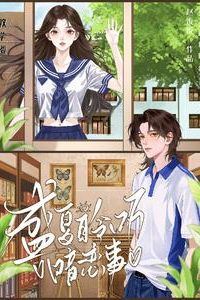
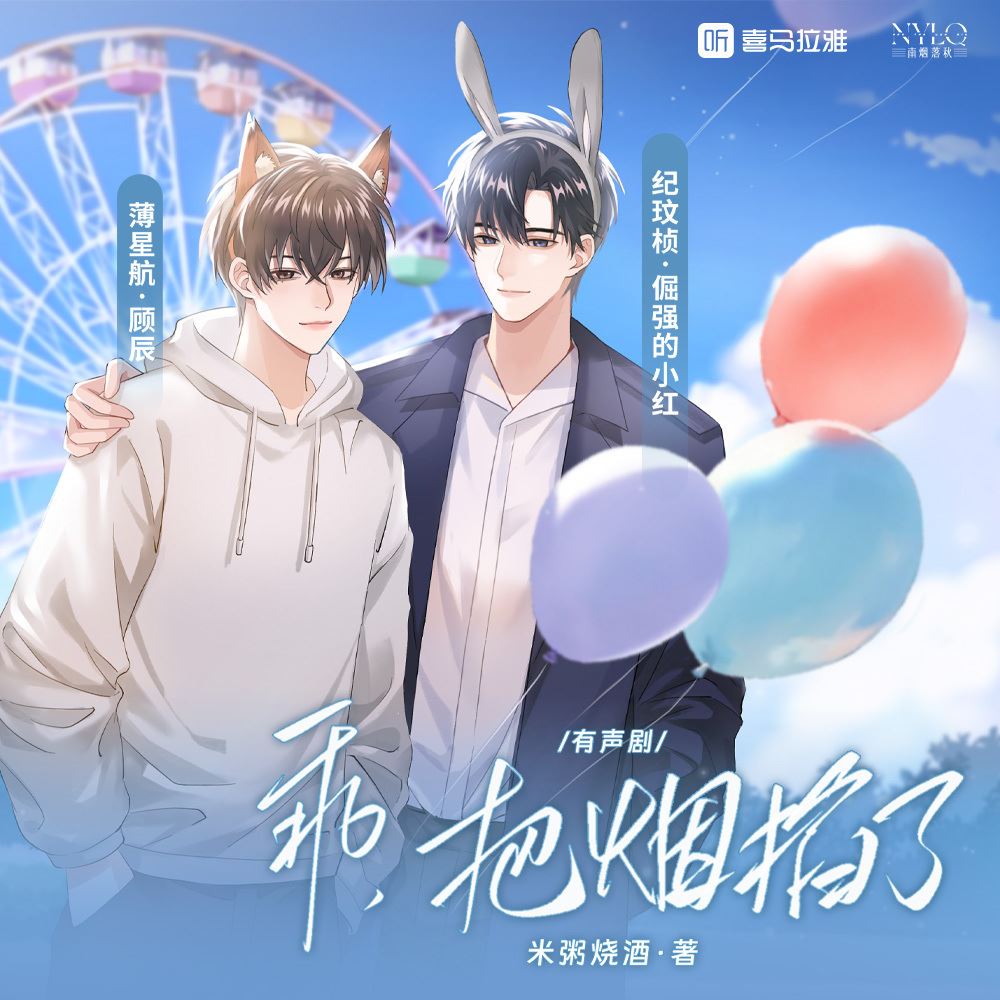
Bo Xinghang is a senior student at Provincial Experimental High School who maintains a rebellious and apathetic exterior. Despite his poor academic performance and tendency to skip classes, he carries a heavy domestic responsibility. His mother is absent, and his grandmother’s recent hospitalization has placed him in charge of her care. To support the family and cover medical expenses, Bo Xinghang works night shifts as a bartender at June Bar, a job he balances alongside his final year of high school. He is known on campus as a delinquent, though his behavior is primarily a facade for his independence and resilience.

One evening, while smoking behind the bar, Bo Xinghang encounters Ji Wenzhen, a renowned surgeon at Q University Hospital. Ji Wenzhen is precise, cold, and disciplined, representing the antithesis of Bo Xinghang’s chaotic lifestyle. Initially, their interaction is marked by tension; Bo Xinghang refuses to acknowledge Ji Wenzhen as a patron, and Ji Wenzhen lectures him about the dangers of underage smoking. Later that night, after consuming too much alcohol while trying to earn tips, Bo Xinghang suffers a medical episode at the bar and is taken to the hospital by Ji Wenzhen. This incident draws unwanted attention, and rumors spread on the school forum, accusing Bo Xinghang of fighting with a doctor.

The situation escalates when the school authorities threaten disciplinary action due to the negative publicity. Desperate to clear his name, Bo Xinghang concocts a story that Ji Wenzhen is his older brother and that he accompanied him to the bar out of concern for Ji’s health. To make this lie credible, he must persuade Ji Wenzhen to cooperate. Through persistent and teasing interactions, Bo Xinghang manages to get Ji Wenzhen’s personal contact information. Their dynamic shifts from adversarial to a complex rapport, with Ji Wenzhen showing unexpected patience and amusement toward the boy’s boldness.

A key turning point occurs when Bo Xinghang visits Ji Wenzhen at the hospital after a car accident disrupts his plans to meet him. While waiting, he spends time in Ji’s office, leading to deeper conversations. Eventually, Ji Wenzhen invites Bo Xinghang to stay at his apartment, citing that it is late and Bo Xinghang should not travel alone. This decision marks a significant shift in their relationship, moving from casual acquaintances to a more intimate connection.

However, the narrative introduces a critical complication: while staying at Ji Wenzhen’s home, Bo Xinghang realizes he has forgotten the primary reason for his visit—to get Ji Wenzhen to testify in front of the principal. He is left facing a difficult choice: admit his forgetfulness and potentially damage his fabricated alibi, or find another way to resolve the school disciplinary issue. Meanwhile, the underlying currents of their growing attraction and the stark differences in their social worlds begin to surface, setting the stage for further conflict and development in their relationship.

The story explores themes of class disparity, familial duty, and the clash between academic expectations and personal reality. Bo Xinghang’s struggle to balance his responsibilities with his desire for freedom contrasts with Ji Wenzhen’s rigid professional life. As they navigate this unusual bond, both characters are forced to confront their own vulnerabilities. Bo Xinghang’s defiance masks a deep fear of failure, while Ji Wenzhen’s cold exterior hides a capacity for connection he has long suppressed.

The plot is driven by the immediate crisis of the school investigation and the evolving personal relationship between the two protagonists. The resolution of the rumor hinges on Ji Wenzhen’s willingness to step out of his comfort zone and participate in Bo Xinghang’s deception. This act of compliance suggests a growing investment in Bo Xinghang’s well-being, complicating the power dynamic between them.

As the chapter ends, the emotional stakes are raised. Bo Xinghang’s accidental discovery of his own forgetfulness creates a moment of panic and self-reflection, highlighting his immaturity and the impulsiveness that characterizes his approach to life’s challenges. Ji Wenzhen’s role transitions from a disapproving authority figure to an enigmatic ally, leaving the trajectory of their relationship open to interpretation. The narrative sets up a continuing exploration of how two individuals from vastly different worlds can find common ground amidst societal pressures and personal insecurities.

The setting of a northern city during early spring, with lingering cold and melting snow, mirrors the transitional state of the characters’ lives. Bo Xinghang is on the cusp of adulthood, yet still bound by school rules and financial constraints. Ji Wenzhen stands at the peak of his career, yet lives in isolation. Their intersection represents a disruption of their respective routines, forcing them to reevaluate their priorities and boundaries.

The summary captures the initial meetings, the conflict arising from public perception, the strategic alliance formed to mitigate school consequences, and the gradual deepening of personal involvement. It outlines the central tension between external judgment and internal desire, positioning the protagonists at a crossroads where their choices will define the future of their association.

Latest Release
DateGroupRelease
2026-09-26knoxt c40
2026-09-26knoxt c39
2026-09-26knoxt c38
2026-09-26knoxt c37
2026-09-26knoxt c36
2026-09-26knoxt c35
2026-09-26knoxt c34
2026-09-26knoxt c33
2026-09-26knoxt c32
2026-09-26knoxt c31
2026-09-26knoxt c30
2026-09-26knoxt c29

Community Reviews

Rating(4 / 5.0, 232votes)
5 stars
68(29%)
4 stars
87(38%)
3 stars
77(33%)
2 stars
0(0%)
1 stars
0(0%)

Popular reviews

... Read More
This chapter is a masterclass in escalating stakes, and I need to process what just happened. It starts deceptively small—Bo Xinghang walks into his childhood home and finds his mother mopping. A mundane scene. But within minutes, every layer of this family's dysfunction peels back until you're staring at something genuinely dangerous. The mother asks for money because she lost it gambling. Bo Xinghang refuses. She reveals she went through his things. He asks for the shirt back. She says she threw it away. Then—the violence. "With blood-stained hands, he grabbed his mother's head and pressed it against the table." This isn't melodrama for its own sake. The author makes it clear: Bo Xinghang felt more restraint in this moment than he ever has in his life. His nails pierced his own palm. He was physically hurting himself more than her, and yet he couldn't stop. What made my chest tight was the internal conflict too. He just pronounced himself motherless three paragraphs earlier—"Bo Xinghang doesn't have a mother anymore"—and now he's the one bleeding, the one running to someone else's house, the one who can't hold himself together. The stakes here aren't just about family drama. They're about whether he'll keep surviving or finally let someone see him actually broken. "Doctor Ji... it hurts so much." That line ended the chapter and I had to put the book down. What does he mean by that, exactly? Physical pain? Emotional? Both? The ambiguity is gut-wrenching.
... Read More
The transition in these chapters is actually insane when you think about it. We go from an intimate nighttime moment — whispered goodnights, checking if the other person's room is dark before turning off your own light — to a high-stakes exam morning, to sitting in a competition hall across from a friend. The author doesn't waste a single paragraph. There's no filler, no 'meanwhile' detours. Bo Xinghang goes from study mode to race mode in like two pages and it feels natural because the text earned it. What I love most is how the tension builds without ever feeling rushed. The four-school competition is mentioned early, then we get two weeks of implied studying summarized in a few lines ('His progress became evident, even to himself'), then BOOM it's exam day and we're right there with him. The author knows exactly when to compress time and when to slow down to a crawl. Those three paragraphs where Bo Xinghang wakes up late, can't find his phone, panics, curses, corrects himself about good students not cursing — that's several minutes of real time stretched over maybe four hundred words and I devoured every single one. The chapter ends mid-thought though — 'He often wanted to' and then it cuts off. That's a weird place to stop. Makes me want to immediately flip to the next chapter even though I was already planning to.
... Read More
I need to talk about the dialogue in this chapter because it is genuinely hilarious and also kind of brilliant. The scene at the barbershop with Xiao Nuo is pure comedy gold. When she says 'If you're scared, let that handsome guy do it'—and Bo Xinghang immediately internalizes it as something totally filthy—I literally laughed out loud. The gap between what she meant and what he heard is such a perfect character moment. It tells us everything about Bo Xinghang's mental state without the narrator having to explain it. And then Doctor Ji asks 'Are you afraid of pain?' and suddenly Bo Xinghang's brain short-circuits again. The author has this incredible ear for how two people can be saying completely different things in the same conversation. The banter between Bo Xinghang and the barber feels natural too—they have history, they joke like old friends, there's no stiffness. But the real masterpiece is the silence between the characters. Doctor Ji's '...' responses, his murmured 'Mm,' the way he looks at his phone instead of at Bo Xinghang—it's all dialogue by omission. Some of the most expressive moments here have zero words.
... Read More
Let's talk dialogue because this chapter has some of the snappiest back-and-forth I've read in a while. The opening exchange between Bo Xinghang and Doctor Ji is practically a masterpiece of minimalism: "Sir, have I met you before?" "What's so funny?" "Nothing." Doctor Ji averted his gaze, leaned back against the lounge chair, and said blandly, "Then I must have remembered wrong." That's it. That's the whole scene. Doctor Ji says basically nothing and yet he communicates SO MUCH. The fact that he chuckles first, then deliberately deflates the moment by saying 'nothing' and looking back at his phone — it's petty in the best possible way. You can feel the smirk on his face even though the text never explicitly says he's smirking. And Bo Xinghang's internal voice? Pure gold. Things like 'Tsk, so petty' and the narrator's aside 'Such a corny invitation. Such an obvious attempt at moral blackmail. Bo Xinghang mocked inwardly.' — the narrative voice has this delicious wryness that makes reading feel like eavesdropping on someone's thoughts. Even the nurses' gossip is perfectly done. 'Doctor Ji is teasing someone?!' — their shock tells us more about Ji Wenzhen's character than any description could. This author understands that dialogue isn't just about what people say, it's about what everyone ELSE thinks they're saying. Also: 'Sort of.' as a response to 'Do you two know each other?' is a dialogue move so clean I almost applauded out loud.
... Read More
Okay so let's talk about this absolutely fascinating power move Bo Xinghang pulled. He asked Ji Wenzhen to pretend to be his brother—then immediately changed his mind and told him anyway. What kind of twisted brain does this kid have? I was simultaneously annoyed and completely mesmerized. And Ji Wenzhen! I knew I should have just walked away. The man literally regretted agreeing the moment the words left his mouth. But he went up on that stage anyway, wrapped in his coat, and said "He is my younger brother" with this voice that—ugh. The narration literally pointed out how attractive his Adam's apple bobbing was while he was being all playful and whiny. Bo Xinghang is weaponizing his cuteness and I am HERE for it. But then the twist—I had to double back and re-read this part—Ji Wenzhen actually SAW the report card on the wall. All zeros. Chinese 0, Math 0, English 0. And he kept it to himself. Don't tell me you're not intrigued by this man holding onto that information like a secret weapon. He found out the "perfect older brother" is actually failing everything, and instead of exposing him, he played along. What is going on in this guy's head? Their dynamic is doing something I can't quite put my finger on. There's manipulation, sure. But there's also something almost protective happening. Ji Wenzhen could have let the school deal with this kid. Instead he stepped in. And Bo Xinghang, despite being all sarcastic and self-destructive, asked for help. That contradiction is everything to me.
... Read More
The pacing in this batch is absolutely ruthless and I'm here for it. It starts in media res at the bar — drinking, banter, the setup of their dynamic. Then it escalates quickly: Bo Xinghang gets drunker, the director's daughter does this embarrassing speech (which honestly could have been a filler scene but instead serves to make Bo Xinghang's headache worse, which is brilliant — everything is compounding). He tries to escape to the restroom, collapses, and then — BAM — Doctor Ji catches him. The transition from bar to hospital is seamless. No time skip, no chapter break that lets you breathe. One moment he's stumbling in the restroom, the next he's being dragged into a car, and then he's staring at the familiar hospital entrance. The pacing here mirrors Bo Xinghang's own disorientation — everything is happening fast and he can't control any of it. Then the author does something really clever with the hospital scene. Instead of continuing the tension with Ji Wenzhen, they pivot HARD to this comedic side character — the loud man, the sharp-tongued little girl. It gives the reader a moment to exhale, but then underneath that humor, the real tension is still building. Bo Xinghang's checking his watch. 8:30. He's still worried about his grandmother. And then the chapter ends on a cliffhanger that cuts off mid-sentence. "who were you chatting with so hap—" No period. No resolution. Just... gone. The author is genuinely cruel and I respect it so much.
See all reviews

Custom lists

See all custom Lists