Summary

... Read More
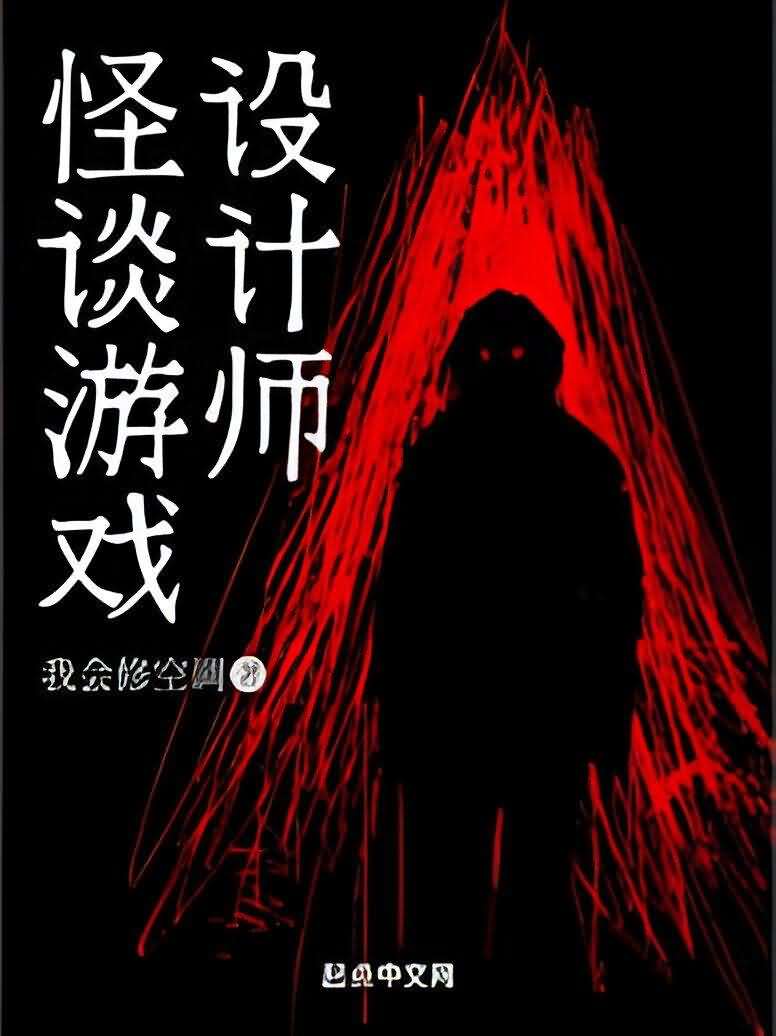
In the year XXXX, a mysterious cosmic force descended upon Earth, initiating a global game known as Strange World. This entity randomly selected players from each nation to enter rule-bound supernatural instances. Failure resulted in the invasion of that country by strange entities, while victory offered tools capable of altering human history. During the first round, countries suffered catastrophic invasions due to players' inability to navigate the lethal rules. By the second round, only five chances remained per nation. The Dragon Country's selected player was Lin Lin, a woman recently discharged from Qingshan Mental Hospital, where she had spent six months battling hallucinations that were, in reality, manifestations of the Strange World. Dr. Lee, her physician, had incorrectly deemed her cured and discharged her, but she recognized the absurdity of this diagnosis given her ongoing encounters with demonic entities.Upon being transported into the second game, Lin Lin found herself in Yongxin Junior High School, assigned the identity of a fifteen-year-old student named Lin Lin. The school operated under a strict set of bizarre rules designed to suppress emotion, enforce obedience, and separate genders. The faculty consisted of grotesque monsters that fed on students who broke these rules. While other nations watched in horror as global broadcasts revealed their player was a psychopath, Lin Lin approached the situation with violent indifference. She immediately violated the core prohibition against showing emotion or disobeying teachers by physically assaulting a female teacher who had been brutally beating a student. Using her extracted S-level skill, Spiritual Enchantment, she created a domain where her will superseded the school's reality, crippling the monster and breaking the mental conditioning affecting the other students.Her actions triggered a chain of violent confrontations. She encountered the dormitory manager, a clay-like entity that fed on disobedient students, and defeated it, forcing it to reveal the location of the Principal's Office. Entering the faculty office, she discovered a slaughterhouse filled with dissected bodies. A male teacher, Mr. Hu Wei, attempted to abduct her, leading to a battle where she killed him. The school's leadership, represented by fake parental figures and the Head Teacher, viewed her as a threat to their feeding cycle. They captured her and subjected her to a gruesome surgery in an underground operating theater. Rather than dying, Lin Lin used the rage induced by her mutilation to fuel a damage-boosting buff, killing the surgeons and escaping. She donned the skin of the Head Teacher, granting her camouflage and regeneration abilities, and proceeded to dismantle the entire medical staff of the school.Using the Head Teacher's skin, she accessed the Principal's Office and discovered the diary of Wu Mingda, the entity who created the school. The diary revealed that Wu Mingda was an outsider who had lost his son and constructed this hellish institution to control and consume adolescents. Lin Lin also discovered that the boys' dormitory room 404 served as a portal to the Principal's Office. Upon entering the forbidden dormitory and defeating the ghostly inhabitants, she unlocked significant exploration progress and received system rewards that enhanced her sanity durability and skill level. The chapter concludes with Lin Lin being welcomed into the dormitory of the surviving male students, who recognized her as an anomaly capable of challenging the oppressive hierarchy of Yongxin Junior High School, marking a shift from mere survival to active rebellion against the game's architect.

Latest Release
DateGroupRelease
2026-09-26knoxt c3
2026-09-26knoxt c2
2026-09-26knoxt c1

Community Reviews

Rating(3.9 / 5.0, 117votes)
5 stars
39(33%)
4 stars
37(32%)
3 stars
35(30%)
2 stars
6(5%)
1 stars
0(0%)

Popular reviews

... Read More
These chapters made me think about institutional horror in a whole new way. Yongxin Junior High School isn't just scary because there are monsters — it's scary because it's RUN like a school. There are forms to fill out, permits to stamp, rules to follow, and procedures to complete. The protagonist discovers that to leave, you need a chain of bureaucratic approval: homeroom teacher signs, dorm manager stamps, gatekeepers check... something. The real horror isn't the cannibalism; it's the paperwork. I kept thinking about how the system rewards exploration with percentage points — this gamification of escape turns the entire school into some kind of institutional maze where the rules ARE the trap. The dorm manager herself is a symbol of institutional compliance. She enforces rules about dustbins and cleanliness while eating students. She's the perfect product of this system — someone who internalized the bureaucracy so deeply that even her monstrous nature has been formalized. Meanwhile the protagonist, by weaponizing the same rules (defending trash can standards while demanding information), becomes something the system can't process. That's why the dorm manager is so terrified — not just because he's strong, but because he's using the institution's own logic against it. The protagonist choosing not to take the office key even though they could is another powerful symbolic moment. They're refusing to become what they're fighting against, even when it would make escape easier.
... Read More
The cafeteria rules posted on the blackboard are pure plot machinery at its finest. Six rules, each one carefully designed to create impossible contradictions. Rule 2 says never eat meat; Rule 6 says you must eat meat if offered. Rule 4 bans whispering; Rule 5 offers a refuge that is explicitly temporary. This isn't bad writing—it is structural horror. The author has built a maze where every exit leads back into the trap. What struck me most is how the protagonist discovers the truth through action rather than exposition. She does not read the rules and figure out the pattern; she follows her hunger, talks to the cook, gets served human feet, and then actively fights back. The plot trusts the reader to connect the dots. The twist of the pig trotters being human feet is delivered with clinical precision—the description of calluses and tendons makes the reveal land like a physical blow. The live stream comments woven into the narrative are a clever device. They provide an external audience reaction that heightens the horror without breaking the story's internal logic. When the viewers cannot bear to watch anymore, it mirrors exactly what we feel. The plot does not just tell us this is dangerous; it makes us feel the collective dread of witnesses who cannot intervene. I would love to see how the Headmaster's rule system escalates. The contract that binds the school mentioned earlier suggests the entire institution operates on supernatural legalism. If the cafeteria is this lethal, what are the dormitories? What about the library Wu Liang referenced? The author is laying groundwork for a full systemic investigation, and I am here for it.
... Read More
'Cut me, quick, cut me! If you're a proper brother, come and cut me, cut me dead.' I need to talk about this opening line because it establishes Linlin's entire voice in three seconds. She's goading a murderer into killing her, using reverse psychology and mockery, and she does it while disguised as someone else. The dialogue here is performative — she's playing a role within a role. Then when she reveals herself: 'Ha! You've finally made your move.' That 'Ha!' is everything. It's giddy, predatory, almost childlike in its excitement. She's not a calculated assassin here, she's a kid who just found a cool toy and she's thrilled. The chef's dialogue is surprisingly underwritten for a villain. 'You... you... you... how could this be?' It's functional but not memorable. Which makes sense — he's not the protagonist, he's an obstacle that gets chopped. But the real vocal standout is Wu Liang's internal narration versus his spoken words. In his head he's doing deep analytical work ('the most outlandish being that she herself was originally from the Underworld'), but when he speaks to her it's all formal deference. The gap between his thoughts and his speech is hilarious and also kind of sad. 'Weren't we heading upstairs? Are you sure the chef's the boss of this cafeteria? I sorted him out and he didn't even let out a fart. Now get moving and lead the way to your corpse.' This is peak Linlin — dismissive, crude, efficient. She treats murder like a household chore and then demands her companion keep up. Her voice doesn't shift or soften, and that consistency IS her character.
... Read More
Wu Liang is the perfect foil for our protagonist, and their dynamic is where this chapter truly shines. He is constantly terrified, constantly trying to warn her, constantly failing to stop her. But beneath the panic there is something deeper—a genuine loyalty that goes beyond self-preservation. When he disguises himself beneath her collar and shivers uncontrollably, it is not just fear of the cook. It is the dread of watching someone you care about walk into certain danger. The cook is an underrated character in this chapter. He is not a cartoon villain—he is a broken functionary of a broken system. His sour mood, his reluctance, his comment about having a decent meal if anything goes wrong all suggest a man who is also trapped, just more violently so. He reeks of blood and the Underworld, yet he follows rules just as strictly as everyone else. The author gives him a moment of humanity when he serves the meal and then retreats into the kitchen, as if he cannot bear to watch what happens next. Our protagonist herself is fascinating in her complete lack of fear. She does not question whether she should eat; she questions whether the food is safe, and when it is not, she flips the rules back on her oppressor. The scene where she marches to the counter with the human foot and demands an explanation is both hilarious and terrifying. She weaponizes bureaucracy against people who thought bureaucracy was their weapon. I want to understand the history between Wu Liang and his father. The mention that many students were dragged in by his father changes everything about his character. Is he here voluntarily? Is he trying to atone? Or is he simply trying to survive long enough to find his own way out?
... Read More
I need a minute. Just a second. The old man weeping. Actual tears. While the protagonist is standing there with a severed head in one hand and glass shards in the other, and the old man is sobbing about his nephew who was right there, hiding as a monster, and he never knew. That scene is living rent-free in my head now. What kills me is the detail about the divorce. Wu Liang was “effectively abandoned by his mother to his father” before being sent to this school. So the kid had NO ONE. Neither parent wanted him, and the one adult who actually cared about him (the old man) was imprisoned on the third floor unable to protect him. The author just casually drops this backstory like it's nothing, but it's devastating when you sit with it. And the arms in the glass case! Two embalmed arms. NOT buried, NOT cremated. Displayed like specimens. Like trophies. The old man says “Have you never wondered why your nephew was left with only two skeletal arms?” and suddenly the horror of it all clicks into place. Wu Mingda didn't just kill his nephew. He Dismantled him. Distributed the pieces. The protagonist holding those arms is holding someone's entire family in their hands, and they didn't even know it at first. I love the protagonist though, even in their worst moments. When they told the old man “I'm no ordinary person” and snatched those arms without hesitation? Fierce. But then keeping the details about how Wu Liang communicated secret instead of showing off? That's protection. That's someone who understands that some truths are too heavy to broadcast. The old man's final plea — “I must keep your promise to kill Wu Mingda” — isn't just about revenge. It's about a father figure finally getting to do something for the child he couldn't save. That's not vengeance. That's love, twisted and broken but still love.
... Read More
The pacing here is a rollercoaster, and I'm here for it. It starts slow and introspective with the diary entries—February, then December, a five-year jump that compresses grief into silence. Then the mirror triggers an immediate physical shift. Boom, now he's elsewhere. The encounter with the three boys happens fast, almost chaotically. He doesn't negotiate; he dismantles beds and beats them up. The rhythm accelerates. He finds the rule paper, unlocks the door, and steps into a corridor where tension spikes again—boys speed up, someone spots the spine-head, and the system announces achievements. Rewards drop (SAN upgrade, skill level-up), which gives a brief breather before the next wave. He's pulled into another dorm, and the pace slows to a tense, observant crawl. Everyone stares, whispers via note, asks about the evil spirits in 404. He delivers the blunt line 'The Headmaster's office is in there' and the chapter cuts to that live broadcast mention. It's a masterclass in alternating between high-octane action and quiet, dread-filled setup. Nothing lingers too long; scenes pivot on knife-edges. The transition from personal survival to perceived public spectacle at the end re-frames everything that came before. Are we watching a solitary exploration or a performed event? That final beat leaves you desperate for the next chapter. It never drags, never rushes confusingly. Each beat earns its place.
See all reviews

Custom lists

See all custom Lists