Summary

... Read More

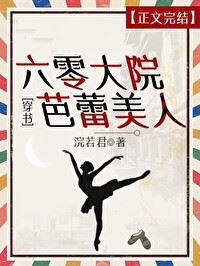
Chen Siyu, a forty-year-old principal choreographer and ballerina who had spent two decades in a wheelchair after a car accident, finds herself transmigrated into the body of a fictional cannon fodder character from a novel she was reading. In this new reality set in 1960s China, she is the foster daughter of a revolutionary family, living in a military compound. The original story cast her as a vain, manipulative girl who stole the spotlight from her adoptive sister, Chen Nianqin. However, the plot has shifted due to Nianqin’s rebirth; in her previous life, Nianqin was sent to the countryside, married a brutal man, and died in childbirth, only to be reborn with the knowledge to frame Siyu for a staged fall down the stairs. This manipulation resulted in Siyu being identified as the one destined for rural labor, while Nianqin secured Siyu’s place in the prestigious Cultural Troupe.

Upon waking in the body of the eighteen-year-old Siyu, the protagonist is initially overwhelmed by the sensation of having functional, long legs for the first time in her adult life. Rather than succumbing to despair, she views her new physical form as a divine gift and a strategic asset. She quickly assesses her dire situation: she is about to be sent to the countryside, her reputation is tarnished, and her adoptive mother, Feng Hui, is biased against her due to Nianqin’s fabricated accusations. Siyu realizes that to survive and pursue her dream of dancing, she must remain in the city and join the arts troupe. She also identifies a critical plot element from the novel: her biological half-brother, Chen Xuan’ang, a twelve-year-old piano prodigy who serves as the original female lead’s “golden finger” or source of power. In the original narrative, Nianqin would eventually manipulate Xuan’ang into becoming her financial backer and emotional crutch, leading to his tragic death in obscurity.

Siyu takes decisive action to alter her fate. She confronts the hostility of her adoptive family by displaying humility and gratitude, effectively disarming Feng Hui’s resentment. She cleverly navigates the household registration bureaucracy, convincing her grandmother to allow her to transfer her residency to her biological father’s family, despite their “stinking old ninth” class background. This move allows her to escape the countryside quota while maintaining a low profile. She then travels to the Ink Factory, where her brother Xuan’ang lives in squalor under the oppressive thumb of his maternal grandmother, Mao Mu, a woman who exploits the boy’s inheritance and forces him into menial labor in a boiler room.

The relationship between Siyu and Xuan’ang is initially fraught with suspicion and hostility, as the boy is conditioned to distrust adults and expects betrayal. Siyu employs patience and culinary skill to bridge the gap, preparing simple but delicious meals like luncheon meat noodles and milk-candy-coated sweet potatoes in an era of severe scarcity. She systematically dismantles his defenses by offering genuine care and protection, rather than the exploitation he anticipates. Simultaneously, she works to repair her damaged reputation in the community, using her natural charm and vocal talents to win over neighbors who had previously scorned her. She performs for the courtyard residents, showcasing her professional training and earning their respect and support.

As Siyu integrates into her new life, she faces external threats from local hooligans who wish to exploit her past reputation, as well as the looming danger of Nianqin, who remains in the city and is unaware that Siyu has successfully changed the course of events. Nianqin, now a member of the Cultural Troupe, begins to sense that her rebirth advantage is being undermined. Siyu’s primary goal becomes securing Xuan’ang’s household registration consent and protecting him from his grandmother’s machinations. She also begins to practice her ballet and vocal skills rigorously, determined to reclaim her career on stage. The story sets the stage for a confrontation between the reborn Nianqin and the transmigrated Siyu, with Xuan’ang’s loyalty and talent becoming the central prize in their struggle for survival and success.

The narrative explores themes of class struggle, family dynamics, and the resilience of the human spirit against systemic oppression. Siyu’s journey is not just about personal redemption but also about saving those around her from the tragic fates prescribed by the original novel. By leveraging her professional expertise and emotional intelligence, she aims to build a new life for herself and her brother, turning a hellish starting point into an opportunity for artistic and personal fulfillment. The tension between the original plot’s inevitability and Siyu’s active resistance creates a compelling dynamic as she navigates the rigid social structures of the 1960s.

Latest Release
DateGroupRelease
2026-08-11shanghai fantasy c63
2026-08-11shanghai fantasy c62
2026-08-11shanghai fantasy c61
2026-08-11shanghai fantasy c60
2026-08-11shanghai fantasy c59
2026-08-11shanghai fantasy c58
2026-08-11shanghai fantasy c57
2026-08-11shanghai fantasy c56
2026-08-11shanghai fantasy c55
2026-08-11shanghai fantasy c54
2026-08-11shanghai fantasy c53
2026-08-11shanghai fantasy c52

Community Reviews

Rating(4 / 5.0, 12votes)
5 stars
4(33%)
4 stars
4(33%)
3 stars
4(33%)
2 stars
0(0%)
1 stars
0(0%)

Popular reviews

... Read More
Can we just take a moment to appreciate how GOOD Chen Siyu's dialogue is? This woman speaks in complete paragraphs of pure fire. When Old Mao tries to guilt-trip her about Xuan'ang being ungrateful, she hits him with: "Uncle, the Qing Dynasty is over. In the new society, everyone is equal. Xuan'ang is your nephew, not your servant." That's not just dialogue—that's a political statement wrapped in a threat. She's using the language of the new era to dismantle an old man's authority. And then when he says she won't get anywhere because Xuan'ang carries a crime, she deliberately provokes him: "I see you've trained my Xiao Ang pretty well." She's goading him. She wants him to reveal more. And he takes the bait completely: "When it comes to knowing the boss's mood and serving skillfully, I've been in the imperial city, so training people is easy." OH. He just confessed to brainwashing her brother. The dialogue does the exposition AND the character revelation in one exchange. But the absolute peak of Chen Siyu's verbal combat is the molestation accusation. Let me quote the full thing because it's a masterpiece: "You filthy old pervert, you lecherous scumbag, you came knocking in the middle of the night just to grope my butt. I'm going straight to the authorities to report you for molestation!" Old Mao: "I… I'm a eunuch, you know that!" Chen Siyu: "Pah! If you're really castrated, why are you groping me? Come on, pull down your pants and let me see if you're fully cut." I cannot stop laughing at this. The absurdity! The audacity! The sheer creative violence of the accusation! Even her dialogue with Xuan'ang is distinct—she teases him mercilessly. "Come on, Xiao Angzi, fetch me a pouch of tobacco to smoke." That's a sister who knows exactly how to push his buttons. And Director Gao's response to Miao Qing's gossip: "Can you stop gossiping like an old fishwife?" The author gives every character a distinct voice. Even the background characters like Director Guo shouting from his window have personality.
... Read More
The relationship between Siyu and Xuan'ang is the emotional anchor of this chapter, and it's beautifully complicated. He's the little brother who should be innocent and pure, but he's already learned to read people. When Nianqin tries to turn him against Siyu, his response is devastating in its honesty: he knows she's scheming, but he also knows she's trying to change, and he won't report her because that would destroy her chance at the troupe. This isn't naive trust—it's a calculated moral choice from a child who understands the world far too well. Nianqin's manipulation of Xuan'ang reveals everything about her character. She's not just jealous; she's weaponizing his love for his sister against him, trying to make him complicit in her schemes. When he refuses, she pivots to a warning—''Take care of yourself. Don't let some schemers hurt you''—which is both genuine concern and a veiled threat. She knows Siyu is dangerous, and she's right. Feng Hui's relationship with Siyu is equally layered. She's warm and indulgent because Siyu is her foster daughter—she doesn't discipline her the way she does Nianqin. But there's an underlying tension: Feng Hui is already showing favoritism, and Siyu knows it. When Siyu performs her crying routine about Nianqin hating her, Feng Hui's response—''You little debt collector, come on, Mom's taking you to register!''—is affectionate but also slightly exasperated. She loves Siyu, but she's also tired of her performance. And then there's Leng Jun, who appears briefly but leaves an impression. Siyu's bashful smile and his calm, unreadable response create a romantic tension that's just beginning to spark. He's the hidden boss she stumbled into, and the chapter ends with her already planning how to thank him—though he clearly doesn't need her gratitude.
... Read More
Okay so this whole sequence is genuinely brilliant plotting. Let me break down why. The Old Mao confrontation is the kind of scene where everything clicks into place. Remember how the text sets it up? Midnight. A knock on the door. Chen Xuan'ang is already alert—"Old Mao's here." The author doesn't waste a single beat. We're immediately in tension. But here's what I love about the plot structure: Old Mao comes in bragging about his past kindness to Xuan'ang's mother, positioning himself as some kind of savior. "In '37, the Japanese came... We stood at the door to protect her." And Chen Siyu's response? Pure venom. "Then you must be the number one good uncle in North City." The dialogue does so much work here—she's not just being rude, she's systematically dismantling his moral authority in front of her brother. Then the pivot. When she threatens him with the fire tongs and he calls her bluff about sending her to prison, she plays her card: the molestation accusation. This is the plot twist that makes the whole scene sing. She's basically saying "you're not fully cut" and then BEATING HIM. The author wrote this line that made me laugh out loud: "Pah! If you're really castrated, why are you groping me? Come on, pull down your pants and let me see if you're fully cut." What's clever is that Old Mao's defeat isn't just physical—it's social. The neighbors hear the commotion. Director Guo speaks from his window. Old Mao has to slink away pretending he "tripped." The power dynamic completely flips. And then the guardianship subplot launches naturally from this victory. Chen Siyu immediately pivots to: "I should be Xuan'ang's guardian." She's not just fighting one battle—she's using each win to set up the next move. That's tight plotting. The fake evidence plot is the hook that'll keep me reading. "Since her so-called evidence is fake and fabricated, we just need to get our hands on it and burn it to ashes." This is basically a heist setup. I need to know if Grandma Mao falls for it.
... Read More
The pacing in these chapters is absolutely masterful, and I want to talk about how the author transitions from the most intense scene to the most domestic one. Chapter 11 ends with a BEATING. Chen Siyu is swinging fire tongs at an old man's head, neighbors are shouting from windows, there's chaos and violence and the kind of midnight confrontation that leaves your heart pounding. And then— Chapter 12 opens with: "Though the courtyard's morning wasn't filled with birdsong and flowers, it was rich with the scent of milk, fresh bread, and cornmeal porridge." BUNS. We go from blood and fury to the smell of steamed buns. This is such a bold structural choice. The author could have kept us in the tension of what happens next—what will Old Mao do? Will he tell Grandma Mao? But instead, we get a full morning scene where Chen Siyu is feeding half-buns to neighborhood kids. This contrast does so much work. It shows us that Chen Siyu's life isn't defined by these conflicts—she's cooking breakfast the next day like nothing happened. She's resilient. She's normal. The violence of the previous night is contained, and she moves on. But the pacing isn't just about contrast—it's about escalation within each scene. Let me trace the Old Mao confrontation: knock on door → he enters → he smirks and smokes → he threatens → she threatens back → the fire tongs come out → the beating → he flees → the quiet aftermath → the plan for the fake evidence. Every beat raises the stakes until the explosion, then drops them, then builds again. The morning scene in Chapter 12 has its own pacing arc: cooking buns → kids gathering → the bicycle jingle → the letter arrives → she runs to Director Gao → gets the guardianship → then the Art Troupe job. Each moment propels her forward. By the end of Chapter 12, she's officially employed, she's Xuan'ang's guardian, and she's made a friend in Ma Manman. The only slight drag I noticed is the Miao Qing and Widow Zhang gossip section—it slows things down a bit, but it's necessary world-building. The author knows when to accelerate and when to let the reader breathe.
... Read More
The dialogue in this chapter is a study in subtext. Almost nothing is said directly. When Siyu performs her crying routine for Feng Hui, the words are simple—''I don't know why Nianqin suddenly got mad at me''—but the performance is elaborate. She's not just lying; she's crafting a narrative that makes Feng Hui feel guilty and protective. The dialogue here is weaponized empathy, and it's devastatingly effective. Xuan'ang's voice is notably different. He speaks in short, direct sentences: ''I know my sister wasn't good before, but I think she's trying to change now.'' ''I'm not drinking.'' ''Sis, our brother looks like a leader.'' He's a child, but he's also a strategist. His dialogue is sparse because he's always calculating, always choosing his words carefully. When Nianqin tries to manipulate him, his response is equally careful: ''I know. That's why I can't report her—otherwise she won't get in.'' He's not refusing to help his sister; he's refusing to help his sister destroy her own future. Nianqin's dialogue is the most revealing. She speaks in accusations and warnings, always positioning herself as the victim or the moral authority. ''She's already been used by Gao Dagang, tainted''—this is the language of a girl who understands that in their world, a woman's reputation is her only currency, and she's trying to devalue Siyu's before it appreciates. Leng Jun's dialogue is almost nonexistent, which makes his presence more powerful. ''If anyone dares to bully your sister again, go to Building 23''—this is a man who speaks in commands and promises, not explanations. His silence is his voice.
... Read More
There's so much layered meaning in these chapters that I want to unpack. Let's start with the most obvious symbol: fire. Chen Siyu's smile at the end is "as radiant as fire." She wields fire tongs as a weapon. Fire is destruction, yes, but also purification. She's burning away the old systems of oppression—one old eunuch at a time. The fire tongs themselves are a brilliant symbol. They're a tool for tending fire, for managing heat and cooking. But in Chen Siyu's hands, they become an instrument of justice. The domestic becomes the weaponized. This is what she does throughout the text—she takes the tools available to her (buns, a bicycle, a uniform) and turns them into weapons of survival. Then there's the eunuch imagery. Old Mao represents everything that's dead but won't stay dead. The Qing Dynasty is over, but he still moves through the world like he's serving an emperor. He trained Xuan'ang to be subservient—"rooted in something bad. So he has to learn to be subservient, or he won't survive." This is the core theme: the old ways of survival (groveling, serving, accepting your place) versus the new ways (fighting back, claiming rights, demanding equality). The text explicitly states: "In '37, the Japanese came... In '45, when the regime changed again." History is cycling, and these characters are caught in the gears. Old Mao survived by serving different masters. Chen Siyu survives by fighting. The grain coupons are another powerful symbol. When Chen Siyu demands Xuan'ang's grain coupons, she's not just getting money—she's claiming the right to define his survival. "Control over the family finances" is power. In a society where the state controls rations, who controls the coupons controls life itself. And the fake evidence—the supposed proof that Xuan'ang's mother was a spy—represents the ultimate theme: history as a weapon. Grandma Mao isn't just hiding evidence; she's weaponizing the past. The question of whether Xuan'ang's mother was actually a spy or whether the evidence is fabricated mirrors the larger question of how history is written and who gets to define truth in this society.
See all reviews

Characters

See all characters

Custom lists

See all custom Lists