Summary

... Read More

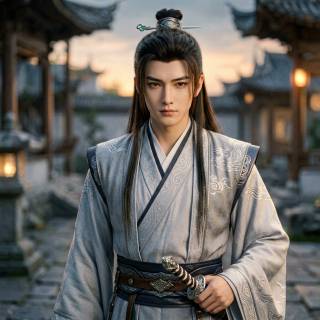
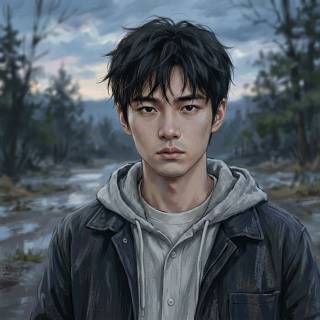
He Zheng is a twenty-eight-year-old actor in the Chinese entertainment industry whose career has declined significantly. Once known for his striking appearance and ability to play female roles, he now struggles to find work after refusing to engage in the sexual favors often expected by industry brokers. Facing financial hardship, he begins livestreaming to make ends meet. His apartment, which he returns to after eight years, is filled with memories of his former life and a foster mother, He Linlin, who raised him. He also recalls Xiao Wei, a boy he found in a garbage bin years ago, who once lived with him but left without explanation, maintaining only annual written contact that He Zheng never reads.

During one of his early livestreams, a viewer with the username DirtyBallMommy appears and begins sending an excessive amount of virtual gifts, including a recurring animation of a hair dryer. This user, later identified as his Top Supporter, spends lavishly until he hits his platform limit, then requests He Zheng’s WeChat ID. Their initial interactions are cautious; the Top Supporter is shy and avoids voice calls, but eventually, they establish a routine. He Zheng learns the man is based in Mexico, where he watches He Zheng’s streams in the early morning hours. Despite warnings from his agent, Li Ru, about the dangers of online relationships and the potential damage to his career, He Zheng maintains a polite distance while accepting the financial support.

The core conflict arises when He Zheng auditions for a small role in a new film directed by an arrogant newcomer. The director dismisses him for a male lead role, offering only a background extra part. On set, He Zheng is subjected to physical abuse by the male lead, Huang Chen, who slaps him repeatedly during a scene, causing injury and humiliation. Huang Chen then posts a misleading narrative on social media, framing He Zheng as the aggressor and inciting his fans to harass He Zheng during his livestreams. The online mob attacks He Zheng’s appearance and character, creating a crisis that threatens his livelihood.

A key turning point occurs when the Top Supporter intervenes. He uses his influence to contact the director, demanding surveillance footage and an apology from Huang Chen. He Zheng discovers that the Top Supporter is connected to Huazhou Group, a major corporation, though the exact nature of this connection remains unclear. The Top Supporter’s intervention forces Huang Chen to retreat, but the public narrative remains contested. He Zheng is invited to appear on a talk show alongside Huang Chen to discuss the incident, marking a shift from passive endurance to public confrontation.

As the story progresses, He Zheng travels to Beijing for the interview. He reconnects with his foster mother, He Linlin, and encounters the Top Supporter’s friend, a mixed-race man who reveals glimpses of the Top Supporter’s private life. The Top Supporter sends He Zheng a white dress as a birthday gift, deepening their emotional bond. He Zheng begins to question the Top Supporter’s true identity and intentions, suspecting he may be a wealthy individual seeking a casual relationship. However, the Top Supporter’s consistent support and emotional vulnerability suggest a deeper attachment. The narrative ends with He Zheng preparing for the televised confrontation, uncertain of the outcome but no longer alone in his struggle against industry exploitation and public defamation.

Novel Items

More
Item
The key to He Zheng's apartment door. The keyhole was badly rusted and He Zheng expected it to snap inside when he turned it.
Item
A package sent to He Zheng containing what appears to be a letter, likely from Xiao Wei. He Zheng instructed his foster mother not to open it and to leave it in the study.
Item
Used by He Zheng to set up his livestream. He compared lighting in both bedrooms before placing it.
Item
A dress He Zheng wore during his livestream after DirtyBallMommy asked why he wasn't wearing one. It fit snugly since he is tall but not slender.
Item
A virtual livestream gift sent by the Top Supporter. It had a special effect of wind blowing wildly across the screen with a loud whooshing noise. The Top Supporter sent so many that the screen was completely filled with animated hair dryers.
Item
Messaging app used by Qin Ya and Shi Jianchuan. Qin Ya found that Shi Jianchuan had deleted her and put her on his blacklist. Her messages showed a red exclamation mark indicating she needed to be added as a friend first. Later Shi Jianchuan removed her from his blacklist in front of her.
Latest Release
DateGroupRelease
2026-08-11shanghai fantasy c20
2026-08-11shanghai fantasy c19
2026-08-11shanghai fantasy c18
2026-08-11shanghai fantasy c17
2026-08-11shanghai fantasy c16
2026-08-11shanghai fantasy c15
2026-08-11shanghai fantasy c14
2026-08-11shanghai fantasy c13
2026-08-11shanghai fantasy c12
2026-08-11shanghai fantasy c11
2026-08-11shanghai fantasy c10
2026-08-11shanghai fantasy c9

Community Reviews

Rating(3.9 / 5.0, 34votes)
5 stars
9(26%)
4 stars
11(32%)
3 stars
14(41%)
2 stars
0(0%)
1 stars
0(0%)

Popular reviews

... Read More
There's so much going on beneath the surface of this chapter. The central theme is visibility - who gets to be seen and who gets to look away. He Zheng has spent eight years being invisible to the industry, treated as a tool rather than a person. The internet mob wants to make him even more visible, but only as a target. The Top Supporter makes him visible in a completely different way - not as entertainment or gossip, but as someone worth defending. The hair dryer gift is symbolic too - it's not just a flashy present, it's a shield, something that literally blocks the toxic comments from reaching him. And the surveillance footage He Zheng promises to post? That's about truth versus narrative. Huang Chen constructed a story - the bullied actor, the diva extra - and the internet believed it because it was convenient. The footage will reveal what actually happened. There's also the theme of performance - He Zheng is an actor by profession, but the livestream is where he's most authentic. Meanwhile, Huang Chen is acting - performing victimhood for his fans. The birthday scene adds another layer: the Top Supporter's simple cake and unlit candle represent his emotional starvation, while He Zheng's presence becomes the light. And that final image of the Top Supporter smoking because he's nervous? It humanizes him completely. This isn't a fantasy power fantasy; it's about two imperfect people trying to connect across distance and screens.
... Read More
Let me just say this: the pacing in these first seven chapters is masterful and I'm not okay. The author doesn't rush anything. He Zheng arrives at the apartment, opens windows, checks the fridge, lights a cigarette—and it could have been filler. But it isn't. Every mundane action is loaded with the weight of eight years of absence. The rotten meat, the spoiled eggs, the tofu riddled with parasite holes—this isn't description for description's sake. It's the physical manifestation of a life that stopped being maintained the moment someone left. Then the livestream scene hits and the pace shifts entirely. It's almost comedic at first—the zero viewers, the beauty filter debate, the guy asking about his nose. But then DirtyBallMommy appears and everything tilts. The gifting spree, the WeChat request, the voice call with the heavy breathing—that's where the tension actually starts building. And the author doesn't resolve it. He just... lets it hang there while He Zheng goes to sleep. Next morning, rain, garbage bags, Aunt Wang, Xiao Wei. Back to slow. Back to quiet. Then the audition scene comes in like a slap—sharp, cold, humiliating. The director's dialogue is so efficiently cruel that you forget to breathe. And the chapter ends with He Zheng accepting a background role and his agent offering dinner, which he declines because he has to stream. The pacing here is doing something really smart: it's making you feel the exhaustion. The story isn't rushing toward drama. It's letting the drama accumulate in the spaces between words.
... Read More
There's this recurring motif in the text that I can't stop thinking about—bodies giving pieces of themselves away. He Zheng's hair becomes a bracelet. His palm gets pinched to prove reality isn't a dream. His voice carries on a livestream to people who don't know him. The whole story seems obsessed with the idea that connection requires sacrifice, however small. The hair bracelet specifically is loaded with meaning. In Chinese culture, hair has always been tied to identity and intimacy—cutting it was a dramatic act, and weaving it into something wearable is almost ritualistic. He Zheng isn't just giving Wei Zhenye a gift; he's binding himself to someone in the most literal way possible. And that red string? Red is the color of marriage and fate in Chinese tradition. The salesgirl weaving it with "lightning speed—one loop took shape, then the second was done" makes it feel almost fateful, like the universe is tying knots faster than either of them can process. Then there's the contrast with Wei Zhenye's world—business dinners, lazy Susans spinning plates away from people who have no voice, investors who treat human beings as line items. The story keeps juxtaposing these two worlds: the cold, transactional space where He Zheng has no power, and the intimate, almost sacred space where he chooses to give something of himself freely. The livestream sequence adds another layer—He Zheng performing vulnerability for an audience of strangers while his most real moment (the text to Wei Zhenye) becomes public by accident. The author seems to be asking: where does authenticity live in a world that commodifies everything? Even Wei Zhenye's forearm—"taut with muscle, veins visible—powerful but not exaggerated"—when he kicks open that door, is described almost like a symbol of protection entering the frame. Not a hero, just a man who refuses to let someone he cares about be humiliated.
... Read More
Okay so this whole Xiao Wei thing is quietly devastating and I need to talk about it. He Zheng literally found the guy in a garbage bin eight years ago—eight years—and he can't even remember his face or voice anymore. That line hit me like a truck: "Someone like that once existed in the first half of your twentieth year." That's not just nostalgia, that's grief dressed up as casual observation. He Zheng doesn't cry about it. He just... notes it. Like a fact. And that's somehow worse. Then there's the Top Supporter. This guy spends a fortune just to get added on WeChat, sends hair dryers like he's trying to fill a void, and when He Zheng calls him, all he can do is breathe heavily. The bamboo tattoo, the restricted Moments, the fact that he says "Laser rain" like it's a normal thing—this person is clearly hiding something, or someone. And He Zheng, who should know better than to trust anyone who opens their wallet this wide, just... goes along with it. Not because he's naive, but because he's tired. He's twenty-eight and already done with pretending he has options. The dynamic between them feels like two people who've both been discarded by the world and are now circling each other cautiously. Neither one is safe. Neither one is whole. And I'm already obsessed with where this is going.
... Read More
The dialogue in this chapter is absolutely fire. Let me just start with He Zheng's line to the trolls: "Who else in your family's still alive? I'm running out of ideas." That's not just a comeback, that's art. He Zheng's voice is so distinct - he can go from deadpan indifference to razor-sharp wit in a single sentence. And the Top Supporter's dialogue is equally memorable. "What kind of dumbass is Huang Chen." Simple, direct, and coming from someone who's usually so composed. The way he types in brackets in the chat versus speaking in his normal voice on the call - it creates this interesting duality. His WeChat messages are efficient and commanding, but his actual voice on the phone is softer, more vulnerable. "I was waiting for you. Can't finish it alone." That line about the birthday cake hit me so hard because it's the Top Supporter's way of saying I wanted you to be part of this. And the back-and-forth about cursing - "Dickhead, Dickhead, Dickhead?" with He Zheng laughing until his chest trembles - it's playful, intimate, and completely natural. The author never lets the dialogue feel staged or forced. Even the director's voice on the phone has a distinct personality - the forced politeness, the simmering anger, the quick retreat when money is mentioned. Every character sounds like themselves.
... Read More
The stakes in this story are deceptively simple on the surface—it's about two guys who loved each other and missed their chance—but the author layers them so carefully that by the time Wei Zhenye is running through Beijing traffic, you're absolutely convinced that something terrible will happen if he doesn't make it. What does He Zheng stand to lose? Eight years of pretending he doesn't care, a carefully constructed career, the illusion that he's fine on his own. What does Wei Zhenye stand to lose? Everything. Eight years of building a new identity, a company, a life—all of it meaningless if He Zheng rejects him again. The letters were his vulnerability, and He Zheng never opened them. Now he's standing at the door in a ill-fitting suit, having run three kilometers through rush hour, and he can't even take another step. The internal conflict is what kills me though. Wei Zhenye's entire motivation is captured in this passage: "He didn't want to see He Zheng forever pushed to the edges of group photos... He Zheng was proud—his life shouldn't have to be so small." He left because he was powerless. He came back because he finally wasn't. But power doesn't erase eight years of rejection. And He Zheng's conflict—his silence was his rejection, but it was also his protection. He was avoiding Xiao Wei's feelings because he couldn't bear to face his own. The moment he reads those letters and realizes what he's done, the guilt and the love collide, and that's when he sends the message: I'll ask one more time. Where are you now? The tension never drops. Not during the investigation, not during the truth or dare game, not during the run, not during the embrace. It only transforms—from anxiety to relief to something quieter and more dangerous: the fear that this time, they might actually be okay.
See all reviews

Characters

See all characters

Custom lists

Oops…There is nothing here.